
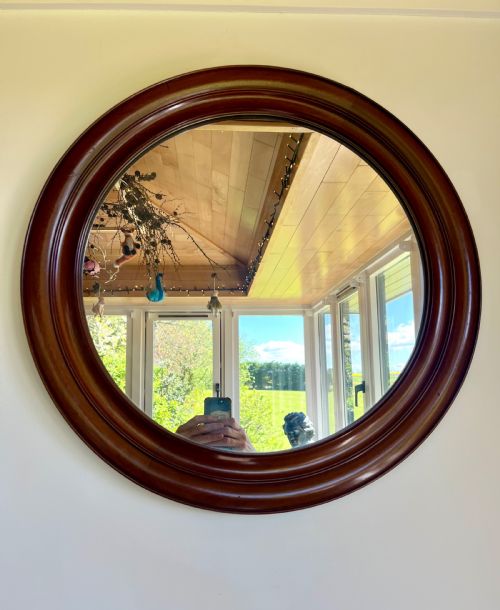


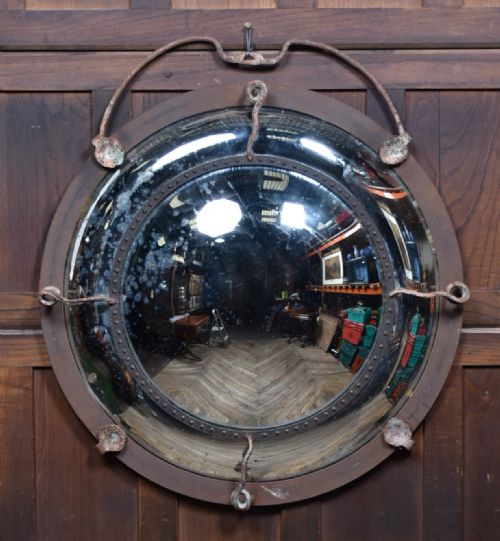


Large Circular Convex Mirror
A large circular convex mirror draws the eye with its curved plate, capturing the entire room in miniature within a bold gilded frame.
Large Circular Convex Mirror
When you search for a large circular convex mirror, you encounter imposing wall pieces primarily anchored in the Regency period alongside later 19th-century and 20th-century revivals. These substantial looking-glasses span grand scale diameters up to four feet, designed to command a wall and distribute light across a parlour or reception room.
The versions most frequently met on this page date from the Regency era, often featuring heavily moulded circular frames fashioned from giltwood. Some examples incorporate decorative crests such as a spread eagle perched atop the timber surround, enhancing their architectural presence.
Beyond strict Regency origins, the selection includes late 19th-century interpretations and industrial pieces utilising wrought iron or copper alongside traditional gesso and ebonised wood. Wall mirrors of this formation remain sought after for their ability to create an illusion of depth and space within interior schemes.
How they were made
The foundation of these circular looking-glasses relies upon timber frameworks shaped into deep rings, frequently layered with gesso and plaster to build up intricate surface ornamentation. Artisans then applied gold leaf to the prepared gesso ground, creating the brilliant gilded finish characteristic of Regency and revival pieces.
The curved glass plate itself required specialised blowing or casting techniques to achieve the distinctive bulging surface that bends reflections outward. Alternative modern or industrial iterations utilise durable metals like wrought iron and copper to construct the heavy-duty surrounds holding the convex glass securely.
Materials recorded across the inventory include traditional giltwood, ebonised wood, gesso, plaster, glass, alongside industrial wrought iron and copper.
What varies in quality
The distinction between superior examples and lesser pieces rests upon the crispness of the original gesso moulding and the depth of the gilding. Finer frames retain sharp botanical or classical motifs without the softening caused by over-restoration or thick repainting.
The integrity of the mirror plate itself dictates much of the value, with older convex glass displaying subtle distortions and historical silvering characteristics that enhance visual authenticity. Furthermore, the structural joinery of the heavy circular wooden frame determines how well the piece bears the considerable weight of the glass over centuries.
The Large Circular Convex Mirror Glossary
- Convex mirror
- A circular looking-glass with an outward-curving plate that reflects a wide-angle, panoramic view of the interior space. It is often called a butler's mirror because it historically allowed staff to monitor a room.
- Giltwood
- Timber coated with a thin layer of gold leaf over a prepared gesso base. This technique provides a luminous, durable metallic sheen.
- Gesso
- A plaster mixture applied to wood frames to create a smooth surface for gilding and relief carving. It allows artisans to shape intricate decorative details.
- Regency
- An English design period spanning the early 19th century, known for classical restraint, bold proportions, and opulent gilded finishes. Pieces from this era often feature heavy circular frames and eagle crests.
- Ebonised wood
- Timber treated with chemical stains or black finishes to imitate expensive ebony. This dark surface creates a sharp contrast against gilt detailing.
Large Circular Convex Mirror: Frequently Asked Questions
Where should I hang a convex mirror?
These large circular looking-glasses function best on a principal wall in a reception room, dining space, or hallway where they can capture light from windows and doors.
Because the curved plate reflects a wide field of vision, placing the mirror opposite a focal point or light source maximises its decorative impact in the interior.
How do I date a Regency mirror?
Dating relies upon examining the construction of the timber frame, the composition of the gesso, and the characteristics of the glass plate itself. Earlier pieces from the Regency period typically feature hand-carved elements beneath the gesso and heavier wooden backing boards.
Later 19th-century revivals often display machine-assisted uniformity in their mouldings and brighter, more modern silvering techniques on the convex glass.
Why are some mirrors surmounted by an eagle?
The spread eagle is a traditional motif in classical and Regency design, symbolising majesty, strength, and imperial authority. In the context of a convex mirror, the carved bird perched atop the frame serves as a dramatic structural apex that draws the eye upward.
This decorative addition was particularly favoured by Regency craftsmen seeking to increase the vertical presence of circular wall pieces.
How heavy are these large mirrors?
Due to the dense wooden frames, thick gesso layers, and heavy curved glass plates, these pieces possess substantial weight that requires secure wall fixings. Professional installation using appropriate load-bearing brackets attached directly to wall studs is essential for safe suspension.
The scale of grand Regency examples means the frame alone commands significant structural support before considering the weight of the convex plate.