
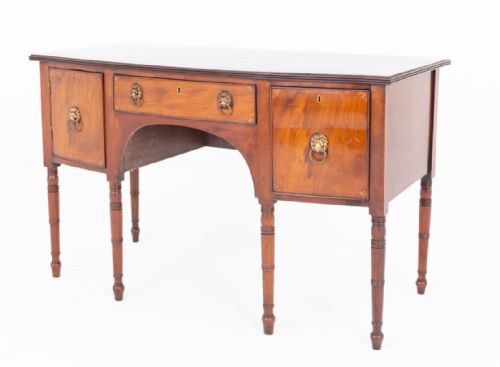
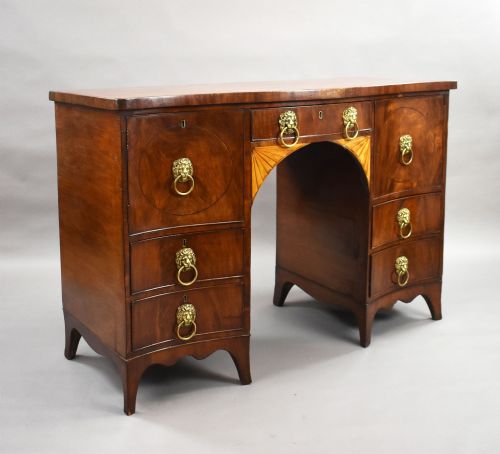


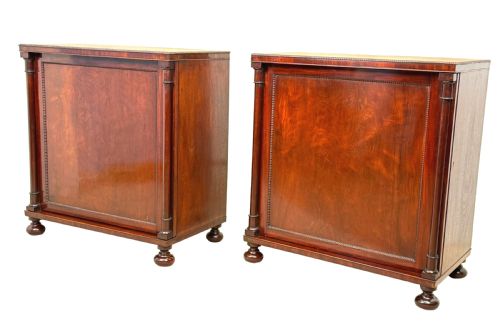


Regency Pedestal Cabinets
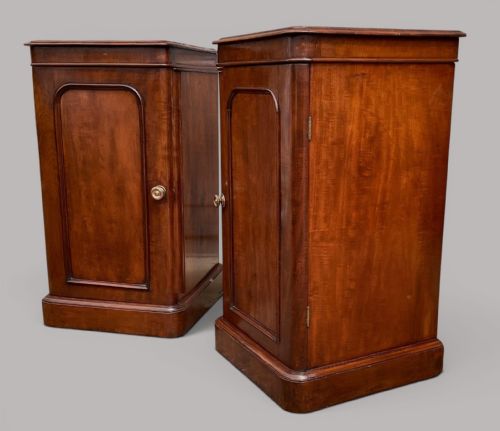
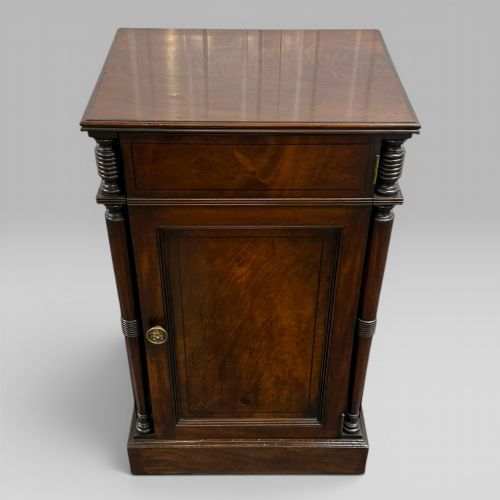
Regency pedestal cabinets are elegant timber storage pieces designed to flank a bed or anchor a dining room wall.
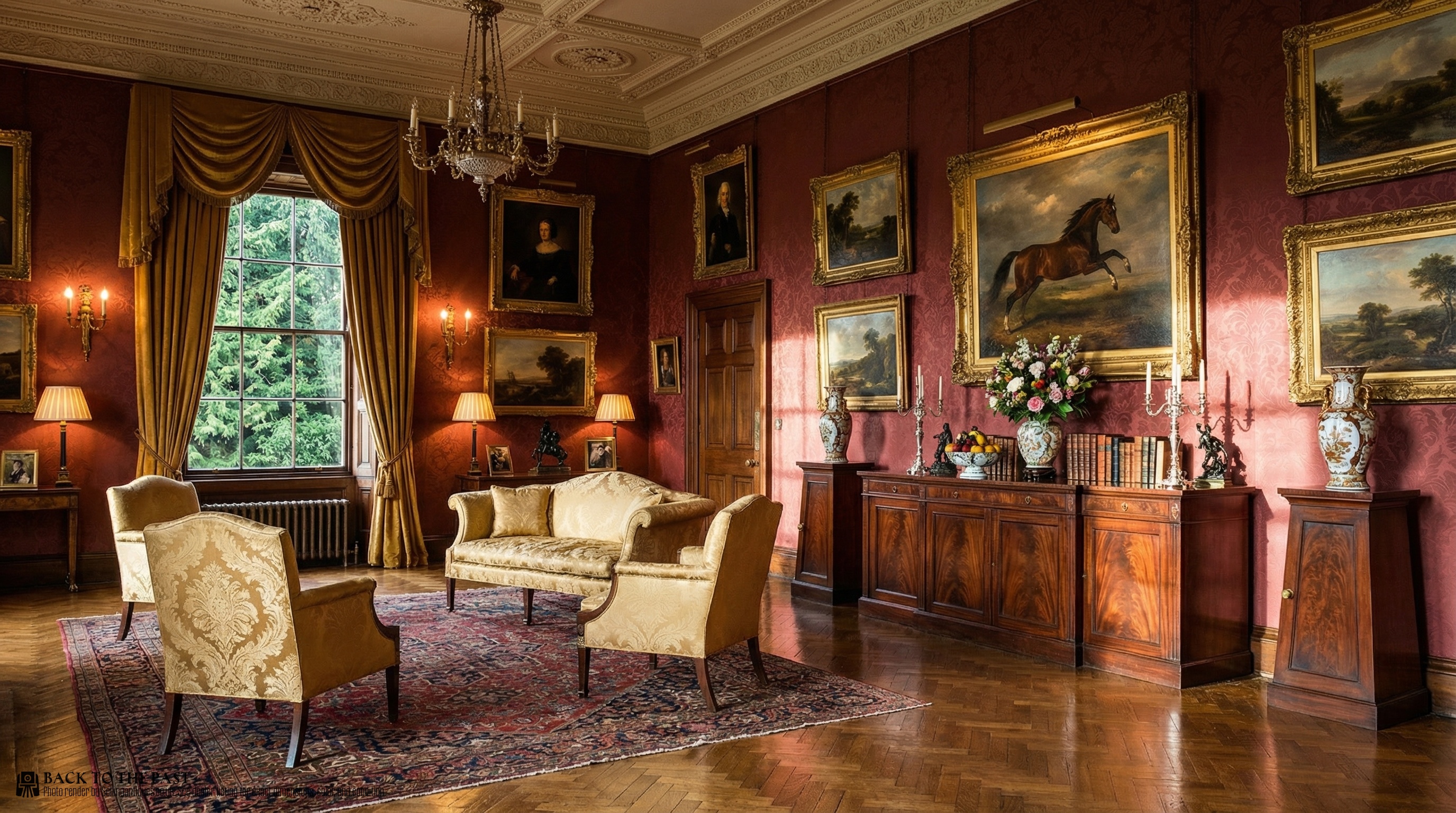
Regency Pedestal Cabinets
When you search for regency pedestal cabinets, you encounter a specialised form of antique storage designed primarily for the bedroom or formal reception rooms. These pieces originate predominantly from the nineteenth century, encompassing Georgian, Regency, William IV, and Victorian periods.
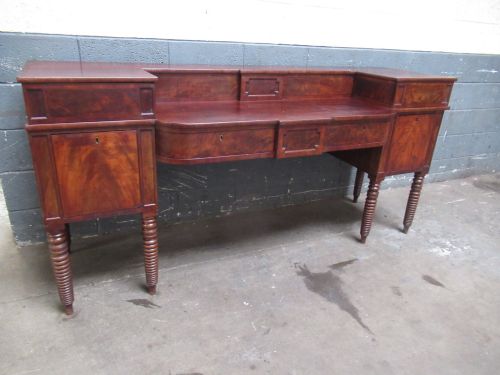
The selection on this page ranges from cylindrical bedside cupboards and hexagonal stands to large pedestal sideboards and side cabinets. Pairs appear frequently among the listings alongside single items, offering symmetry for interior schemes.
Makers and workshops of the period utilised distinct regional forms, including Scottish and Irish variations alongside English designs. Buyers meet both authentic period pieces and later revivals from the twentieth century.
What varies in quality
The selection of timber grain dictates much of the visual appeal, particularly in figures such as flame mahogany or rosewood. Superior examples display carefully matched veneers that wrap seamlessly around cylindrical or bowfronted forms.
Construction precision separates standard production from workshop attributions linked to notable makers. The integration of functional hardware, such as discreet pull-out steps or fitted desk interiors, demonstrates higher craftsmanship.
Some bedside cupboards include a hidden pull-out step to help Georgian sleepers climb into exceptionally high beds.
Holland and Sons·Gillows
The Regency Pedestal Cabinets Glossary
- Pedestal cabinet
- A freestanding piece of furniture built on a columnar or pedestal base, often housing internal shelves or a cupboard. These units frequently serve as bedside nightstands or side storage.
- Flame mahogany
- A distinct wood veneer cut from the fork of a mahogany tree to produce a flickering, flame-like pattern. Cabinet makers valued this figure for prominent surfaces.
- Cylinder cupboard
- A closed storage unit featuring a rounded, rolling, or curving door that encloses the interior space. This form demands advanced woodworking to ensure smooth operation.
- Davenport
- A compact writing desk featuring a sloped writing surface above a pedestal of drawers. Examples often incorporate side compartments and fine wood marquetry.
- Sideboard
- A long dining room piece utilised for serving food and storing plate, frequently flanked by heavy pedestals or cupboards. These often display substantial carved mahogany timber.
Regency Pedestal Cabinets: Frequently Asked Questions
Where were pedestal cabinets placed?
These cabinets served multiple domestic functions, primarily positioned beside beds as nightstands or placed against dining room walls as part of larger sideboard arrangements.
Smaller cylindrical and hexagonal variants suited tight bedroom spaces, while substantial pedestal sideboards anchored formal reception rooms.
How do I identify Regency style?
Regency design draws on classical antiquity, displaying clean architectural lines, minimal carved ornamentation, and rich timber grains. Pieces often incorporate brass details, ebony stringing, and curved bowfront shapes.
Later Victorian revivals adopted similar forms but frequently utilised heavier proportions and darker finishes.
Are pairs common for these cabinets?
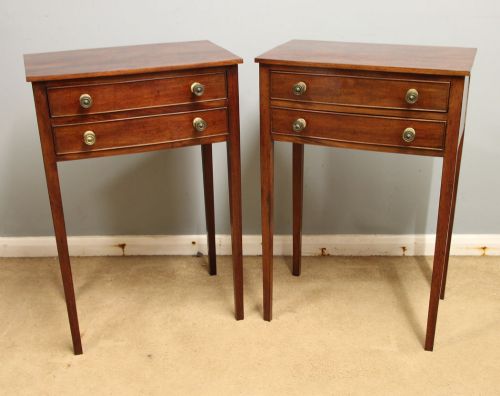
Pairs appear regularly among nineteenth-century bedroom and side tables, originally intended to flank a bed or fireplace symmetrically.
Matching pairs command distinct interest from collectors seeking balanced interior layouts.
What timbers were used?
Mahogany forms the foundation of most pieces, enhanced by figured variations like flame mahogany veneers. Workshops also employed rosewood, goncalo alves, and king-wood for more decorative commissions.
Secondary woods supported the internal structure, while marble and leather provided durable upper surfaces.