



Mahogany Storage Pedestals
Mahogany storage pedestals are substantial timber pieces designed to organise rooms with utility and classical proportion.
Mahogany Storage Pedestals
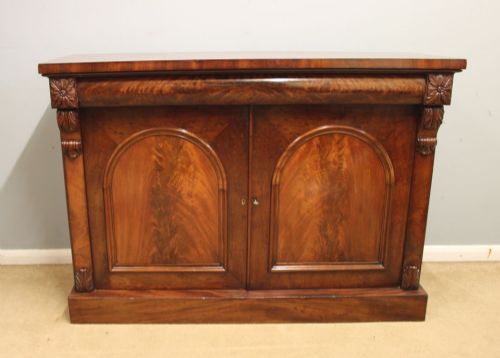
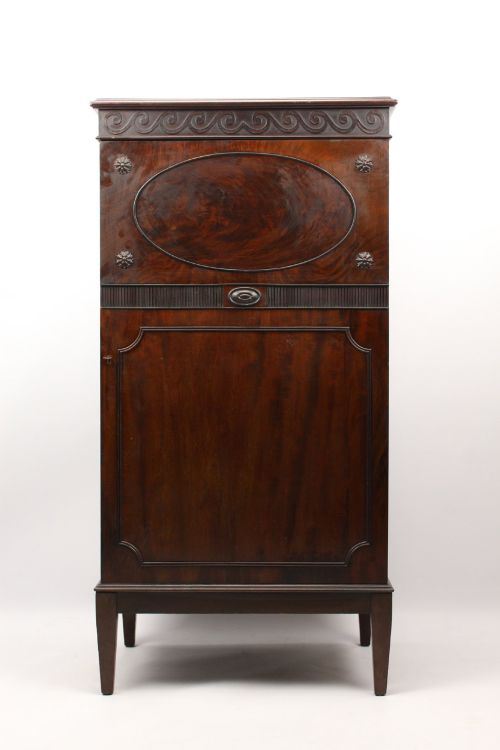
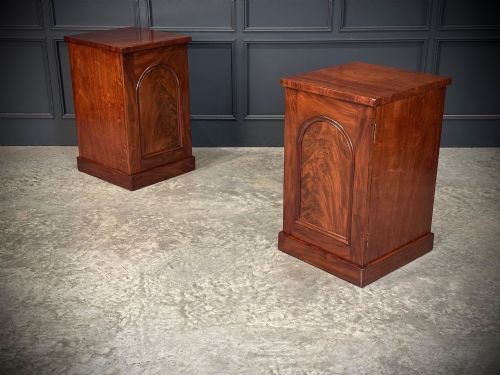
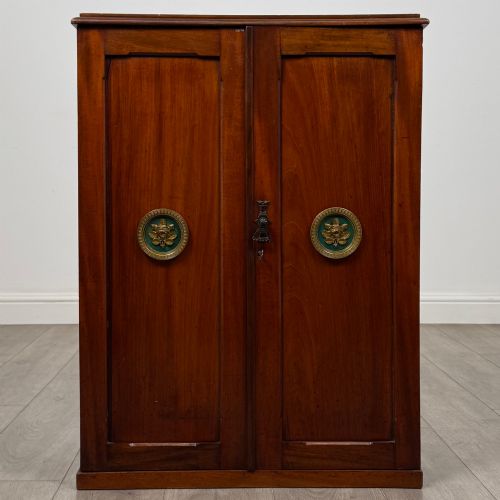
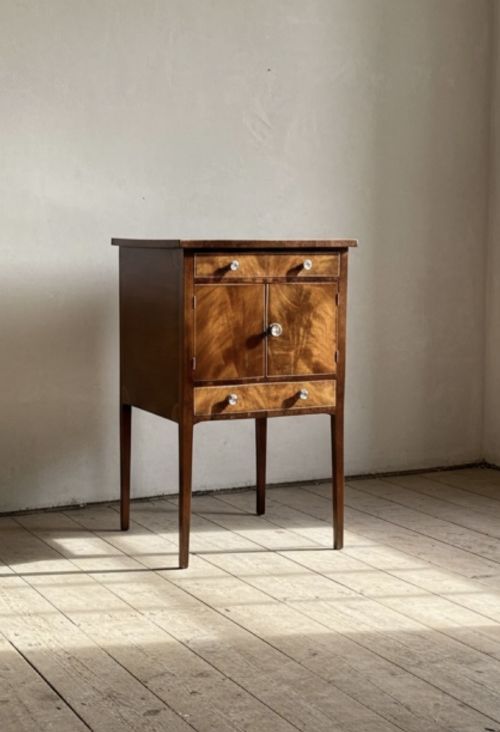
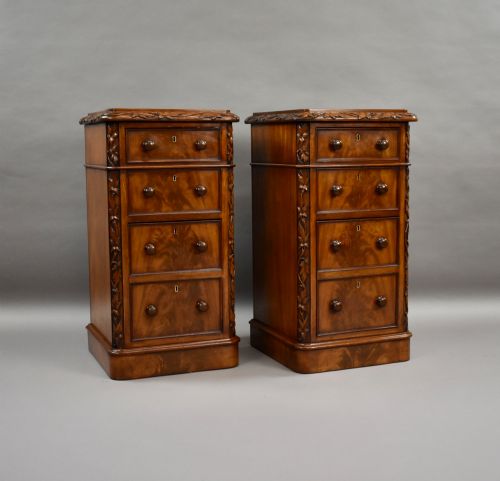
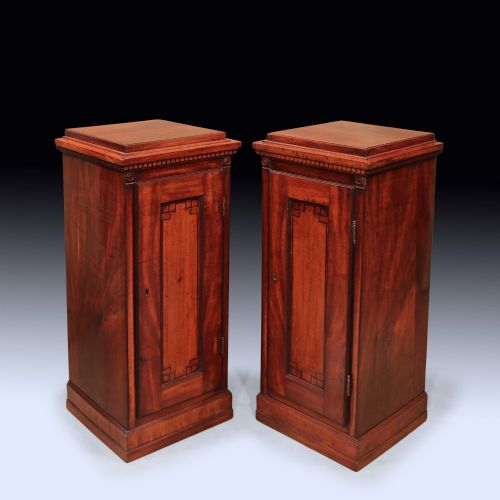
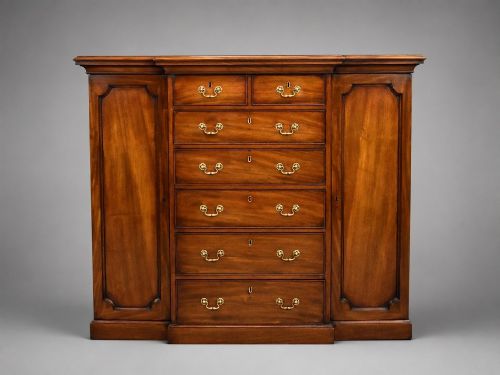
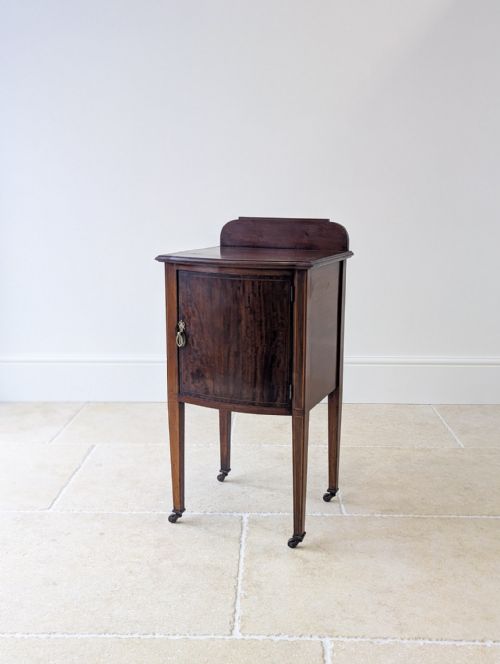
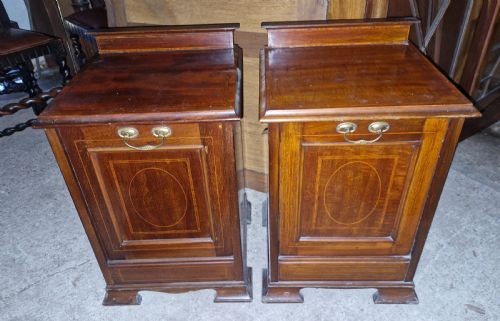
Mahogany storage pedestals encompass bedside cabinets, cupboards, and tall chests originating across the Georgian, Regency, Victorian, and Edwardian eras. The most frequent forms encountered on this page are compact bedside cabinets and paired pedestals designed for domestic chambers.
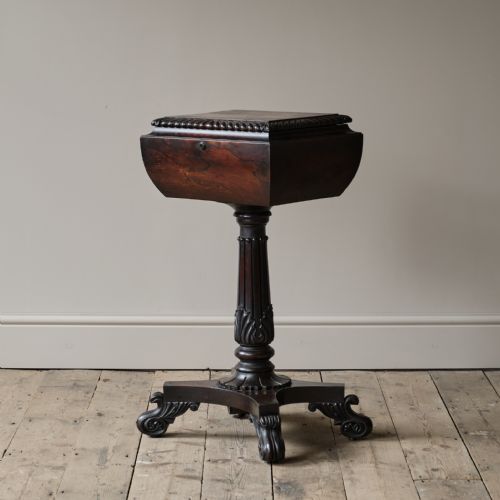
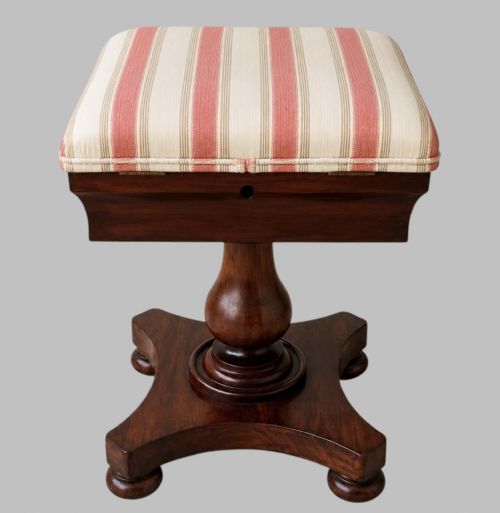
Beyond standard bedside pieces, the selection includes side cabinets, pedestal cupboards, and specialised items like teapots and cellarettes. These items range from simple 19th-century utility pieces to refined designs bearing inlaid boxwood or flame veneer.
How they were made
Cabinet makers utilised solid mahogany and applied flame mahogany veneer over secondary timbers such as pine to achieve striking surface grain patterns. Structural details frequently incorporate boxwood stringing, brass fittings, and secondary drawer linings.
Joinery techniques span dovetailed drawer construction and turned wooden supports, reflecting the prevailing cabinet-making standards of the 18th and 19th centuries. Surfaces were finished to highlight the natural reddish-brown depth of the timber.
Several bedside cabinets double as disguised shoe storage, proving that Victorian practicality occasionally hid behind very polite joinery.
What varies in quality
Quality rests upon the selection of timber, particularly the symmetry and depth of flame mahogany veneer chosen for the primary facade. Pieces exhibiting finely figured grain and careful matching across doors and drawers command attention.
Construction fidelity dictates longevity, seen in tight dovetail joints, original brass hardware, and restrained inlay work rather than heavy ornamentation. The integration of secondary woods and the crispness of turned or carved details separate standard utility items from finer workshops.
Gillows of Lancaster·Denby & Spinks
The Mahogany Storage Pedestals Glossary
- Flame mahogany
- A veneer figure resembling flickering flames, produced by cutting across the branch junction of the tree. It was favoured for principal display surfaces on high-grade cabinets.
- Teapoy
- A small stand or pedestal chest originally used to store tea caddies and blending equipment. They often feature internal compartments beneath a hinged lid.
- Cellarette
- A fitted storage cabinet or box designed to hold bottles securely off the floor. They appear in Regency and Georgian interiors as robust freestanding pedestals.
- Boxwood
- A dense, pale yellow wood utilised for fine stringing and contrasting inlay lines. It provides sharp linear definition against dark mahogany borders.
- Wellington chest
- A tall, slender stack of drawers secured by a single hinged locking stile on the right edge. This form maximises vertical storage in narrow floor spaces.
Mahogany Storage Pedestals: Frequently Asked Questions
What distinguishes a bedside cabinet from a night table?
Bedside cabinets generally feature enclosed storage behind a door or drawers to keep personal items out of sight. Night tables often incorporate open shelving or simpler tray tops intended for chamber use.
Both forms served similar functional roles in bedrooms across the Georgian and Victorian periods, varying mainly in internal capacity.
How do I identify a Regency pedestal from a Victorian one?
Regency pieces often display classical architectural influences, brass mounts, and ebony stringing dating from the early decades of the 19th century. Victorian examples tend to be heavier in proportion, sometimes utilising bold flame mahogany veneers and darker finishes.
Examining the construction methods and secondary timbers inside the drawers assists in confirming the production era.
Where were pedestal cabinets placed in a period home?
These cabinets were primarily positioned beside beds to hold chamber candlesticks, books, and night-time necessities. Pairs were frequently balanced symmetrically on either side of larger double beds.
Smaller cupboards also found utility in parlours and dressing rooms as discreet storage for personal effects.
Are pairs of pedestal cabinets common?
Matched pairs do appear, though locating survivors from the 19th century requires patience because individual pieces often became separated over generations of use. Closely matched pairs sometimes combine pieces built to similar dimensions.
Mismatched pairs were also adapted by owners who valued bedside symmetry over strict original manufacture.