

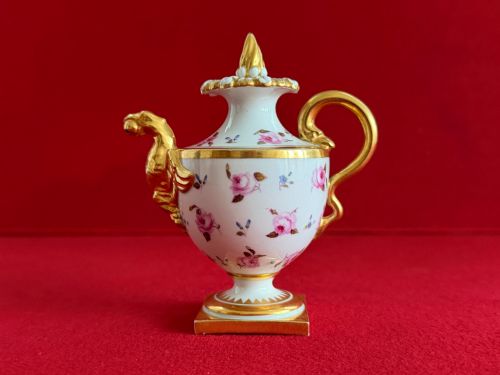
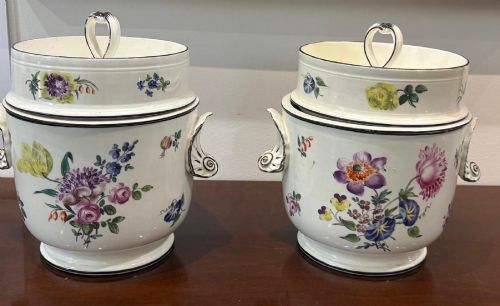


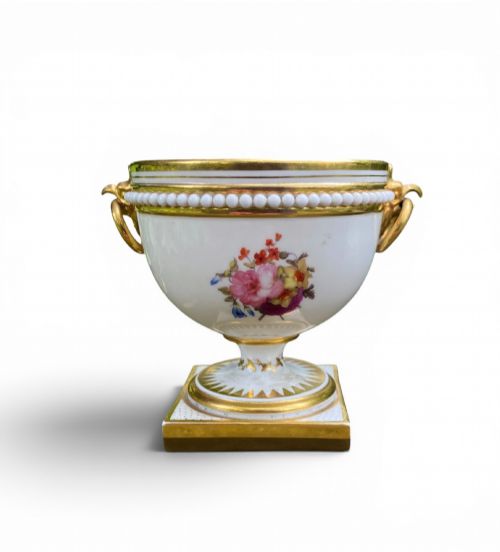
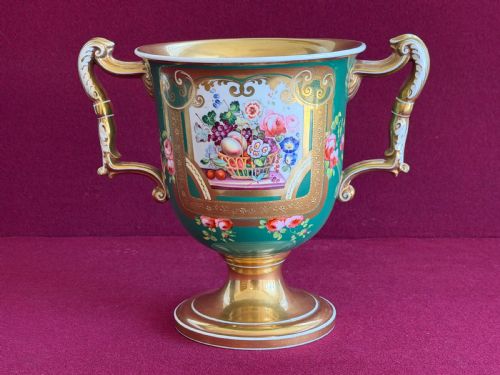


Regency Painted Ceramic Urns
Regency painted ceramic urns are classical decorative vessels that bring symmetry and hand-painted elegance to a mantelpiece or side table.
Regency Painted Ceramic Urns
When you search for regency painted ceramic urns, you encounter classical vessels shaped as campagna vases, garnitures, ice pails, and jardinieres originating from the Regency and Georgian periods.
The pieces on this page are predominantly English porcelain and ironstone ceramics, with Worcester manufactories such as Flight, Barr and Barr featuring heavily alongside Spode, Derby, Coalport, and Miles Mason.
Forms span covered vases, bough pots, and rose water sprinklers, often produced in pairs or garnitures designed to anchor symmetrical interior schemes.
How they were made
Maker workshops utilised porcelain, creamware, earthenware, and ironstone as the primary ceramic bodies, shaping them into classical vase and urn silhouettes.
Decoration relied on hand-painted enamel colours combined with gold leaf and gilding to accentuate handles, rims, and classical motifs.
Listings feature porcelain, ironstone, and creamware from the Regency and Georgian eras, spanning forms from campagna urns to jardinieres.
What varies in quality
Quality rests upon the crispness of the porcelain throwing and moulding, particularly in the handling of classical handles, feet, and covers.
The fineness and preservation of the hand-painted enamel work and gold leaf gilding distinguish standard production from exceptional factory output.
Flight, Barr and Barr·Chamberlain Worcester·Barr, Flight and Barr·H and R Daniel·Coalport·Spode·Miles Mason·Derby
The Regency Painted Ceramic Urns Glossary
- Campagna urn
- A bell-shaped classical urn form with a flared rim and footed base, popular during the Regency period. These vessels were frequently utilised as decorative centrepieces or ice pails.
- Garniture
- A matching set of three or more vases or urns designed to be displayed together on a mantelpiece. They typically comprise a central taller vessel flanked by two smaller matching pieces.
- Ironstone
- A dense, durable type of earthenware patented in the early nineteenth century by Miles Mason. It offered a robust alternative to porcelain while accepting bright enamel and gilt decoration.
- Bough pot
- A decorative ceramic vessel fitted with a pierced cover designed to hold freshly cut tree boughs or floral arrangements. They were standard interior ornaments in polite Georgian and Regency rooms.
- Enamel
- Opaque vitreous colours fused to the ceramic surface through firing. Hand-painted enamels provide the vibrant botanical and scenic details seen on these urns.
Regency Painted Ceramic Urns: Frequently Asked Questions
How were regency painted ceramic urns used?
These vessels functioned primarily as decorative ornaments on mantelpieces, sideboards, and pier tables within formal rooms. Certain forms such as ice pails and cream tureens also served practical dining purposes during grand meals.
Over time, their role shifted entirely to interior decoration, valued for the classical symmetry they introduced to a room.
How do I identify a georgian urn?
Georgian and Regency ceramics are identified by their classical proportions, neoclassical motifs, and specific factory marks found on the base. Stylistic cues include campagna silhouettes, painted floral panels, and rich gilding.
Reference books and recorded factory patterns help attribute unmarked pieces to specific periods and manufactories.
Are these urns waterproof?
While many of these vessels were designed to hold water for flowers, botanical displays, or cooling ice, nineteenth-century glazes and bodies can develop hairline fractures with age. It is safest to use a discreet inner container rather than filling the antique ceramic directly.
Gentle handling preserves both the ceramic body and the delicate hand-painted enamel surface.
How should I clean my painted urn?
Dusting with a soft, dry brush is the best method to maintain the surface without disturbing fragile gold leaf or enamel details. Avoid soaking the piece or using modern chemical cleaning agents.
Water and harsh soaps can penetrate old ceramic bodies and degrade nineteenth-century gilding.