


Antique Porcelain Mantelpiece Urns
Antique porcelain mantelpiece urns sit with quiet authority on a ledge, bringing classical proportion and hand-painted colour to a room.
Antique Porcelain Mantelpiece Urns
When you search for antique porcelain mantelpiece urns, you encounter decorative vessels and garniture sets designed to occupy the shelf above a fireplace. These pieces emerge predominantly from nineteenth-century European factories and Japanese workshops, taking the form of twin-handled vases, lidded urns, and cassolettes.
The selection on this page relies heavily on French and English works from the Regency and Victorian eras alongside Japanese Satsuma and Imari productions. You will find matched pairs and larger garnitures intended to sit symmetrically around a clock or mirror.
Forms draw directly from classical antiquity and later revivals, featuring the broad shoulders of the Medici shape or slender baluster profiles. Makers produced these items to punctuate formal interiors, balancing height and decorative weight on a chimney breast.
Materials and construction
Potters shaped these bodies from hard-paste and soft-paste ceramic, applying ground enamels and metallic oxides before firing. Artisans then layered polychrome pigments and hand-painted motifs across the glazed surfaces, often highlighting details with gold leaf.
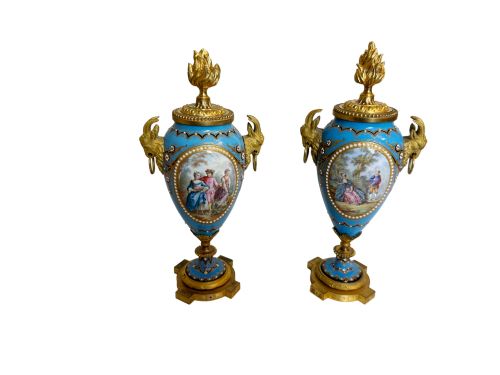
Mounts and subsidiary parts frequently incorporate ormolu, gilt bronze, and cast metal to frame the ceramic body. Lidded pieces and reversible cassolettes combine these metal mounts with porcelain to create functional yet ornamental mantel garnitures.
Listings feature nineteenth-century porcelain urns alongside Japanese Satsuma and Imari ceramics from the Meiji period.
Assessing quality and execution
The distinction between ordinary and exceptional examples rests in the crispness of the hand-painting and the weight of the ceramic body. Superior pieces display finely detailed botanical or figural scenes executed by named or skilled hands, whereas standard productions rely on printed transfers.
Mounting hardware also dictates standing; substantial ormolu mounts with chased detail signal a higher grade of production than stamped brass. The integration between the porcelain vessel and its metal fittings reveals the original ambition of the workshop.
Flight Barr and Barr·Royal Crown Derby·Thomas Lowe·Thomas Steel·Royal Vienna
The Antique Porcelain Mantelpiece Urns Glossary
- Garniture
- A set of three or more matching decorative vases or urns designed to be displayed together on a mantelpiece.
- Cassolette
- A dual-purpose vessel with a reversible lid that functions as a vase on one side and a burner on the other.
- Ormolu
- Gilt bronze mounts applied to furniture and porcelain to provide structural framing and decorative contrast.
- Bleu Celeste
- A vivid turquoise blue glaze ground developed at the Sèvres factory during the eighteenth century.
- Imari
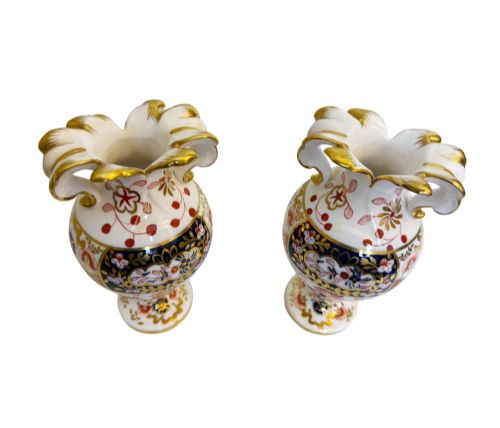
- A style of Japanese export porcelain decorated in underglaze blue and iron red with extensive gilding.
Antique Porcelain Mantelpiece Urns: Frequently Asked Questions
How do I style mantel urns?
Place a matched pair symmetrically at either end of a mantel shelf, leaving sufficient breathing room around each vessel. They work well flanking a mirror or a central clock garniture to create a balanced focal point.
Keep surrounding objects minimal to let the painted decoration and glazed surfaces stand out against the wall. Avoid placing them where heat from an active fire directly reaches the ceramic body.
What is a garniture set?
A garniture set consists of multiple matching vases or urns, usually numbering three, four, or five pieces of graduated sizes. These sets were manufactured to be displayed together as a unified decorative scheme across a mantelpiece or sideboard.
The central urn is typically taller than the flanking pair, creating a stepped visual rhythm. Collectors look for complete sets where every piece shares identical decoration and glaze tones.
How do I identify French and English pieces?
French pieces often display neoclassical or rococo influences with rich ormolu mounts, turquoise grounds, and painted reserves reminiscent of Sèvres workshops. English productions from factories like Worcester or Derby tend to favour botanical studies and Imari patterns with distinctive factory marks.
Examine the foot rim for factory stamps, painted script, or impressed ciphers which often indicate the exact origin and period. The weight of the paste and the tone of the gilding also help separate Parisian output from Staffordshire or Worcestershire alternatives.