



Painted Landscape Porcelain Vases
These painted landscape porcelain vases bring hand-brushed pastoral scenes, lake views and Highland cattle directly to the mantelpiece.
Painted Landscape Porcelain Vases
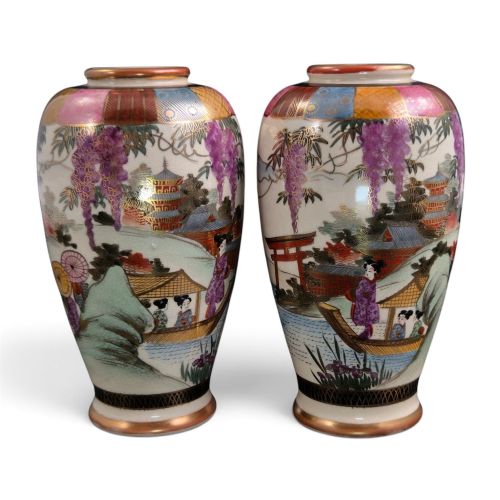
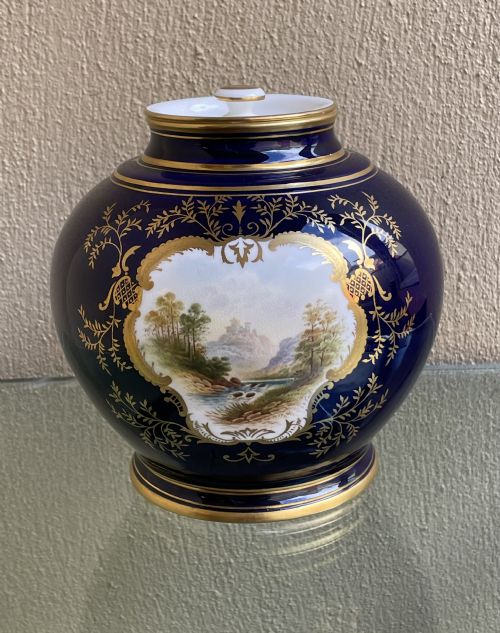
When you search for painted landscape porcelain vases, you encounter works that combine ceramic body forms with detailed scenery, ranging from English country estates and castles to Japanese lakes and mountains. The selection spans 18th century Georgian creations, Regency garnitures, Edwardian bone china, and late 19th century Japanese Satsuma and Kutani productions.
Vessels take many shapes including traditional two-handled pedestal urns, covered vases, bough pots, spill vases, ewers and potpourri jars. English factories such as Royal Worcester, Coalport and Derby feature heavily alongside continental Sevres style pieces and Asian export wares.
Most examples date across the 19th and early 20th centuries, reflecting a sustained European and Japanese appetite for miniature landscape art rendered upon three-dimensional ceramic canvases.
Judging the work
Quality rests upon the skill of the landscape painter and the precision of the porcelain body. Finer pieces display meticulous brushwork with subtle tonal gradients in the skies and foliage, while lesser examples rely on stencilled transfers or hasty application.
The crispness of the gilt work and the preservation of the enamel colours without rubbing or fading separate standard decorative wares from master-painted cabinet pieces produced by named artists.
Highland cattle stare steadfastly from miniature painted panels across several Edwardian spill vases.
Coalport·Derby Porcelain·Royal Doulton·Royal Worcester
The Painted Landscape Porcelain Vases Glossary
- Bough pot
- A decorative vessel designed to hold flowering branches or bulbs rather than cut flowers. These often feature flat backs to sit flush against a wall.
- Garniture
- A matched set of three or more vases or urns designed to be displayed together on a mantelpiece or cabinet top.
- Earthenware
- A porous, opaque ceramic body fired at lower temperatures than porcelain. It is frequently glazed and enamelled.
- Spill vase
- A narrow, upright cylindrical container traditionally used to hold wooden spills for lighting fires or candles.
- Satsuma
- A type of Japanese earthenware or porcelain characterised by a crackle-glaze finish, often heavily decorated with enamel and gold leaf.
Painted Landscape Porcelain Vases: Frequently Asked Questions
What subjects appear on these vases?
Artists painted lake views, pastoral settings, castle grounds, wisteria blossoms and highland cattle across the ceramic surfaces.
English pieces frequently depict domestic architecture or Scottish landscapes, while Japanese Satsuma and Kutani items portray traditional Eastern lakes and flora.
How do I identify the period?
Makers' marks on the base provide the clearest indication of date, supported by the painting style and the form of the vase.
Georgian and Regency pieces tend towards neoclassical urns with hand-pencilled topography, whereas Edwardian and later pieces often showcase named artists and more naturalistic animal or lake scenes.
Were these vases meant for flowers?
Some forms, such as spill vases and bough pots, served functional roles holding taper spills or flowering branches.
Many larger pedestal vases, covered urns and garnitures were strictly decorative ornaments intended for display on mantelpieces, credenzas and cabinets.
Who painted these landscape scenes?
Specialist ceramic artists decorated these pieces, sometimes signing their work directly onto the front or base of the vase.
Recorded factory painters include notable hands such as Harry Davis, Zachariah Boreman and John H Plant.