



Regency Miniature Furniture
Regency miniature furniture distils the grand domestic forms of the early nineteenth century into charming scale models.
Regency Miniature Furniture
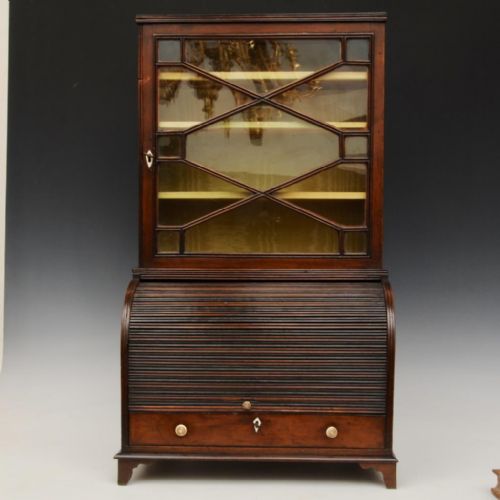
When you search for regency miniature furniture, you encounter small-scale chests of drawers, side tables, fire screens, and chairs created during the nineteenth century, Georgian, and Regency periods. These diminutive objects replicate full-sized domestic furnishings with remarkable fidelity, serving various decorative and functional purposes in period interiors.
The pieces listed on this page span the 19th Century, 1800, and 1880, alongside George III and Victorian eras. Miniature chests of drawers appear most frequently, alongside child's chairs, cabinets, and bookcases.
Makers produced these works using the same cabinet-making vocabulary as domestic furniture, ranging from bow-front chests to breakfast tables and tea caddy sideboards.
How they were made
Cabinet-makers utilised dense hardwoods including mahogany, rosewood, burr oak, burr yew, and amboyna to construct these small pieces. These timbers provided the stable grain necessary for tight joints and delicate miniature scaling.
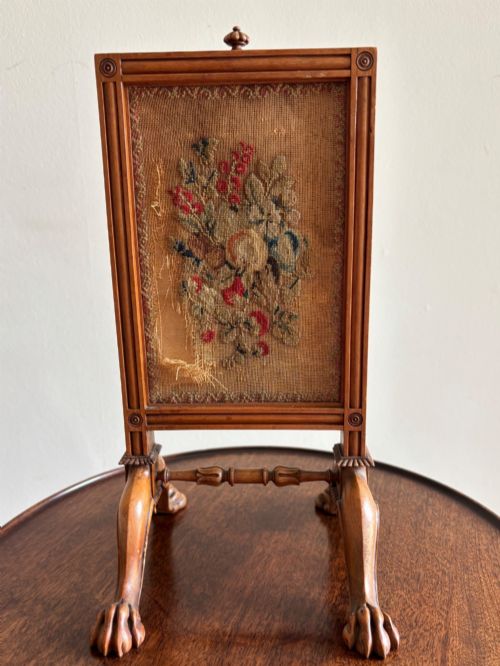
Craftsmen incorporated brass fittings and tapestry wool panels on fire screens and caned bergere seating to replicate larger household items. Bone inlay and fine wood veneers completed the polished surfaces seen across the period.
Construction techniques mirrored standard joinery of the early 19th century, employing dovetail joints for drawer boxes and turned elements for table supports and chair legs.
Miniature chests of drawers form the largest category across these listings, alongside chairs, tables, and fire screens.
What varies in quality
The refinement of the timber selection dictates much of the visual distinction, particularly where figured veneers like burr oak or amboyna are employed. Plain mahogany contrasts sharply with richly grained rosewood and yew.
Proportion and fidelity to full-scale furniture determine the success of each piece, distinguishing accomplished workshop examples from simpler constructions. The integration of brass handles, escutcheons, and cane work reveals the maker's hand.
The Regency Miniature Furniture Glossary
- Bowfront
- A convex curving front contour typical of chests of drawers and cabinets. This shape softens the profile of case pieces.
- Apprentice piece
- A small item of furniture demonstrated by a craftsman to prove skill. These demonstrate advanced joinery at a reduced scale.
- Firescreen
- A small freestanding panel designed to deflect fireplace heat. They sit on short feet or pedestals.
Regency Miniature Furniture: Frequently Asked Questions
What is regency miniature furniture?
These items are small-scale representations of domestic furniture produced during the early nineteenth century. They include chests of drawers, tables, and seating.
Craftsmen built them using fine hardwoods like mahogany and rosewood to replicate full-sized household objects.
Were these pieces made for children?
Some items served as child's furniture or dollhouse furnishings, while others functioned as salesman samples or apprentice pieces. Domestic scale models also decorated large drawing rooms.
Makers tailored the function according to the specific object type and its delicate proportions.
How do I date miniature furniture?
Dating relies on timber choices, construction methods, and stylistic markers associated with the Regency, Georgian, and Victorian periods. Mahogany and rosewood dominance points toward the early 19th century.
Secondary woods and dovetailing techniques help confirm the exact era of manufacture.
Where should I place miniatures?
These small pieces fit well on sideboards, desks, or dedicated display shelves where their detail remains visible. Their compact size allows integration into varied interior settings.
Protecting them from direct sunlight preserves the polished mahogany and rosewood surfaces.