
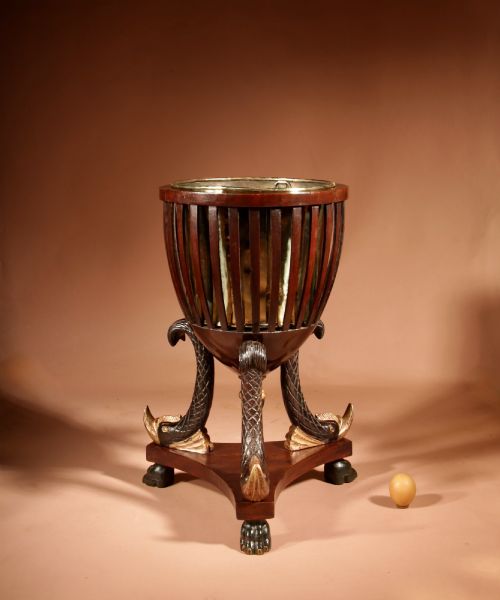
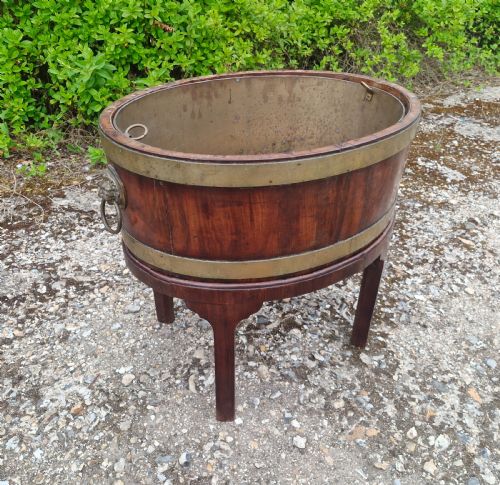
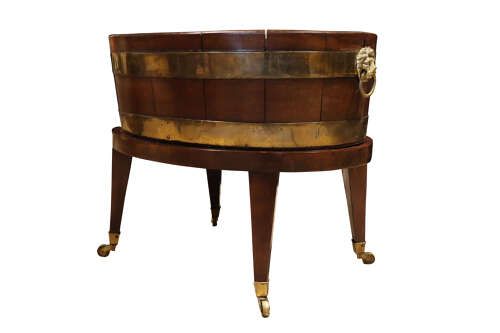


Regency Mahogany Jardiniere
These regency mahogany jardiniere pieces are timber plant holders and wine coolers designed to bring greenery or chilled bottles into formal rooms.
Regency Mahogany Jardiniere
A regency mahogany jardiniere brings together timber plant holders, wine coolers, and cellarettes originating from the nineteenth century, Georgian, William IV, and French Empire periods. You are most likely to encounter mahogany vessels with brass bands, coopered construction, or pedestal stands on this page.
Makers and workshops adapted these forms over decades, producing round planters, octagonal buckets, and tea stoves that served multiple domestic duties. Later revival pieces from the twentieth century also appear, echoing the original Georgian and Dutch Empire styles.
Materials and Construction
Craftsmen built these vessels primarily from solid and veneered mahogany, alongside rosewood, walnut, ebonised wood, and satinwood. Metal components such as brass bands, zinc liners, and iron fittings provided structural strength and protection against moisture from plants and ice.
Coopered staves bound with metal hoops formed the bodies of many planters and wine coolers, echoing traditional barrel-making techniques. Inlays and pedestals added decorative detail to freestanding plant stands and table-form jardinieres.
Several versatile nineteenth-century vessels double as tea stoves, knitting baskets, and wine coolers, proving that historical household multitasking was an art form.
Quality and Construction
Quality rests on the selection of timber figures, the precision of coopered joints, and the integrity of internal metal linings. Superior examples display finely matched mahogany grains and substantial brasswork that integrates cleanly with the wooden body.
The sophistication of carving, the presence of original stands, and the subtlety of brass banding distinguish finer period items from later revivals. Altered liners or replaced feet shift a piece away from its original workshop state.
The Regency Mahogany Jardiniere Glossary
- Jardiniere
- An ornamental stand or container designed to hold growing plants or flowers. These vessels often feature protective metal linings.
- Coopered
- Constructed from wooden staves fitted together side by side and bound by metal hoops, similar to a barrel. This technique provided strength for holding liquids and damp soil.
- Cellarette
- A lockable container used for storing bottles of wine within reach of the dining table. They share similar forms and construction methods with plant buckets.
- Peat Bucket
- A deep wooden bucket traditionally used for holding fuel for a fireplace. Many double as plant holders or jardiniere stands.
- Ebonised
- Wood treated with a dark finish to imitate ebony. This treatment appears on decorative highlights and specific period frames.
Regency Mahogany Jardiniere: Frequently Asked Questions
What is a regency mahogany jardiniere?
A regency mahogany jardiniere is a nineteenth-century wooden container designed to hold potted plants or serve as a wine cooler. They often feature brass bands and coopered construction.
These pieces reflect the styles of the Regency, Georgian, and French Empire periods, utilising rich timbers like mahogany and rosewood.
How were these jardinieres used originally?
Originally, these vessels held indoor plants, cut flowers, or chilled wine bottles during formal dining and drawing room gatherings. Some double as cellarettes or peat buckets.
Their watertight metal liners allowed owners to water plants indoors without damaging the surrounding timber floors and furniture.
Are all listed jardinieres from the Regency period?
While many pieces date from the nineteenth century and the Regency era, the selection includes Georgian, William IV, and Dutch Empire styles.
Later revival items from the twentieth century also appear alongside pieces dated around eighteen hundred, nineteen ten, and nineteen thirty.
What woods besides mahogany do makers use?
Makers incorporated rosewood, walnut, satinwood, and ebonised wood alongside mahogany in these plant stands and wine coolers.
Brass, zinc, and other metals provided structural binding and protective interior linings for damp soil and ice.
How do I care for a vintage jardiniere?
Protect the timber by using modern plastic or ceramic inner pots rather than placing wet soil directly against the antique wood or metal lining. Dust the mahogany regularly with a soft cloth.
Keep these pieces away from direct heat sources and strong sunlight to prevent the timber veneers from drying out or cracking.