


Carved Mahogany Planter
These carved mahogany planter pieces bring warmth and architectural presence to a room, holding greenery with traditional British and continental grace.
Carved Mahogany Planter
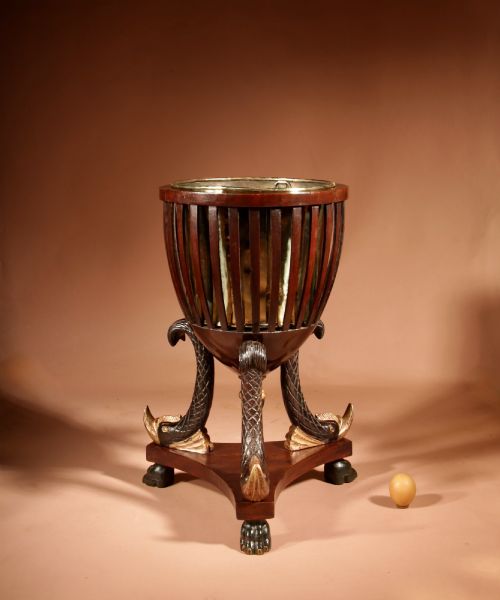
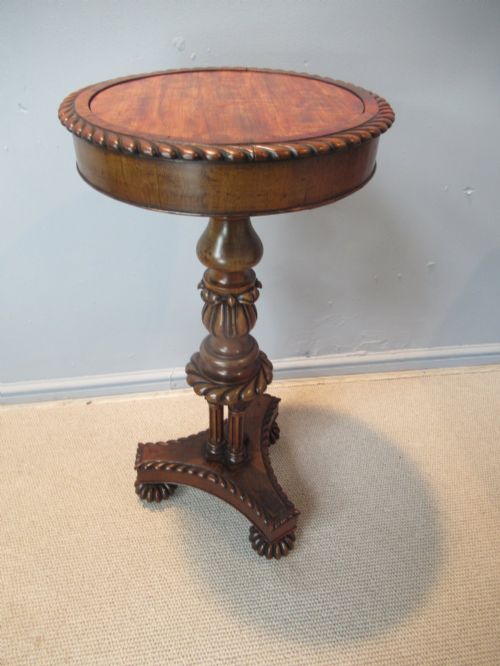
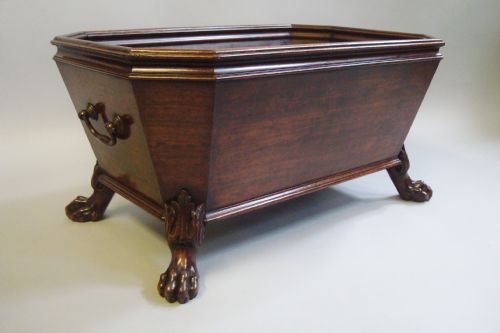
A carved mahogany planter takes several forms across the nineteenth century, appearing as jardiniere stands, plant tables, buckets, and wine coolers adapted for foliage. You will frequently encounter Victorian and Regency pieces that combine rich timber with practical metal liners for interior display.
The styles range from crisp Georgian and Chippendale interpretations to continental French and Dutch Empire designs, along with Chinese export hardwood and Anglo-Indian padouk pieces. These diverse origins reflect a long tradition of decorative plant display in fine domestic interiors.
How they were made
Cabinetmakers worked primarily with solid mahogany and rosewood, often enriching the dense timber with hand-carved classical details, reeded columns, and claw feet. Ebonised highlights and contrasting hardwood elements provided visual depth to the structural forms.
Functional metal components, including brass liners, zinc inserts, and metal hoops, were integrated to protect the timber from moisture and soil. These internal elements were crucial for vessels that doubled as wine coolers and plant holders.
Listings feature nineteen-century pieces predominantly in mahogany, rosewood, and hardwood, alongside brass, zinc, and marble materials.
What varies in quality
Quality rests upon the crispness of the carving and the selection of the timber, where finely figured mahogany shows greater depth and grain movement. Superior examples demonstrate confident joinery and well-proportionate turnings that elevate simple plant holders into significant furniture forms.
The integration of original metal linings and hardware marks the distinction between utilitarian items and pieces made for principal reception rooms. Regional variations, from English cabinet work to Chinese export workshop production, display different standards of decorative enrichment.
The Carved Mahogany Planter Glossary
- Jardiniere
- An ornamental pot or stand designed to hold plants or flowers indoors. These vessels often incorporate internal metal liners to contain water and soil.
- Torchere
- A tall, slender stand originally intended for a candlestick, frequently adapted to support a plant vase or jardiniere. They feature elevated platforms on single or multi-legged columns.
- Padouk
- A heavy, durable tropical hardwood with reddish-brown tones, utilised in Anglo-Indian furniture production. It offers a dense surface suited to detailed carving.
- Whatnot
- A piece of open shelving furniture designed for displaying small decorative objects or plants. These multi-tiered items appeared in refined nineteenth-century interiors.
- Wine Cooler
- A deep, insulated vessel originally used for chilling bottles at the dining table, often repurposed as a planter due to its waterproof lining and sturdy timber construction.
Carved Mahogany Planter: Frequently Asked Questions
Where did people place these stands?
These pieces found their places in nineteenth-century drawing rooms, halls, and dining parlours where natural light favoured indoor greenery. They stood near windows or within bay areas to showcase prized ferns and flowering plants.
In dining spaces, similar forms served a dual purpose as wine coolers before transitioning into permanent floral displays. Their sturdy construction allowed them to anchor corners or punctuate wall spaces between windows.
How do I care for the timber?
Maintaining the wood involves keeping it away from direct heat sources and sudden humidity changes that cause timber to split. Regular dusting with a dry cloth preserves the polished surface without heavy chemical intervention.
Liners require careful removal during watering to prevent moisture from reaching the interior mahogany. Ensuring pots drain properly before placing them back into the stand protects the original lining and timber base.
Were they used for wine too?
Many deep wooden buckets and coolers were constructed with metal linings specifically to hold ice and wine bottles during formal dining. As dining habits evolved, these waterproof vessels easily accommodated potted plants and palms.
This crossover in function explains why several surviving examples retain lead or brass interiors designed for liquids. The robust timber and secure metal inserts made them naturally suited to the moisture demands of indoor horticulture.