

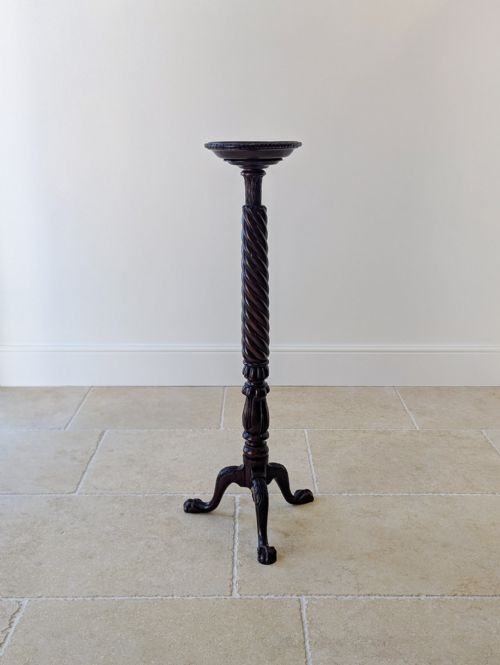
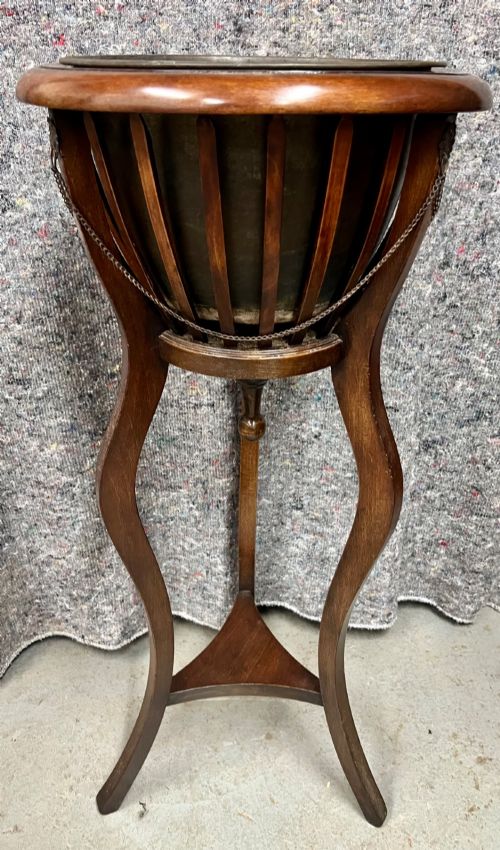

Edwardian Mahogany Plant Stand
An Edwardian mahogany plant stand lifts botanical displays into the room with slender proportion and considered detail.
Edwardian Mahogany Plant Stand
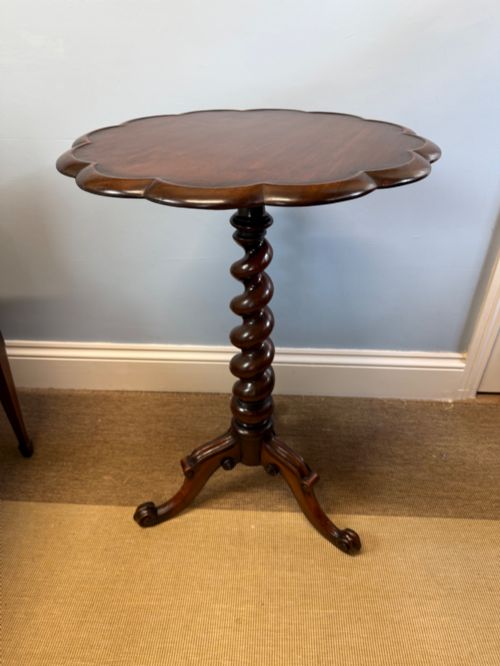
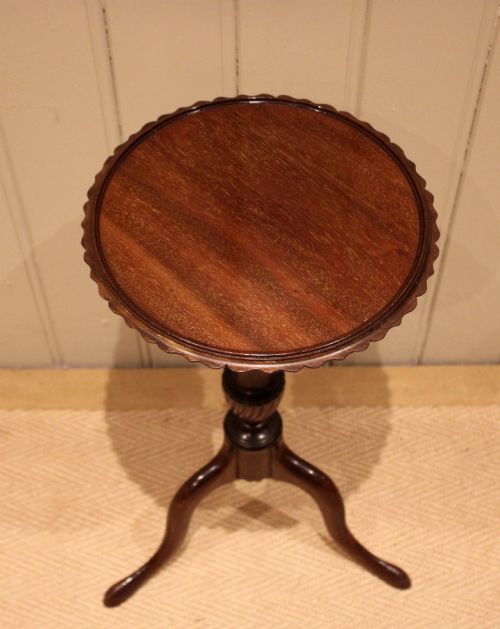
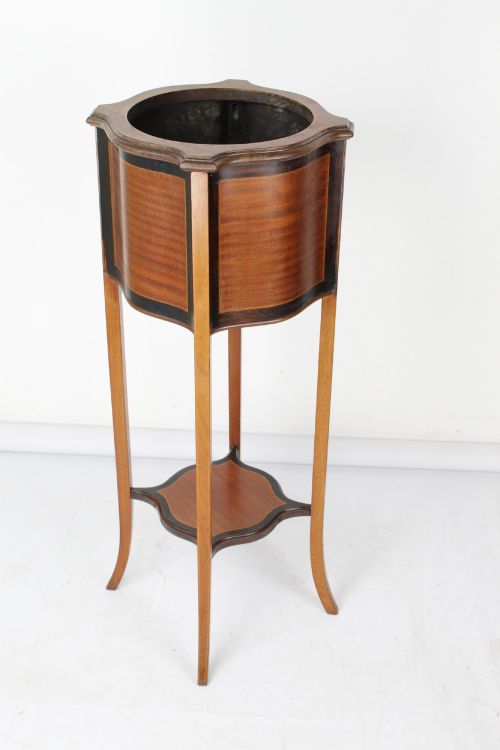
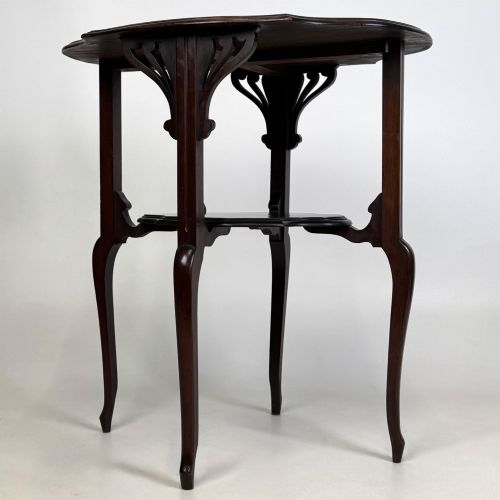
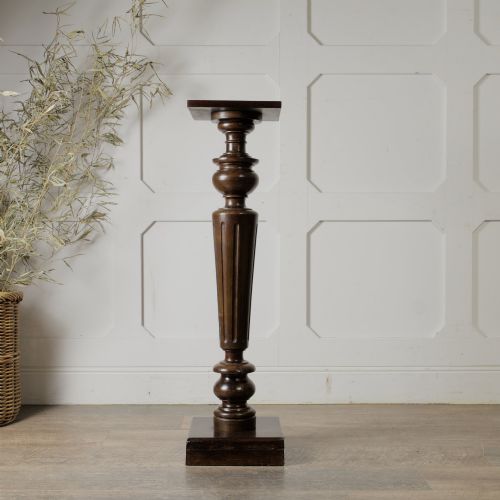
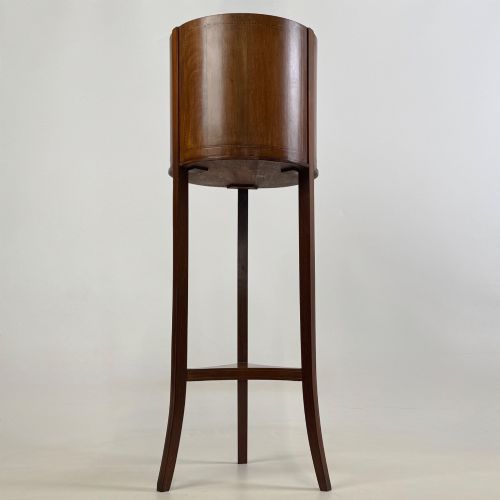
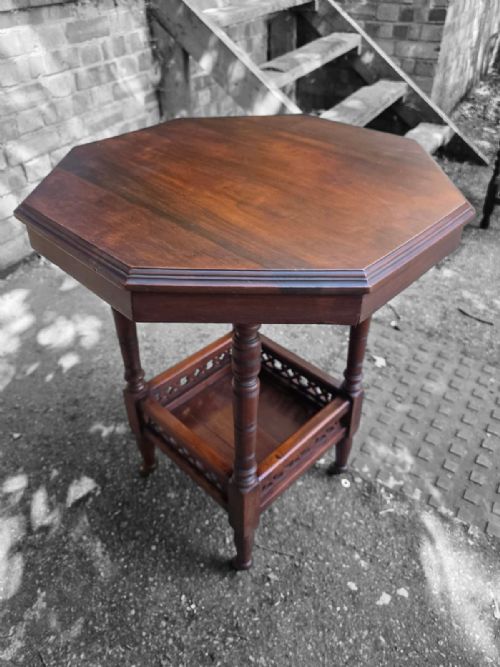
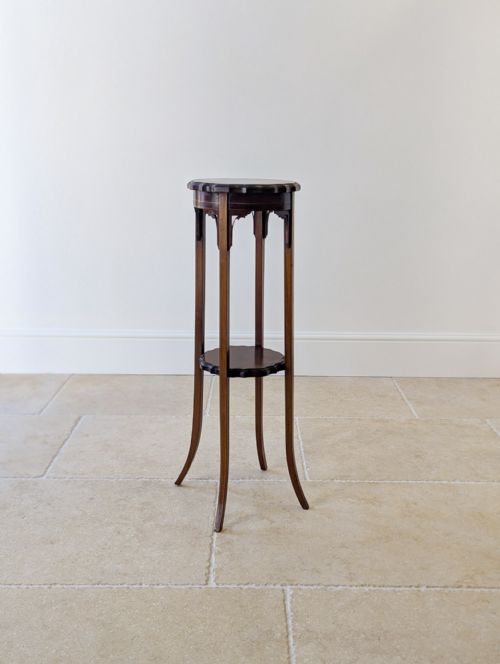
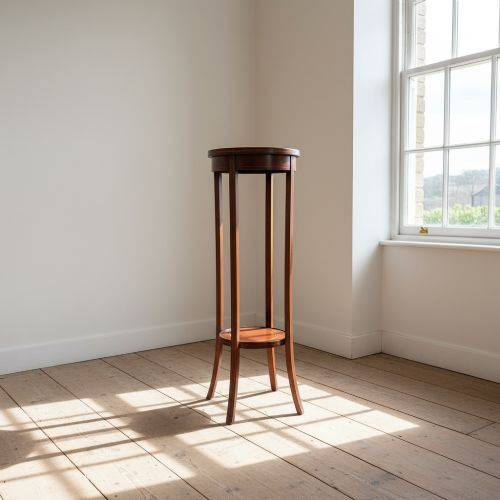
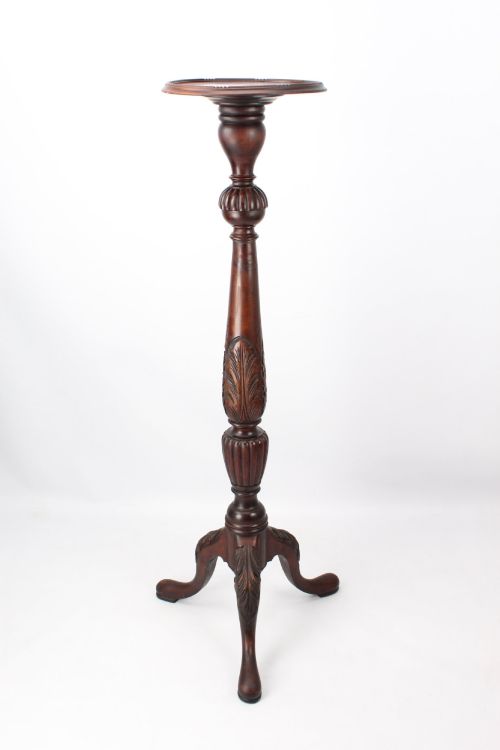
When you search for an edwardian mahogany plant stand, you look for upright furniture designed to elevate jardiniere pots, figures, or torchere lamps within a room. The versions you meet most frequently on this page date from the Edwardian era and the late nineteenth century, taking the form of tall columns, pedestals, and multi-tiered stands.
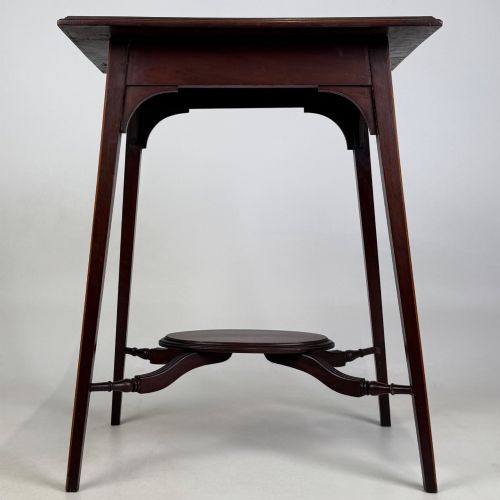
The architectural form ranges from simple turned plinths to slender tapered columns and occasional tables adapted for botanical display. Makers of the period drew upon Georgian Revival, Sheraton Revival, and Arts and Crafts design vocabularies to create vertical punctuation for domestic interiors.
Materials and Construction
The primary timber across these examples is mahogany, frequently selected for its rich grain and structural stability when shaped into slender columns. Workshops employed solid mahogany and fine veneers to achieve both durability and surface warmth.
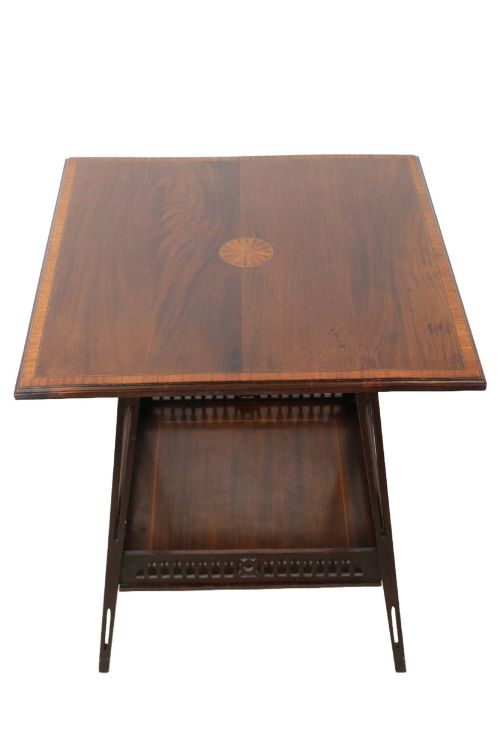
Detailing often incorporates contrasting boxwood and satinwood inlay, bringing linear sharpness to tabletops and shafts. Certain iterations include functional elements such as brass liners for jardiniere bowls and turned wooden plinths.
Listings feature mahogany, brass, satinwood, and boxwood inlay across Edwardian, Victorian, and early twentieth-century periods.
Distinctions in Quality
The upper tier of these pieces is defined by the crispness of the turning and the deliberate integration of wood inlay rather than applied ornamentation. Finer examples display balanced proportions that maintain stability despite considerable height.
Consideration of materials also marks the hierarchy, where dense mahogany and precise stringing distinguish bespoke workshop output from standard commercial production. The joinery of tiers and columns reveals the maker's intent to combine utility with refined aesthetic presence.
Trevor Page and Co·Druce and Co London·Shapland and Petter
The Edwardian Mahogany Plant Stand Glossary
- Torchere
- A tall, slender stand designed to support a lamp or decorative object. These vertical pieces use elevated platforms to draw the eye upward.
- Jardiniere
- A decorative receptacle or stand meant to hold a plant or floral arrangement. These vessels often integrate waterproof metal liners.
- Inlay
- A technique where contrasting woods such as boxwood or satinwood are set flush into the mahogany surface. This method creates geometric or floral borders.
- Plinth
- The heavy base or lower block supporting a column or pedestal. It provides the necessary counterweight for tall vertical furniture.
Edwardian Mahogany Plant Stand: Frequently Asked Questions
What is a plant stand?
A plant stand is a piece of elevated furniture created to display botanical specimens, jardiniere bowls, or sculptural figures above floor level. These items allow plants to receive better light and create vertical interest within domestic spaces.
Most examples utilise a tall shaft or pedestal base supporting a small circular or square top. Their compact footprint made them versatile additions to period drawing rooms and hallways.
How were plant stands used?
These pieces served primarily to showcase potted ferns, flowering plants, or decorative lamps in prominent corners of a room. Households also utilised them as torcheres to hold lighting devices or as pedestals for busts.
Multi-tiered variants offered space for multiple decorative objects or trailing foliage. Their mobility allowed inhabitants to rearrange interior layouts with ease.
How do I identify Edwardian pieces?
Edwardian furniture typically displays lighter proportions and greater restraint than heavy Victorian designs. Look for delicate satinwood or boxwood inlay patterns set into mahogany surfaces.
Construction methods from this period often blend traditional hand-turning with early twentieth-century machine precision. Stylistic revivals of Sheraton and Georgian forms frequently guide the decorative vocabulary.
Where should I place one?
A tall stand functions effectively in empty corners, beside windows, or framing fireplace hearths where vertical emphasis is required. Their narrow profiles ensure they fit comfortably into transitional spaces like hallways and landings.
Ensure the placement accounts for the stability of the stand, particularly in high-traffic areas. Pairing the piece with an appropriate jardiniere or trailing plant completes the intended visual effect.