


Tiered Plant Pedestal
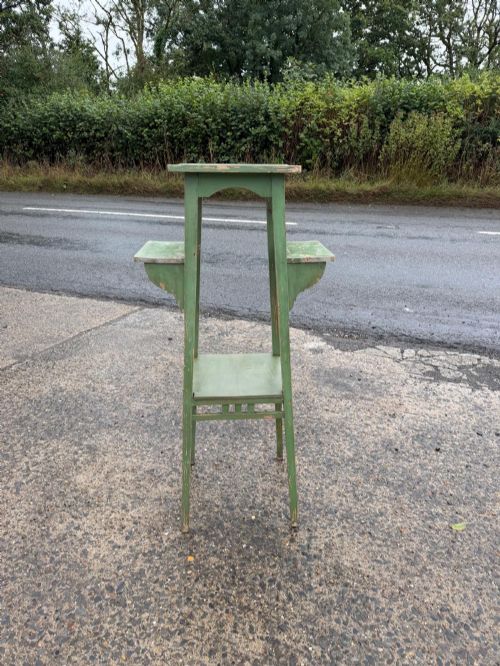
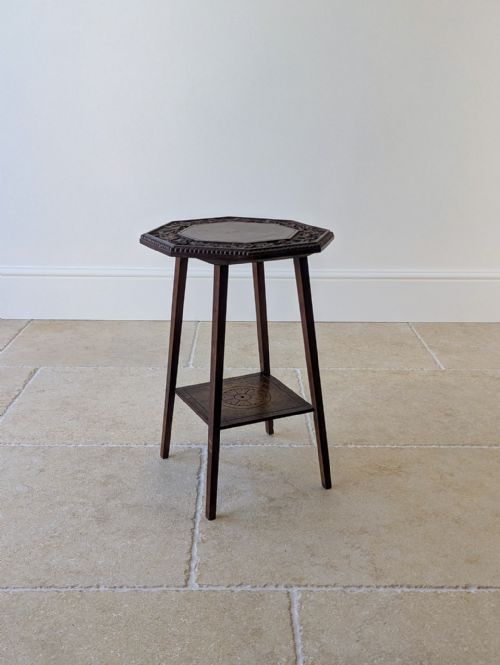
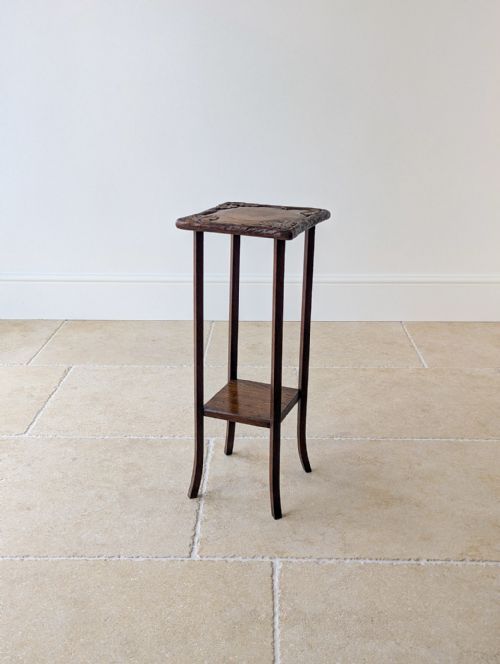
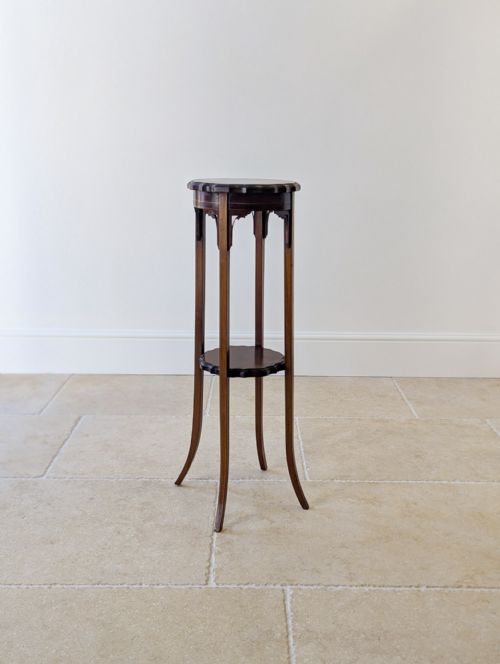
These tiered plant pedestals elevate flora and display decorative objects with architectural presence, spanning Victorian, Edwardian and Qing Dynasty periods.
Tiered Plant Pedestal
A tiered plant pedestal raises pots and decorative vessels above the floor, creating vertical interest in interior spaces. These functional items appear across the nineteenth and early twentieth centuries in various domestic settings.
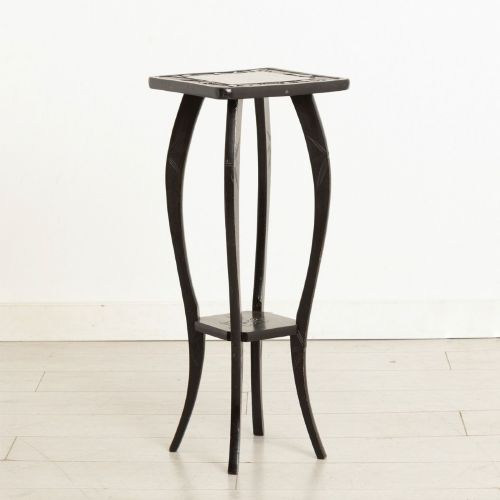
Most examples found here date from the Victorian and Edwardian eras, alongside Chinese hardwood and Hongmu pieces from the nineteenth century. Common forms include two-tier plant stands, tripod pedestals and occasional tables adapted for botanical display.
Originating from diverse traditions, these furnishings range from British oak and mahogany designs to French Empire and Belle Epoque styles. They serve as practical supports for jardinières, lamps and vases within period and contemporary rooms alike.
Materials and construction
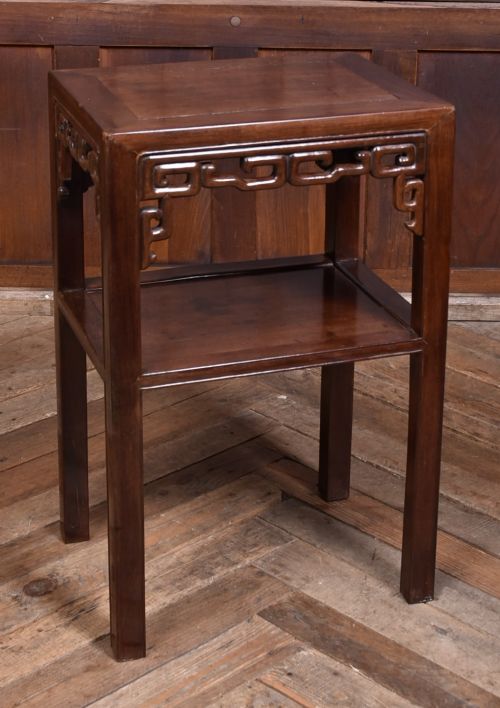
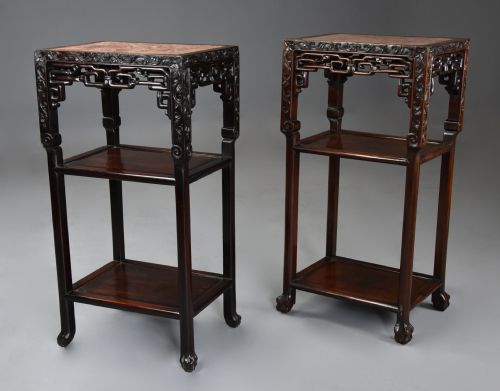
Cabinetmakers utilised dense timbers such as mahogany, walnut, rosewood and oak, frequently employing turnings, cabriole legs or barley twist supports. Hardwood and Hongmu pieces often feature intricate hand-carved details characteristic of Chinese craftsmanship.
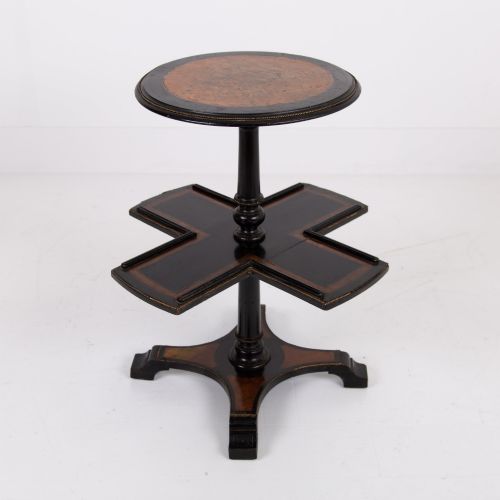
Mixed media stands incorporate brass galleries, marble insets, porcelain plaques and cast iron structures to add decorative contrast and stability. Surface treatments range from original paint and ebonised finishes to polished natural grain.
Design styles span Victorian, Edwardian, Arts and Crafts, French Empire, Belle Epoque, Art Deco and Chinese Qing traditions.
Judging quality in construction and material
The standard of a tiered plant pedestal rests upon the selection of timber and the precision of its joinery. Heavier hardwoods and stable marble inserts indicate superior manufacture compared to lighter secondary woods.
Execution of carved ornamentation and inlay work defines the upper tiers of craftsmanship. Crisp detailing in floral motifs or geometric brass mounts distinguishes workshop pieces from simpler domestic utility items.
Liberty of London·Michel Dufet
The Tiered Plant Pedestal Glossary
- Hongmu
- A dense, dark traditional Chinese hardwood frequently used for nineteenth-century stands and urn tables. It provides natural durability and a rich surface grain.
- Jardinière
- A decorative pot or stand designed specifically to hold indoor plants and floral arrangements. These containers sit atop pedestals or integrate directly into table structures.
- Gueridon
- A small French occasional table or stand, often featuring circular tiers supported by slender legs. Originating in the seventeenth century, these forms persisted into the Art Deco period.
- Torchère
- A tall, slender stand originally designed to hold a torch or candle lamp. Later Victorian and Edwardian examples adapted the form to support floral displays and electric lighting.
Tiered Plant Pedestal: Frequently Asked Questions
How do I use a tiered plant pedestal at home?
These stands fit comfortably in corners, beside seating, or in hallways to showcase trailing plants, ceramic vases and table lamps. Their vertical arrangement makes efficient use of floor space while adding height variations to a room.
Grouping multiple stands together creates layered botanical displays. Ensure heavier stone or ceramic pots align with sturdy hardwood or cast iron frames for stability.
What periods do these plant pedestals come from?
The selection spans the nineteenth and early twentieth centuries, including Victorian, Edwardian and Art Deco eras. Chinese Qing Dynasty pieces from the late nineteenth century also feature prominently among the available designs.
Stylistic markers range from British Arts and Crafts oak to French Empire and Belle Epoque brass and marble combinations. Each era brings distinct manufacturing techniques and aesthetic preferences.
How do I distinguish between European and Chinese stands?
European examples typically utilise oak, mahogany, walnut or cast iron, incorporating styles like barley twist, inlay and ebonised finishes. They reflect classical revival movements or domestic Victorian cabinetmaking.
Chinese stands rely on dense hardwoods such as Hongmu and rosewood, featuring mortise and tenon joinery without metal fasteners. Their carvings draw upon traditional motifs distinct from Western decorative arts.
How should I care for antique wood and marble surfaces?
Maintain wooden surfaces with appropriate beeswax or furniture polish, avoiding excess moisture and direct sunlight. Regular dusting preserves the original polish and grain depth of mahogany, walnut and rosewood.
Marble tops require gentle cleaning with mild soap and water, avoiding acidic substances that etch the stone. Felt pads beneath heavy pots prevent scratching on both wood and marble tiers.