


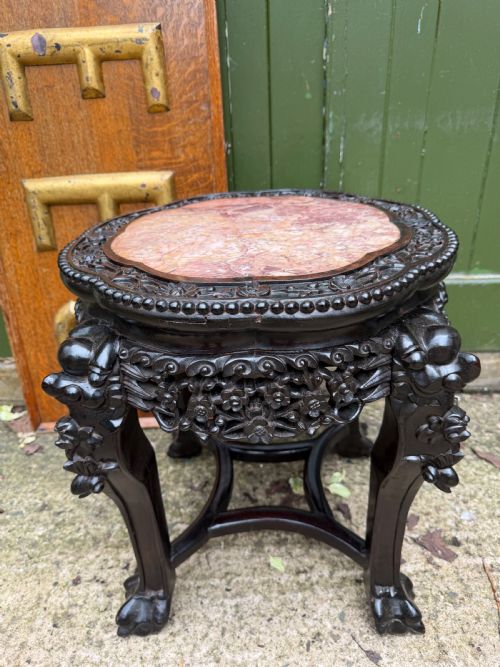


Marble Top Jardiniere
A marble top jardiniere marries heavy stone with carved timber or metal to elevate indoor plants and display prized porcelain.

Marble Top Jardiniere
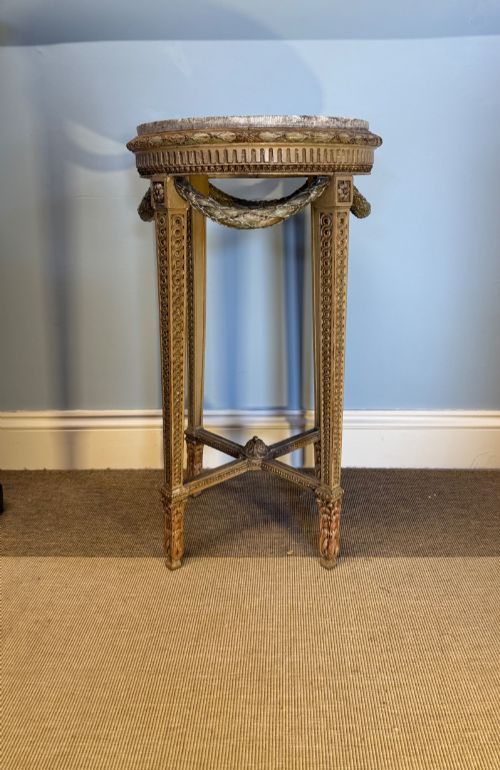
A marble top jardiniere serves primarily as a decorative plant stand, vase holder or occasional table designed to elevate heavy ceramic bowls and urns. Buyers searching for a marble top jardiniere will encounter a diverse selection ranging from compact low tables to taller pedestals originating from multiple design traditions.
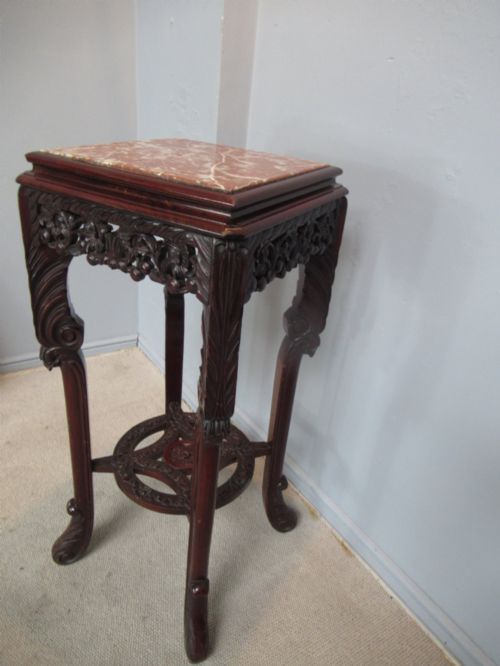
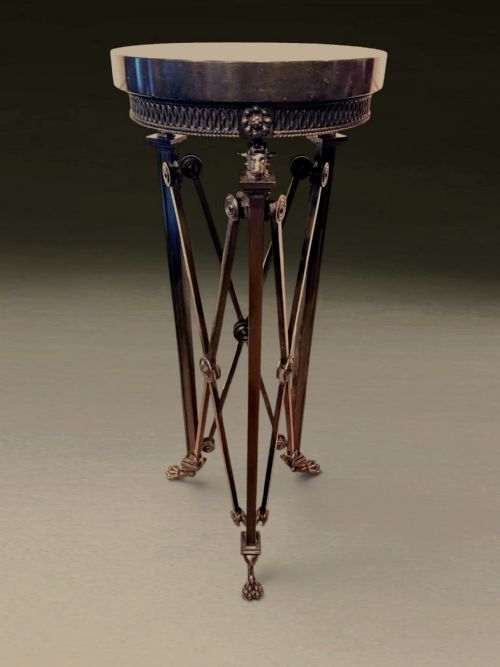
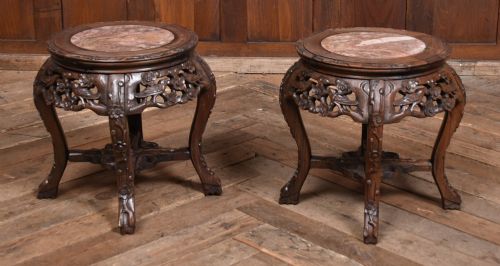
The material record shows a strong division between Chinese export works, particularly those carved from dense Asian hardwoods during the nineteenth century, and European examples utilising mahogany, walnut, rosewood, brass and cast iron. Many pieces date from the Victorian era and the late nineteenth century, spanning Qing Dynasty pieces alongside Regency and later styles.
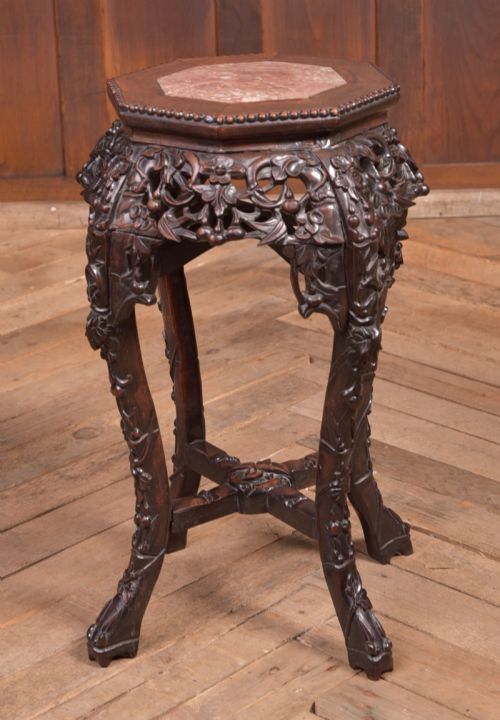
Forms vary from single round or octagonal inset stone tops to two-tier plant stands and occasional side tables. The central function remains supporting weight while providing a cool, stable surface that resists moisture from potted plants.
How they were made
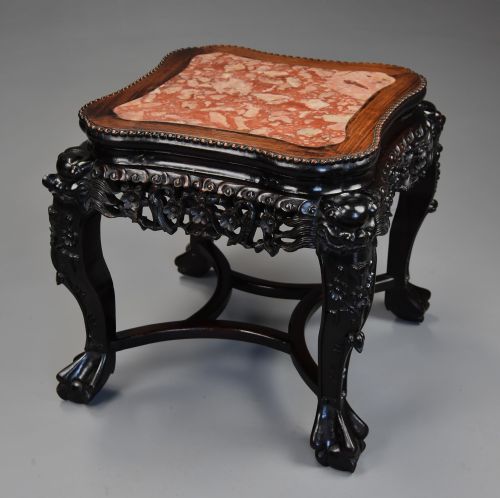
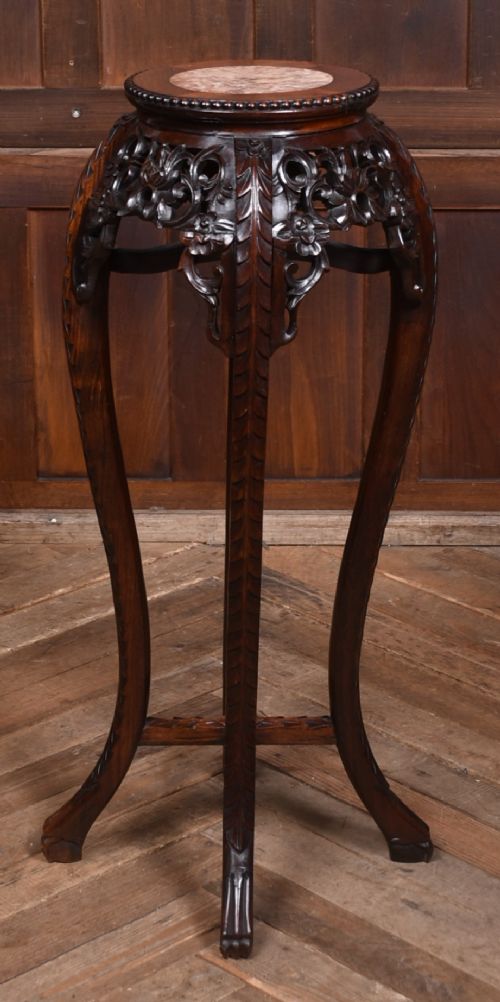
Construction relies heavily on dense timbers such as padouk, hongmu, rosewood and mahogany, frequently shaped through intricate hand-carving to form curved aprons and sturdy legs. These hardwoods provide the structural rigidity necessary to support heavy stone inserts without sagging.
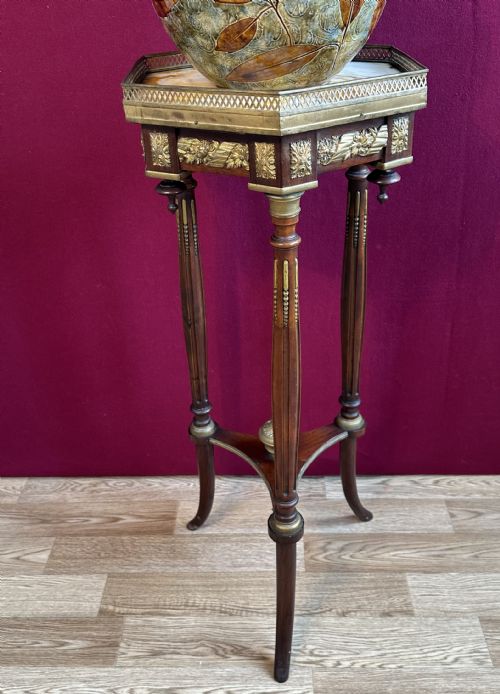
The stone component typically consists of an inset marble or onyx slab, sometimes featuring variegated rouge colouring, cut to fit precisely within a wooden or metal frame. European pieces frequently incorporate cast brass, bronze, gilt wood or cast iron frameworks to support the stone top and base.
Listings feature items spanning the nineteenth century through to the nineteen-thirties, incorporating both Chinese export forms and European styles.
What varies in quality
Quality rests significantly upon the density and grain of the timber utilised, alongside the depth and crispness of the hand-carving on the aprons and legs. Superior examples display tight joinery and heavy, well-figured rosewood or padouk rather than lighter, plain timbers.
The selection and fit of the marble insert also dictates worth, with thick, attractively variegated rouge or green stone tightly seated into the frame representing higher execution. Scale and proportion further differentiate standard utility pieces from grander, larger-scale stands designed for formal reception rooms.
The Marble Top Jardiniere Glossary
- Hongmu
- A dense tropical hardwood often used in fine Chinese furniture and jardiniere stands. It translates simply as red wood and takes a dark, polished finish.
- Padouk
- A heavy, durable reddish timber frequently encountered in nineteenth-century Chinese export plant stands. Its natural stability makes it well-suited for supporting stone insets.
- Jardiniere
- A large decorative pot or stand intended for holding plants or floral arrangements. The term derives from the French word for gardener.
- Variegated marble
- Stone featuring natural multicoloured streaks, patches or veins. Rouge varieties show rich red and white patterns across the polished surface.
- Qing Dynasty
- The final imperial dynasty of China, spanning from sixteen-forty-four to nineteen-twelve. Many surviving stands date from the late nineteenth portion of this period.
Marble Top Jardiniere: Frequently Asked Questions
What were marble top planter stands originally used for?
These pieces served as dedicated pedestals for heavy ceramic plant pots, jardiniere bowls and large decorative vases inside the home.
By elevating the greenery off delicate carpets and timber floors, they protected domestic interiors from water damage while displaying exotic plants at eye level.
How can I tell a Chinese export stand from a European one?
Chinese pieces typically utilise dense Asian hardwoods like padouk, hongmu or rosewood combined with distinctive hand-carved floral or pierced aprons.
European examples from the nineteenth century more commonly rely on walnut, mahogany, brass, bronze or gilt wood following Regency or Victorian design idioms.
Are these stands strong enough to hold heavy modern planters?
The combination of solid hardwood frames and inset stone slabs provides exceptional structural strength designed to bear considerable weight.
They were built specifically to support large ceramic fish-bowls and heavy bronze urns filled with damp soil and substantial plants.
Can I use a jardiniere stand as a regular side table?
Many of the lower variants double easily as wine tables, lamp tables or small occasional furniture in a sitting room.
The smooth marble insert provides a durable surface that naturally resists rings from drinking glasses and moisture from plant pots.