




Carved Wooden Bonsai Stand
These carved wooden bonsai stand examples elevate your displays through intricate joinery and dense timber.

Carved Wooden Bonsai Stand
A carved wooden bonsai stand provides a sturdy and ornamental platform for displaying trees, ceramics, and ornaments. When searching for a carved wooden bonsai stand, you will encounter pieces designed to elevate nature indoors.
The selections span the nineteenth century and the early twentieth century, incorporating Victorian influences alongside Chinese Qing Dynasty aesthetics and Japanese Meiji and Taisho periods. Forms include low tables, plant stands, pedestals, and two-tier hongmu urn stands.
Origins range from Chinese export workshops to Japanese makers such as Liberty of London, reflecting cross-cultural influences in nineteenth-century and early twentieth-century interior decor.
What varies in quality
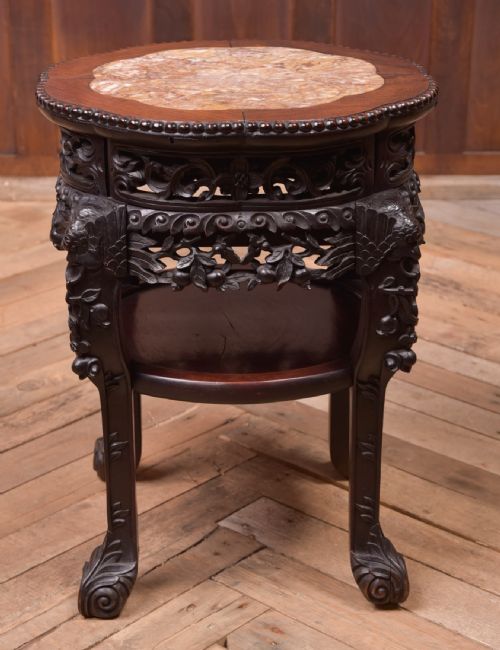
Depth and crispness of the hand carving separate simpler utility pieces from finer artistic examples, with superior stands showing deep undercut relief rather than shallow surface scoring. The selection of timber grain and the precise fitting of inset marble tops also indicate higher workshop standards.
Proportion and stability matter greatly, as better-made stands distribute weight evenly across balanced legs and stretchers. Maker attribution, such as pieces retailed through Liberty of London, influences desirability among collectors.
Carved Wooden Bonsai Stand Retail Price Guide 2026
Typical asking prices for carved wooden bonsai stand among the pieces listed under this phrase on Sellingantiques today, from the lower quarter to the upper quarter. They describe what is for sale here now, not the wider market.
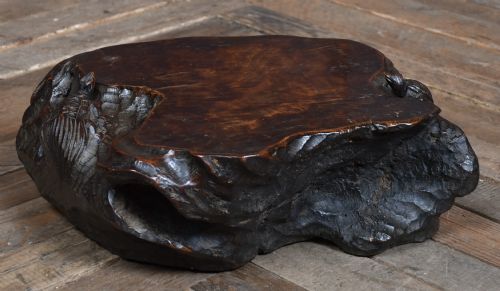
One turtle-shaped stand proves that nineteenth-century artisans occasionally let reptiles hold up the begonias.
Liberty of London
The Carved Wooden Bonsai Stand Glossary
- Hongmu
- A dense, dark tropical hardwood traditionally utilised in fine Chinese furniture construction. It translates literally to red wood and develops a rich patina with handling.
- Padouk
- A heavy, durable timber prized for its reddish-brown colour and stability in carved furnishings. It accepts a high polish and resists decay.
- Meiji Period
- An era in Japanese history spanning from eighteen sixty-eight to nineteen twelve characterised by the opening of trade and exceptional craftsmanship in decorative arts.
- Qing Dynasty
- The final imperial dynasty of China, lasting from sixteen forty-four to nineteen eleven, known for ornate carved hardwood furnishings and export wares.
- Jardiniere stand
- A tall pedestal or small table specifically designed to hold a ceramic flower pot or plant container. These often feature raised rims or inset stone tops to contain moisture.
Carved Wooden Bonsai Stand: Frequently Asked Questions
What is a carved wooden bonsai stand used for?
These platforms elevate bonsai trees, ceramic vessels, and decorative objects to enhance their visual impact in a room. They protect tabletop surfaces while providing a formal framing device for natural elements.
Historically, collectors used them in scholar's studios and reception rooms to display prized specimens of flora and art. Today, they function equally well as low lamp tables or plant pedestals in modern interiors.
How do I date a Chinese hardwood stand?
Dating relies on observing construction methods, timber choice, and decorative motifs associated with specific periods like the Qing Dynasty or the late nineteenth century. Hongmu and padouk were widely utilised during these eras, showing distinct hand-carved detailing.
Examining the wear patterns on the underside and the fitting of inset marble panels helps determine age. Pieces associated with the Meiji period in Japan or Victorian import records offer further chronological markers.
Are all these stands from China and Japan?
The majority of pieces originate from Chinese export workshops and Japanese Meiji or Taisho period makers, reflecting the global trade of the nineteenth and early twentieth centuries. Some items were also retailed through European firms such as Liberty of London.
Chinoiserie and Orientalist influences during the Victorian era also inspired domestic British production that imitated Eastern forms. Examining the specific joinery and timber helps clarify the geographic origin of each piece.
Why do some stands have marble tops?
Inset marble panels provided a cool, waterproof surface that protected the wooden structure from moisture drainage when watering potted plants. This practical feature also added weight and stability to the display.
Visually, the contrast between vewed marble and dark carved hardwood created a balanced, elegant aesthetic favoured in both Chinese and Victorian interiors. The marble is typically set flush into the wooden frame.