


Early Twentieth Century Table
These early twentieth century table items bring genuine period character to a room, offering practical surfaces shaped by Edwardian and later hands.
Early Twentieth Century Table
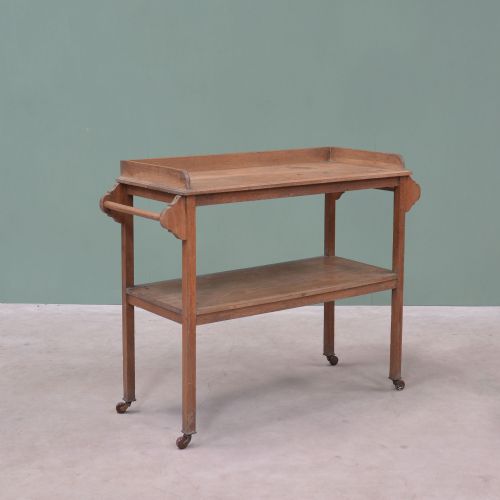
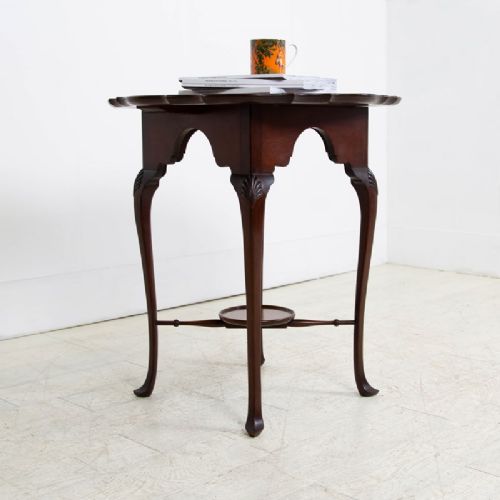
An early twentieth century table covers a diverse range of domestic furniture and smaller accessories dating from the Edwardian era through to the nineteen-thirties. Buyers searching for an early twentieth century table encounter various forms including serving trolleys, occasional side tables, coffee tables, and console tables.
The surviving pieces demonstrate a transition from heavier traditional styling towards more streamlined modern shapes. Oak, mahogany, and walnut feature prominently across the various designs.
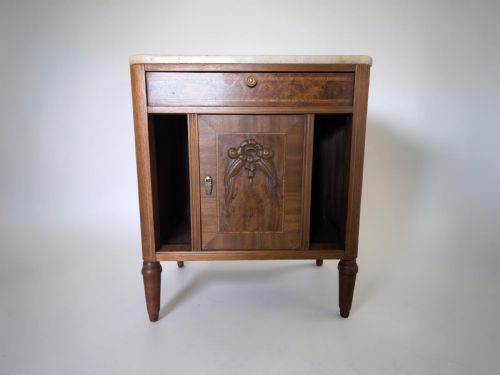
Revival styles remain common alongside emerging modernist tendencies. Examples span from solid oak serving trolleys to figured walnut coffee tables and marble-topped console tables.
Materials and construction
Cabinet makers utilised dependable hardwoods such as mahogany, oak, and walnut to build sturdy frames that survive in daily use. Timber selection governed both the visual weight and the structural integrity of each piece.
Decorative touches included marble tops and brass mounts, reflecting both traditional craftsmanship and industrial capabilities of the period. Surface finishes were applied to highlight natural grain patterns in the wood.
Assessing quality and craftsmanship
Quality rests upon the selection of timber and the precision of the joinery rather than mere ornamentation. Finer items exhibit careful figuring in the walnut or mahogany veneers alongside robust internal construction.
Proportion and the integration of decorative elements dictate the overall success of a piece. Better examples maintain balanced dimensions and secure mountings for stone or metal components.
Shapland and Petter·David Andersen
The Early Twentieth Century Table Glossary
- Edwardian
- Pertaining to the reign of King Edward VII, spanning from nineteen hundred to nineteen ten. Furniture from this period often lighter in proportion than Victorian counterparts.
- Occasional table
- A small movable table intended for specific, temporary uses in a room. These pieces include side tables and coffee tables designed to be easily repositioned.
- Console table
- A table designed to be fixed against a wall, frequently supported by ornamental brackets or legs. Marble-topped versions offer durable and decorative surfaces.
- Figured walnut
- Timber exhibiting an attractive, highly figured grain pattern prized by cabinet makers. It provides distinctive surface decoration on tables and cabinets.
Early Twentieth Century Table: Frequently Asked Questions
What defines an early twentieth century table?
An early twentieth century table encompasses furniture produced between nineteen hundred and nineteen thirty, covering diverse styles from Edwardian revivals to later modernist influences.
These pieces utilise traditional timbers like mahogany, oak, and walnut, reflecting both enduring craftsmanship and changing domestic fashions of the era.
How do I care for wooden surfaces?
Wooden surfaces benefit from regular dusting with a soft, dry cloth and occasional application of appropriate wax polish to nourish the grain.
Keeping items away from direct sunlight and extreme temperature fluctuations preserves the finish and prevents timber movement.
Are marble tops original?
Marble tops on console tables and furniture from this period were typically fitted by the original makers to provide a durable and luxurious surface.
Examining the fit and the supporting structure helps confirm the relationship between the stone top and the wooden base.
Which woods are most common?
Mahogany, oak, and walnut appear most frequently across the surviving furniture pieces from this timeframe.
Each timber offered distinct working properties and visual characteristics suited to the prevailing interior design trends.