


Regency Mahogany Dining Chairs
Regency mahogany dining chairs bring architectural balance and rich timber grain to a dining room through enduring classic forms.
Regency Mahogany Dining Chairs
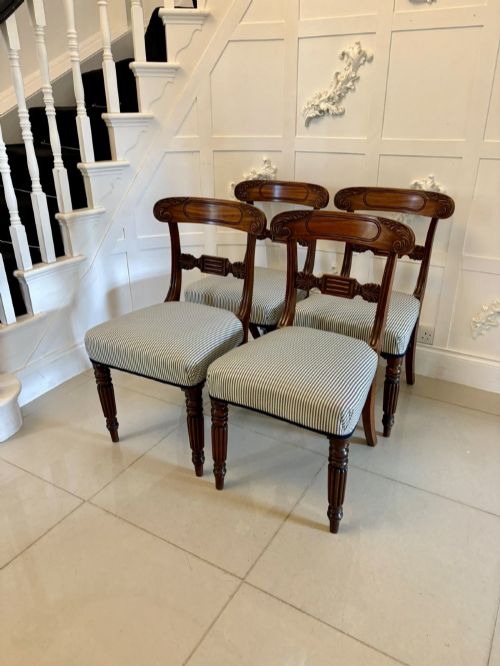
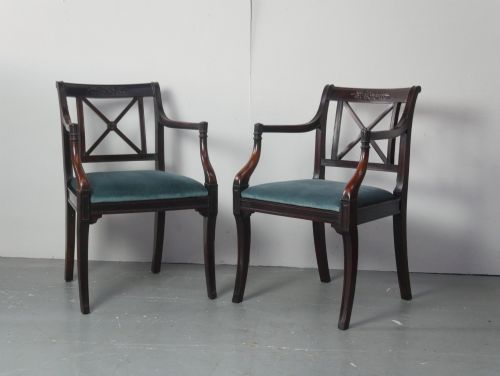
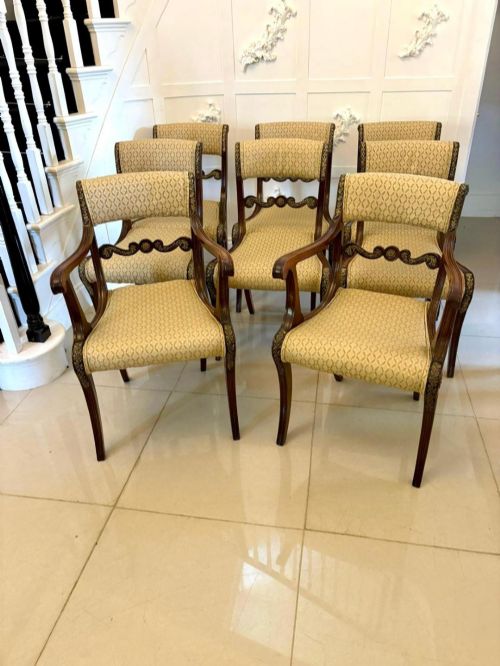
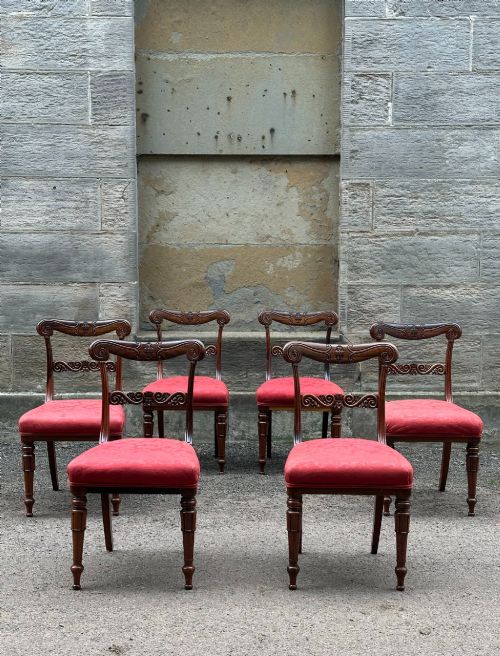
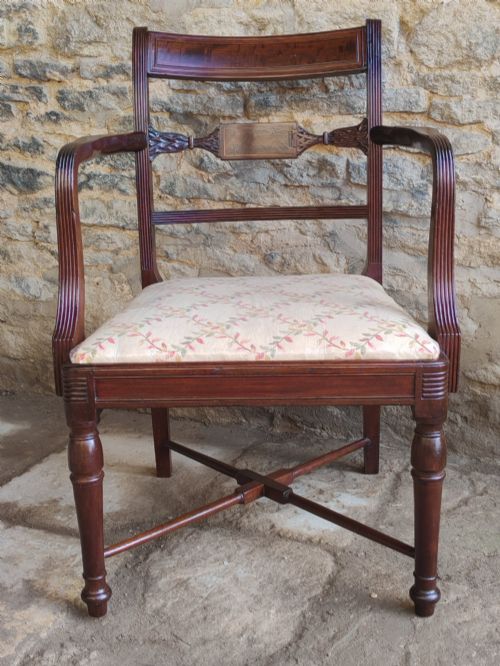
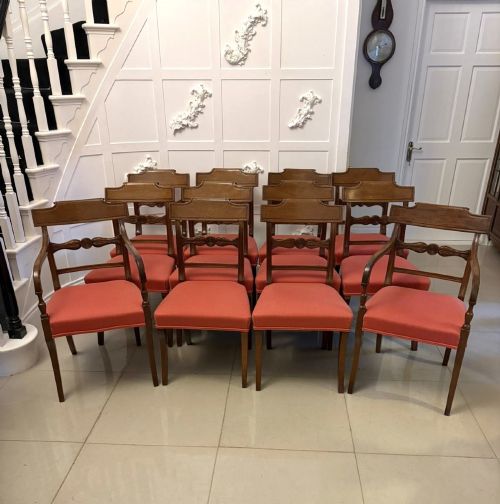
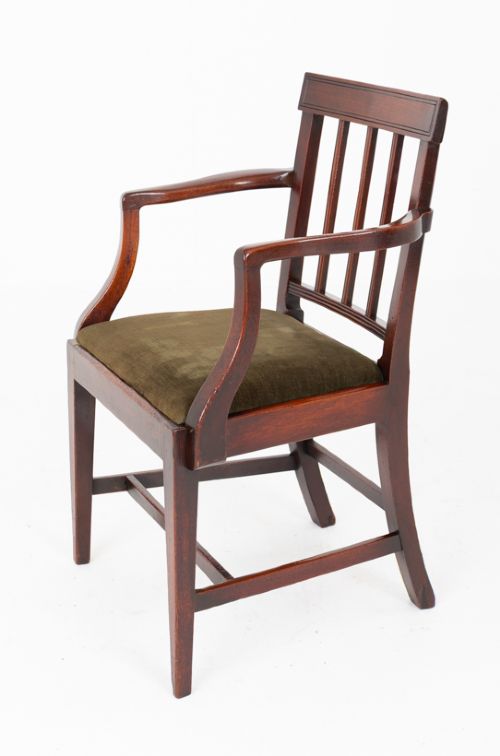
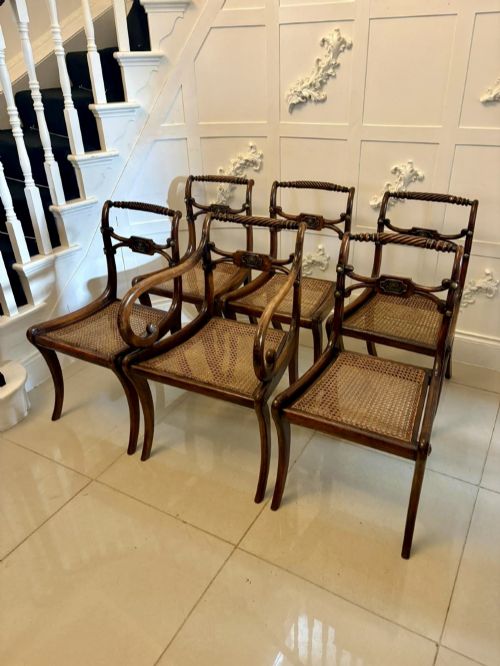
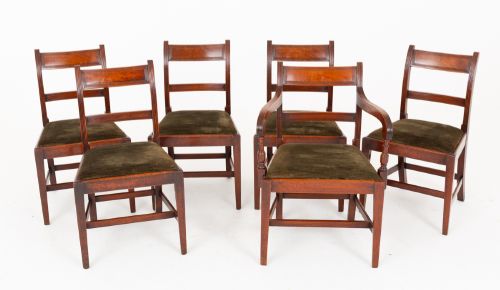
When searching for regency mahogany dining chairs, buyers encounter a range of forms including sets of single chairs accompanied by matching carvers with scroll arms. The selections span periods from the nineteenth century and Georgian eras through to later revival interpretations.
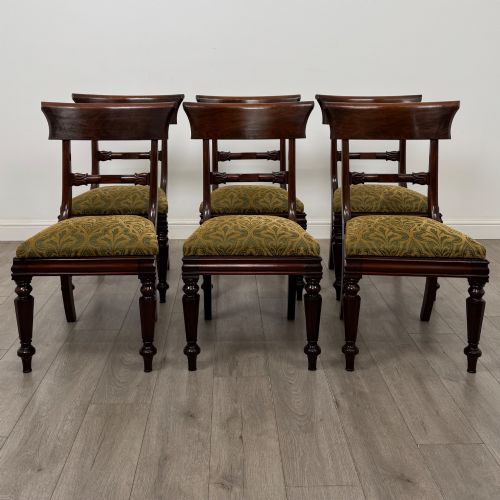
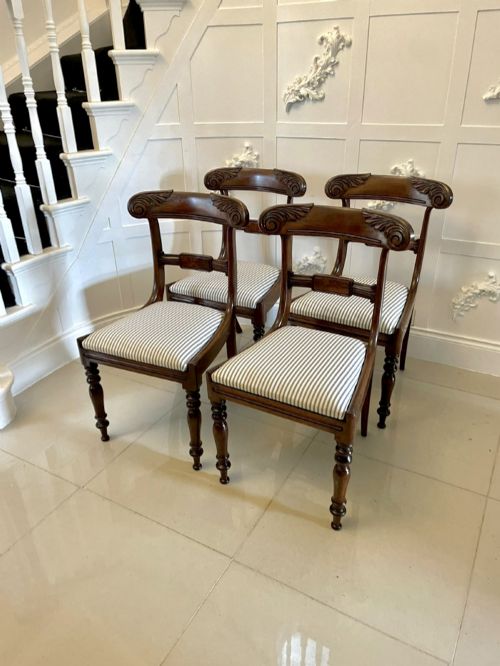
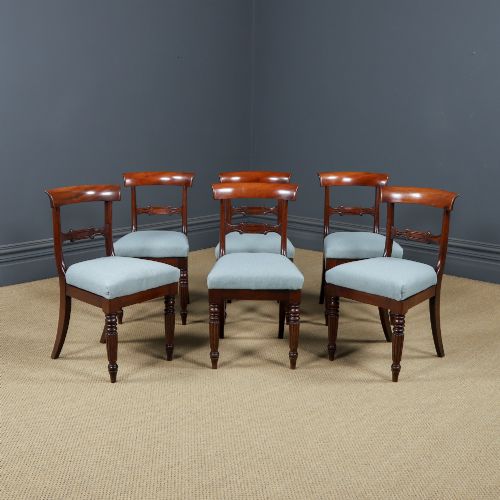
Most gatherings of these seats appear as sets of four, six, or eight pieces, often featuring bar backs or rope-twist details. Side chairs and armchairs dominate the selection, frequently upholstered in fabric or leather.
Origin points across the listings include English and Scottish workshops, utilising dense timbers such as Cuban mahogany. Buyers find both authentic period examples and twentieth-century reproductions designed to replicate the architectural lines of the era.
Materials and Construction
Makers utilised solid mahogany, sometimes incorporating Cuban timber for deeper colour and heavier weight. Brass inlay and brass mounts frequently accent the woodwork on select models.
Joinery relied on traditional techniques to secure sabre legs, bar backs, and rope-twist rails. Seats were commonly upholstered with fabric, velvet, or cane inserts fitted into the wooden frames.
Regency Mahogany Dining Chairs Retail Price Guide 2026
Typical asking prices for regency mahogany dining chairs among the pieces listed under this phrase on Sellingantiques today, from the lower quarter to the upper quarter. They describe what is for sale here now, not the wider market.
Several chairs feature hand-carved rope-twist rails designed to make guests wonder if they are sitting on actual rigging.
Markers of Distinction
Quality rests in the crispness of the carved details on the crest rails and the weight of the mahogany timber used in the frame. Higher grades exhibit tighter grain patterns and more robust joinery in the seat construction.
The presence of matching sets in larger numbers, particularly with original carvers included, elevates the standing of a group. Subtle refinements in the sweep of the sabre legs and integrated brass work distinguish standard production from exhibition pieces.
Gillows·Thomas Clarkson and Sons
The Regency Mahogany Dining Chairs Glossary
- Carver
- An armchair designed to sit at the head of a dining table, featuring supportive armrests. These pieces frequently match the companion single side chairs in a dining set.
- Bar back
- A horizontal wooden splat shaped like a curved bar across the upper portion of the chair back. This design element provides structural support while offering a clean classical silhouette.
- Sabre leg
- A chair leg that curves outward in a concave shape resembling a cavalry sabre. This form is typical of classical revival furniture from the early nineteenth century.
- Rope-twist
- A carved wooden detail mimicking the spiral texture of a twisted rope along the top rail or splat. Artisans carved this pattern by hand to add textural contrast to the smooth mahogany.
- Klismos
- An ancient Greek chair design featuring curved uprights and a concave backrest that re-emerged during the classical revival period. These chairs offer an ergonomic profile suited for formal dining.
Regency Mahogany Dining Chairs: Frequently Asked Questions
How many chairs come in a set?
Sets typically range from four to twelve pieces, with six and eight being common configurations. Larger sets often include a mix of single side chairs and matching carvers.
Individual pairs and single chairs also appear for use in hallways or reception rooms.
What wood are these chairs made from?
The primary timber is mahogany, including heavy Cuban varieties known for rich grain patterns. Secondary woods appear occasionally in hidden frame structures.
Brass details and fabric upholstery complete the construction of these classical seats.
Are these chairs comfortable for daily use?
The ergonomic curved backrests and upholstered drop-in seats provide practical support for dining. Many examples feature padded textile or leather surfaces designed for extended sitting.
Proper maintenance of the joints ensures stability during regular household use.
How do I spot a revival piece?
Revival pieces date from later periods such as the late nineteenth or early twentieth century. They imitate the earlier styles using machine-assisted joinery and distinct timber finishes.
Examining the wear patterns and construction methods helps distinguish original period pieces from later interpretations.