
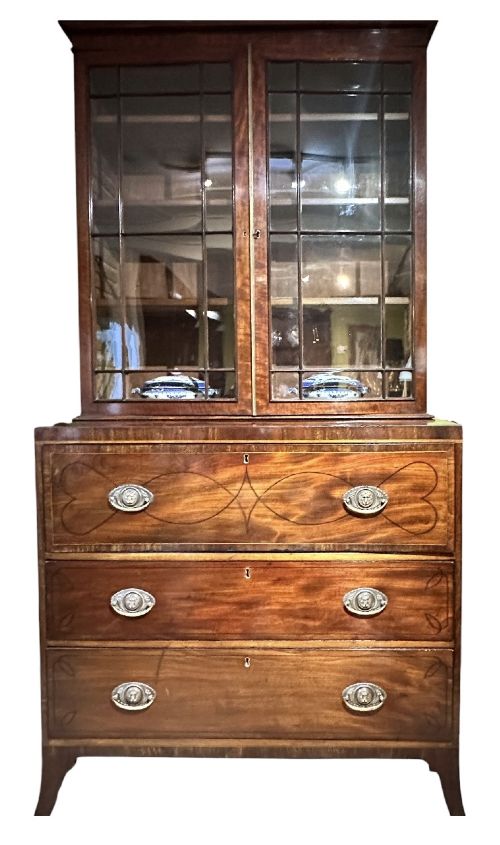
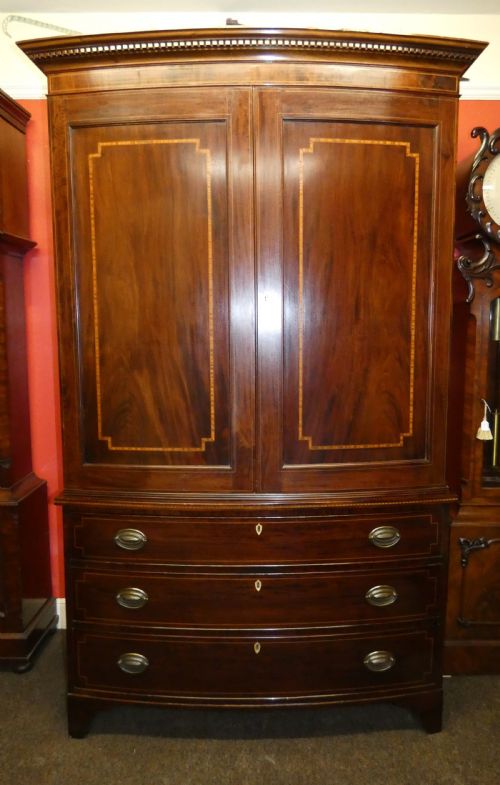
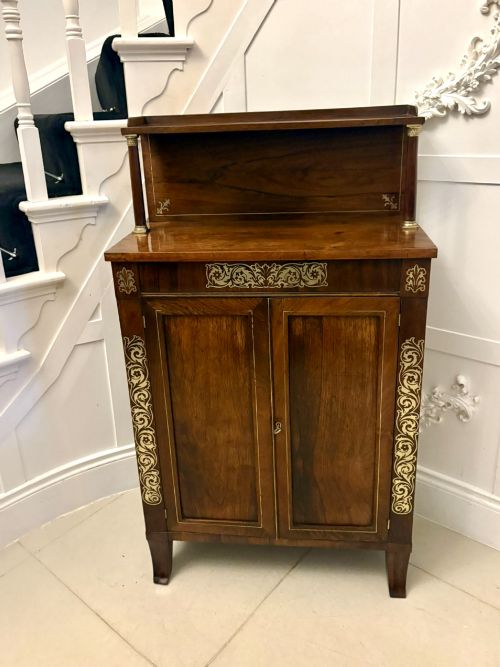
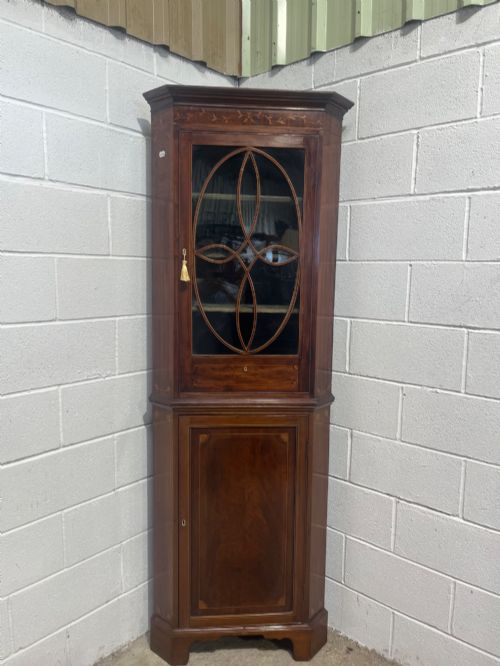
Regency Inlaid Mahogany Cabinet
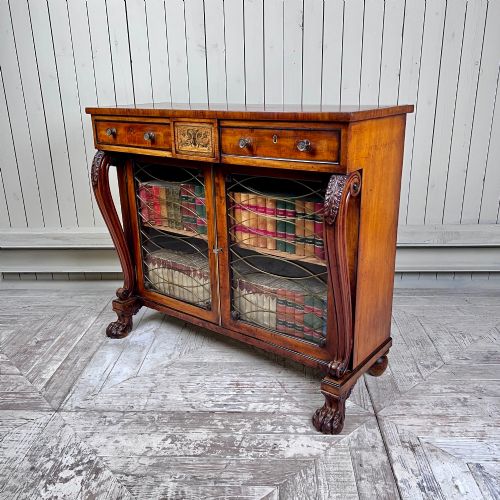
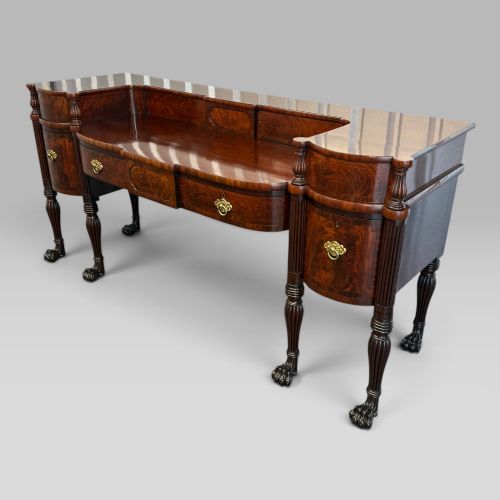
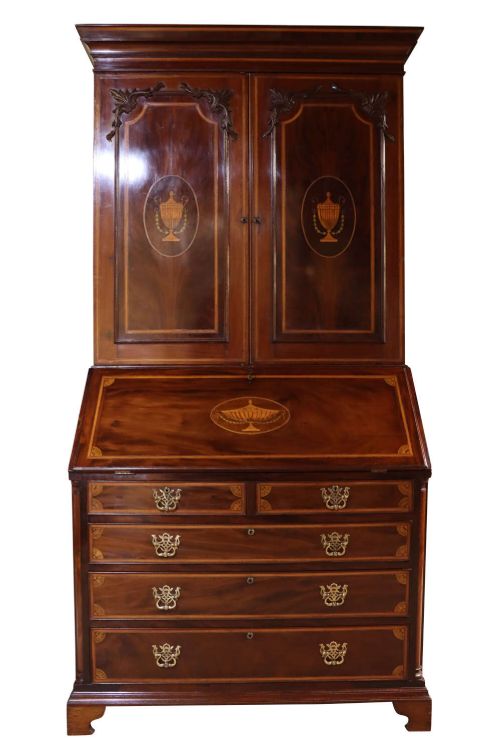
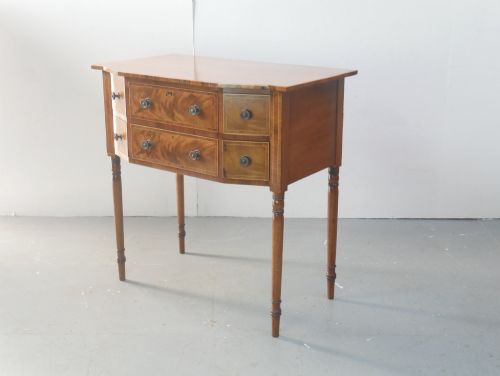
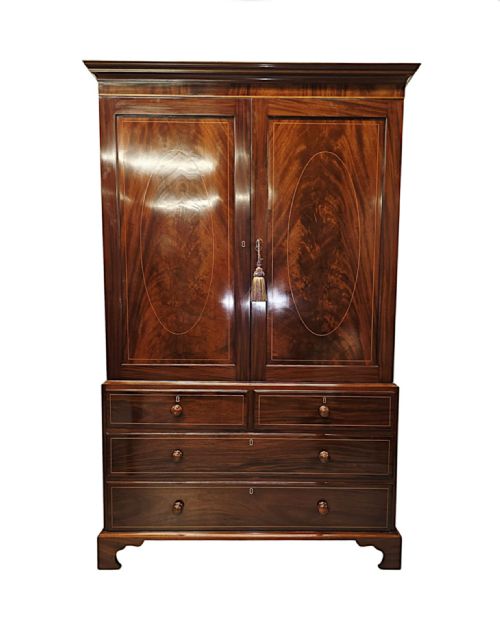
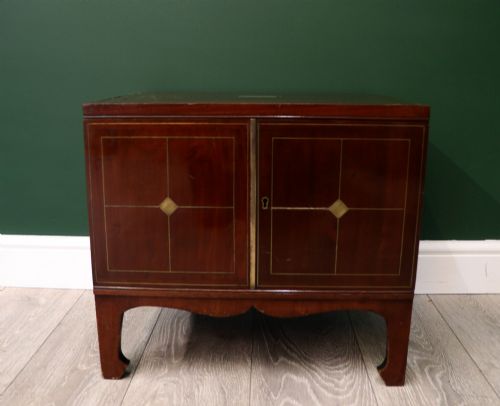
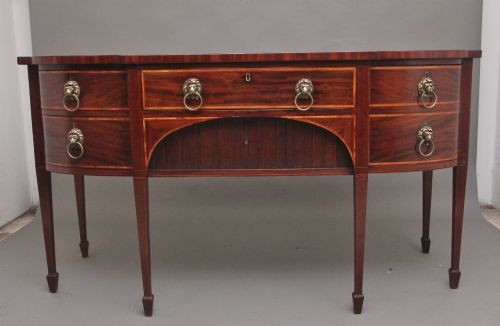
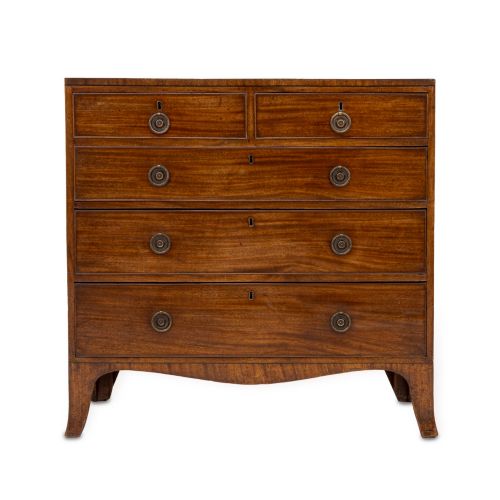
A regency inlaid mahogany cabinet brings together precise cabinet-making and rich timber, offering both storage and strong decorative presence.
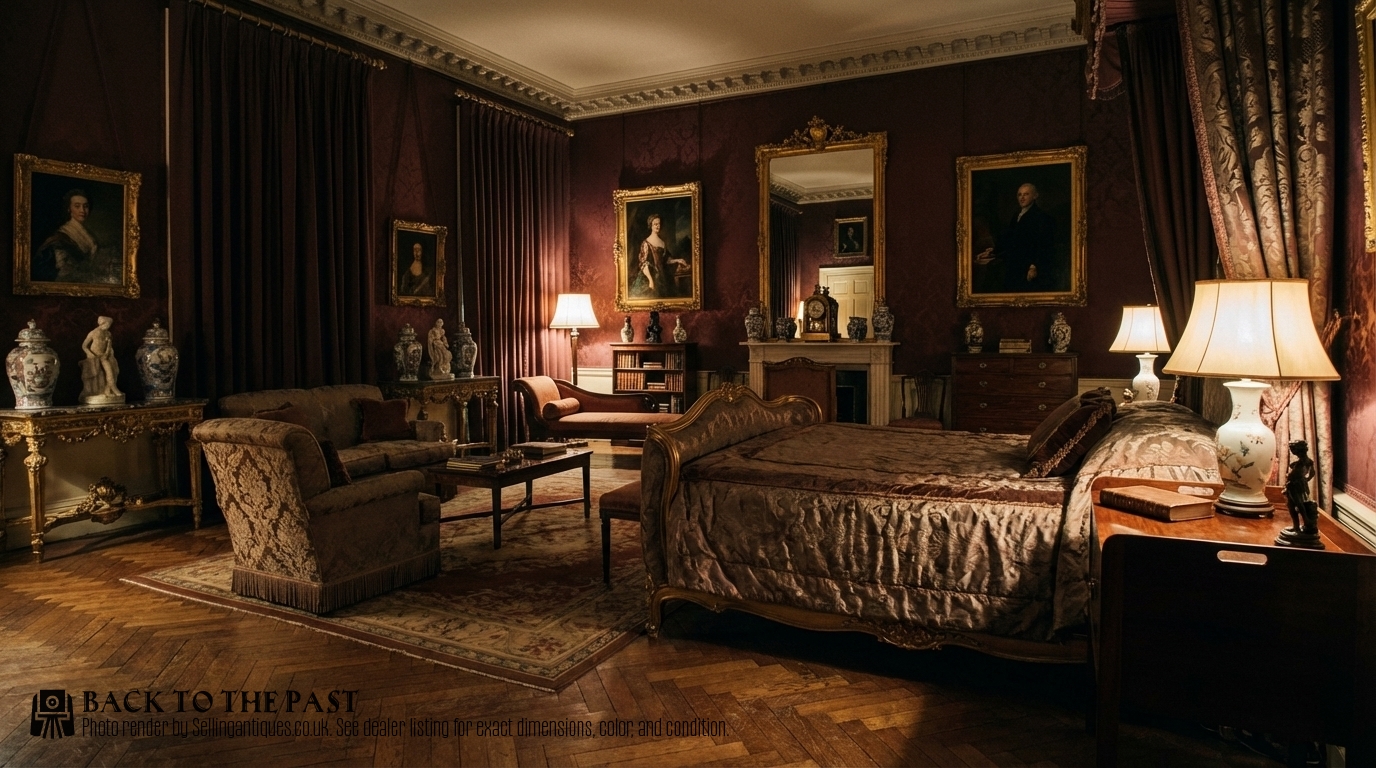
Regency Inlaid Mahogany Cabinet
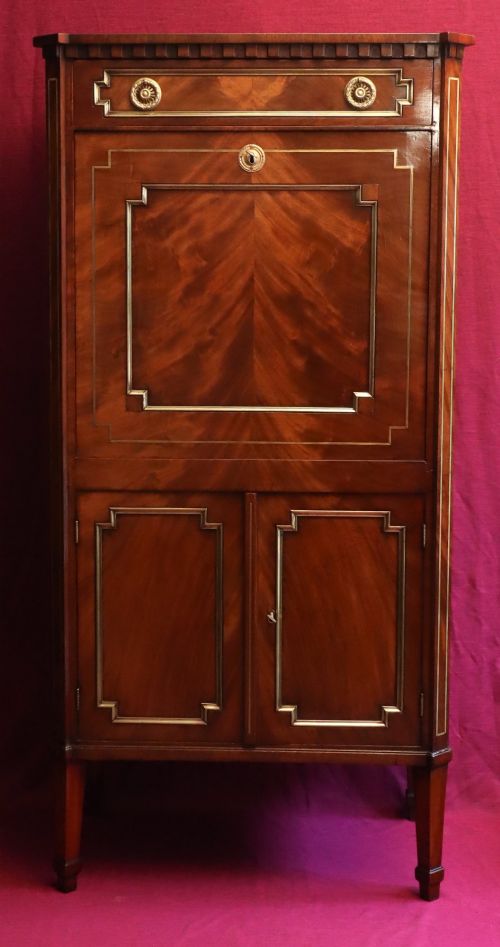
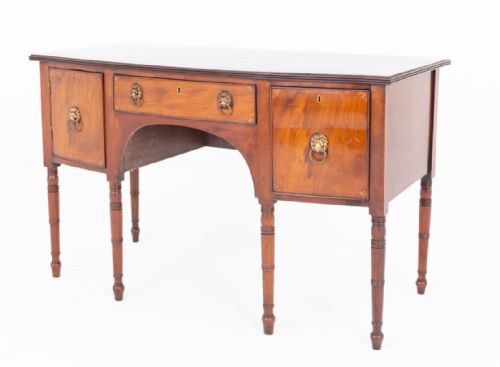
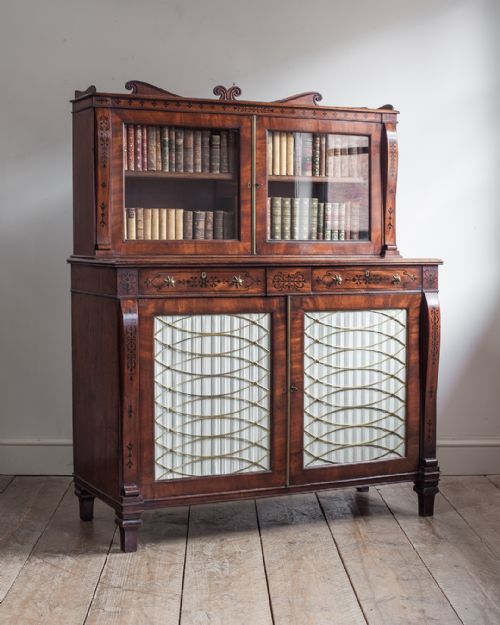
A regency inlaid mahogany cabinet spans practical storage forms such as side cabinets, chiffoniers, bookcases, and linen presses.
The majority of pieces encountered align with the Regency, Georgian, and wider 19th-century periods, alongside later revival examples.
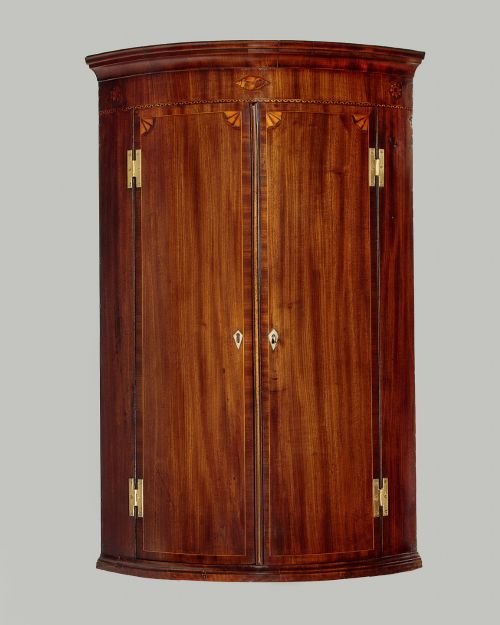
Makers utilised these versatile carcasses for domestic utility, resulting in variations from corner cupboards to large breakfront bookcases.
Materials and construction
Workshops relied primarily on solid and veneered mahogany, often selecting figured or flame grades to create dramatic surfaces on drawer fronts and doors.
Carcasses incorporate contrasting timber inlays such as boxwood, ebony, and satinwood, frequently paired with cast brass mounts, stringing, and glazed panels.
Certain bedside cabinets hide a pull-out step, proving that early 19th-century designers anticipated the perils of high-altitude morning routines.
Judging the standard
Evaluation rests on the crispness of the wood inlay and the selection of figured mahogany veneers across prominent surfaces.
Structural refinement shows in the handling of secondary timbers, dovetail joints, and the integration of brass details or campaign elements.
Gillow·John Mclean·Harrods
The Regency Inlaid Mahogany Cabinet Glossary
- Inlay
- A technique where pieces of contrasting wood, such as boxwood or ebony, are fitted into recesses in the primary mahogany surface to form linear patterns.
- Flame mahogany
- A veneer cut from timber where the grain creates a distinctive flame-like pattern, highly prized for visual depth.
- Secretaire
- A desk form featuring a pull-out writing drawer with a drop front, concealing small compartments and pigeonholes.
- Chiffonier
- A low sideboard or cabinet developed during the Regency period, often fitted with shelves or a glazed bookcase superstructure.
- Astragal
- The moulded bar that divides panes of glass within a cabinet door, typical of bookcase construction.
Regency Inlaid Mahogany Cabinet: Frequently Asked Questions
What is a regency inlaid mahogany cabinet used for?
These pieces served multiple domestic functions, from storing household linen and books to displaying china and writing correspondence.
Today, they adapt readily to modern living rooms, studies, and hallways as practical storage with distinct historical character.
How do I identify a Regency period piece?
Look for characteristic design elements such as classical proportions, brass inlay, ebony stringing, and flame mahogany veneers.
Construction methods, including hand-cut dovetails and period secondary timbers, help separate early 19th-century originals from later revivals.
Are these cabinets difficult to maintain?
Maintenance requires standard care suitable for antique timber, avoiding direct sunlight and excessive humidity fluctuations to protect veneers and polish.
Regular dusting with a dry, soft cloth preserves the finish of the mahogany and any delicate boxwood or brass inlay.