
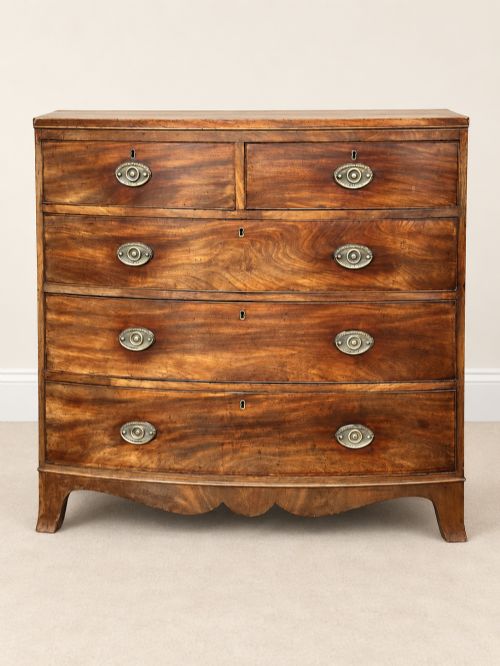
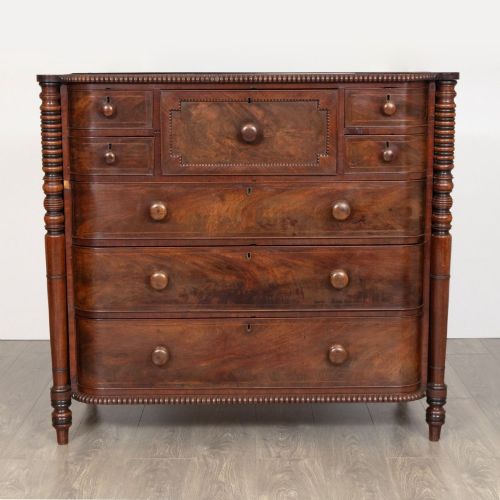
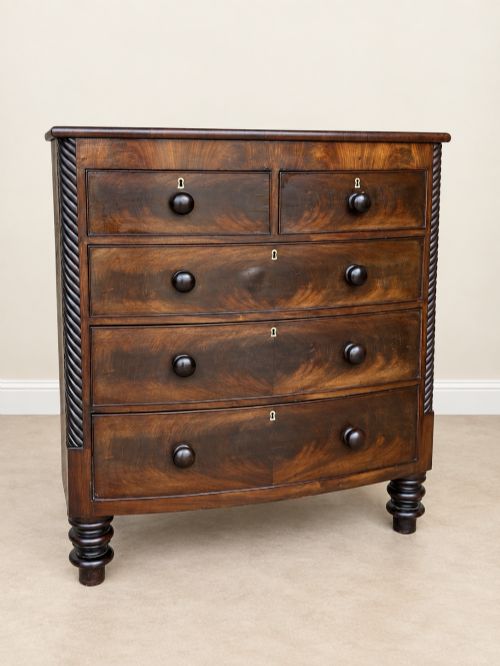
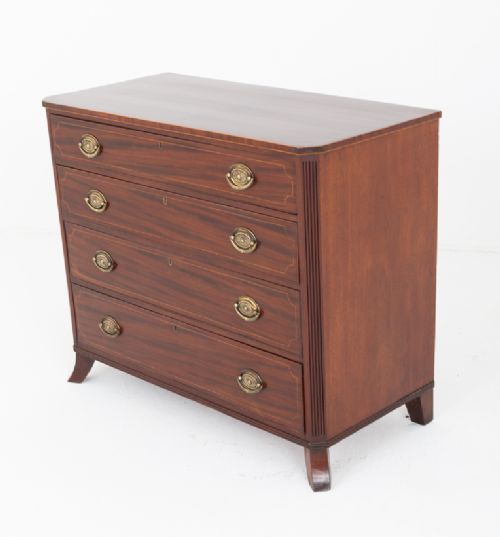
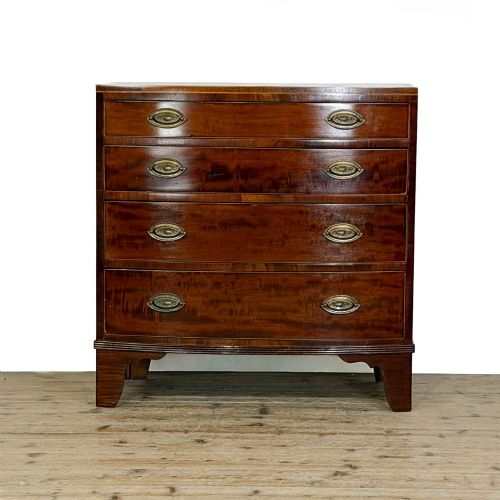

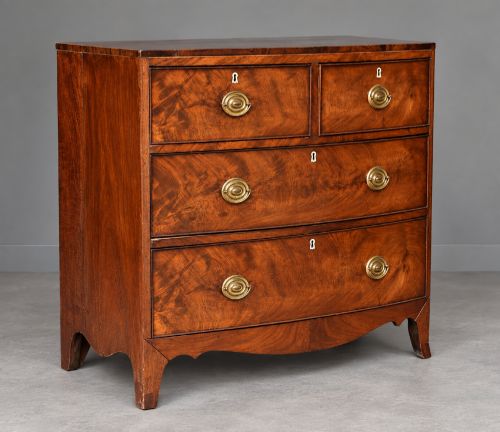
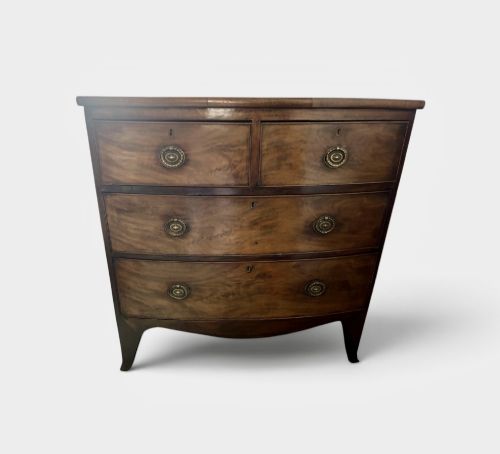
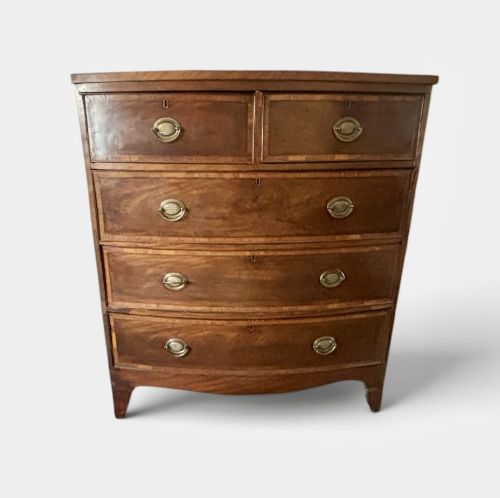
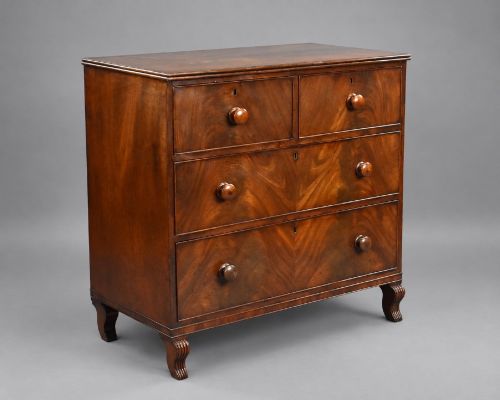
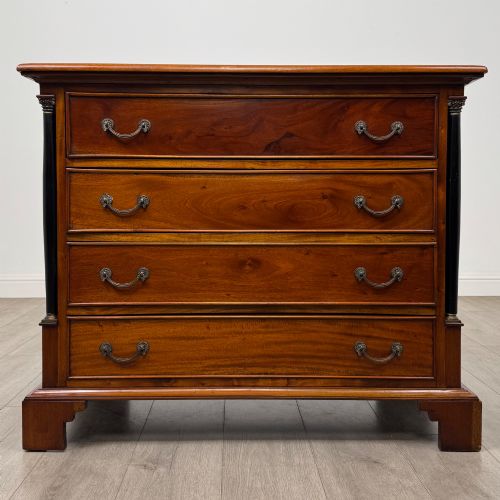
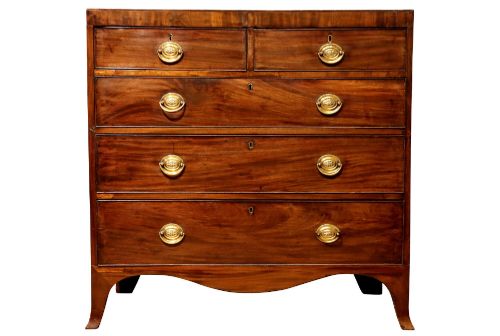
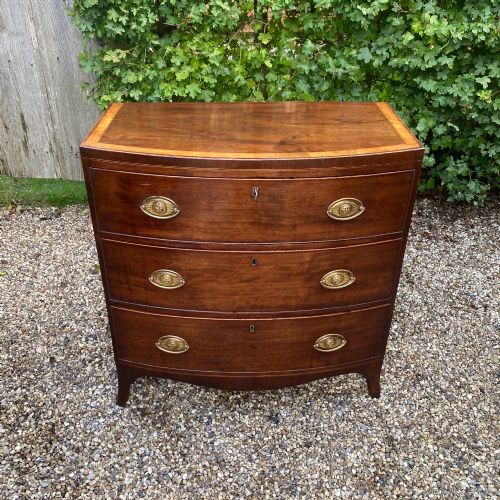
Regency Mahogany Commode Chest
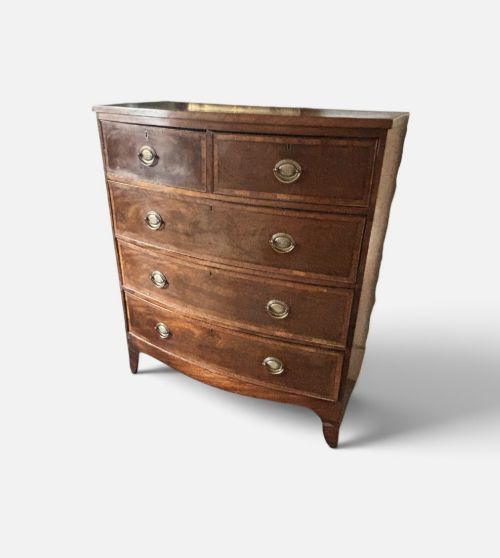
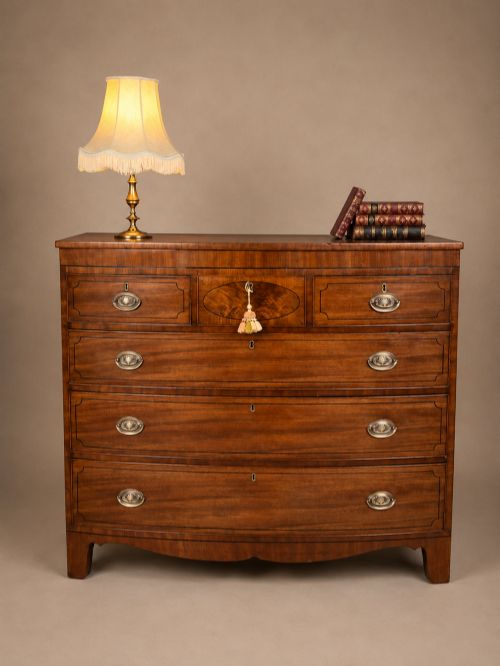
A regency mahogany commode chest brings architectural proportion and rich timber grain to a room.
Regency Mahogany Commode Chest
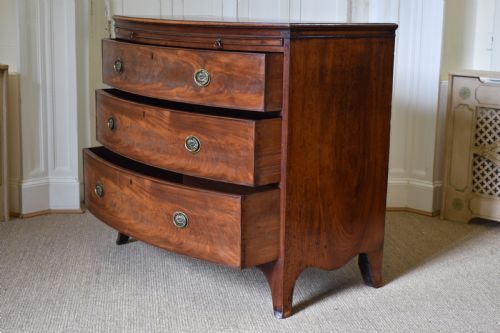
A regency mahogany commode chest combines practical storage with formal design, spanning the late eighteenth and early nineteenth centuries. You will most frequently encounter bow-fronted examples featuring four graduated drawers, alongside occasional straight-front variations.
Makers working during the Regency, George IV and William IV periods produced these storage pieces in proportions suited to both grand drawing rooms and smaller chambers. The inventory on this page demonstrates that Scottish regional workshops also contributed distinctive bow-fronted forms during these eras.
How they were made
Cabinet makers utilised solid mahogany and applied flame mahogany veneers over secondary timbers such as oak. These surfaces were often enhanced with satinwood banding, crossbanding and floral inlay details.
Structural integrity relied on dovetailed drawer construction and secondary linings in oak. Drawers were arranged in graduated heights, frequently fitted with brass hardware.
Some Scottish chests hide secret compartments behind their upper mouldings, offering a secure spot for hidden letters and small valuables.
What varies in quality
The visual hierarchy of a regency mahogany commode chest rests on the selection of the timber. Flame mahogany veneer with strong natural figuring commands greater attention than plain stock, particularly when matched symmetrically across drawer fronts.
Subtleties of edge moulding, precise satinwood stringing and the crispness of crossbanding separate standard workshop output from exceptional cabinet work.
Gillows
The Regency Mahogany Commode Chest Glossary
- Bow front
- A convex curved front that softens the rectangular outline of the furniture. This shape proved particularly popular during the Regency period.
- Flame mahogany
- A veneer cut from timber where the branch meets the trunk, producing a distinctive fire-like ripple pattern. Cabinet makers reserved this timber for principal display surfaces.
- Caddy top
- A moulded top edge resembling the lid of a tea caddy. It adds a refined profile to the upper surface of a chest.
- Graduated drawers
- Drawers that decrease in depth from bottom to top. This arrangement creates a balanced visual perspective.
Regency Mahogany Commode Chest: Frequently Asked Questions
Where should I place a regency mahogany commode chest?
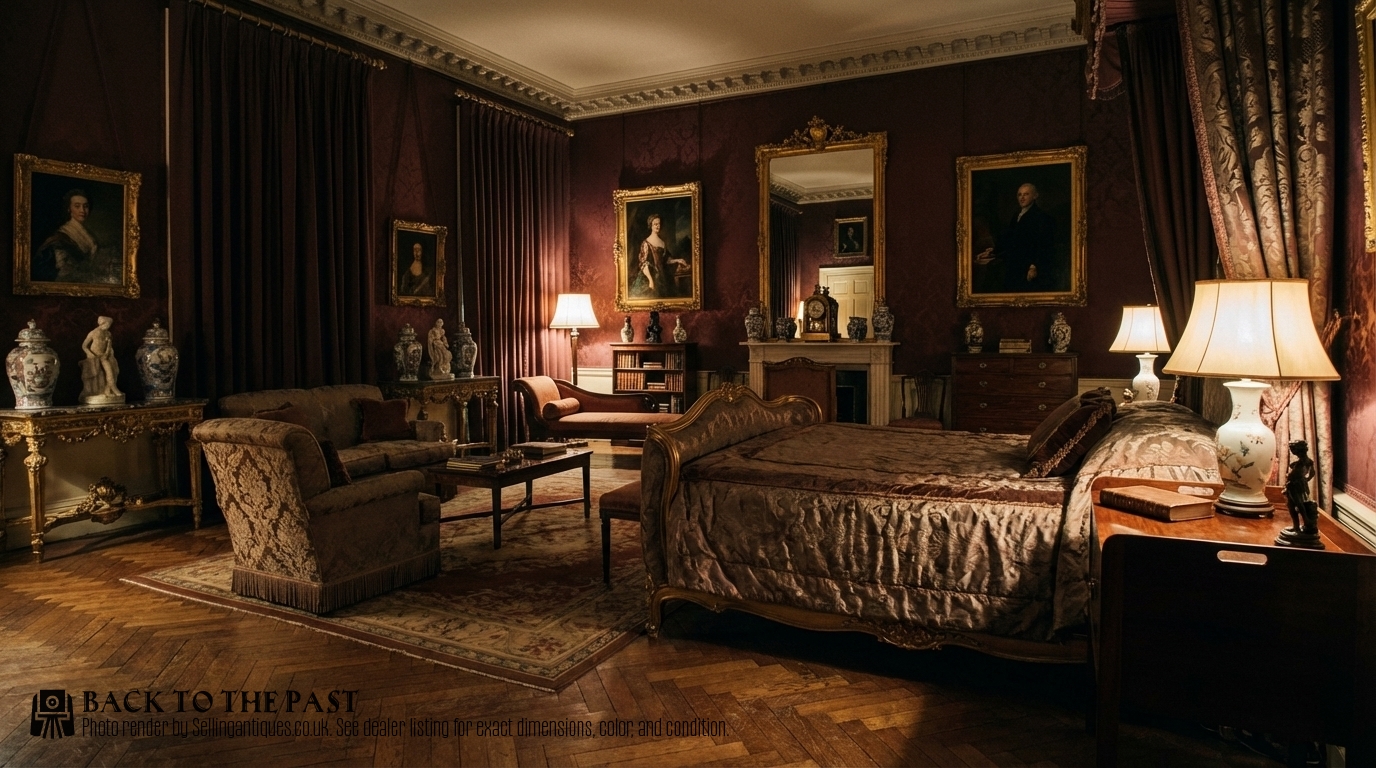
These pieces suit living spaces, bedrooms or hallways where their proportions provide surface display area and deep drawer storage.
Keep them away from direct heat sources and strong sunlight to protect the polished mahogany veneer and timber movement.
How do I distinguish a Regency chest from a Georgian one?
Regency pieces often display bolder curves, richer flame mahogany veneers and contrasting satinwood banding compared to earlier Georgian designs.
Overlapping stylistic periods mean many items incorporate elements from both design vocabularies.
Are these chests suitable for daily use?
Solid construction and sturdy oak drawer linings ensure these pieces remain practical for storing clothing and household items today.
Careful handling of the timber surfaces and traditional wax maintenance will preserve the finish.
What is the difference between straight and bow fronts?
Straight-front chests offer a clean, classical architectural silhouette suited to orderly room layouts.
Bow-front versions project outward, reflecting light across figured mahogany veneers to create a softer visual presence.