




Georgian Bed Commode
A georgian bed commode combines discreet convenience with cabinet-maker joinery, offering concealed function inside a polished timber chassis.
Georgian Bed Commode
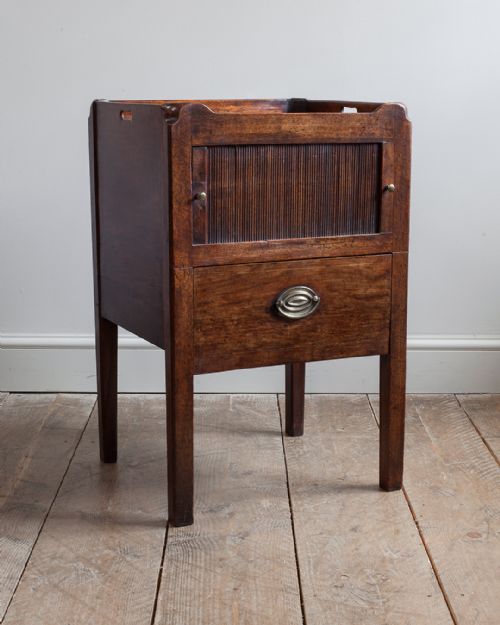
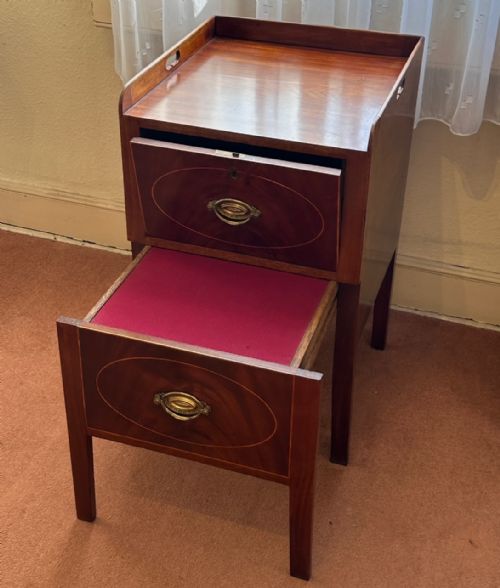
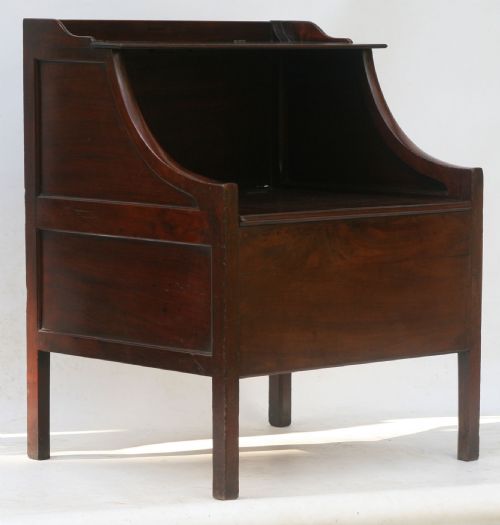
A georgian bed commode is a specialised item of bedroom furniture designed during the eighteenth and early nineteenth centuries. These pieces function primarily as bedside cabinets, cupboards, or nightstands while housing sanitary equipment or integrated steps.
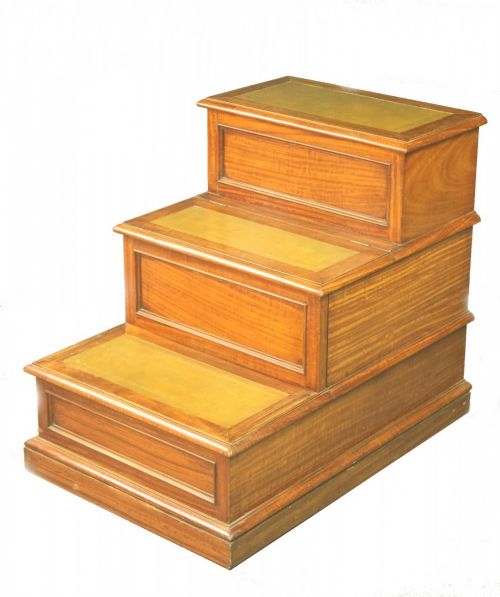
The versions most frequently met on this page span the Georgian, George III, and Regency periods, appearing in forms such as tray-top cabinets, tambour-fronted cupboards, and multi-tiered bed steps.
Makers of the era utilised robust forms that doubled as practical bedroom conveniences and refined decorative tables, employing mahogany and satinwood to suit domestic interiors.
How they were made
Cabinet-makers relied heavily on solid mahogany and flame mahogany veneers, often pairing darker tropical hardwoods with contrasting satinwood stringing or brass hardware. Timber selection prioritised rich grain figures, particularly on top surfaces and door panels.
Construction techniques included dovetailed drawer boxes, tambour slats running in hidden grooves, and hinged mechanisms that allowed steps or commode inserts to deploy smoothly from the main carcass.
Listings demonstrate a strong preference for mahogany across the Georgian, George III, and Regency periods, alongside occasional satinwood bed steps.
What varies in quality
Quality rests upon the crispness of the timber selection, the fidelity of period construction methods, and the integrity of moving parts such as tambour fronts and pull-out steps. Superior examples exhibit fine dovetailing, uncompromised veneers, and original brass fittings.
Plain utilitarian examples sit at one end of the scale, whilst attribution to known workshops or inclusion of complex dual-purpose mechanics elevates an object to the upper tier of craftsmanship.
Gillows·J Jarvis
The Georgian Bed Commode Glossary
- Tray top
- A raised gallery edging around the top surface designed to prevent items from rolling off. This feature appears frequently on Georgian bedside cabinets.
- Tambour
- Flexible narrow strips of timber glued to a canvas backing to form a sliding shutter door. It runs within a grooved track around a curved cabinet front.
- Bed steps
- A set of tiered steps used to climb into high historic beds. Many period iterations incorporate hidden commode drawers within the lower treads.
- Commode
- A piece of furniture containing a concealed chamber pot or sanitary insert. In bedroom contexts, it typically masquerades as a standard cabinet or nightstand.
Georgian Bed Commode: Frequently Asked Questions
What is a georgian bed commode?
A georgian bed commode is a dual-purpose bedroom cabinet produced during the eighteenth and early nineteenth centuries. It usually combines a bedside cupboard or nightstand with a concealed sanitary compartment.
Many surviving examples also integrate pull-out steps or tambour fronts, reflecting the practical needs of period bedchambers.
How were these commodes used?
They served as bedside furniture to hold night lighting, pocket items, and water jugs while discretely housing a chamber pot below. The integrated step variations also assisted occupants in climbing into high tester beds.
By day, closed doors and fitted tray tops maintained a tidy appearance in fashionable bedrooms.
What timber was used?
Mahogany served as the primary material for the majority of these pieces, frequently enhanced by figured flame mahogany veneers on drawer fronts and doors. Satinwood also appears as a secondary or contrasting timber.
Hardware typically incorporates cast brass handles, hinges, and occasional stamped maker details.
How do I date a bedside commode?
Dating relies upon stylistic markers such as George III straight-leg proportions, Regency reeded columns, and construction traits like hand-cut dovetails. The presence of specific hardware and secondary woods further narrows the period of manufacture.
Archival comparisons with documented cabinet-maker designs provide additional chronological anchors.