

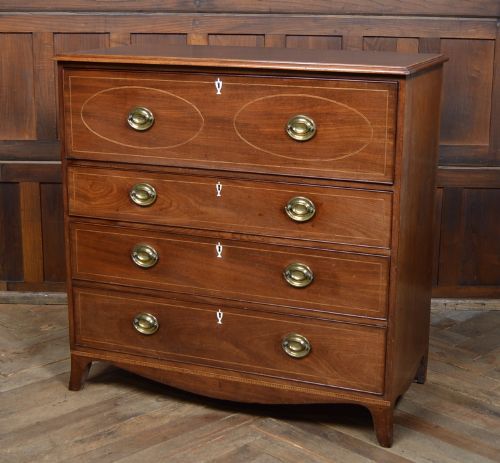


Regency Inlaid Chest
A regency inlaid chest brings structural dignity and precise cabinet-making together, offering polished storage enriched by contrasting timber details.
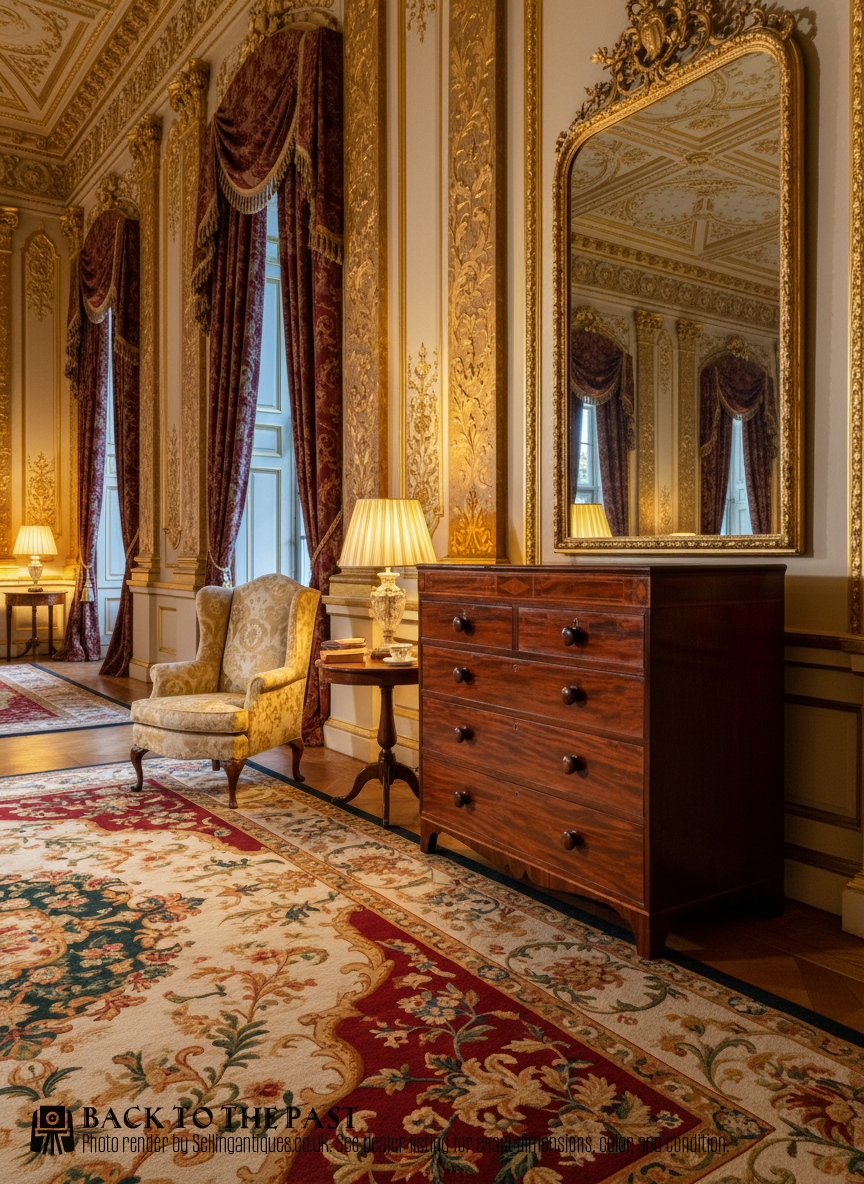
Regency Inlaid Chest
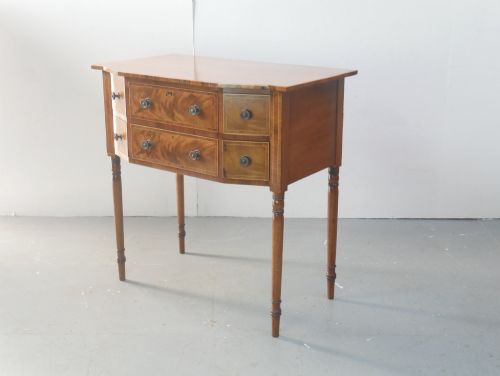
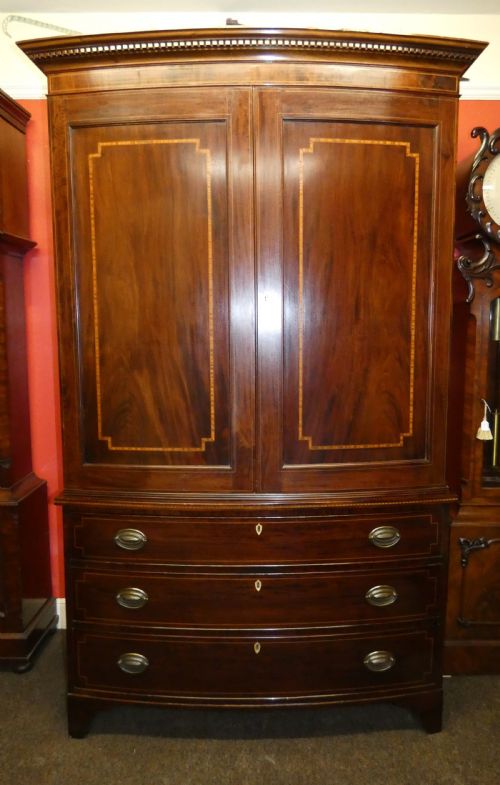
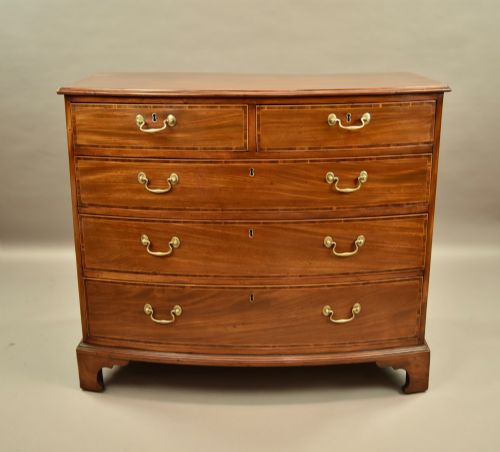
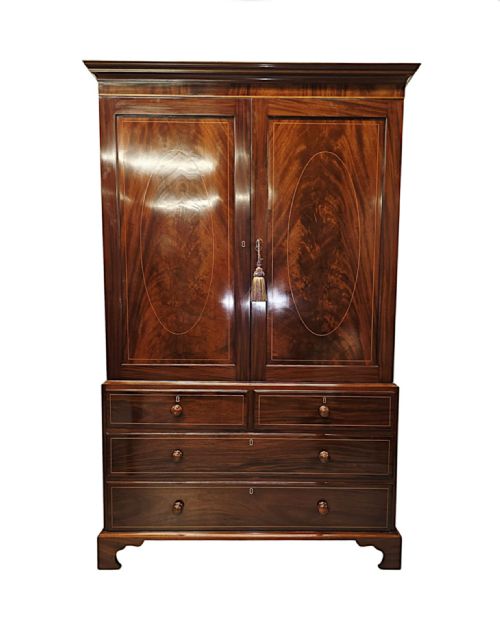
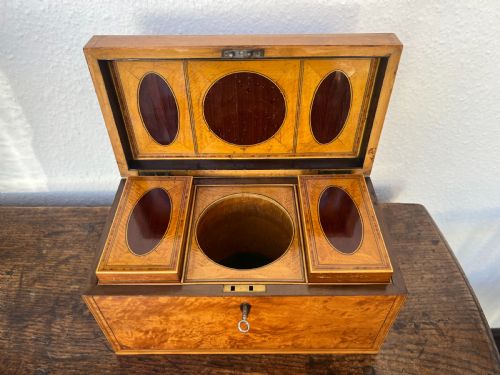
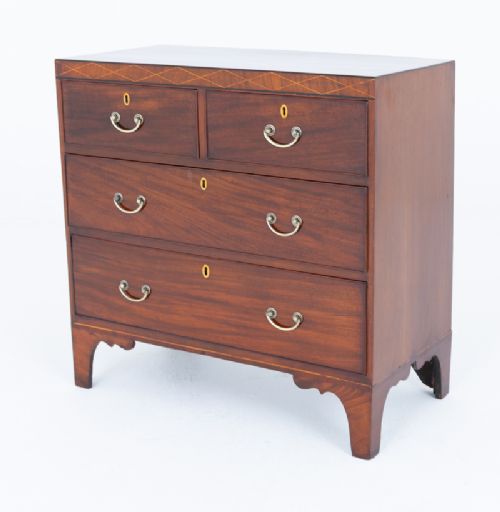
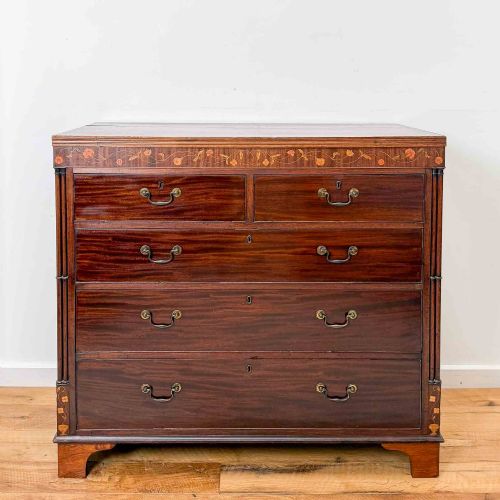
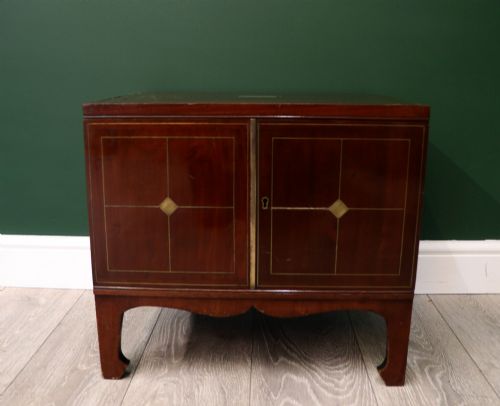
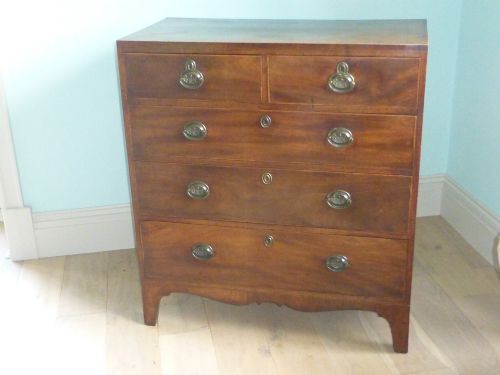
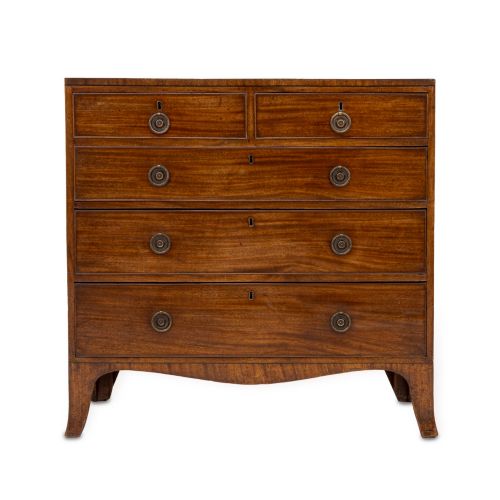
A regency inlaid chest primarily takes the form of a chest of drawers, often featuring a bowed front or flat façade produced during the early nineteenth century and related stylistic revivals. Buyers seeking a regency inlaid chest frequently encounter mahogany carcass work finished with satinwood, ebony, or boxwood banding.
Beyond standard drawer units, the category encompasses related storage forms such as linen presses, secretaire desks, and tallboys sharing the characteristic linear stringing and symmetrical grain patterns. These pieces originated in periods spanning late Georgian production through to later nineteenth- and early twentieth-century interpretations.
How they were made
Cabinet-makers constructed the primary carcases using solid timbers like mahogany, rosewood, and walnut, frequently applying figured veneers to exposed drawer fronts and top panels to create optical depth. Artisans then recessed contrasting woods such as boxwood, satinwood, and ebony into channels cut directly into the primary timber.
Brass hardware, including ring pulls, lion mask handles, and inlaid stringing, accented the structural lines, whilst secondary linings often utilised oak or pine for drawer interiors.
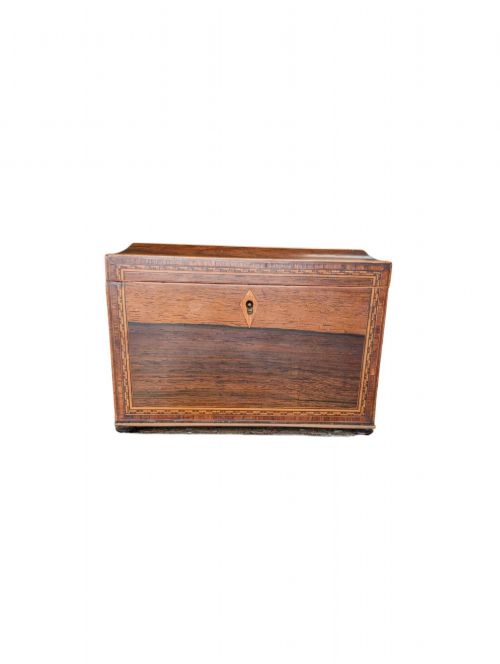
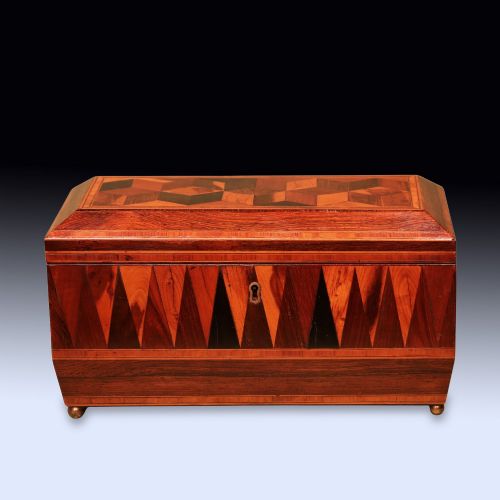
The documented forms span chests of drawers, linen presses, secretaires, bedside cabinets, cellarettes, and tea caddies.
What varies in quality
The standard of a regency inlaid chest rests upon the crispness of the timber selection and the precision of the parquetry and stringing work. Superior examples display tightly figured mahogany or rosewood matched across multiple drawers, with flush, hand-cut inlay that follows structural contours without filler.
Interior construction reveals workmanship through hand-cut dovetailing on drawer boxes, sound secondary timbers, and well-fitted original locks and brasses that complement the exterior proportions.
The Regency Inlaid Chest Glossary
- Bowfront
- A convex curved cabinet front that projects outward in a smooth arc. This curved profile requires skilled shaping of both the solid frame and individual drawer fronts.
- Stringing
- Thin lines of contrasting wood inlay used to outline drawers, panels, or tops. It creates delicate geometric borders that frame the main timber grain.
- Secretaire
- A cabinet or chest containing a fitted writing drawer with a drop-front fall. This internal desk space typically includes small pigeonholes and subsidiary drawers.
- Parquetry
- Geometric patterns formed by fitting small pieces of wood veneer together. Artisans apply this technique to decorative surfaces such as box lids and drawer fronts.
- Caddy top
- A raised, moulded tabletop profile resembling the lid of a traditional tea caddy. This decorative edging sits above the uppermost drawer of a chest.
Regency Inlaid Chest: Frequently Asked Questions
How do I identify a genuine period piece?
Examine the secondary woods inside the drawers, such as oak or pine, alongside hand-cut dovetail joints that show irregular spacing typical of period hand tools. Look for natural ageing in the timber and subtle irregularities in the inlay work rather than uniform machine production.
Check for matching grain continuity across stacked drawer fronts and confirm that internal blocks and backboards align with early nineteenth-century cabinet-making methods.
Where should I place a chest in my home?
These cabinets suit hallways, bedrooms, or living spaces where their polished timber surfaces and compact proportions can function as primary storage or display units. Keep them away from direct sunlight and strong heat sources to protect the delicate veneers and boxwood inlays from drying out.
Ensure the room maintains stable humidity levels to prevent the solid timber carcase and veneered surfaces from shifting or cracking over time.
What is the difference between a tallboy and a standard chest?
A standard chest typically provides three to five full-width drawers at a height suitable for placing an accessory or mirror on top. A tallboy incorporates an upper section over a lower base, creating a significantly taller storage unit with additional drawer capacity.
Both forms utilise similar mahogany and satinwood inlay techniques, but tallboys demand more vertical wall space and offer partitioned linen or clothing storage.
How should I clean polished mahogany surfaces?
Dust the exterior regularly with a soft, dry lint-free cloth to prevent particulate accumulation on the veneered and inlaid panels. Avoid using silicone-based sprays or modern household detergents that can penetrate the polished finish and damage the underlying wood.
Apply a traditional beeswax polish sparingly when the timber appears dry, buffing it gently with a clean cloth to maintain the natural lustre of the grain.