
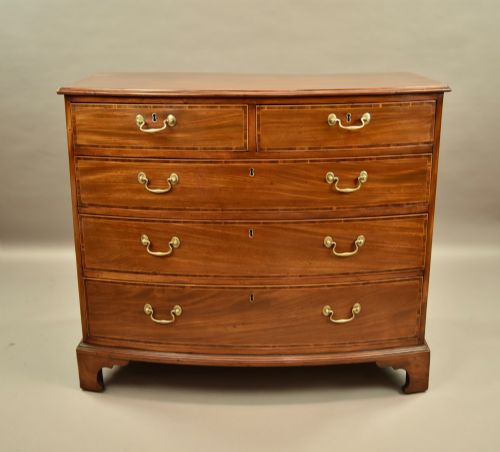
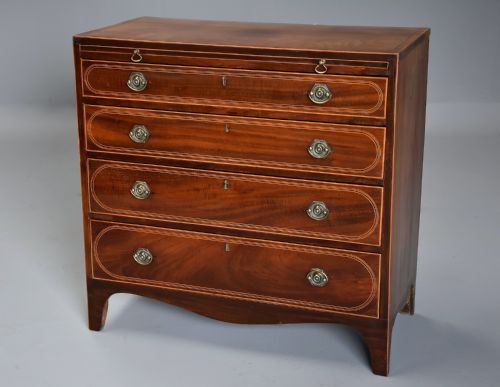
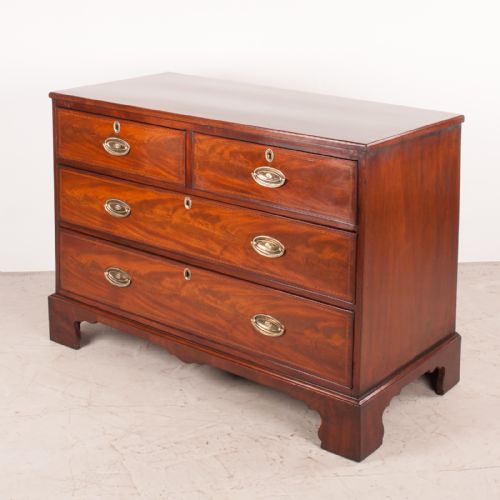
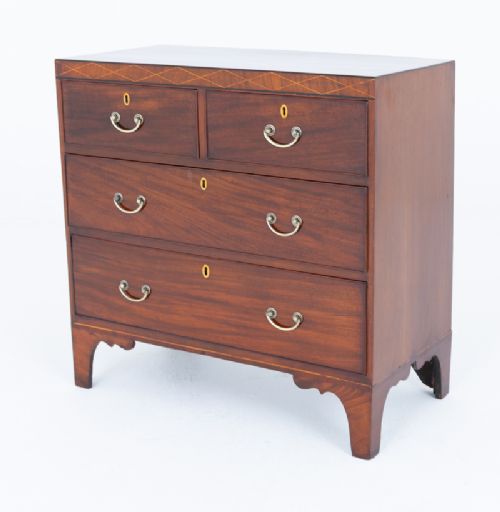
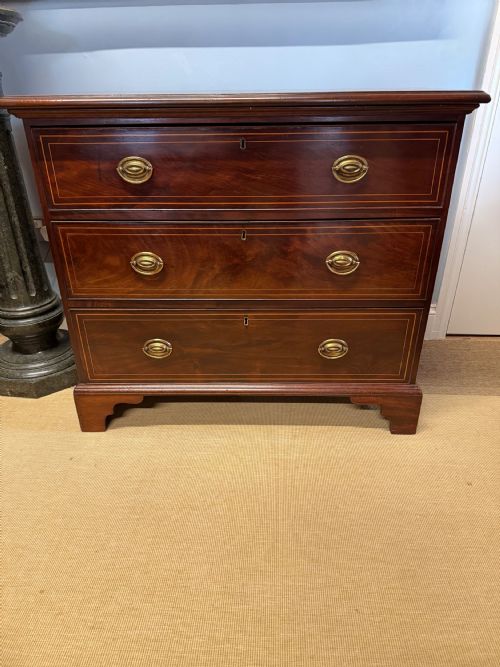

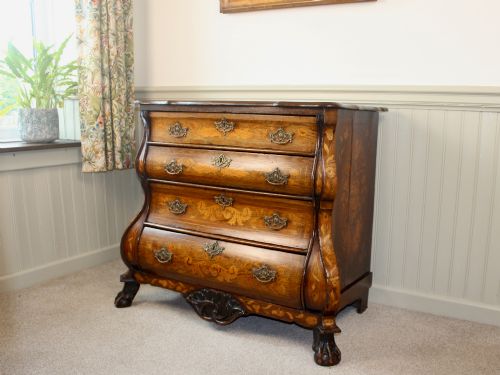

Georgian Inlaid Commode
A georgian inlaid commode brings architectural line and figured timber to a room, offering practical storage through drawers or cupboards.
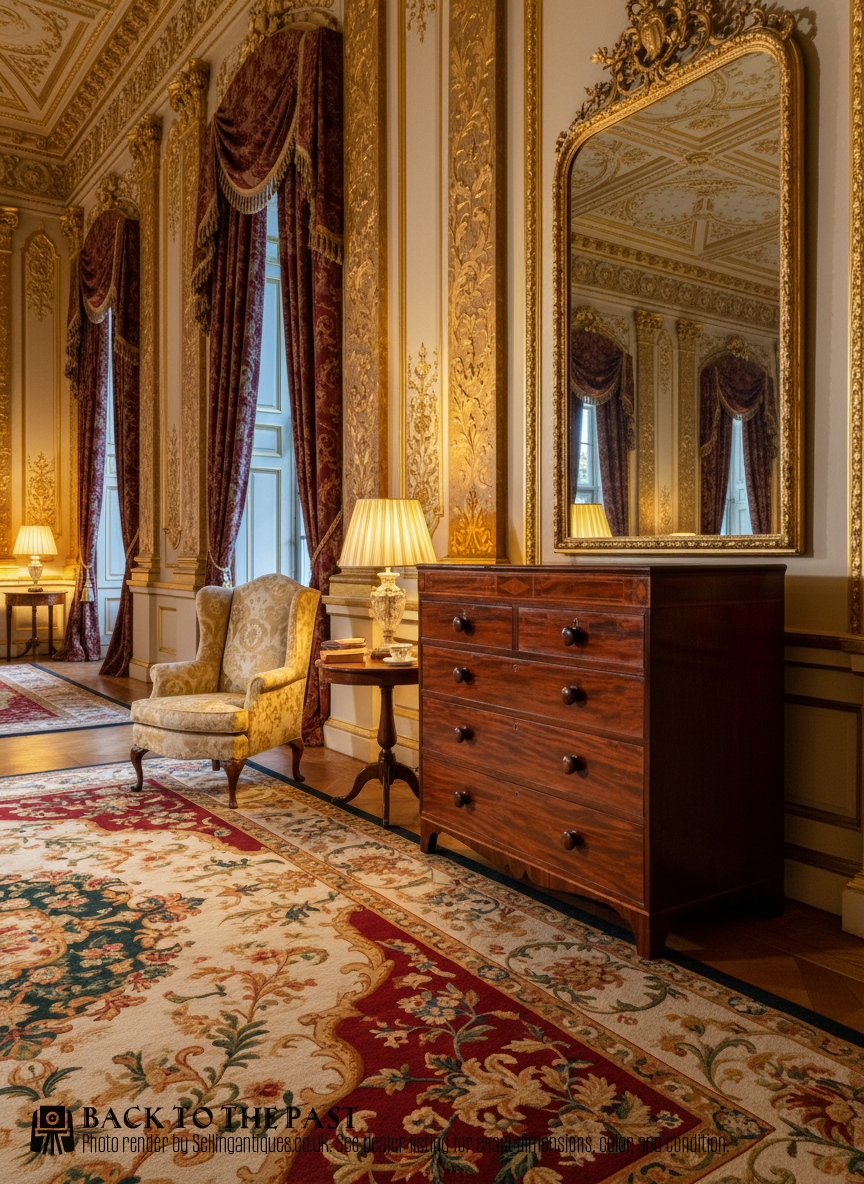
Georgian Inlaid Commode
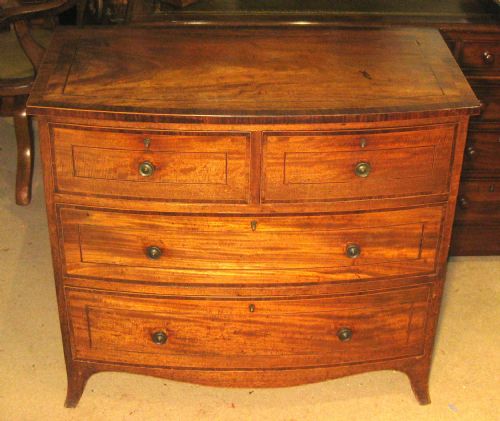
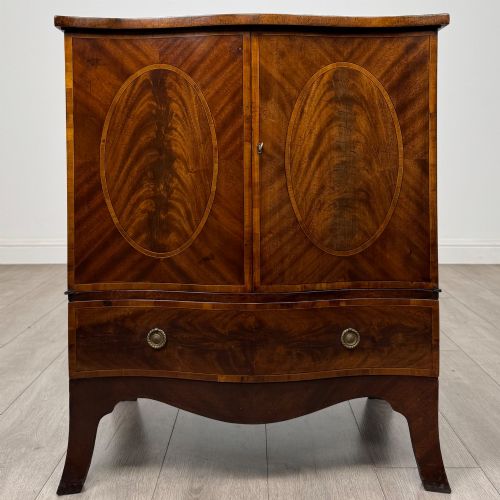
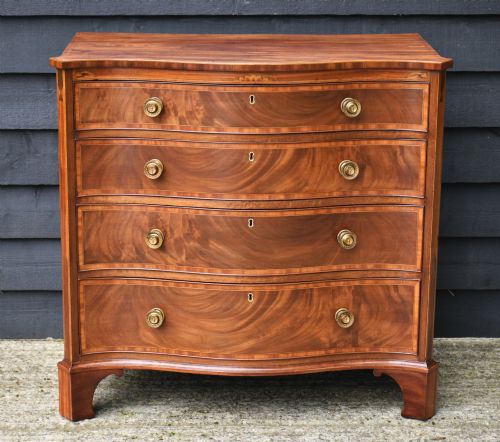
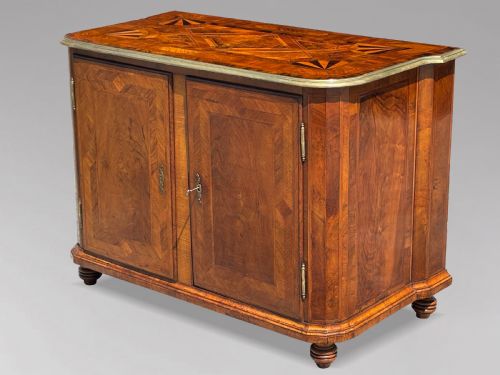
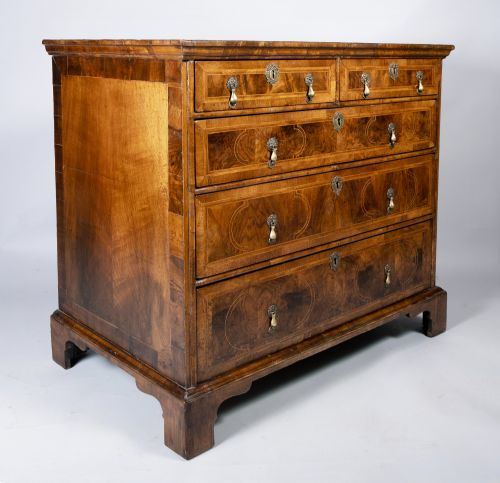
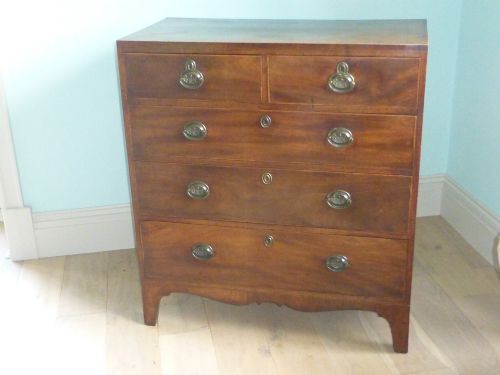
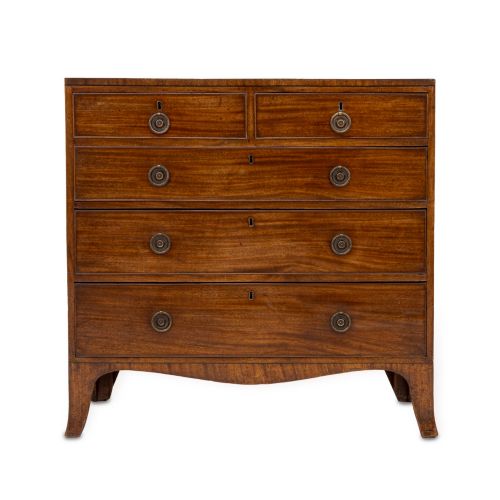
A georgian inlaid commode on this page typically appears as a mahogany, walnut, or satinwood chest of drawers, serpentine cabinet, or bedside night table. The pieces span periods from the eighteenth century through the georgian, regency, and victorian eras into later revivals.
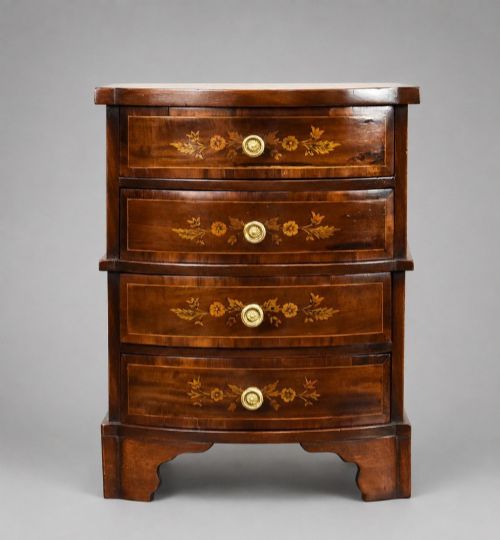
Makers and regional workshops in Britain, the Netherlands, Austria, and France produced these cabinets using native and exotic woods. Buyers encounter serpentine fronts, bow-fronted carcases, and demi-lune shapes alongside miniature furniture and side cabinets.
The term commode in these listings often overlaps with sophisticated chests of drawers and bedside cupboards fitted with intricate timber decoration. Surviving examples demonstrate the shift from formal eighteenth-century proportions to nineteenth-century interpretations.
Materials and Technique
Cabinetmakers constructed the carcases using primary timbers such as mahogany, walnut, and oak, providing a stable frame for decorative surfaces. Veneers of satinwood, burr elm, and burr yew created rich figured panels across drawer fronts and top boards.
Wood inlay and boxwood stringing defined the borders and geometric patterns, while marquetry introduced floral or pictorial scenes. Brass handles and escutcheons completed the construction, securing functional drawers and cabinet doors.
Listings feature mahogany, satinwood, walnut, and oak alongside specialised techniques like boxwood inlay and marquetry.
Judging Quality
The refinement of the timber figure and the precision of the boxwood or satinwood inlay set finer pieces apart from standard production. Crispness in the shaping of serpentine or bow fronts reveals the skill of the original cabinetmaker.
Proportion and the integrity of the secondary woods inside the drawers indicate the standard of construction. Original brass hardware and undisturbed surfaces carry greater weight among collectors.
Druce & Co·Mawer & Stephenson
The Georgian Inlaid Commode Glossary
- Serpentine
- A front shape curving inward centrally and outward at the ends, creating a flowing contour. This silhouette demands precise woodworking to follow the compound curves.
- Marquetry
- The art of forming decorative patterns using fitted pieces of various coloured woods and veneers. It differs from simple inlay by covering the entire surface in a mosaic design.
- Bow-front
- A convex curved cabinet front projecting outward in an arc. This form softens the rigidity of a standard rectangular chest.
- Demi-lune
- A half-moon shape used for side cabinets and commodes designed to stand flat against a wall. The curved top matches the sweeping apron below.
- Feather-banding
- Narrow strips of veneer arranged diagonally to resemble a bird feather, framing drawer perimeters. Cabinetmakers utilised this technique on walnut and mahogany pieces during the eighteenth century.
Georgian Inlaid Commode: Frequently Asked Questions
How do I identify a genuine georgian inlaid commode?
Examine the construction of the drawer linings and the timber selection used for the secondary framing, which should show appropriate age and hand-cut joinery. The inlay work must integrate smoothly into the primary wood rather than appearing superficial or modern.
Check for period-appropriate brass hardware impressions and consistent patination across the entire surface of the commode. Regional variations in walnut, mahogany, and satinwood help confirm the era of manufacture.
Where should I place a commode in a modern room?
These versatile pieces suit hallways, living rooms, or bedrooms, functioning as side tables, bedside cabinets, or primary drawer storage. Their compact footprints allow them to anchor awkward corners or narrow wall spaces.
Pair a serpentine or bow-fronted cabinet with simple modern surroundings to highlight the figured timber and intricate inlay work. Avoid placing antique wood in direct sunlight or beside active heat sources to protect the veneers.
What is the difference between a commode and a chest of drawers?
Historically, a commode referred to a decorative cabinet or low chest with doors or drawers, often of French or sophisticated British design. The listings demonstrate how the term covers both formal bedside night tables and grand serpentine drawer units.
Standard chests of drawers generally offer tall, straightforward storage, whereas commodes frequently emphasise curved fronts, marquetry, and architectural presence.
How do I care for antique wood inlay?
Maintain a stable indoor humidity and temperature to prevent the boxwood stringing and delicate veneers from lifting or cracking. Dust gently with a dry, soft cloth and avoid chemical polishes that can degrade the historic finish.
Apply a microcrystalline wax sparingly if the timber appears dry, buffing it lightly to preserve the natural lustre of the satinwood and mahogany.