





Neoclassical Inlaid Drawers
Neoclassical inlaid drawers bring balanced proportions and geometric wood patterns into a room, offering practical storage alongside period design.
Neoclassical Inlaid Drawers
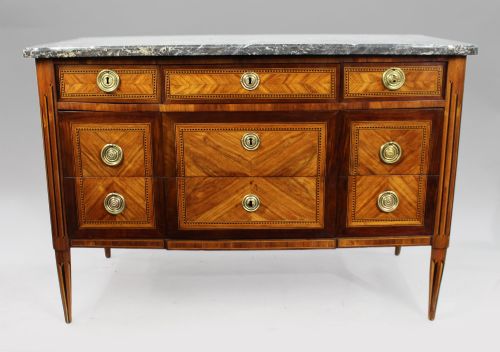
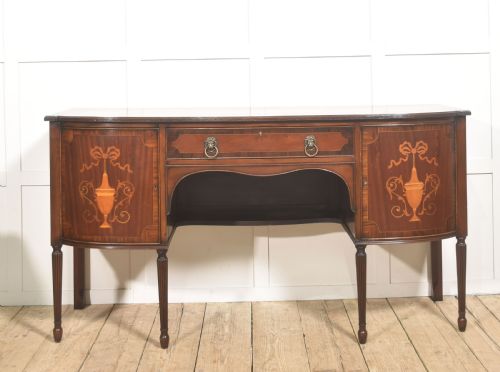
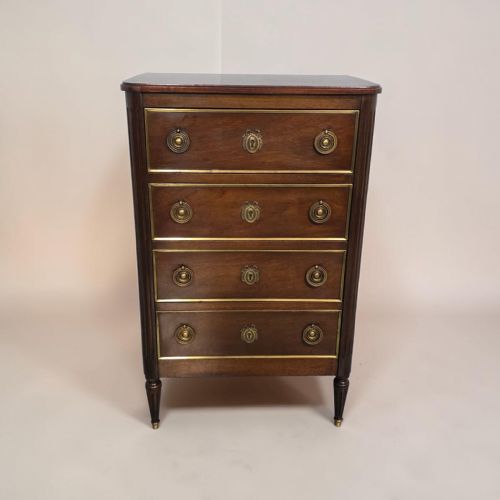
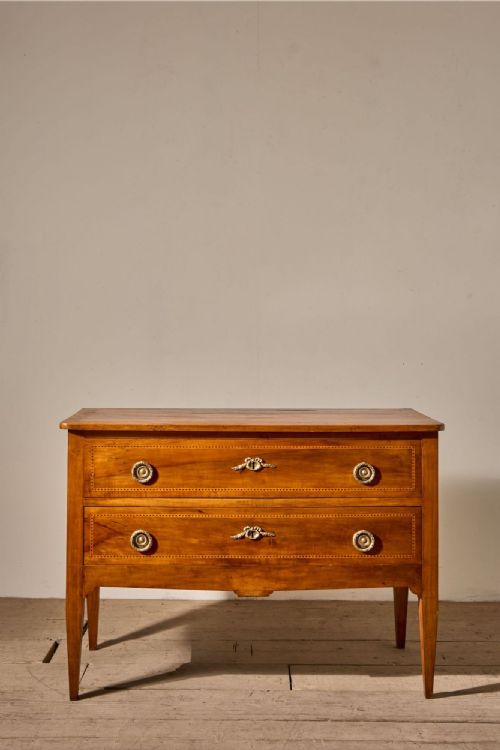
Neoclassical inlaid drawers appear most frequently as commodes, chests of drawers, and writing tables spanning the eighteenth and nineteenth centuries. These pieces reflect regional variations from English Georgian designs to French Louis XVI, Dutch, Italian, and Swedish workshops.
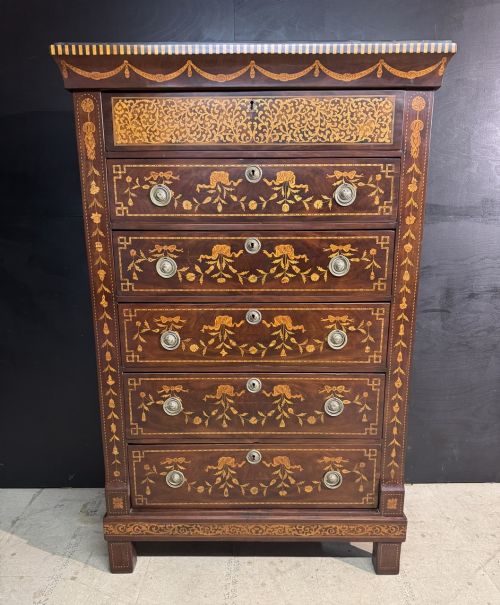
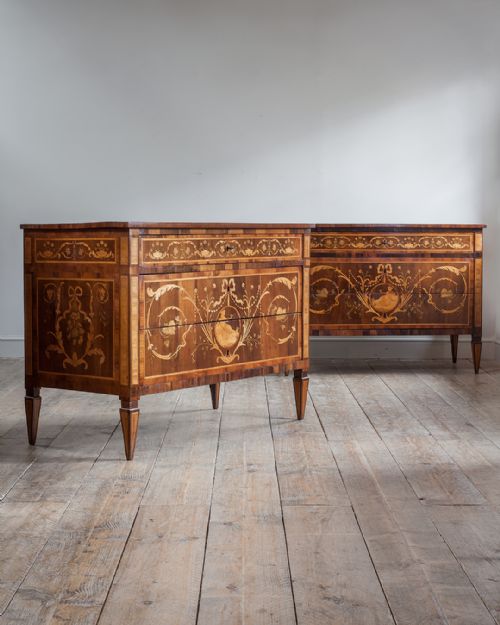
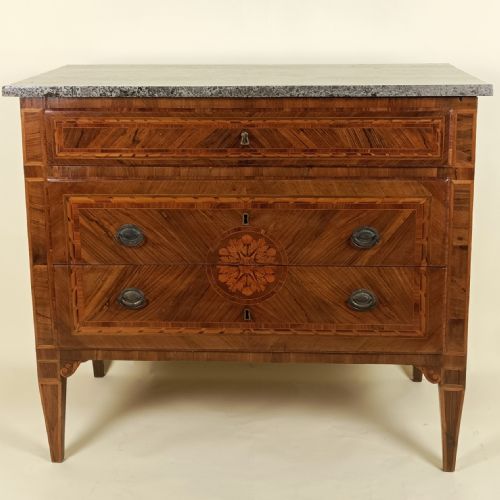
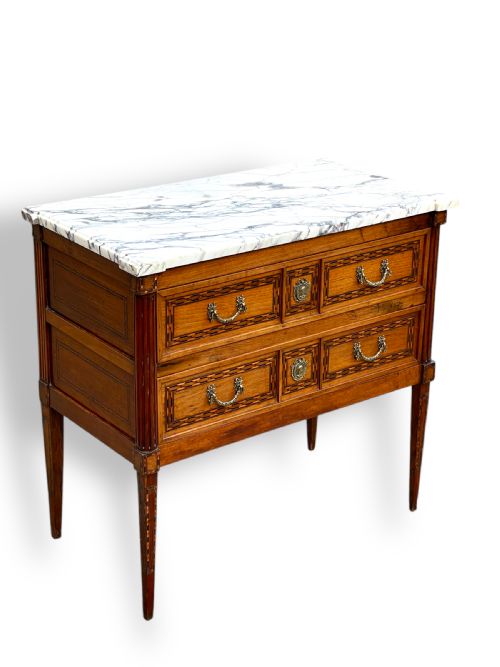
The dominant forms include serpentine cabinets, marble-topped commodes, and tall chests featuring precise wood inlays. Buyers encounter both continental European examples with elaborate floral or geometric marquetry and British iterations focusing on satinwood and mahogany veneers.
Materials and Construction
Cabinet makers utilised a foundation of solid timbers such as walnut, mahogany, cherrywood, or birch, applying contrasting veneers and wood inlay to create decorative surface patterns. Marquetry designs incorporated fruitwood and exotic timbers, whilst parquetry laid out geometric tile arrangements.
Many high-status commodes and side tables integrated shaped marble tops fitted directly above the drawer structure. Metal elements such as brass handles, mounts, and ormolu details complemented the wooden cabinetry.
Distinguishing Quality
Quality rests upon the precision of the wood inlay and the crispness of the carving across the frame. Pieces with finely detailed marquetry work and well-matched timber grains sit at the upper end of the scale.
Structural integrity of the drawer boxes and the harmonious integration of marble tops with the wooden base define the standard of manufacture. Regional finesse in stylistic execution marks the distinction between standard workshop output and exceptional cabinet work.
The Neoclassical Inlaid Drawers Glossary
- Marquetry
- Decorative veneer patterns assembled from various coloured woods to form pictorial or floral designs. This technique covers the entire drawer front on many continental pieces.
- Parquetry
- Geometric wood inlay arranged in repetitive patterns such as cubes or chequers. It creates a structured surface texture on table tops and commode facades.
- Ormolu
- Gilded bronze mounted onto furniture for decorative effect. This material appears frequently on French and continental pieces.
- Serpentine
- A curved line that undulates inward and outward across the front of a cabinet. It requires advanced woodworking skill to fit drawers to this shape.
- Commode
- A low chest of drawers, often fitted with a marble top. The term applies broadly to continental European case furniture from the period.
Neoclassical Inlaid Drawers: Frequently Asked Questions
What defines neoclassical furniture?
Neoclassical furniture draws upon classical antiquity, prioritising symmetry, straight lines, and restrained ornamentation over earlier curved excesses. The style values balanced proportions and architectural details.
Inlaid pieces utilise geometric veneers, urn motifs, and floral marquetry rather than heavy carving, maintaining a clean and orderly visual rhythm.
How do I care for antique wood inlay?
Maintain stable indoor humidity and temperature to prevent the underlying timbers and delicate veneers from expanding or contracting. Avoid placing pieces near direct heat sources or in harsh sunlight.
Apply high-quality beeswax periodically to nourish the wood surface and preserve the natural sheen of the inlay without sealing the pores.
Where were these pieces made?
These pieces originate from across Europe, with distinct regional traditions documented in England, France, Italy, Holland, Sweden, and Austria. Each region developed specific preferences for timbers and decorative motifs.
Italian and Dutch makers favoured elaborate floral marquetry, whilst English workshops concentrated on figured mahogany and satinwood veneers.
How do I distinguish eighteenth and nineteenth century pieces?
Eighteenth century examples often display hand-cut dovetailing, native fruitwood inlays, and specific regional structural traits associated with Georgian or Louis XVI periods. Timber choices and internal construction methods provide primary clues.
Nineteenth century pieces occasionally incorporate broader mechanical production techniques or revival styles while maintaining traditional cabinet-making skills.