
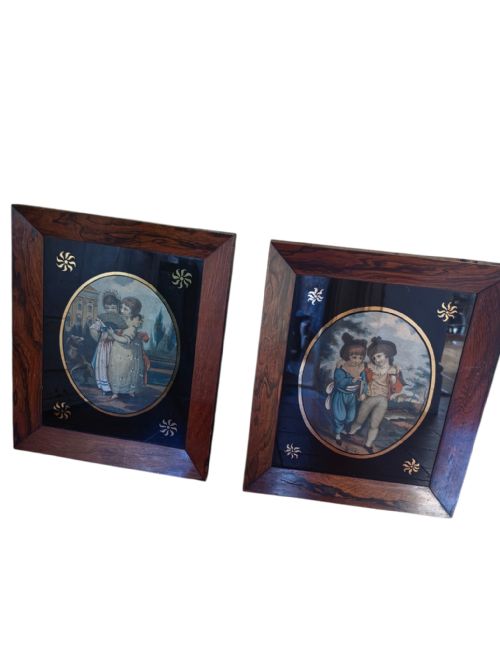


Regency Glass Pictures
Regency glass pictures are intricate reverse glass paintings and prints offering a distinct glimpse into early nineteenth-century visual culture through vibrant pigment and delicate framing.
Regency Glass Pictures
When searching for regency glass pictures, collectors encounter a specialised category of wall art primarily originating from the nineteenth century, including the Regency and Georgian periods. These works encompass reverse glass prints, painted silhouettes, silkwork embroideries combined with black glass, and chrystoleums.
The most common examples on this page are reverse glass prints and engravings depicting historical battles, allegorical scenes such as the seasons, and royal portraits. Pieces range from single devotional or commemorative prints to pairs and sets framed in rosewood, maple, or original giltwood.
How they were made
Makers produced these works by applying pigment and engraving directly onto the reverse side of a glass sheet, often pairing the finished plate with paper prints or silkwork. This technique protected the delicate paintwork and metallic foils from environmental damage while imparting a luminous depth to the image.
Mouldings of wood such as maple and rosewood, alongside giltwood and gesso, housed the fragile glass panels. Some elaborate wall mirrors incorporated a divided two-section construction featuring a reverse glass print positioned above the looking glass.
Listings feature works spanning the Georgian, Regency, and Victorian periods, utilising materials such as reverse glass, pigment, maple, and giltwood.
What varies in quality
The distinction between standard and superior pieces rests on the precision of the reverse painting or engraving and the preservation of the original pigments. Finer examples retain their vivid coloration without extensive flaking or moisture damage beneath the glass.
Framing also dictates overall merit, with original period surrounds in rosewood, maple, or giltwood elevating the piece above those housed in later replacements. Intact sets and pairs display a higher degree of historical integrity than single, isolated plates.
The Regency Glass Pictures Glossary
- Reverse glass painting
- An artistic technique where the image is painted or engraved on the back of a glass sheet and viewed from the front. This method creates a glossy, saturated surface finish unique to the period.
- Chrystoleum
- A method of applying a coloured photograph or print to glass, hand-painting it from behind, and clarifying the paper with oil. This process became popular for producing ornate narrative scenes.
- Pier mirror
- A tall wall mirror designed to fit the narrow wall space between windows. These frequently incorporated decorative glass panels or prints within their upper sections.
- Mezzotint
- A printmaking process that achieves tonal gradation through roughening the copper plate. It provided the dark, rich backgrounds often utilised in silhouette and portrait work on glass.
Regency Glass Pictures: Frequently Asked Questions
What is a reverse glass print?
A reverse glass print involves adhering an engraving face-down onto glass, rubbing away the paper backing, and hand-colouring the remaining transparent ink. This creates a smooth, luminous finish distinct from standard paper prints.
These pieces were typically framed for domestic display in parlours and drawing rooms during the early nineteenth century, serving both decorative and commemorative functions.
Where were these pictures hung?
In period interiors, these works hung in principal reception rooms, often placed between windows as part of pier glass arrangements or mounted above mantelpieces. Their reflective glass surfaces helped bounce natural candlelight around the room.
Today, they suit similar spaces away from direct sunlight, which can fade the delicate pigments and discolour the underlying paper.
How do I date a glass picture?
Dating relies heavily on the framing materials, backing boards, and the subject matter depicted, such as specific military engagements or Regency monarchs. Earlier nineteenth-century examples often feature hand-beaten glass and native wood veneers like maple and rosewood.
Examining the construction of the frame and the type of paper used on the reverse provides further clues to the manufacturing decade.