


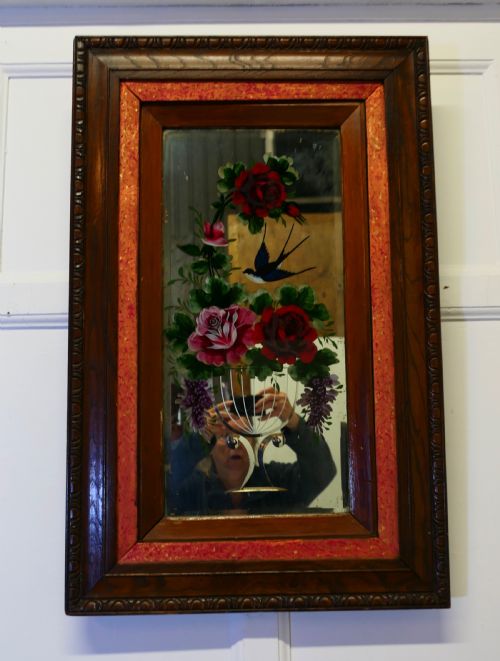


Verre Eglomise Picture
A verre eglomise picture brings gilt and painted depth behind glass, capturing Regency silhouettes and Georgian portraits in bright, reflective detail.
Verre Eglomise Picture
Verre eglomise picture examples on this page span Georgian, Regency, and Victorian periods, often presenting reverse glass paintings, prints, and silhouettes.
The most common forms you will encounter are framed wall art, silhouette portraits, and reverse glass engravings, frequently set in period giltwood or ebonised wood frames.
Subjects range from equestrian sporting art and religious needlework to detailed portrait miniatures of gentlemen and ladies.
Materials and construction
Makers applied paint, gold leaf, and prints directly to the reverse of glass panels, protecting the delicate surface behind the transparent medium.
Frames utilise wood, giltwood, and ebonised wood, sometimes incorporating silk, paper, and woolwork components to mount the central glass or textile panel.
Materials across these listings include silk, woolwork, gold leaf, and painted glass, housed within giltwood and ebonised wood frames from the eighteenth and nineteenth centuries.
Assessing quality
Quality rests upon the crispness of the reverse painting or engraving and the preservation of the delicate gold leaf detailing behind the glass.
The integrity of the original wood or giltwood frame contributes heavily to the piece, as does the clarity and condition of the vintage glass panel.
Abraham Cooper·John Miers·Henry Corbould
The Verre Eglomise Picture Glossary
- Verre eglomise
- A process of applying cold painting and gold leaf to the reverse side of glass. This technique produces a mirror-like sheen that frames the central imagery.
- Reverse glass painting
- An artwork created by painting directly onto the back of a glass sheet so the image is viewed through the front. It creates a smooth, glossy finish.
- Silhouette
- A solid shape of a person or scene, usually a profile cut from paper or painted in black. These are frequently mounted behind glass with painted details.
- Mezzotint
- A printmaking process where the image is worked from dark to light on a roughened metal plate. It yields rich tonal gradations found in period frames here.
Verre Eglomise Picture: Frequently Asked Questions
What is a verre eglomise picture?
A verre eglomise picture is an artwork created by applying paint and gold leaf to the reverse side of a glass panel. This method produces a luminous, reflective backdrop for portraits, prints, or scenes.
Such pieces are typically housed in period wooden frames, ranging from simple ebonised profiles to elaborate gilded mouldings.
How do you date these pictures?
Dating relies on stylistic clues in the costume, hair, and framing materials, alongside techniques typical of the Georgian, Regency, and Victorian eras.
Signatures, inscriptions on the reverse, and the construction methods of the wood frames also help pinpoint the period of creation.
Where should I hang them?
These pictures suit intimate spaces where their reflective glass and delicate gold leaf can be appreciated at close range. Avoid placing them in direct, harsh sunlight to protect the fragile pigments and paper components behind the glass.
Pairing them with traditional wooden furniture or neutral walls allows the antique frames to stand out.
Are silhouettes and glass paintings the same?
While both use glass as a protective medium, silhouettes focus on profile portraits cut from paper or painted in solid dark tones. Reverse glass paintings involve more complex polychrome imagery applied directly to the glass plate.
Both techniques were popular during the Georgian and Regency periods for portable portraiture.