


Victorian Horse Racing Art
Victorian horse racing art captures the speed and drama of the turf through period oils, aquatints, and engravings.
Victorian Horse Racing Art
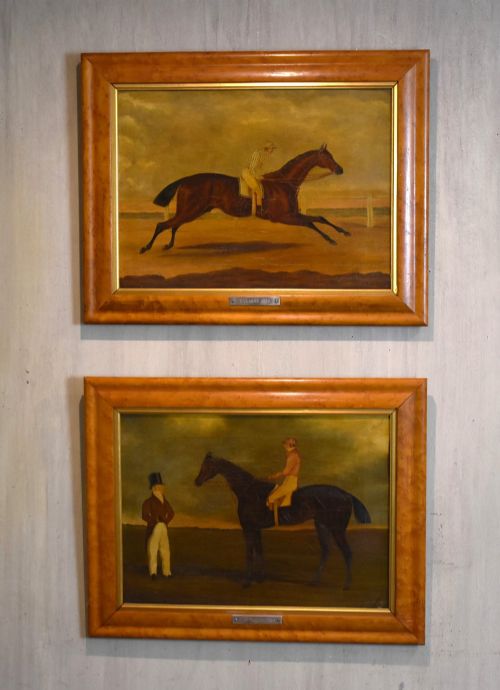
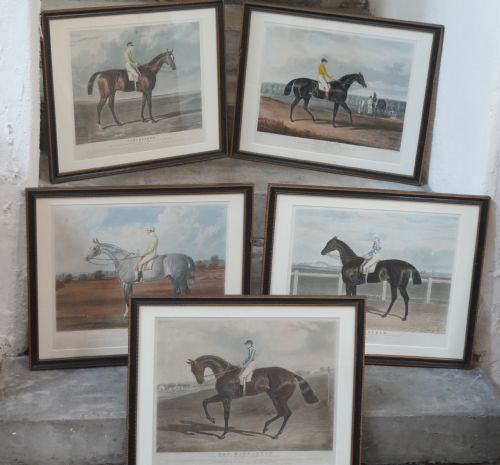
Victorian horse racing art comprises nineteenth-century paintings, prints, and needlework depicting famous racehorses, jockeys, and major tracks like Epsom. Buyers browsing this selection encounter framed oil paintings, sets of aquatints, chromolithographs, and detailed silk needlework pictures.
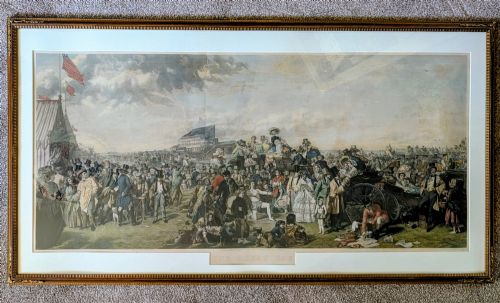
The material ranges from oil on canvas and reverse glass painting to paper prints framed in gilded wood. Many pieces focus on specific historical events, such as the Derby Day or named winners with their jockeys up.
Materials and methods
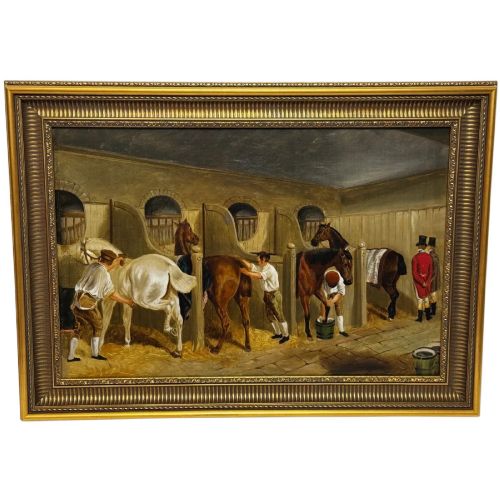
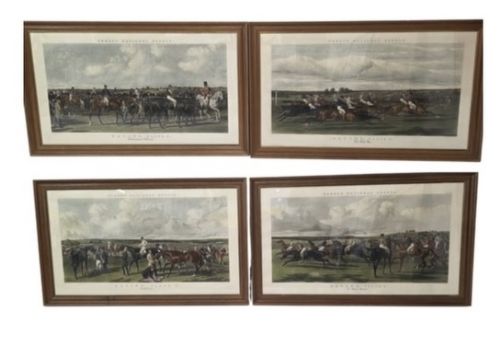
Makers utilised oil on canvas for portraits of renowned racehorses and commissioned racing scenes, applying pigments with precision to capture coat sheen and muscle tone. Paper works rely on ink, engraving, and chromolithography to produce detailed multi-plate sets of prints and Vanity Fair pages.
Framing often involves gilt wood and gilded wood, protecting delicate works on paper under glass while complementing the domestic display of nineteenth-century sporting interiors.
Jockeys in Victorian prints frequently possess remarkably solemn expressions, as though posing for a solemn family portrait rather than galloping at speed.
Distinguishing quality
Quality rests upon the directness of the observation and the skill of the hand, whether in the delicate brushwork of an oil portrait or the crisp impression of an aquatint series. Original works by named artists command attention through anatomical accuracy and spirited composition.
The condition of the paper, the integrity of the original frame, and the clarity of print impressions also separate standard decorative pieces from finer collector items.
William Powell Frith·George Finch Mason·John Frederick Herring Snr·Alfred Wheeler·Thomas Worth·John Parker Davis
The Victorian Horse Racing Art Glossary
- Aquatint
- An intaglio printmaking technique that produces tonal areas resembling watercolours. It allows artists to achieve subtle shades for atmospheric racing scenes.
- Chromolithography
- A colour lithographic printing process using multiple stones or plates. It created vibrant double-page periodical plates and prints during the period.
- Engraving
- A method of cutting design lines into a metal plate to hold ink for printing. Impressions show fine, crisp details suitable for multi-plate sets.
- Silk needlework
- Stitched textile art created using fine silk threads. These pieces rendered complex track layouts and landscapes in coloured thread.
- Reverse silhouette painting
- An artwork painted on the underside of glass, viewed from the front. This delicate technique protected the pigment from dust and damage.
Victorian Horse Racing Art: Frequently Asked Questions
How do I identify a period racing print?
Look closely at the paper stock, printing technique, and framing materials. Nineteenth-century examples often utilise aquatint, engraving, or chromolithography rather than modern offset printing.
Examine the margins and reverse for period stamps, collector marks, or publication details that verify the nineteenth-century origin.
Were these artworks meant for homes or clubs?
Sporting art decorated both private Victorian drawing rooms and gentlemen's clubs. Framed oils and large needlework pictures served as prestigious wall displays for enthusiasts.
Smaller prints and periodical plates offered an accessible way for middle-class racing fans to collect images of their favourite horses.
What subjects appear most frequently?
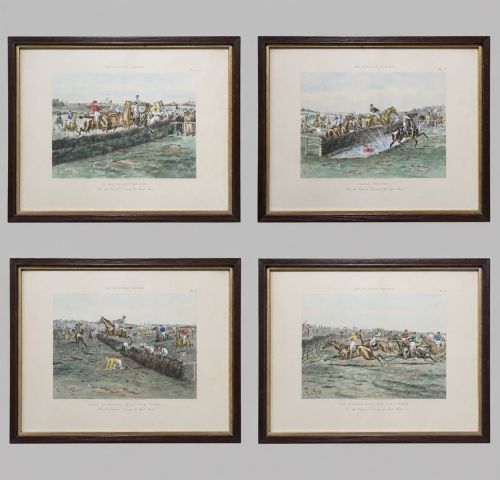
Portraits of champion racehorses with their jockeys up dominate the painted works, often commemorating specific cup winners and historic races. Track scenes, steeplechase jumps, and multi-plate humorous sequences also recur frequently across the print medium.
Many depictions reference famous venues such as Epsom Park or specific historical racing stakes.
How should I care for paper racing prints?
Keep works on paper away from direct sunlight to prevent fading of the inks and discolouration of the paper stock. Maintain stable indoor humidity levels to protect both the paper and any original wooden or gilded frames.
Ensure framing uses acid-free backing boards if reframing becomes necessary over time.