



Regency Glass Engraving
Regency glass engraving brings together brilliant lead crystal and sharp wheel-cut decoration, offering collectors tactile pieces of early nineteenth-century drinking culture.
Regency Glass Engraving
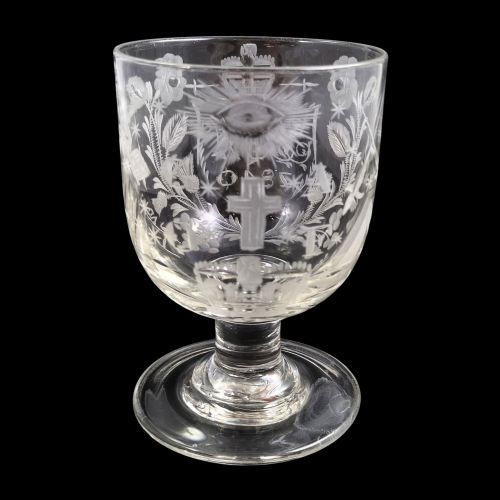
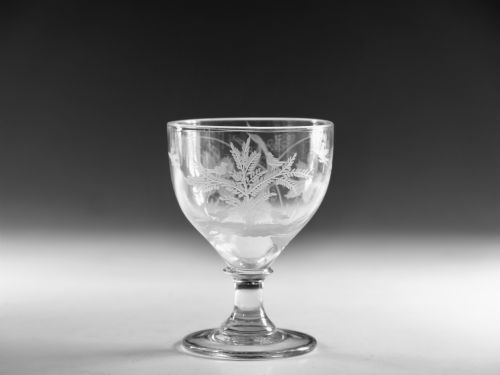
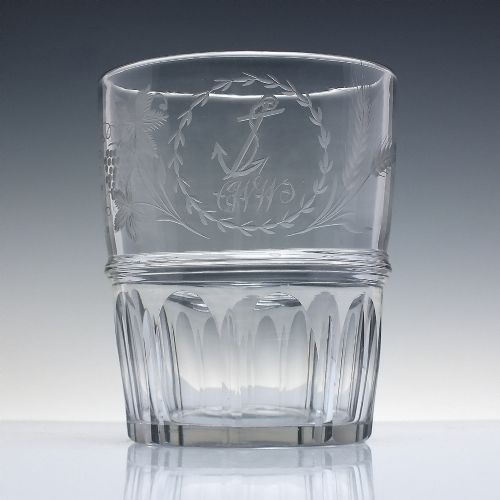
Regency glass engraving covers heavy lead-crystal drinking vessels, decanters, and reverse glass paintings originating predominantly from the Georgian and Regency periods. Rummers form the core of what surfaces here, often featuring deep wheel-cut motifs like hops, barley, and armorial crests.
Buyers will frequently encounter substantial rummers with square lemon squeezer bases, alongside decanters and reverse glass panels depicting historical subjects. The forms remain functional and heavy in the hand, reflecting the tavern and dining habits of the early eighteen-hundreds.
Judging quality
Quality rests on the clarity of the metal, the crispness of the wheel engraving, and the structural weight of the piece. Superior rummers and decanters display sharp, precise cutting without soft edges or cloudiness in the crystal.
The complexity of the subject matter also dictates value, moving from simple foliar motifs to detailed armorial crests, architectural views like the Sunderland Bridge, or portrait work on reverse glass panels.
Queen Caroline's likeness peers out from more than one Regency glass panel, reminding us that eighteenth-century politics made great mantelpiece conversation.
Ganthony of London·Henry Corbould
The Regency Glass Engraving Glossary
- Rummer
- A large, heavy drinking glass popular in the eighteenth and nineteenth centuries, typically used for ale, wine, or punch. These vessels often sit upon sturdy stems and heavy feet.
- Lemon squeezer base
- A square, heavily moulded glass foot shaped like a citrus squeezer, commonly found on rummers and decanters from the Georgian period. This design added stability to heavy drinking vessels.
- Reverse glass painting
- An artwork created by painting or drawing on the back of a piece of glass, viewed from the unpainted front side. Regency examples include portraits and political subjects.
- Lead crystal
- Glass containing a significant proportion of lead oxide, which increases brilliance, weight, and workability. This material allowed artisans to execute deep and sharp wheel engravings.
Regency Glass Engraving: Frequently Asked Questions
What is a rummer glass used for?
Rummers served as substantial drinking vessels for ale, cider, or punch during communal gatherings and tavern meals in the Georgian era. Their thick walls and heavy bases made them durable for daily use.
Collectors today appreciate them as display pieces or for occasional table use, connecting directly with nineteenth-century social traditions.
What is a reverse glass engraving?
Reverse glass engraving involves incising or painting directly onto the rear surface of a glass panel to create a finished image viewed from the front. These works often depicted prominent figures or historical events.
Protected by the glass itself, the delicate imagery survives with remarkable clarity when properly framed and kept away from damp conditions.
How can I tell Georgian glass from later periods?
Georgian glass typically exhibits a darker metal tone, heavy lead content, and hand-tooled pontil marks on the underside. The engraving work shows the organic irregularities of freehand wheel cutting.
Later Victorian pieces often feel more uniform in thickness and lack the specific heft associated with early nineteenth-century rummers and decanters.