

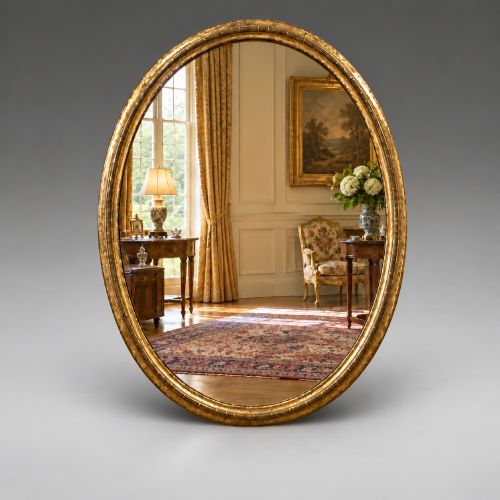
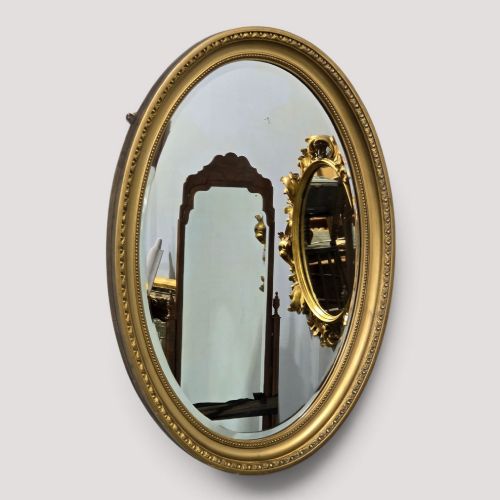
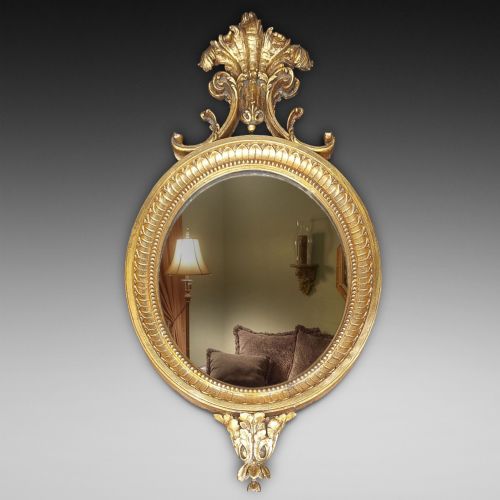
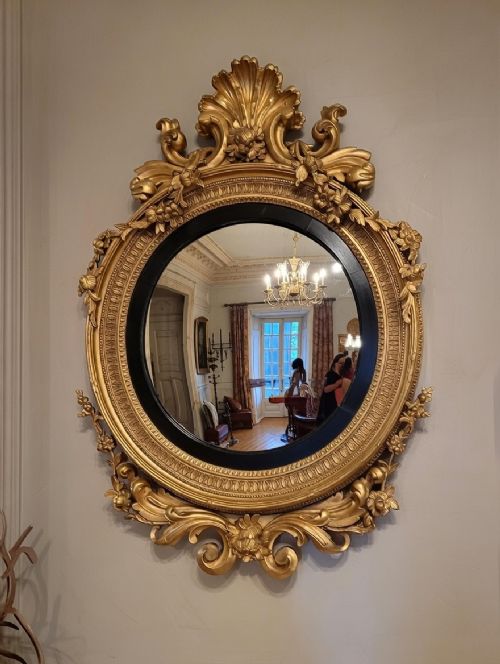


Regency Gilt Oval Mirror
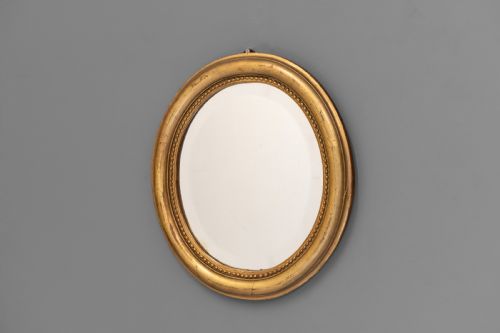
A regency gilt oval mirror brings a bright, classical focus to a room, offering refined proportions and warm gilded reflection.
Regency Gilt Oval Mirror
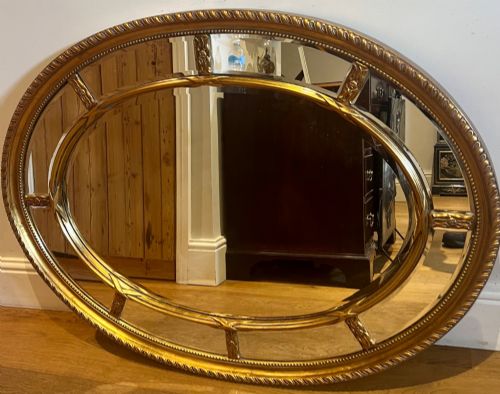
When searching for a regency gilt oval mirror, buyers encounter a selection spanning the nineteenth century alongside later revivals from the Victorian era and the nineteen-thirties. The forms range from compact wall-hanging pieces and miniature pairs to grand overmantels designed to sit above a fireplace.
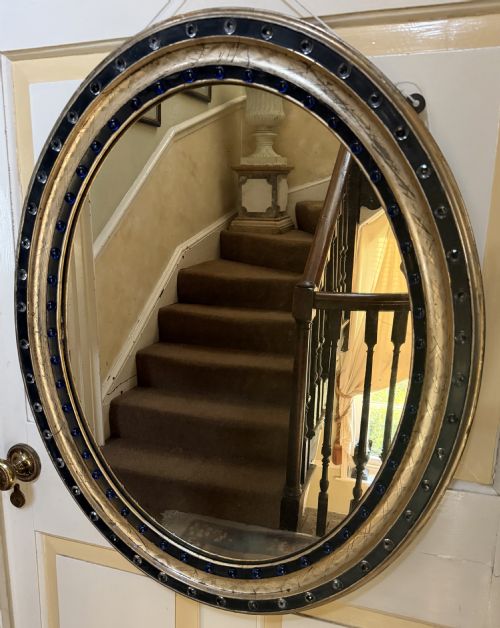
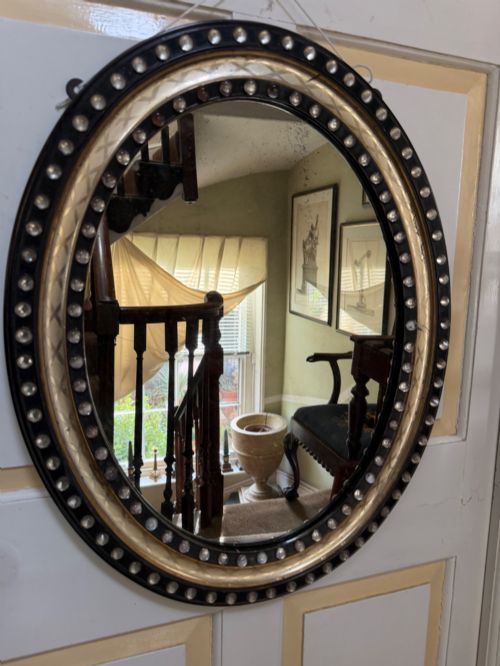
The materials recorded in these listings show timber frames finished with gold leaf, gesso, ebonised wood, and parcel-gilt. Some examples incorporate decorative details such as applied glass jewels, rope twists, eagles, and griffins.
Origin points vary across English, Italian, and notably distinct nineteenth-century Irish workshops, which often feature ebonised surfaces and silver-gilt highlights. Buyers will find both authentic period items from around eighteen-twenty and later revival interpretations maintaining the classic oval silhouette.
How they were made
The foundational frames are constructed from wood, frequently enhanced with moulded gesso to build up crisp classical motifs and relief decoration before gilding. Artisans applied thin sheets of gold leaf or parcel-gilt over these prepared surfaces to achieve a luminous metallic finish.
Alternative treatments involve ebonised wood combined with silver-gilt, alongside applied glass decorations and bevel-edged mirror glass. Frame construction styles range from hand-carved wooden details to rope twists and cast metal elements found in later revival pieces.
Regency Gilt Oval Mirror Retail Price Guide 2026
Typical asking prices for regency gilt oval mirror among the pieces listed under this phrase on Sellingantiques today, from the lower quarter to the upper quarter. They describe what is for sale here now, not the wider market.
Materials recorded across the inventory include gesso, ebonised wood, gold leaf, and mirror glass.
What varies in quality
The distinction between tiers rests upon the crispness of the gesso moulding and the depth of the hand-carved wooden details adorning the frame. Finer examples display meticulous execution in decorative elements like laurel wreaths, eagles, or applied glass jewels.
Surface finish also determines the caliber of a piece, separating simple modern gilding from richly patinated gold leaf or authentic nineteenth-century parcel-gilt and ebonised contrasts. The integrity of the original mirror glass and the weight of the timber frame further elevate certain pieces above standard production.
The Regency Gilt Oval Mirror Glossary
- Giltwood
- Wood that has been prepared and coated with a thin layer of gold leaf. This technique provides a durable and brilliant metallic sheen characteristic of classical mirrors.
- Gesso
- A plaster-like mixture applied to wood frames and carved or moulded into intricate decorative reliefs. It forms the smooth base required for successful gilding.
- Parcel-Gilt
- A surface treatment where only specific portions of an object are gilded while other areas, such as ebonised wood, remain exposed for contrast.
- Overmantel
- A large mirror specifically proportioned to hang on the wall directly above a fireplace mantelpiece. These pieces often anchor the decorative scheme of a principal room.
- Ebonised
- Wood treated with a chemical stain or dark finish to imitate expensive ebony. This dark ground frequently contrasts sharply with silver-gilt or gold highlights.
Regency Gilt Oval Mirror: Frequently Asked Questions
Where should I hang an oval mirror?
These mirrors suit principal living spaces, hallways, or above fireplaces where their curved frames soften linear architectural elements. Overmantel variants naturally draw the eye when centred above a chimney breast.
Smaller wall-hanging pieces work effectively in pairs or as single focal points in narrower wall spaces. Their reflective qualities help distribute light around a room.
How do I date a gilt oval mirror?
Dating relies on examining the construction methods of the wooden frame, the composition of the gesso, and the characteristics of the glass. Nineteenth-century pieces often display hand-carving and distinct patination on the gold leaf.
Later revival pieces from the Victorian era or the twentieth century utilise different manufacturing markers and assembly techniques. Comparing the decorative motifs against known historical styles helps narrow the period.
How do I clean a antique mirror glass?
Cleaning requires a soft, dry cloth to remove dust from the frame and glass without disturbing fragile surfaces or flaking gesso. Moisture should be kept away from the edges of old mirror plates.
Harsh chemical cleaners must be avoided entirely to protect the delicate gold leaf and historical patination. Gentle maintenance preserves both the glass and the surrounding decoration.