
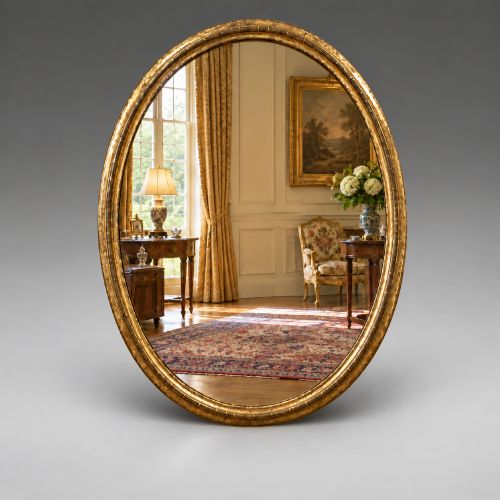
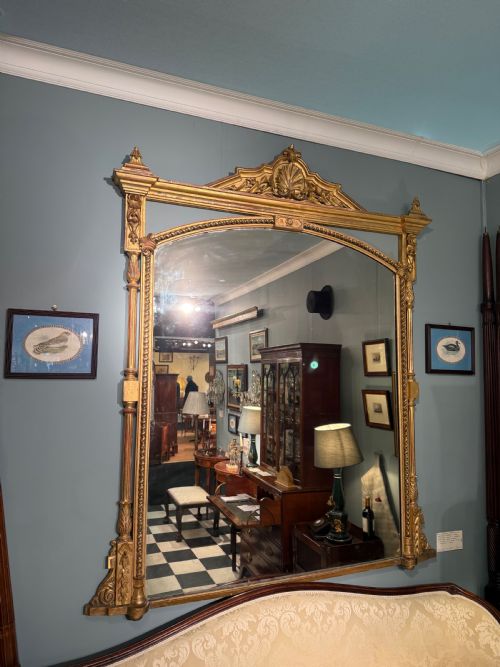
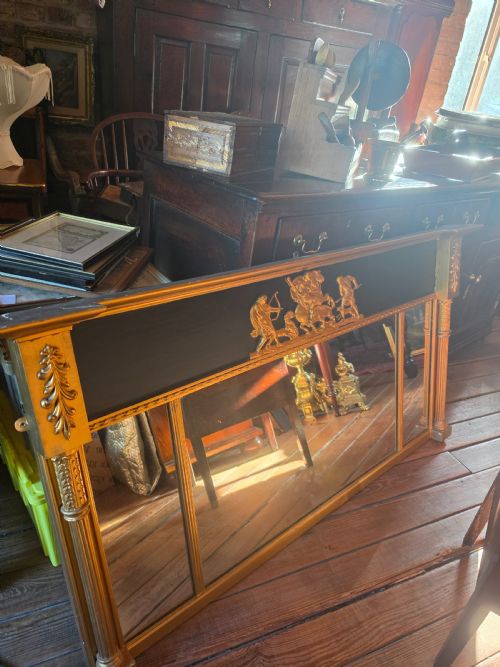
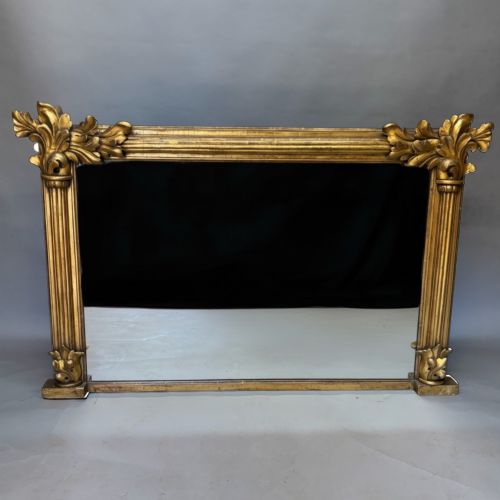
Regency Gilded Overmantel
A regency gilded overmantel brings horizontal presence to a chimney breast, catching light across a room with classical proportion.
Regency Gilded Overmantel
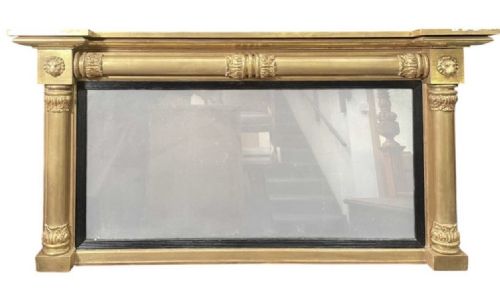
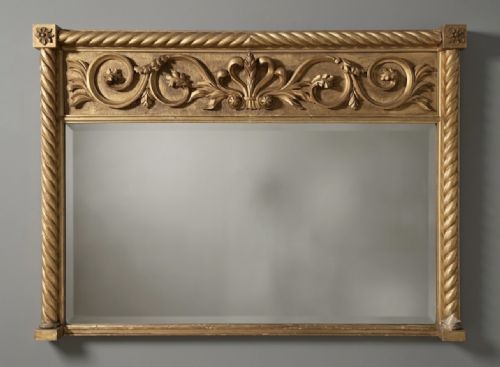
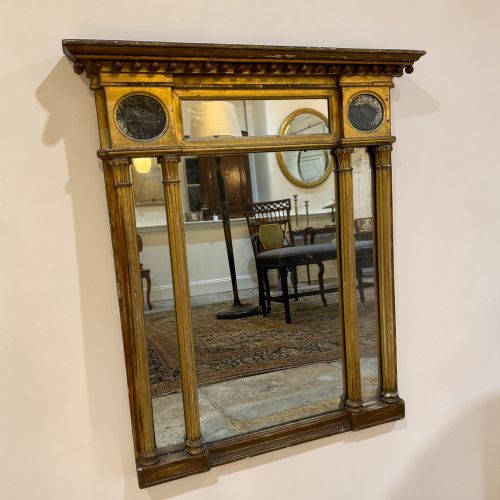
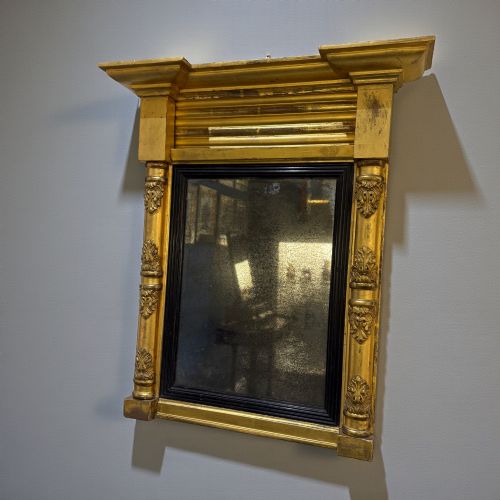
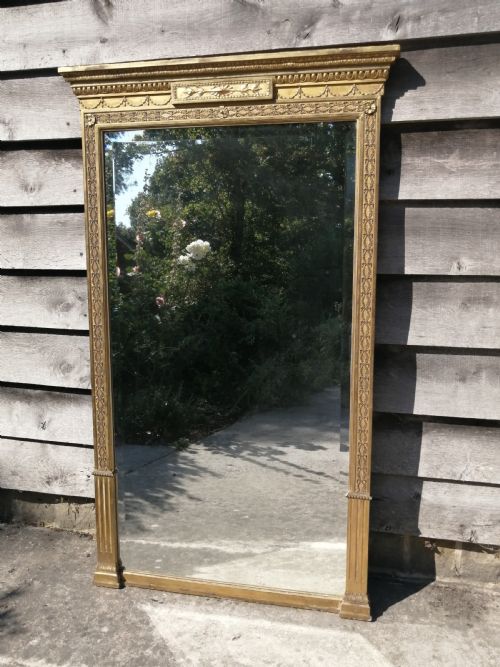
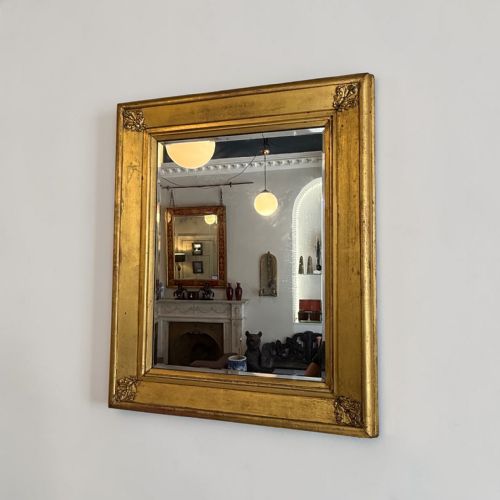
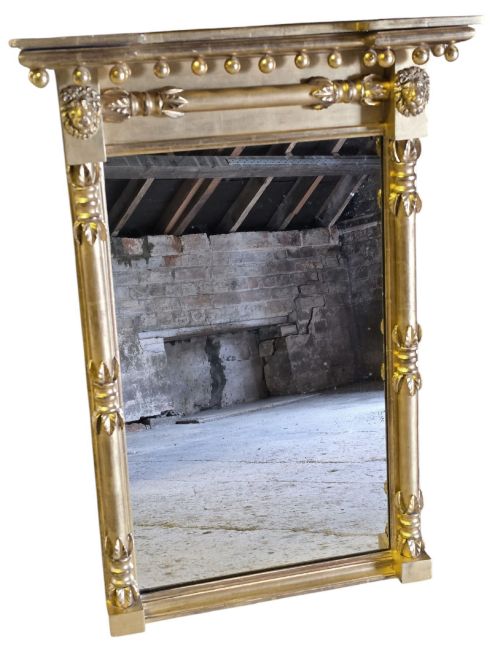
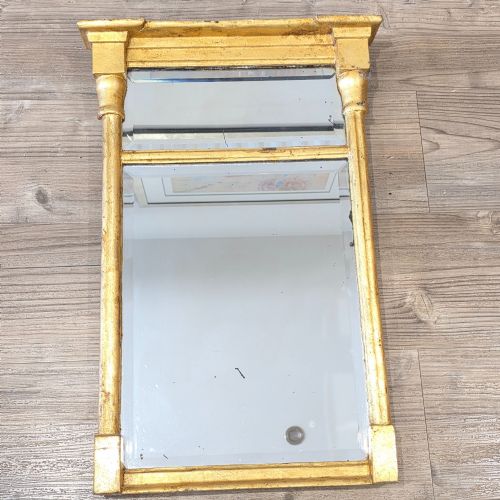
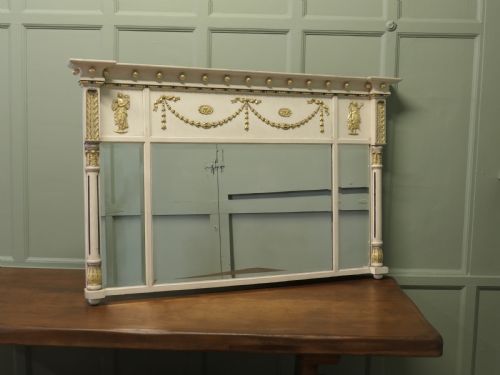
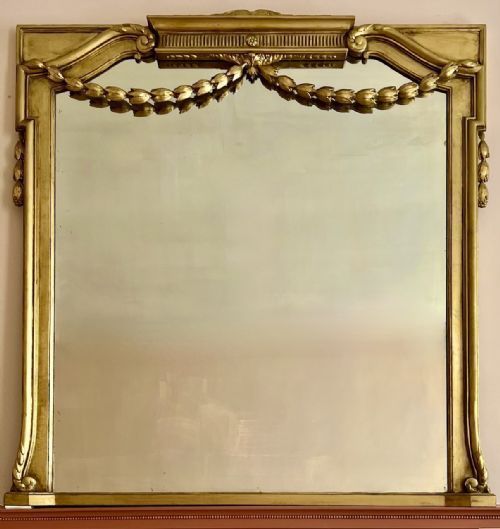
A regency gilded overmantel sits above a fireplace, anchoring the wall with a wide rectangular or arched frame designed to reflect interior light. These large mirrors span multiple plates of glass, often divided by colonnettes or decorated with classical motifs such as lion masks and rope carving.
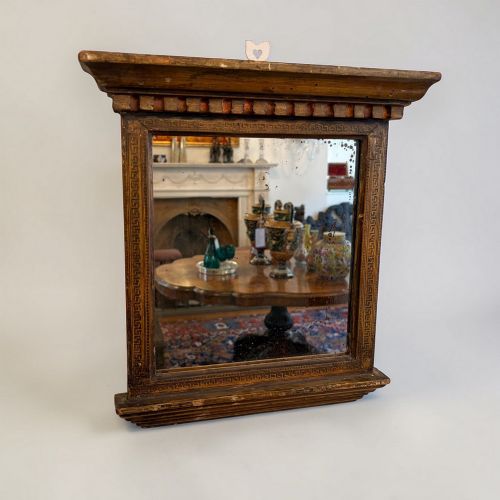
The pieces appearing here include authentic items from the nineteenth century alongside later revivals, spanning styles from grand neoclassical to french empire and william iv. Surviving examples range from compact pier glasses to huge architectural leaner mirrors fitted with original foxed glass plates.
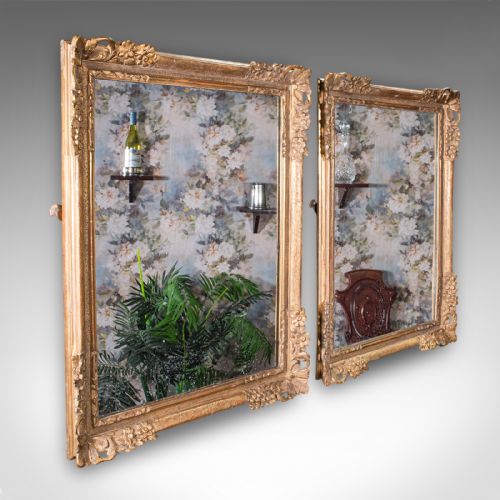
Many showcase specialised elements such as verre eglomise panels, birds eye maple, or carved wood and gesso frames finished in bright gold leaf. Buyers find both landscape formats meant for mantel placement and vertical formats functioning as tall pier mirrors between windows.
What varies in quality
The crispness of the carved or moulded ornamentation dictates visual success, separating sharply defined neoclassical motifs from softened, indistinct casts. Original gilding and untouched mirror plates hold greater aesthetic integrity than later resurfaced frames or replaced glass.
Structural joinery and the survival of secondary elements, such as verre eglomise panels or original painted details, determine the integrity of each piece. Scale and proportion relative to period architectural standards also separate standard domestic items from exceptional statement pieces.
Listings feature eighteenth-century roots up to twentieth-century revivals, constructed in giltwood, compo, and painted wood.
The Regency Gilded Overmantel Glossary
- Overmantel
- A large mirror designed specifically to hang on the wall directly above a fireplace mantelpiece. These horizontal frames pull natural light deeper into living spaces.
- Gesso
- A plaster-like mixture applied to wood frames to create a smooth surface for subsequent gilding or painting. It accepts fine detail work from carved moulds.
- Composition
- A mouldable mixture of whiting, resin, glue and oil pressed into decorative reliefs for frames. This technique replaced slow hand-carving for repeating motifs.
- Verre Eglomise
- A cold decoration technique where artisan painters apply gold or silver leaf to glass alongside reverse painting. It frequently appears on panels above the main mirror plate.
- Foxing
- Small dark spots and gradual clouding within mirror glass caused by chemical degradation over long periods. This natural ageing process proves the glass plate is original.
- Pier Mirror
- A tall vertical mirror built to hang on the wall space between two windows. They share stylistic traits and materials with overmantel mirrors.
Regency Gilded Overmantel: Frequently Asked Questions
How do I hang a heavy overmantel safely?
These large framed mirrors require substantial wall fixings anchored directly into masonry or heavy timber studs behind the plaster.
Professional mirror installers use weight-rated steel brackets or hidden hanging wire systems attached securely to the structural frame of the piece.
Are original mirror plates usually distorted?
Historic glass manufacturing methods often resulted in minor surface undulations and characteristic thickness variations across the plate.
These natural irregularities create gentle ripples in the reflection rather than the flat, uniform images produced by modern float glass.
Can I place these mirrors directly above a working fire?
Intense heat and soot from an active open fire can dry out the gesso and damage delicate gilding over time.
Using a deep mantel shelf helps deflect rising heat away from the antique frame and glass surface.