


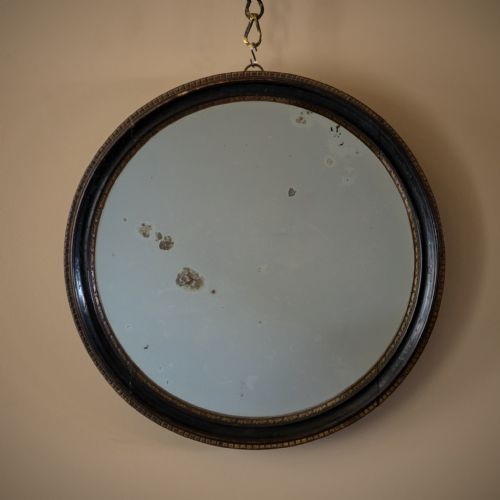
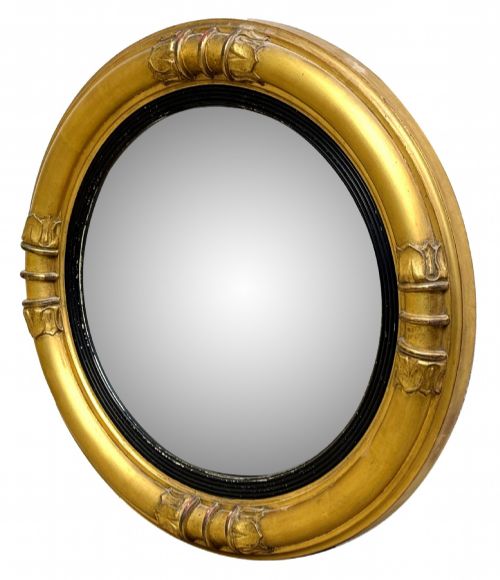
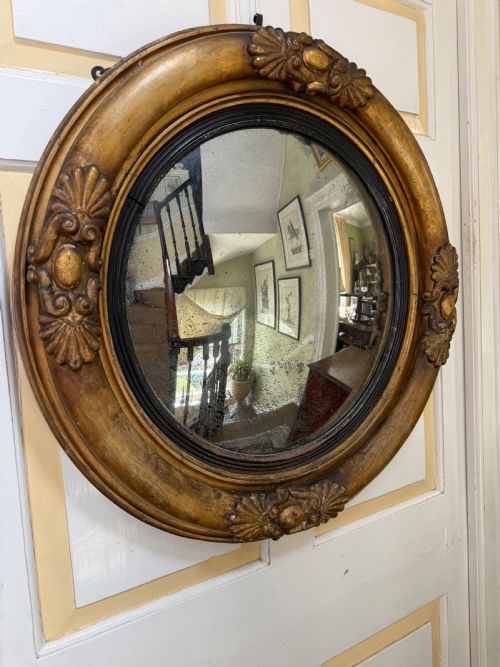


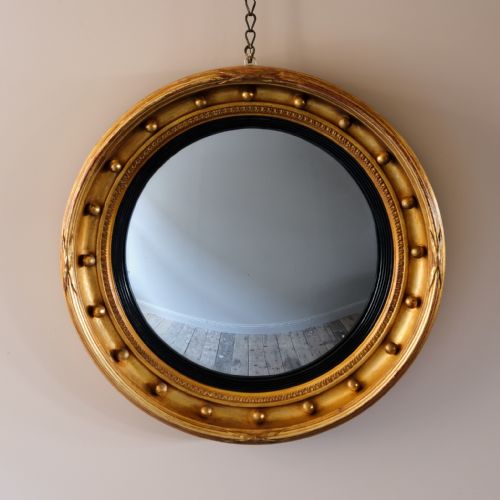


Regency Ebonised Frame Mirror
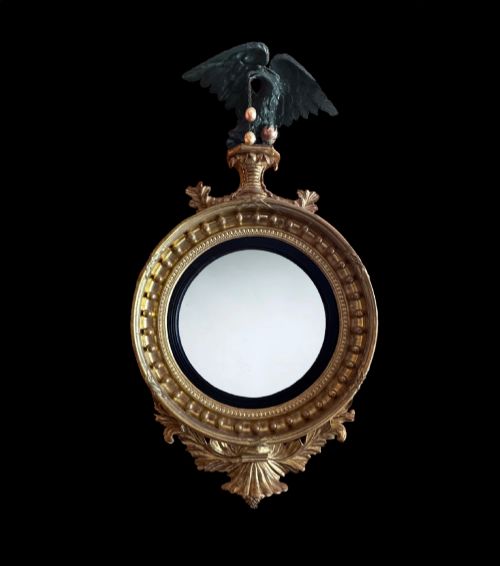
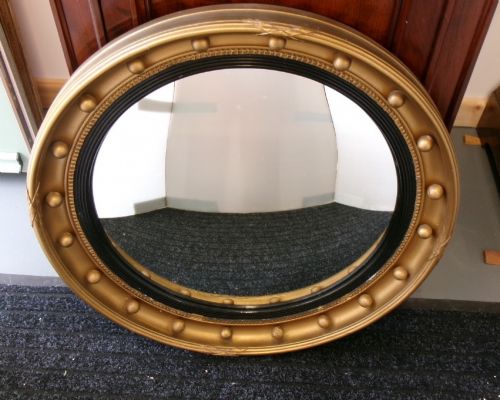
A regency ebonised frame mirror brings dark timber and gilt contrast into a room, reflecting light through convex plates designed to command a wall.
Regency Ebonised Frame Mirror
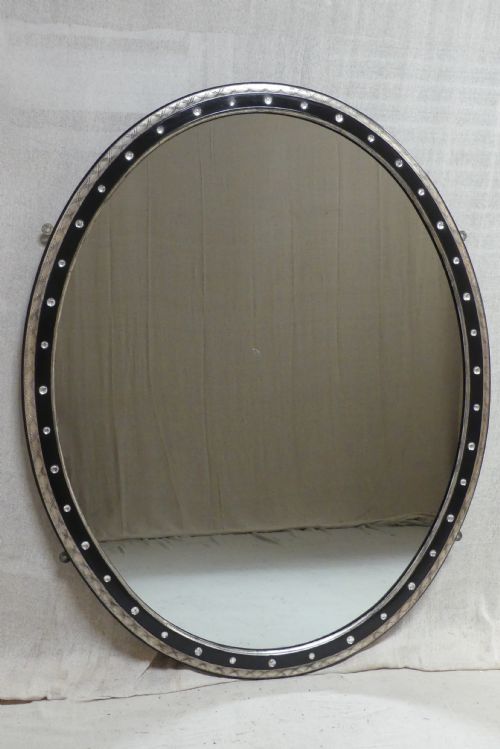
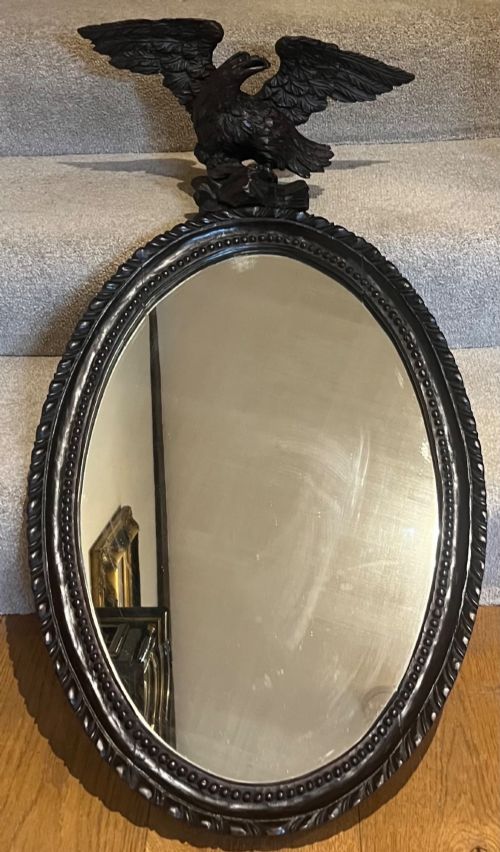
When you search for a regency ebonised frame mirror, you are looking at wall mirrors and overmantel mirrors spanning the nineteenth century, including the Regency period, Victorian era, and later revivals. The form typically appears as a circular convex plate or a larger horizontal overmantel format, often incorporating classical revival details such as Egyptian or Grecian motifs.
The version you are most likely to meet on this page combines ebonised wood with gilt highlights, framing a curved glass plate that distorts the room in the manner of a traditional sorcerer's mirror. These pieces originate primarily from nineteenth-century English and Irish workshops, though revival pieces from the late nineteenth and early twentieth centuries also appear.
How they were made
Craftsmen built these frames using woods such as pine, applying layers of gesso to carve fine details like reededbezels, rope twists, or applied ornament before finishing the surface with ebonised paint and gold leaf. The combination of dark ebonised wood and bright gilt creates the high-contrast aesthetic characteristic of the Regency style.
The glass used is typically heavy convex mirror glass, seated within a rebated frame and backed to protect the silvering. Overmantel mirrors utilise larger rectangular or oval plates, while circular convex mirrors rely on smaller plate dimensions set deep within moulded wooden rims.
Listings feature convex, oval, and overmantel forms spanning the nineteenth and early twentieth centuries, utilising ebonised wood, giltwood, and gesso.
What varies in quality
The distinction between ordinary and exceptional pieces lies in the crispness of the carved wood and gesso ornamentation, particularly on complex elements like eagles, greyhounds, or classical revival motifs. Superior examples maintain sharp definition in the gilt and ebonised finishes, whereas lesser pieces show softer moulded details or heavy repainting.
Proportion and scale also separate standard mirrors from grander works, such as large Irish ovals or expansive overmantels with intact original mirror plates. The depth of the ebonising and the richness of the parcel gilt enrich the overall visual presence on the wall.
The Regency Ebonised Frame Mirror Glossary
- Ebonised wood
- Timber treated to imitate ebony, giving a deep black finish that provides a dark contrast against gilt details. This treatment is typical of Regency and Victorian framing.
- Convex mirror
- A round mirror with an outward-curving glass plate that reflects a wide, panoramic view of the interior. These are frequently known as sorcerer's mirrors.
- Giltwood
- Wood carved and coated with gold leaf or gold paint to create a luminous metallic surface. It appears widely across Regency frames.
- Gesso
- A plaster-like mixture applied to wood frames to provide a smooth base for carving and gilding. It allows for intricate surface decoration.
- Overmantel mirror
- A large horizontal mirror designed to sit directly above a fireplace mantel. These pieces often feature extended rectangular or architectural frames.
Regency Ebonised Frame Mirror: Frequently Asked Questions
How do I date an ebonised mirror?
Dating relies on construction methods, wood types, and decorative motifs such as Grecian or Egyptian revival elements. Earlier Regency examples display hand-carved gesso and specific joinery.
Later Victorian and revival pieces from the late nineteenth century often utilise simpler pine carcasses and machine-prepared mouldings alongside ebonised finishes.
Where should I hang an overmantel mirror?
An overmantel mirror is traditionally mounted directly above a fireplace mantelpiece to reflect light and anchor the room's central wall. Their horizontal proportions suit wide expanses.
Ensure the wall fixings can support the substantial weight of the timber, gesso, and heavy glass plate.
What is the difference between Regency and Victorian pieces?
Regency pieces date from the early nineteenth century and typically embody strict classical revival styles, fine giltwood, and distinct ebonised accents.
Victorian and later revival pieces from the late nineteenth century often replicate these earlier aesthetics while introducing heavier proportions and alternative construction techniques.