





19th Century Circular Mirror
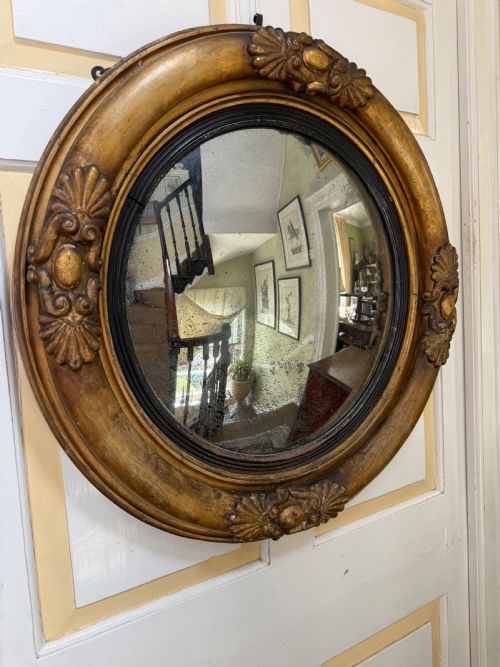
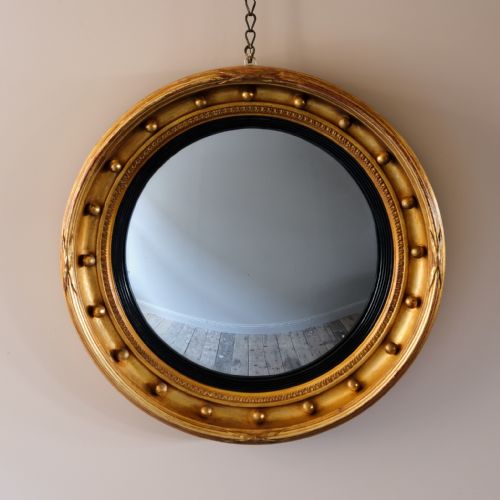
A 19th century circular mirror brings depth and curved light to a room, dominated here by Regency convex giltwood designs.
19th Century Circular Mirror
These pieces are round wall mirrors from the 19th century, with the Regency period providing the strongest representation on this page. Buyers look for these round frames to break up the linear geometry of a traditional interior.
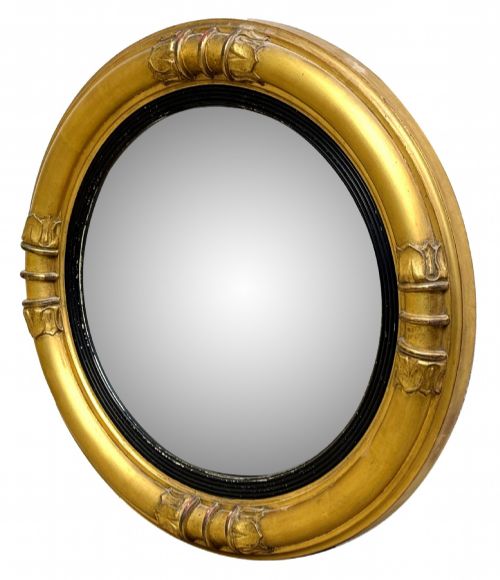
The convex mirror, often called a butler's mirror or bull's-eye glass, forms the majority of the selection here. Alongside these convex formats, wall mirrors and hall mirrors appear in various scales from small domestic pieces to grand frames spanning several feet.
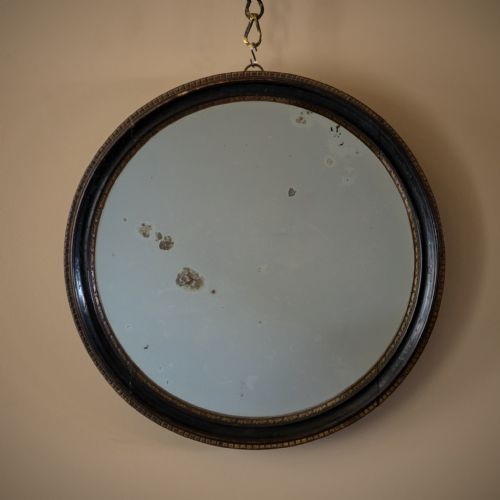
Italian, Florentine Rococo, and Victorian revivals join the core Regency style in the wider record. Most examples utilise traditional giltwood frames, though ebonised wood, brass, and painted surfaces also occur.
How they were made
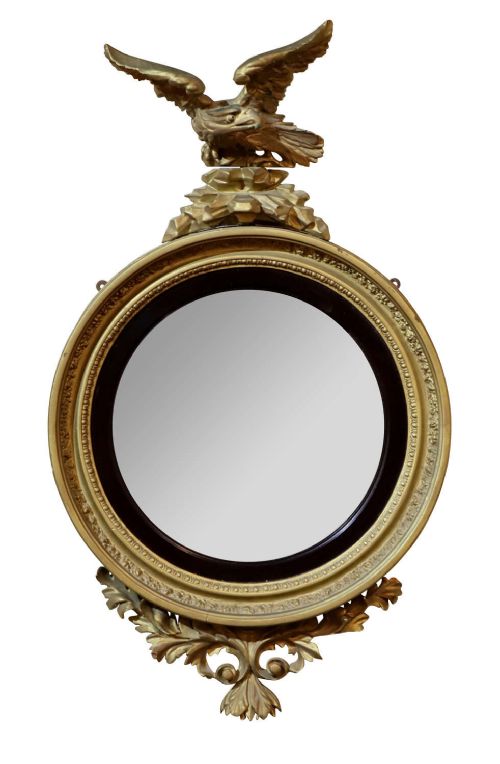
Makers shaped these frames primarily from wood and gesso, applying gold leaf or liquid gilding to achieve a bright reflective surface. Carved details such as eagle crests or relief ornament were integrated into the wood structure before finishing.
The curved mirror glass itself, essential for convex designs, required specialised glass-blowing and forming techniques to maintain optical consistency. Ebonised finishes and japanned surfaces provided alternative dark or polished appearances using applied lacquers and pigments.
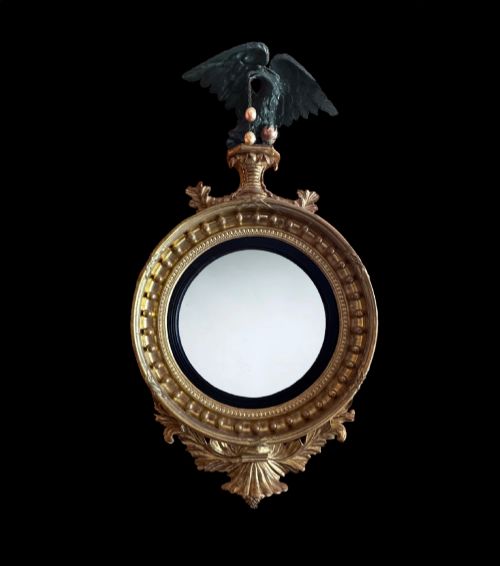
An eagle surveys the room from atop the glass, keeping watch over the reflections in a classic convex frame.
What varies in quality
The crispness of the carved ornamentation on the giltwood frame dictates much of the visual distinction. Superior pieces retain deep, sharp detailing in the gesso and wood without softening from repeated over-gilding.
The quality of the mirror plate itself and the condition of the original gilding create the primary division between standard examples and top tier specimens. Surviving original surfaces with minimal restoration hold greater integrity than heavily reworked frames.
Coalbrookdale
The 19th Century Circular Mirror Glossary
- Convex mirror
- A round mirror with an outward-curving glass surface that reflects a wide, distorted panoramic view of the room. This form was popular in the Regency period for monitoring domestic spaces.
- Giltwood
- Wood carved and coated with gold leaf or metallic powder over a gesso ground. This material defines the majority of high-status frames from the period.
- Gesso
- A plaster-like mixture applied to wood frames to provide a smooth base for gilding or painting. It allows intricate relief ornaments to be moulded directly onto the structure.
- Ebonised wood
- Timber treated with chemical stains or dark finishes to imitate expensive ebony. This dark contrasting material often pairs with gilt details.
- Japanned
- A style of European lacquer finish imitating East Asian export wares. It appears on select frames in dark glossy tones.
19th Century Circular Mirror: Frequently Asked Questions
Where should I hang a convex mirror?
These mirrors work best opposite a window or in a hallway where the curved glass can capture and project light across the entire space. Their wide-angle reflection creates an illusion of depth in smaller rooms.
Because they naturally draw the eye, positioning them at standard eye level above a fireplace or console table provides a balanced focal point in a traditional interior.
How do I date a 19th century mirror?
Dating relies on examining the construction of the wooden frame, the composition of the gesso, and the characteristics of the mirror plate. Regency examples often feature distinct Regency motifs like eagle surmounts and reeded bezels.
Later Victorian and late 19th century interpretations tend to show heavier cast ornamentation or different backing boards. Comparing the joinery and finish helps separate early pieces from revival work.
Why are convex mirrors called butler's mirrors?
The wide field of view provided by the curved glass allowed domestic staff to monitor activity across a dining room or hall from a single vantage point. This practical surveillance use led to the common domestic moniker.
Over time, the functional object transitioned into a decorative wall feature valued for its unusual optical properties.
Can these mirrors be cleaned safely?
Dusting the giltwood frame requires a soft, dry brush to protect fragile gesso and gold leaf surfaces. Moisture can lift old water gilding, so liquid cleaners must be avoided on the frame entirely.
Mirror glass can be wiped gently with a soft cloth dampened slightly with distilled water, taking care not to let moisture seep behind the plate edges.