


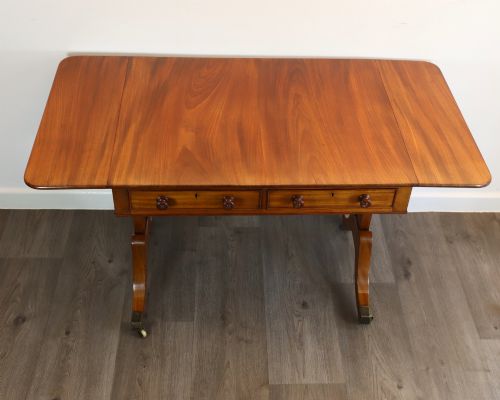
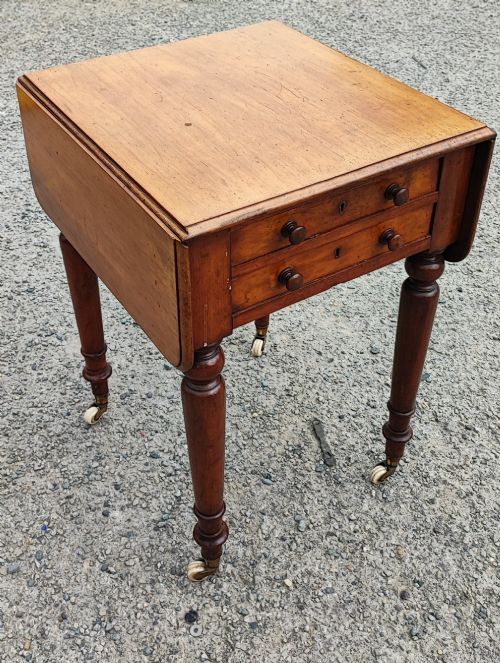
Regency Drop Leaf Sofa Table
A regency drop leaf sofa table brings practical surface space and refined proportions to a room, designed originally to stand behind a sofa.

Regency Drop Leaf Sofa Table
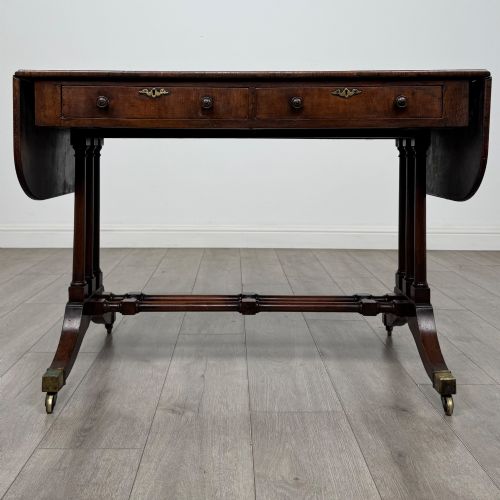
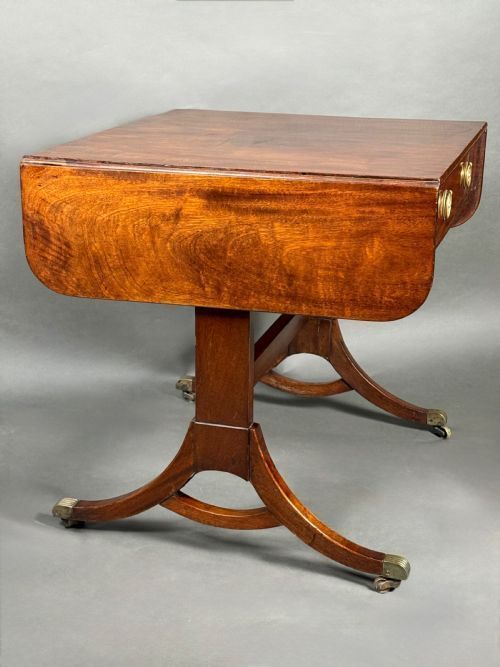
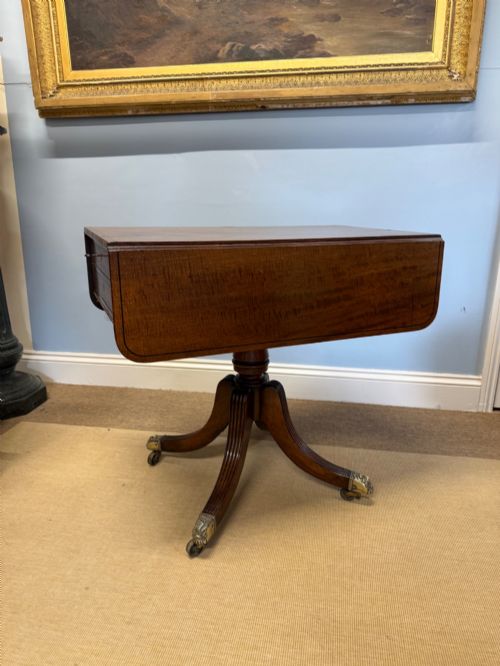
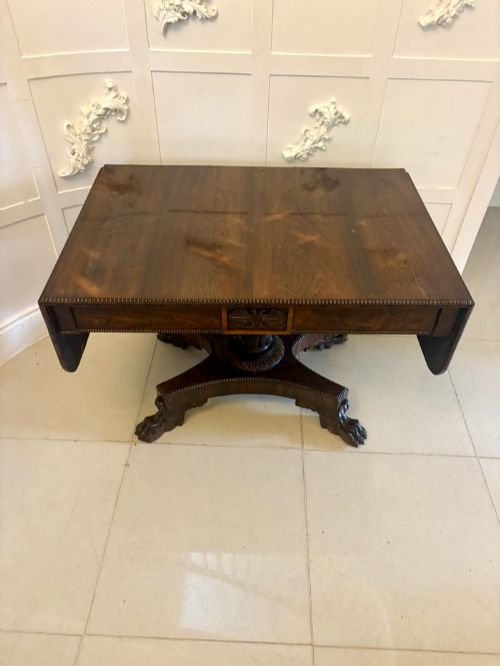
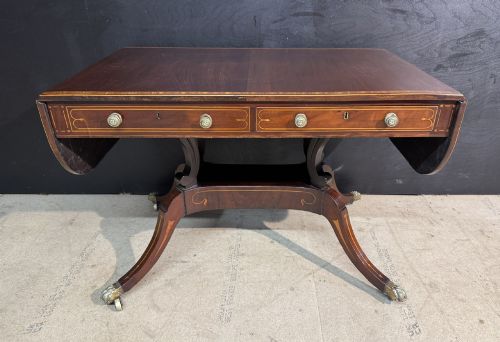
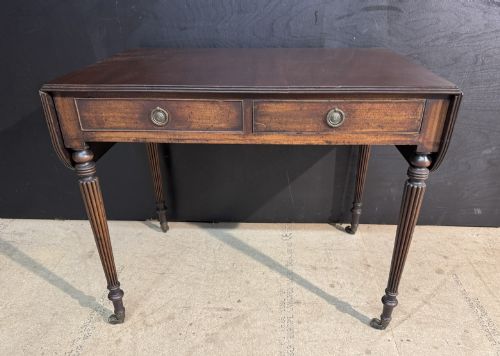
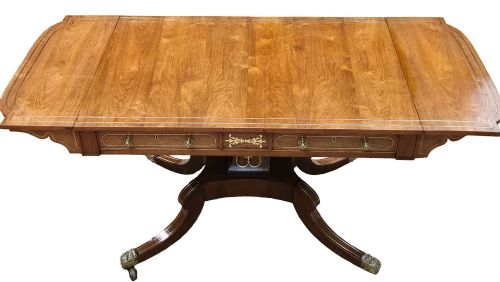
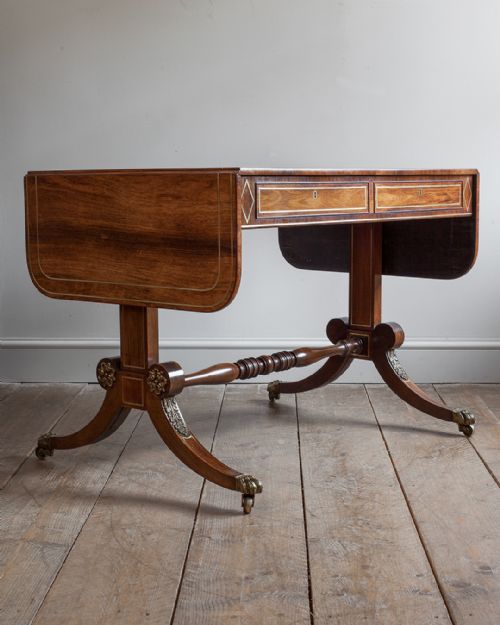
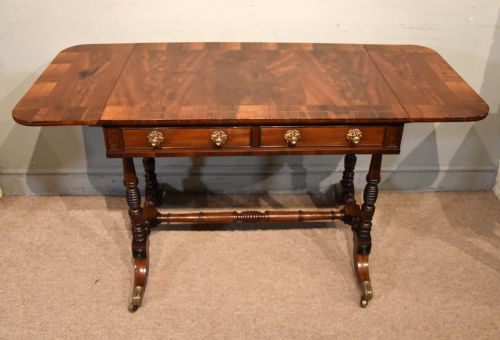
A regency drop leaf sofa table provides a versatile table form featuring folding flaps on either side of a rectangular top. These pieces frequently incorporate drawers and stand on pedestal bases, pillar supports, or four legs, often fitted with castors.
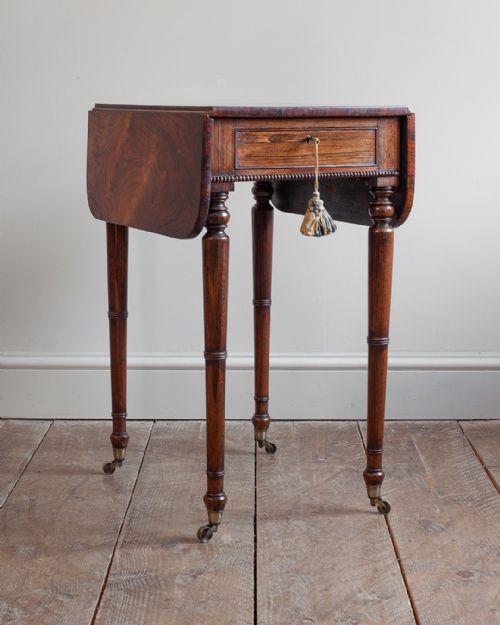
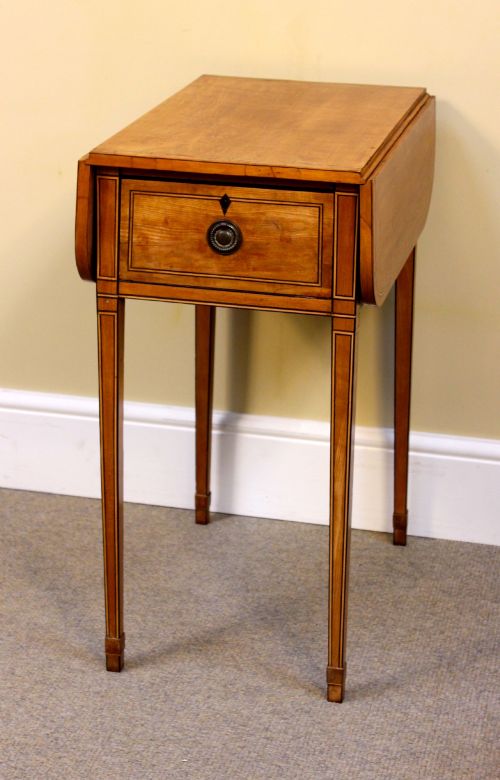
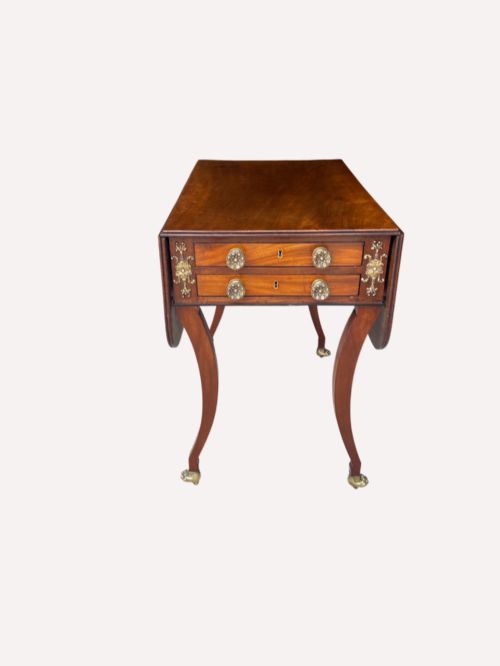
The pieces appearing in this selection span the Regency, Georgian, and 19th-century periods, alongside later Edwardian interpretations. Alongside proper sofa tables, related formats such as Pembroke tables, work tables, and centre tables share similar drop-leaf mechanisms and proportions.
Makers and workshops constructed these tables to sit freely in the centre of a room rather than against a wall, making finished backs standard. Buyers encounter solid and figured timbers enhanced by contrasting wood inlays.
How they were made
Cabinet makers utilised dense primary timbers including mahogany, flame mahogany, and rosewood, often selecting figured veneers to cover structural carcases. Workshops applied contrasting stringing and banding in satinwood, boxwood, and ebony to accent borders and drawer fronts.
Metal components played a structural and decorative role, with brass mounts, lion paw castors, and gilt details fitted to the feet and supports. Joinery techniques united solid timber frames with stable secondary woods to support the pivoting drop leaves.
Many historical drop leaves spent their lives hiding behind sofas, finally escaping into the middle of the room to catch the light.
What varies in quality
The choice of timber grain sets the visual standard, with matched flame mahogany and richly figured rosewood marking out superior examples. Subtle execution of wood inlay and the crispness of brass mounts distinguish finer workshops from standard production.
Structural stability in the drop leaf hinges and the smoothness of drawer operations reveal the underlying joinery skill. Freestanding execution with finished panels on all sides indicates a higher grade of manufacture intended for central room placement.
James Mein Kelso·Jean-Joseph Chapuis
The Regency Drop Leaf Sofa Table Glossary
- Sofa table
- A long, narrow table designed to stand immediately behind a sofa, featuring drop leaves on opposite sides. These pieces usually contain two small drawers and finished backs for central room placement.
- Drop leaf
- A hinged section of a table top that folds down when not in use and raises to expand the surface area. Supporting brackets or swing legs hold the flap level.
- Crossbanding
- A border veneer laid around the perimeter of a table top or drawer front with the wood grain running perpendicular to the centre panel. This technique frames the primary timber.
- Pembroke table
- A small table with two hinged flaps and typically a single drawer, sharing dimensions and lineage with sofa tables. These pieces often served light dining or writing functions.
- Lyre end
- A table support shaped in the classical silhouette of a musical lyre, frequently carved from mahogany or rosewood. This support style appears on pedestal bases.
Regency Drop Leaf Sofa Table: Frequently Asked Questions
Where did people use sofa tables?
Makers designed these tables to stand behind a sofa in the drawing room or parlour. The drop leaves allowed servants to raise the surface for writing, sewing, or taking tea.
Because they were finished on all sides, owners placed them in the middle of a room rather than pushing them against a wall. The low profile allowed them to sit neatly behind low Regency seating arrangements.
How do I spot a Regency period piece?
Regency pieces often display classical proportions influenced by Greek and Roman design. Look for rosewood or mahogany timbers combined with brass stringing, lion paw castors, and lyre-shaped pedestal supports.
Construction details such as hand-cut dovetails in the drawers and solid secondary woods help confirm the early nineteenth-century date. Later Edwardian or Victorian copies often use machine-cut joints and heavier framing.
What is the difference between a sofa table and a Pembroke table?
A sofa table is longer and narrower, designed specifically to sit behind a sofa with two small drawers facing outward. Pembroke tables are generally more compact, square or rectangular, and often feature a single drawer.
Both utilise drop leaves, but Pembroke tables function more as general occasional or breakfast tables rather than central room dividers.
Can I use a drop leaf table every day?
These tables adapt well to daily use as sofa ends, lamp tables, or small desks. The folding leaves provide flexibility when floor space changes.
Care should be taken with the drop leaf hinges and supporting brackets to avoid overloading the extended flaps. Using coasters protects the polished mahogany or rosewood surfaces from moisture and heat.