
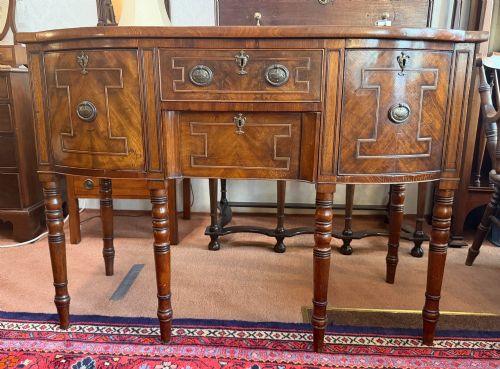
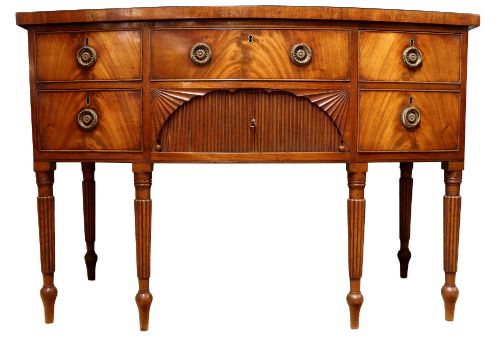
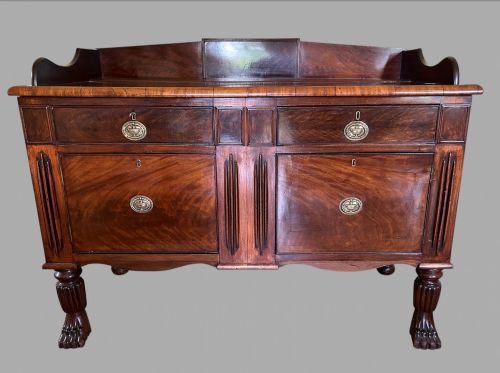
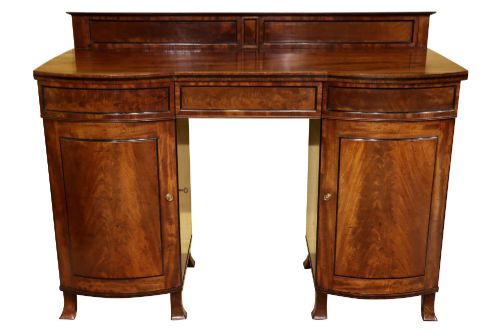
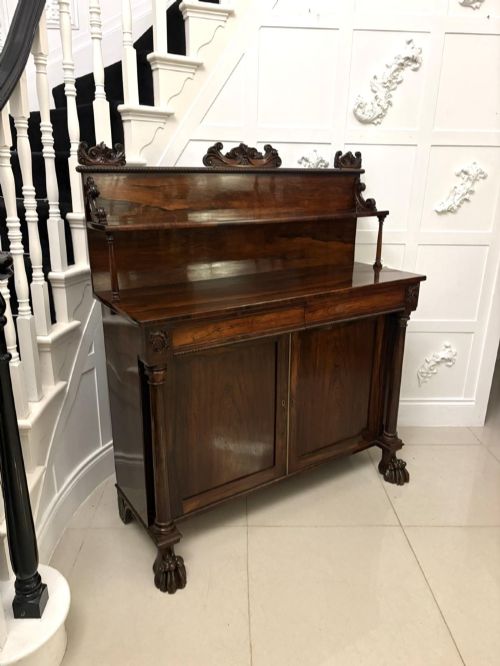
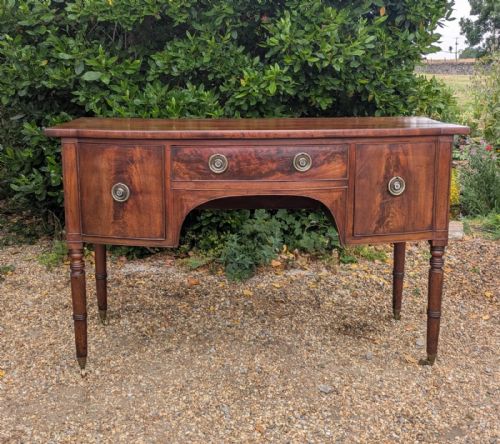
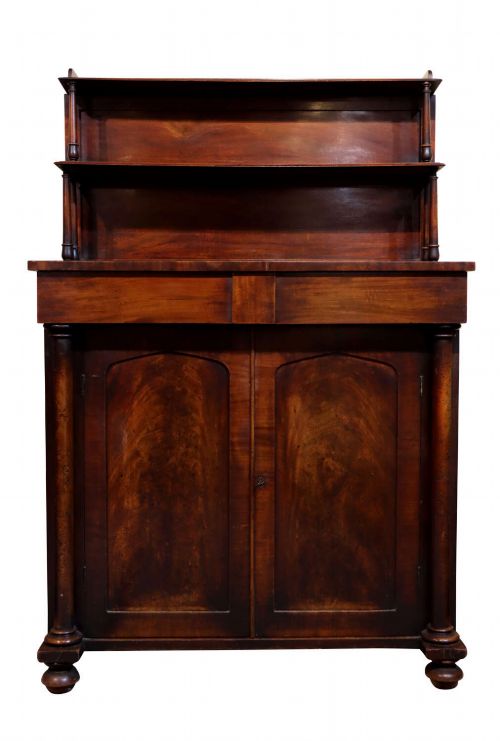
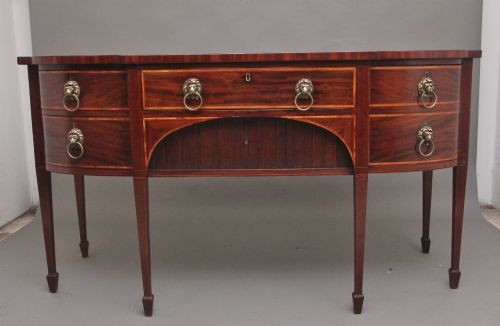

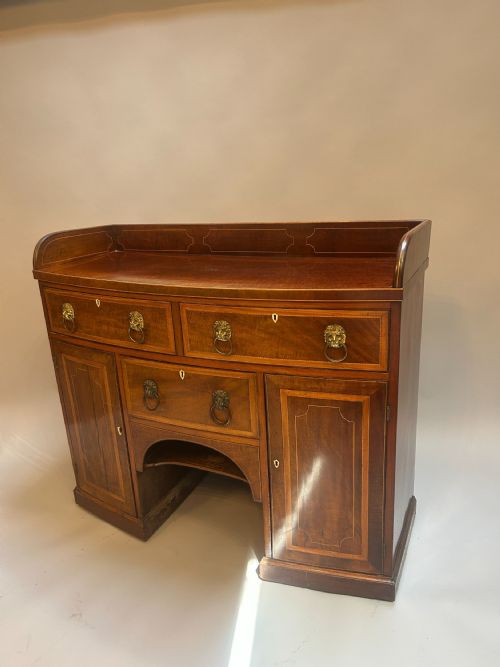


Regency Dining Room Sideboard
These pieces for a regency dining room sideboard provide grand proportion and timber depth for serious hospitality.

Regency Dining Room Sideboard
A regency dining room sideboard is the central serving piece of a dining space, designed to hold plate, silver and wine during large meals. The pieces seen here span the nineteenth century, including the Regency, George IV and William IV periods, alongside Late Georgian and Victorian examples.
The most common formats found on this page are bow-fronted sideboards, breakfront designs and pedestal sideboards, often equipped with cupboards and drawers. Serving tables and chiffoniers also appear, representing the varied ways dining rooms were furnished across the Regency, Irish Regency and Grand Regency styles.
Origins stretch across English and Irish workshops of the early nineteenth century, drawing on periods from the eighteenth century up to nineteen hundred. Buyers encounter both compact bow-front pieces and large breakfront furniture suited to substantial dining rooms.
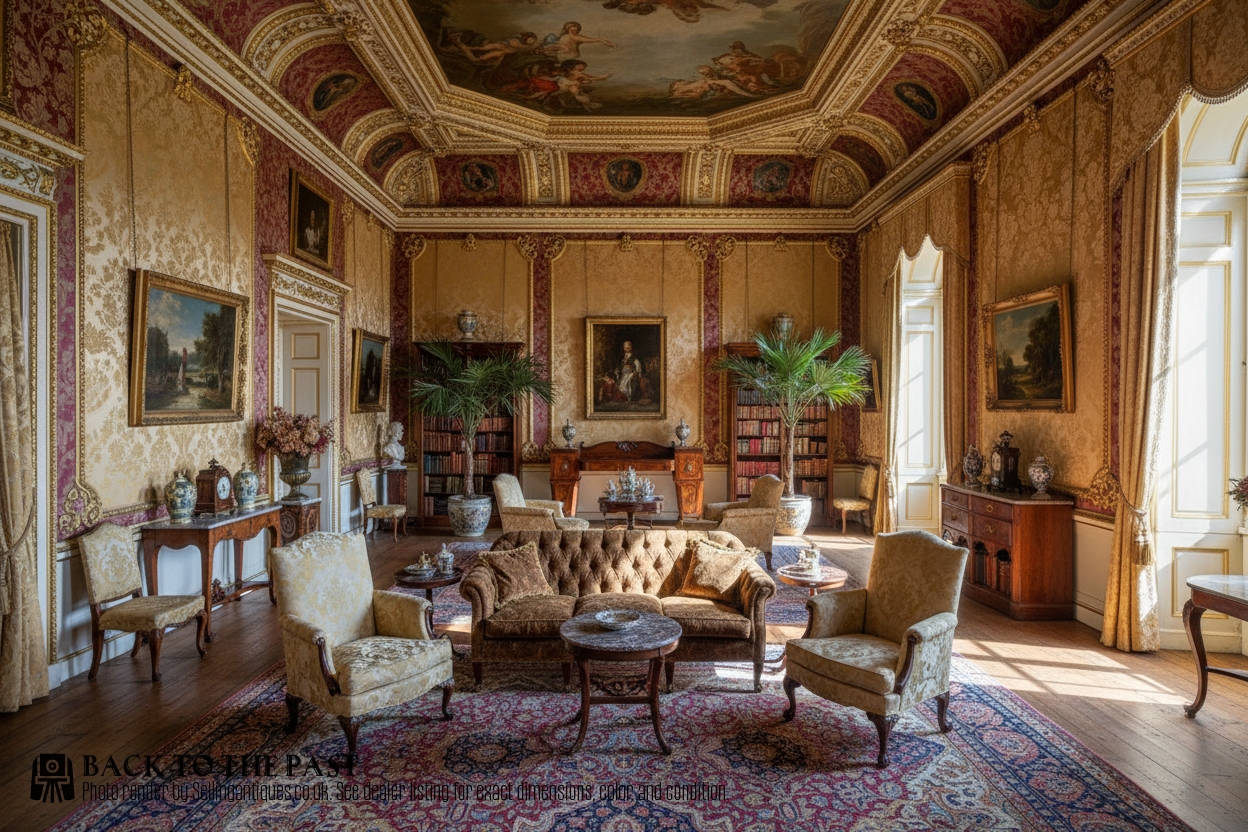
Craftsmanship and Proportion
Quality rests primarily in the selection of timber veneers and the precision of the cabinet work. Superior examples display symmetrical flame mahogany or figured grain that flows seamlessly across multiple drawers and doors.
The finesse of the inlay work and the integration of brass mounts or galleries distinguish finer pieces from plainer iterations. Sharp hand-cut joints, well-fitted drawers and substantial pedestal bases indicate higher workshop standards.
Metamorphic dining furniture allows your sideboard to secretly transform, proving that nineteenth-century hosts loved a clever party trick.
Gillows·Mack Williams And Gibton·The Woodworkers Ltd Kilkenny
The Regency Dining Room Sideboard Glossary
- Bow-front
- A cabinet front that curves outward in a convex arc. This shape softens the rigidity of a formal dining room and maximises internal storage.
- Breakfront
- A piece of furniture where the central section projects forward from the flanking wings. This architectural arrangement creates depth and shadow across the facade.
- Pedestal sideboard
- A form featuring two distinct pedestals supporting or flanking a central section, common in larger nineteenth-century dining rooms. They often housed plate warmers or cellarets.
- Chiffonier
- A low cabinet derived from the sideboard, featuring shelves or enclosed cupboards below. They served smaller dining spaces or drawing rooms.
- Flame mahogany
- A veneer cut from timber fork sections where the branch meets the trunk. It creates a distinctive rippling, flame-like pattern highly prized by Regency cabinetmakers.
Regency Dining Room Sideboard: Frequently Asked Questions
What is a regency dining room sideboard used for?
These pieces served as practical utility furniture during large nineteenth-century meals, holding serving dishes, cutlery and wine bottles.
Their broad top surfaces allowed servants to plate food and prepare courses away from the main dining table.
How do I identify a Regency period piece?
Look for specific stylistic markers such as classical restraint, mahogany veneers, brass inlay and curved bow-front or breakfront shapes.
Makers of this era drew heavily on architectural motifs, incorporating reeded legs and brass gallery rails.
What is the difference between a sideboard and a chiffonier?
Sideboards are generally larger, heavier dining room pieces designed for extensive storage and serving.
Chiffoniers are more compact cabinets, often featuring upper shelves or simpler cupboard arrangements suited to smaller rooms.
Will a large breakfront sideboard fit my dining room?
Breakfront and pedestal sideboards require substantial floor space and high ceilings to balance their grand proportions.
Measuring both the wall space and the depth of the projecting central section ensures the piece sits comfortably within the room.