
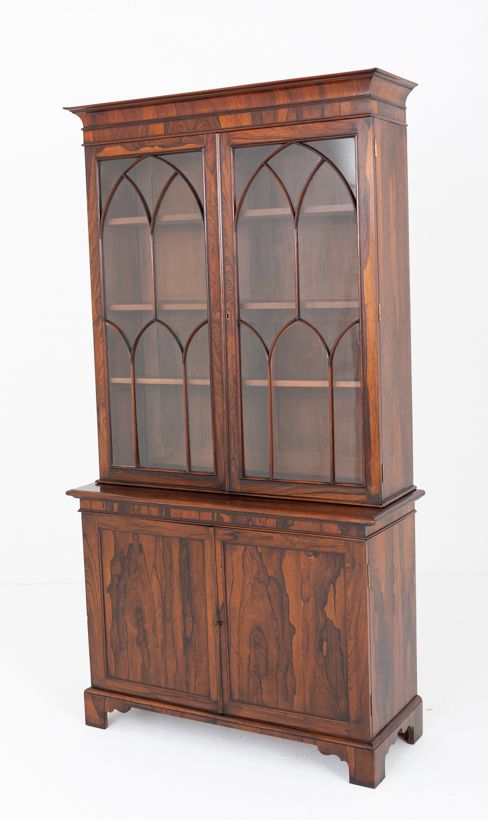
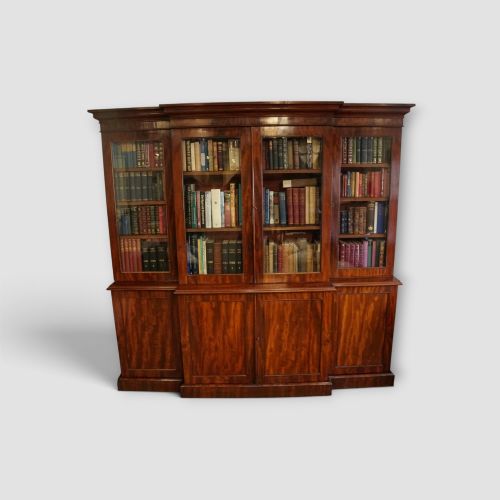
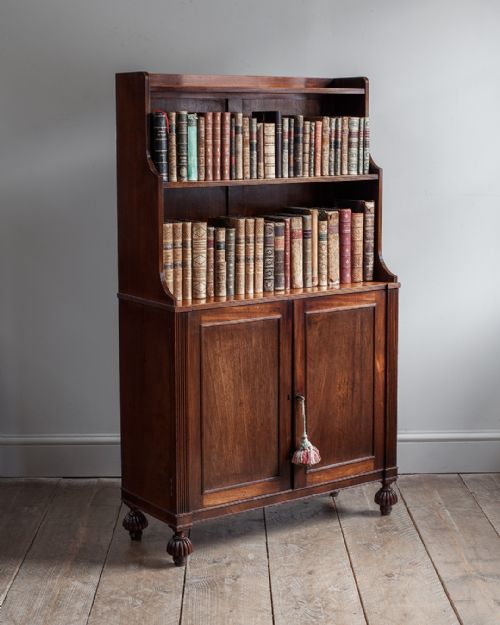
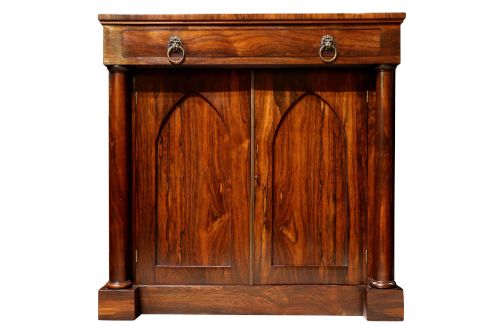
Regency Cupboard Bookcase
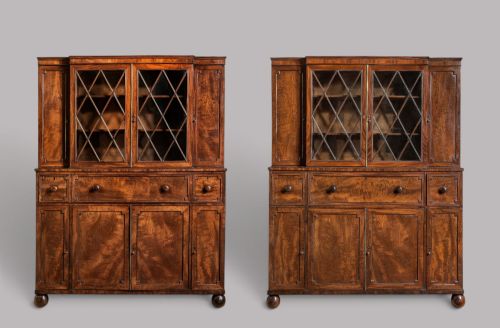
These regency cupboard bookcases combine shelved display with concealed storage, offering a practical centrepiece for books and household items alike.
Regency Cupboard Bookcase
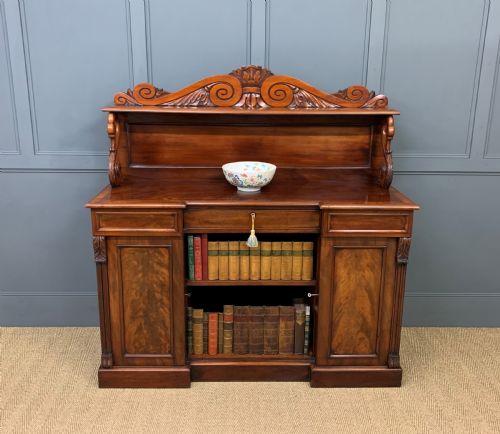
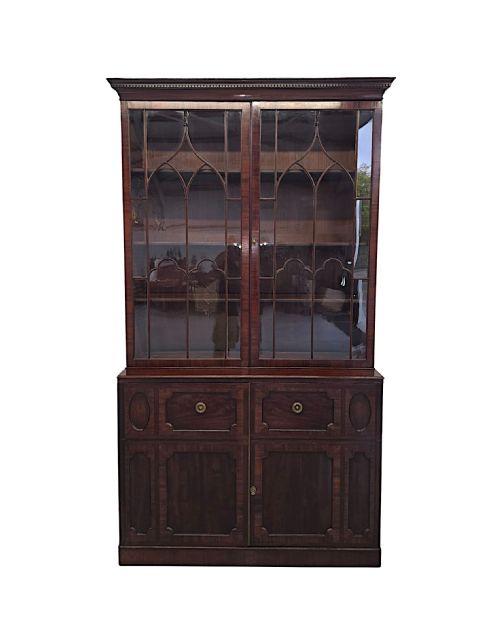
A regency cupboard bookcase unites an upper tier for volumes with a lower enclosed base for storage, satisfying both display and utility. These hybrid pieces emerge most frequently from the Regency period and the wider nineteenth century, carrying the formal lines typical of the era.
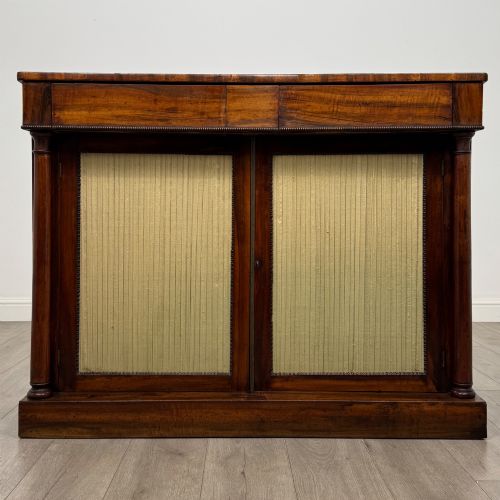
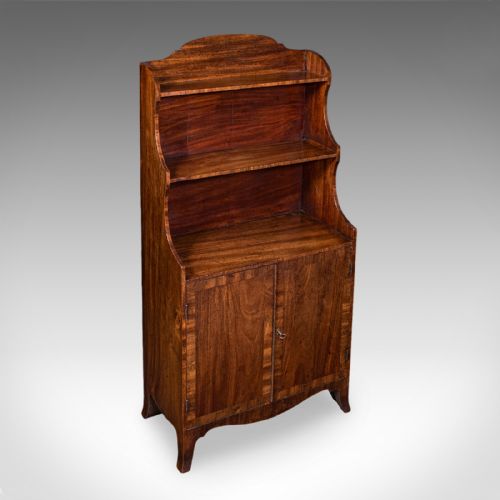
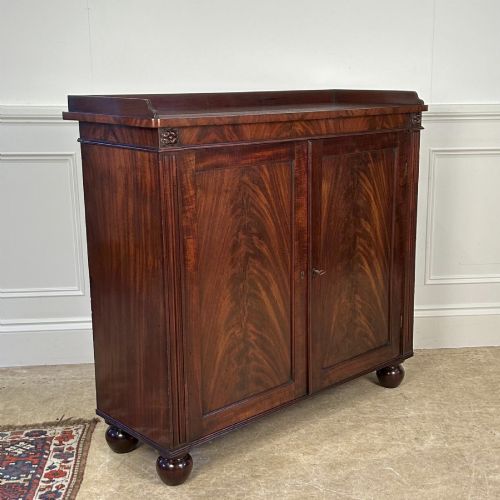
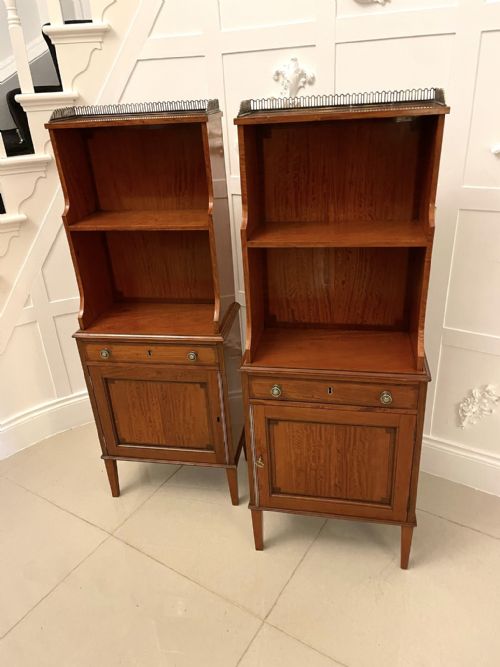
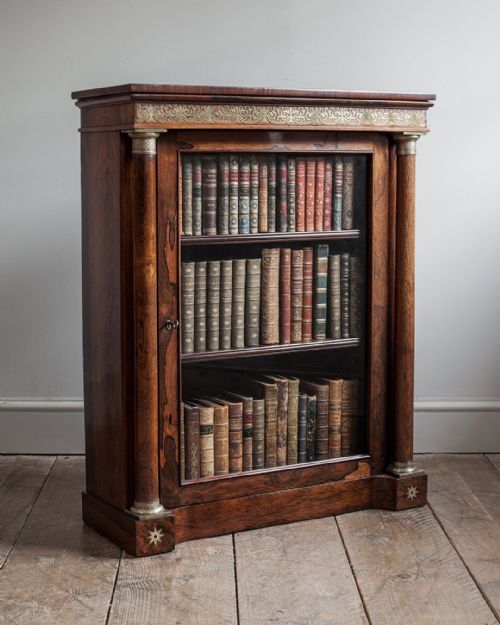
The selection ranges from tall breakfront library editions to compact waterfall formats and chiffonier variations. Mahogany and rosewood dominate the forms, frequently paired with glazed doors or open upper shelving.
Makers of the period adapted these cabinets for domestic libraries and morning rooms, creating versatile storage solutions that still suit modern interiors. Buyers encounter numerous variations featuring brass mounts, satinwood banding, and Gothic panelled doors.
How They Were Made
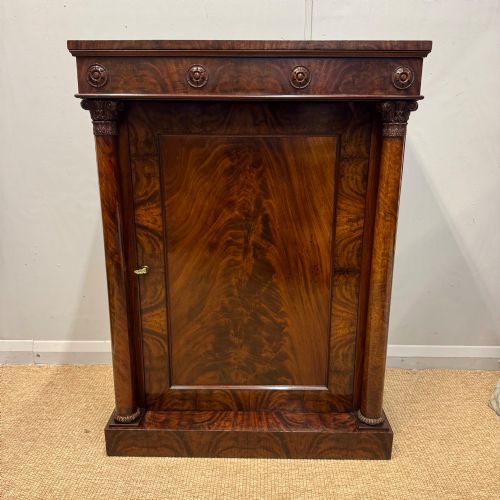
Cabinet makers relied primarily on solid mahogany and rosewood, often applying flame mahogany veneers to drawer fronts and door panels to create rich visual depth. Satinwood appears as a contrasting timber for inlay work and decorative banding.
Listings feature pieces spanning the Georgian, Regency, and Victorian periods, constructed primarily in mahogany, rosewood, and satinwood.
What Varies in Quality
The distinction between standard examples and superior pieces rests on the choice of timber and the precision of the cabinet work. Finely figured flame mahogany and richly grained rosewood indicate workshop selections of the highest order.
Execution of secondary details, such as precise brass inlay, well-fitted secretaire drawers, and original astragal glazing bars, separates workshop masterpieces from simpler commercial production.
Attribution to prominent workshops like Gillows elevates certain items, demonstrating exceptional joinery and proportion that persist across the centuries.
Gillows
The Regency Cupboard Bookcase Glossary
- Breakfront
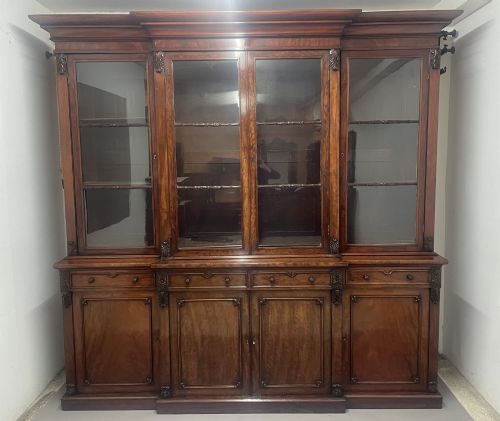
- A cabinet design where the central section projects forward from the flanking wings. This configuration creates architectural depth on large library pieces.
- Astragal
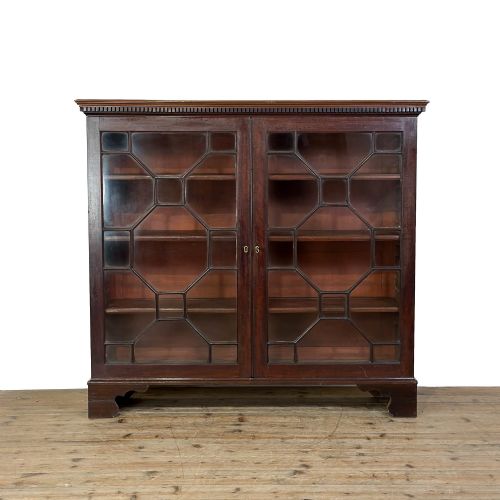
- Moulding strips that divide glass panes within a cabinet door into smaller geometric segments. These wooden bars add structural support and decorative elegance.
- Secretaire
- A pull-out writing drawer containing small compartments and pigeonholes, often concealing a fitted leather writing surface. It integrates a desk into the upper cupboard base.
- Chiffonier
- A low sideboard or cabinet equipped with enclosed shelving below, sometimes surmounted by a small bookshelf or mirror. They serve as compact storage units for drawing rooms.
- Flame mahogany
- Timber cut from the branch junction of the tree, producing a distinctive rippled grain pattern resembling flickering flames. Cabinet makers placed these veneers symmetrically.
Regency Cupboard Bookcase: Frequently Asked Questions
What is a regency cupboard bookcase?
A regency cupboard bookcase is a dual-purpose furniture form combining open or glazed upper shelving for books with a closed lower cabinet base. These pieces date principally from the early nineteenth century.
They provide both functional storage and display space, making them adaptable for modern living rooms and home libraries.
How do I identify a Gillows piece?
Gillows pieces often display exceptional timber selection, precise brass inlay, and refined proportions characteristic of their Lancaster and London workshops. Signature construction details include stamped signatures or distinct cabinet-making methods.
Such attribution typically indicates a high standard of craftsmanship within the Regency period.
Where were these bookcases used?
Original placement included formal libraries, morning rooms, and drawing rooms where landowners and gentry housed their growing book collections. The lower cupboards kept loose papers and household items out of sight.
Today, they suit similar domestic spaces, anchoring a room with period character.
What woods were commonly used?
Mahogany and rosewood serve as the primary timbers, frequently enhanced by flame mahogany veneers and satinwood stringing. Oak also appears on internal shelving and backing boards.
These dense hardwoods ensure structural stability and display rich natural grain patterns.