
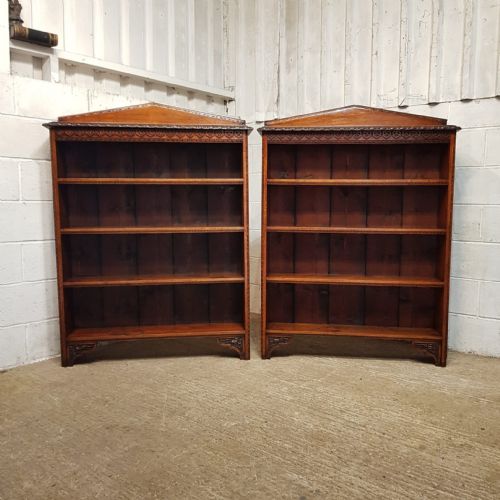

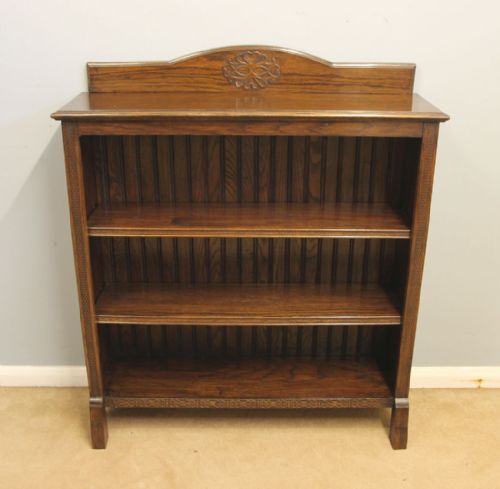


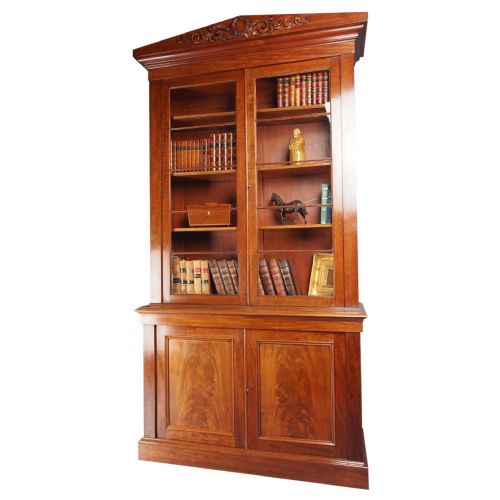


Carved Pediment Bookcase
These carved pediment bookcases bring architectural scale and timber warmth to a room, ranging from early Georgian library pieces to later revival formats.
Carved Pediment Bookcase
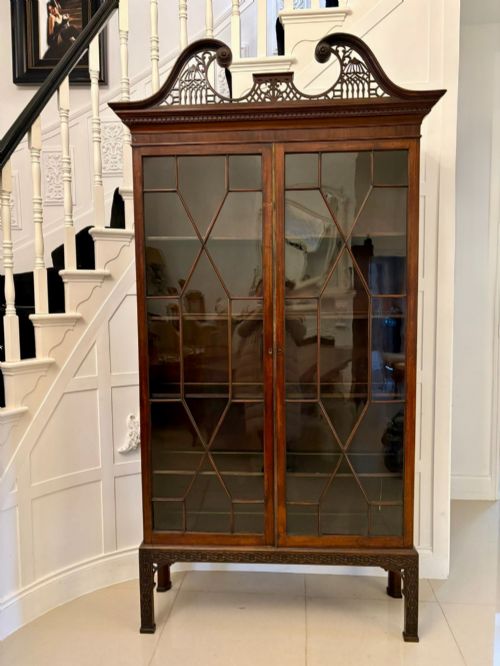
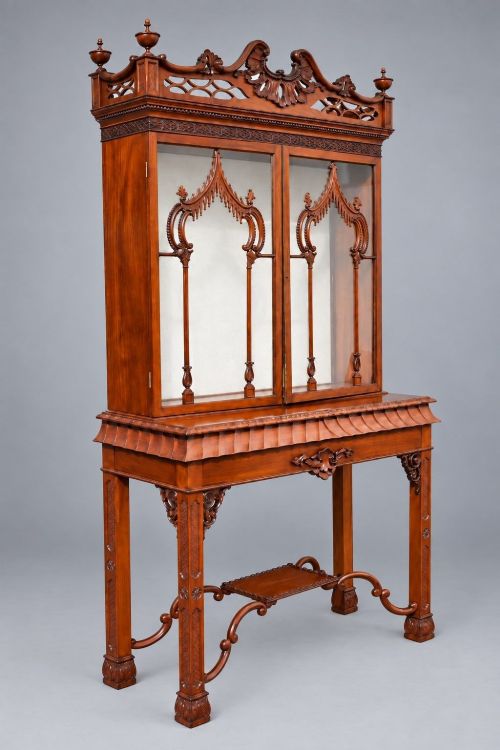
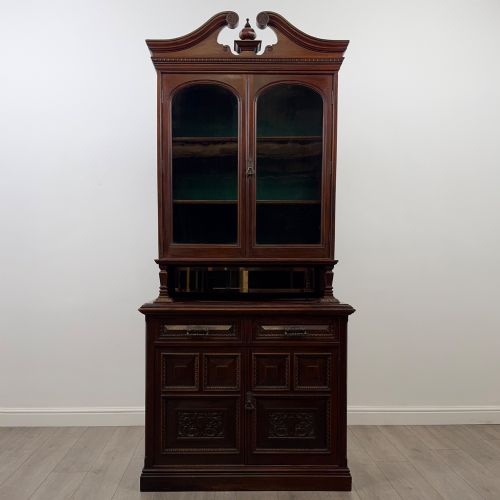
A carved pediment bookcase offers enclosed shelving behind glass or timber doors, topped by a defining architectural crest. When you search for a carved pediment bookcase, you encounter pieces spanning the Georgian, Victorian, and Edwardian eras, executed in mahogany, oak, and walnut.
The versions most commonly met on this page include Victorian mahogany examples with astral glazing and Edwardian iterations featuring detailed carved panels or swan neck pediments. Earlier Georgian formats also appear, bringing cabinet storage below adjustable shelves.
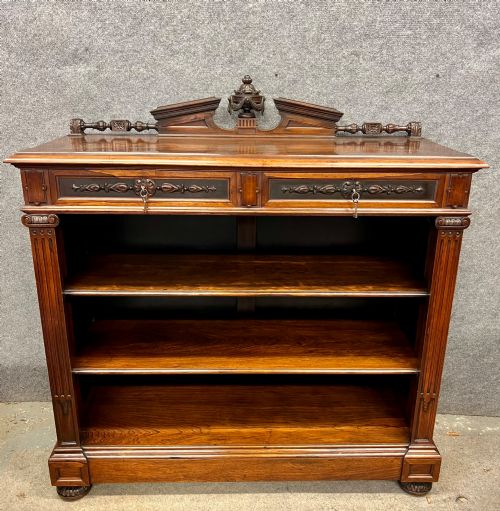
Formations vary from upright two-door cabinet bookcases to broader breakfront layouts and open shelf configurations. Each piece balances utility with classical architectural detailing derived from historical revivals.
Materials and construction methods
Makers utilised dense cabinet timbers including mahogany, burr walnut, and oak, often enhanced by decorative wood inlay or marquetry details in fruitwood. Structural frames support heavy glass panes and deep cornices.
Carved elements such as swan neck pediments and cartouches were shaped directly from solid timber or applied as carved ornament. Brass fittings secure doors and provide functional hardware across the periods.
Listings feature mahogany, oak, walnut, burr walnut, and fruitwood across Victorian, Georgian, Edwardian, and Regency periods.
Assessing quality and execution
Quality rests upon the depth and crispness of the timber carving on the pediment and the selection of figured veneers such as burr walnut or flame mahogany. Superior examples display balanced proportions between the upper glazed section and the lower cabinet base.
Joinery standards separate standard production from master cabinet work, evident in tight mitres, well-fitted internal shelving, and original brass hardware. The integration of the pediment into the overall cornice structure dictates the visual harmony of the piece.
The Carved Pediment Bookcase Glossary
- Pediment
- The triangular or curved architectural crown surmounting the top of the bookcase. It draws the eye upward and defines the classical style of the piece.
- Astral glazing
- Glass doors divided into small panes by narrow wooden bars called astrals. This grid pattern lightens the visual weight of large library furniture.
- Swan neck pediment
- A broken pediment featuring opposing S-shaped curves that sweep upward to a central terminal or cartouche. It is frequently seen on Georgian and Edwardian cabinet work.
- Breakfront
- A large piece of furniture where the central section projects forward from the flanking wings. This configuration creates visual depth and generous interior capacity.
- Marquetry
- Decorative patterns formed by fitting together thin veneers of various coloured woods. Dutch examples on this page utilise walnut and fruitwood to create pictorial designs.
Carved Pediment Bookcase: Frequently Asked Questions
How do I date a bookcase?
Dating relies on timber selection, construction methods, and stylistic revival markers present in the woodwork. Secondary woods inside drawers and the profile of the pediment offer further clues.
Georgian pieces tend to show heavier internal craftsmanship, while Victorian and Edwardian examples incorporate machine-sawn elements alongside hand carving.
Are the shelves adjustable?
Many taller cabinet bookcases feature original wooden or metal rack systems that allow shelves to be moved. Earlier open bookcases often rely on fixed upright supports.
Checking the interior reveals whether the vertical support battens are period originals or later additions.
What is astral glazing?
Astral glazing refers to the delicate timber framework holding individual panes of glass within the doors. This technique protects books from dust while maintaining visibility.
In revival styles, these bars mimic earlier Georgian proportions to achieve an authentic period appearance.
How do I care for mahogany?
Mahogany benefits from consistent indoor humidity and protection from direct sunlight to preserve its rich colour. Regular dusting with a dry lint-free cloth maintains the surface sheen.
Application of traditional wax polish every few months nourishes the timber grain without building up a heavy residue.