



Carved Oak Shelves
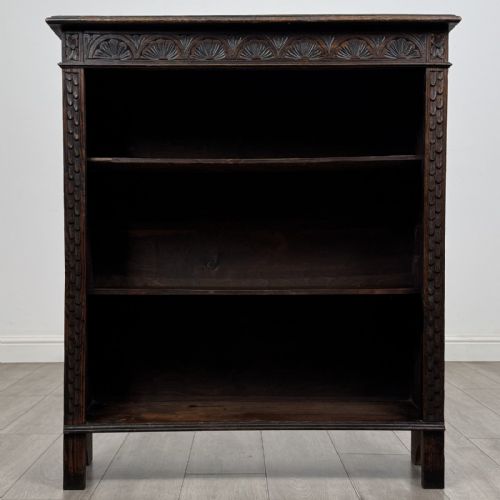
Solid timber storage built with carved oak shelves brings tactile grain and historic character straight into a room.
Carved Oak Shelves
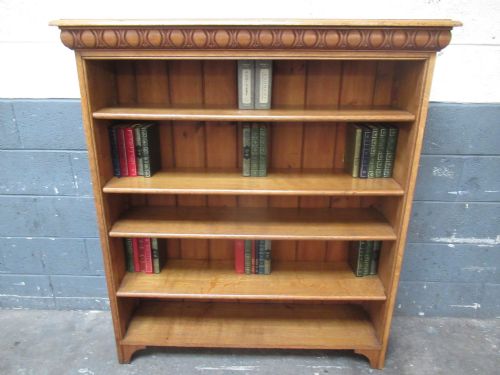
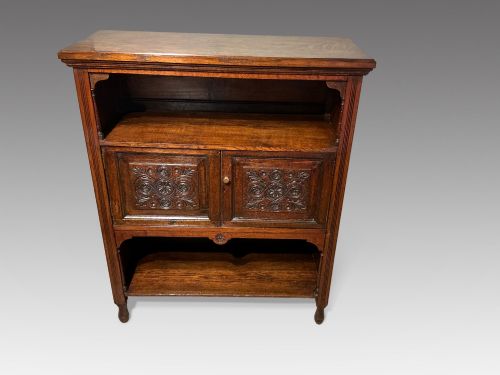
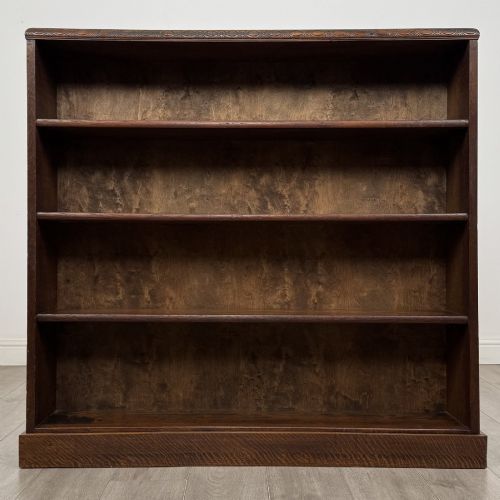
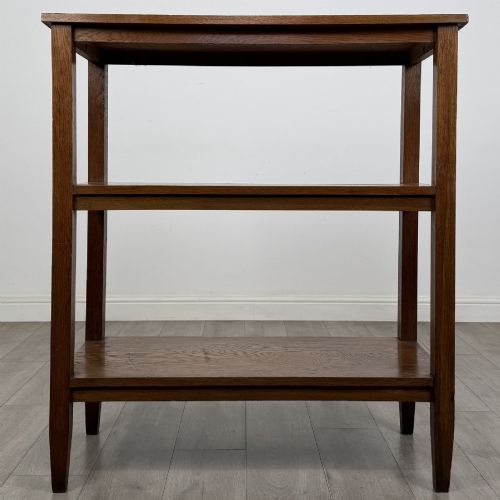
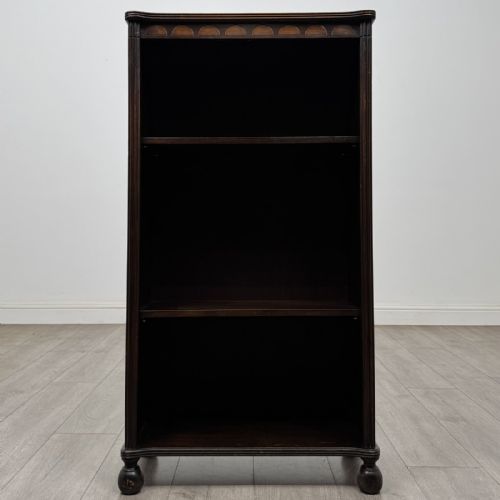
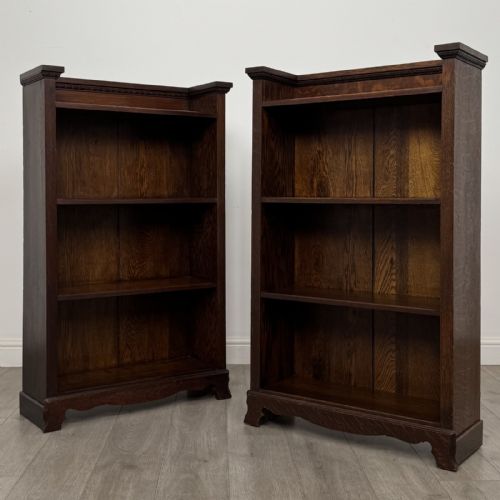
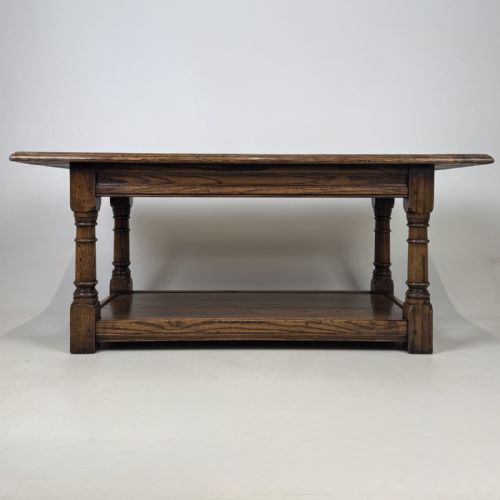
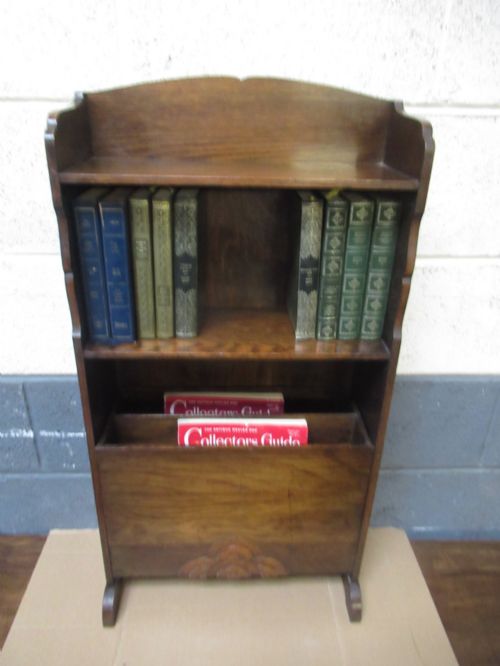
Carved oak shelves encompass wall-mounted fixtures, open bookcases, and display units shaped by Victorian, Edwardian, and Arts and Crafts makers. These pieces range from compact hanging ledges to substantial library bookcases equipped with adjustable storage.
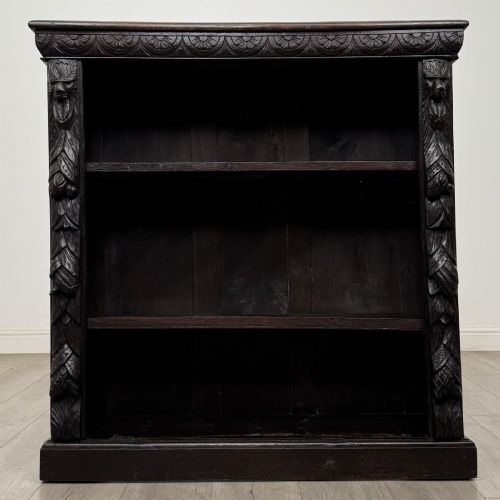
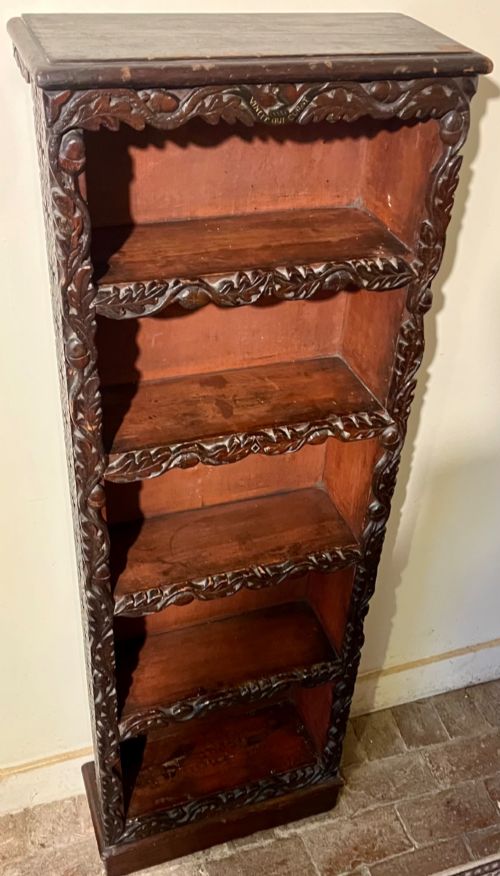
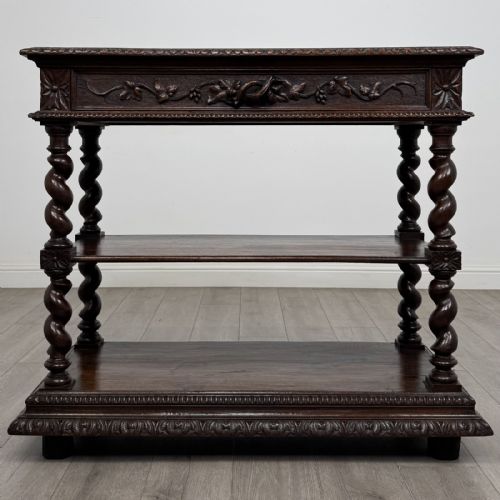
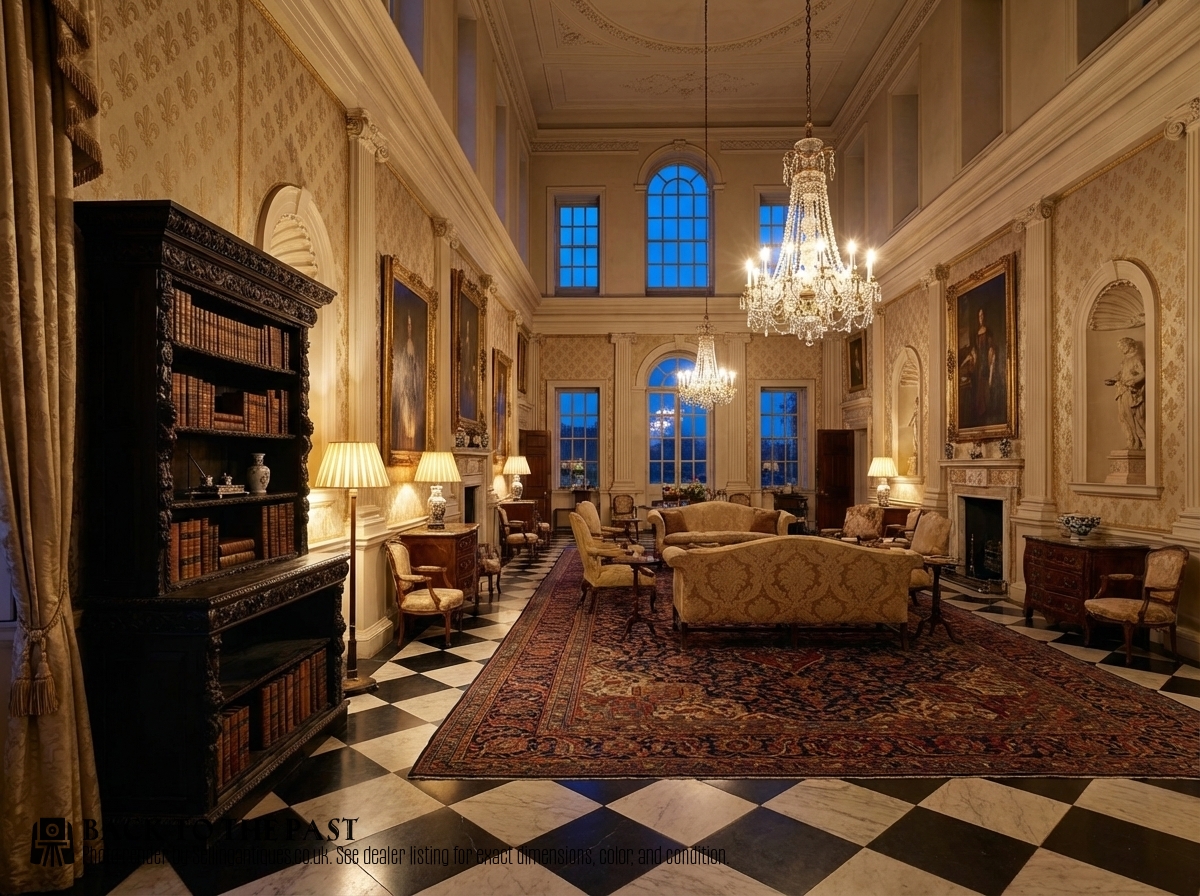
The version most commonly encountered on this page is the open Victorian or Edwardian bookcase, often detailed with foliate carving, architectural mouldings, or figurative motifs like the Green Man. They combine functional book storage with the distinct ornamental weight of nineteenth- and early twentieth-century domestic woodwork.
How they were made
Construction relies heavily on solid oak boards, occasionally enhanced by golden, tiger, or ebonised finishes that alter the natural tone of the timber. Joinery methods such as mortise and tenon frame the uprights and support internal ledges.
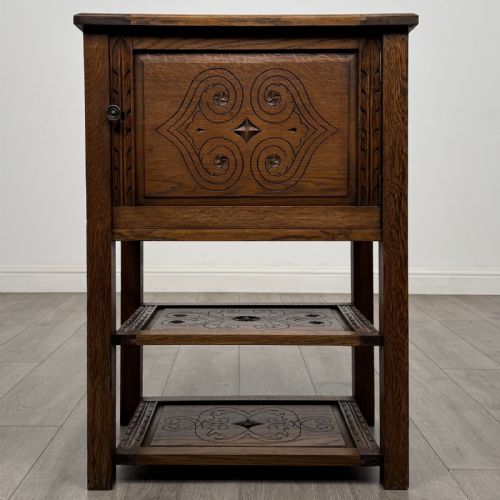
Carving is executed directly into the solid wood rather than applied as separate compo mouldings, frequently taking the form of geometric strapwork, linenfold panels, or deep-relief floral motifs. Hardware elements like brass brackets or iron fixings appear on wall-mounted variants.
Carved Oak Shelves Retail Price Guide 2026
Typical asking prices for carved oak shelves among the pieces listed under this phrase on Sellingantiques today, from the lower quarter to the upper quarter. They describe what is for sale here now, not the wider market.
Listings feature oak combined with brass, glass, iron, and mahogany across styles spanning Victorian Gothic to Aesthetic Movement.
What varies in quality
Quality rests on the depth and crispness of the hand-carving and the selection of the timber grain, with quarter-sawn tiger oak marking the upper tiers. Pieces showing deliberate proportion, integrated architectural cornices, and substantial panel thickness stand apart from plainer utility formats.
The sophistication of the joinery and the presence of original, unreplaced backboards or functional adjustable shelf mechanisms distinguish superior workshop output from simpler vernacular carpentry.
Arthur Simpson of Kendal
The Carved Oak Shelves Glossary
- Tiger oak
- A figure in oak timber produced by quarter-sawing, revealing prominent medullary rays that resemble tiger stripes. This cut creates a decorative shimmering effect across flat surfaces.
- Green Man
- A sculptural architectural motif representing a human face sprouting from or entwined with foliage. It appears frequently as a carved detail on Victorian and Edwardian woodwork.
- Gothic Revival
- An architectural and decorative style drawing inspiration from medieval design. Pieces often feature pointed arches, tracery, and heavy mouldings.
- Adjustable shelves
- Storage boards resting on movable supports or slots cut into the interior uprights. This system allows the height between tiers to be altered.
- Ebonised
- Timber treated with a chemical stain or pigment to imitate the deep, dark finish of ebony. This treatment was popular during the Victorian period for dramatic contrast.
Carved Oak Shelves: Frequently Asked Questions
How do I install heavy wall shelves safely?
Heavy oak shelves require secure fixing into solid masonry walls or direct attachment to timber studs using heavy-duty brackets. The weight of the dense oak timber and loaded books demands robust hardware to prevent pulling away from the plaster.
When positioning wall-mounted units, verify that the supporting fixings match the specific composition of your wall. Distributing the load evenly across multiple fixing points ensures long-term stability.
Are the shelves usually adjustable?
Many larger bookcases and standing display units feature adjustable shelving systems supported by wooden ratchets, peg holes, or metal tracks. This allows the internal spacing to be modified for different book heights.
Smaller hanging shelves and older vernacular pieces often utilise fixed shelves secured directly into the side panels. Checking the interior uprights will reveal whether the height can be altered.
How do I care for antique oak furniture?
Maintaining antique oak involves applying a quality beeswax polish periodically to nourish the dry timber and preserve the satin sheen. Avoid silicone-based sprays, which can build up and soften the historic surface finish.
Keep wooden pieces away from direct heat sources and strong sunlight to prevent the oak from splitting or warping over time. Dusting regularly with a soft, dry cloth protects the carved details from grime accumulation.
What is the difference between Victorian and Edwardian styles?
Victorian carved oak pieces tend to be heavier and darker, frequently featuring dense ornamentation, deep-relief carvings, and dramatic motifs like gothic tracery or Green Man masks. Proportions are often grander to suit formal nineteenth-century room layouts.
Edwardian designs generally reflect a lighter aesthetic, favouring golden oak tones, cleaner lines, and simpler Arts and Crafts influences. The construction remains robust while adapting to brighter, more open domestic interiors.