
Regency Credenza
A regency credenza is a sophisticated low storage cabinet that brings architectural elegance and practical display space to any principal room.
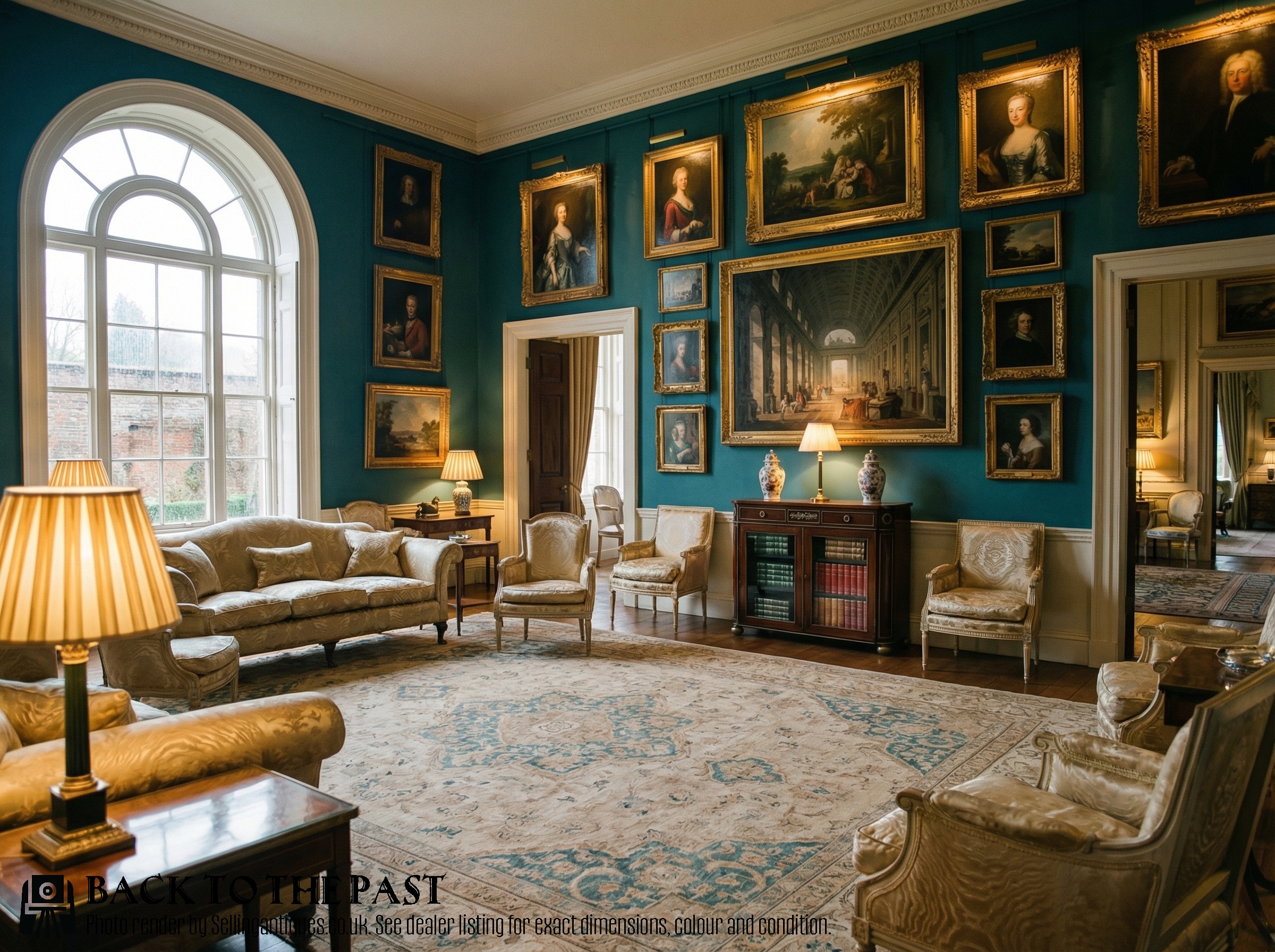
Regency Credenza
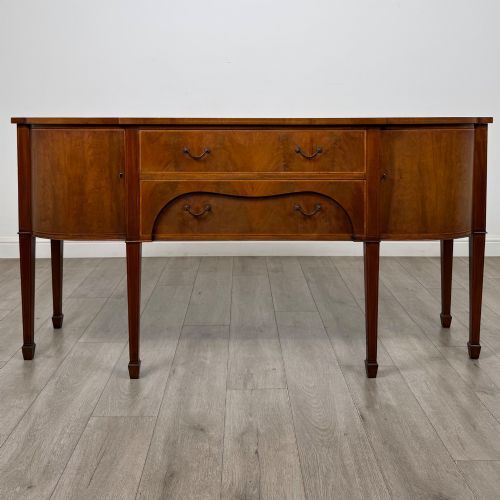
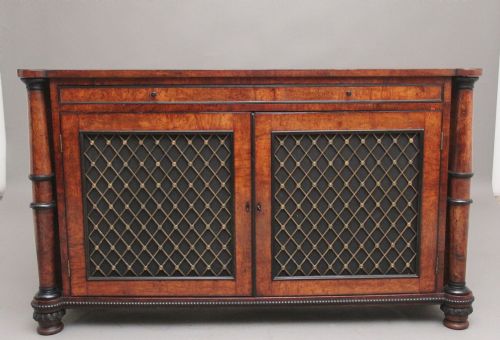
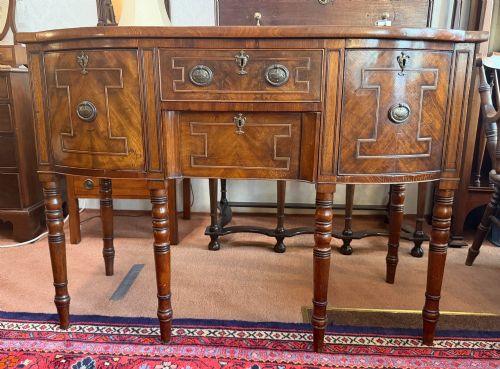
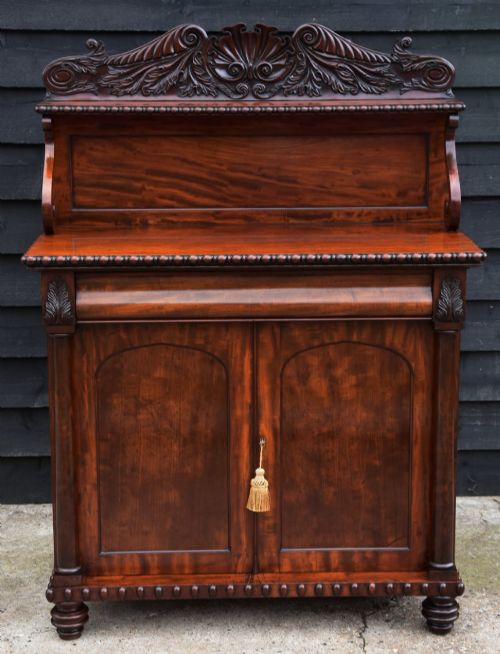
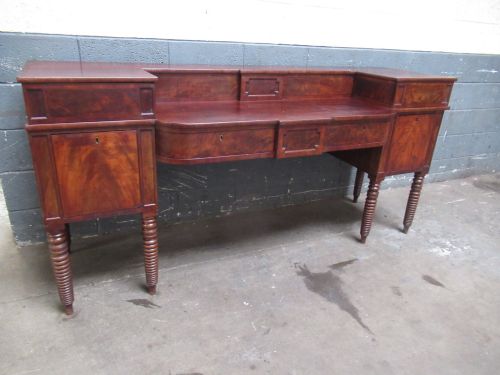
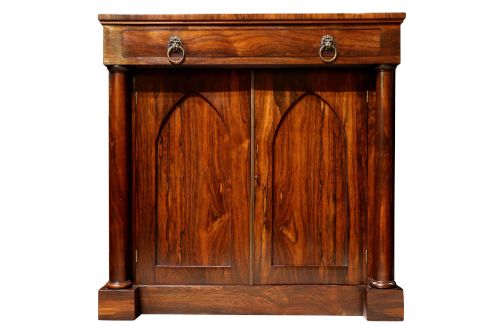
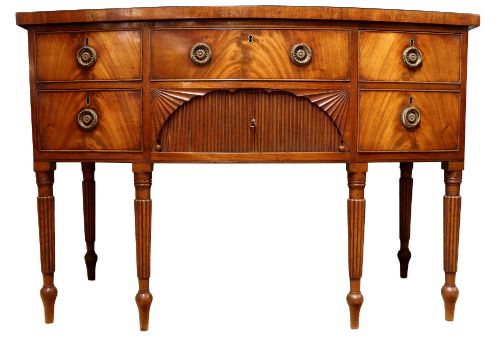
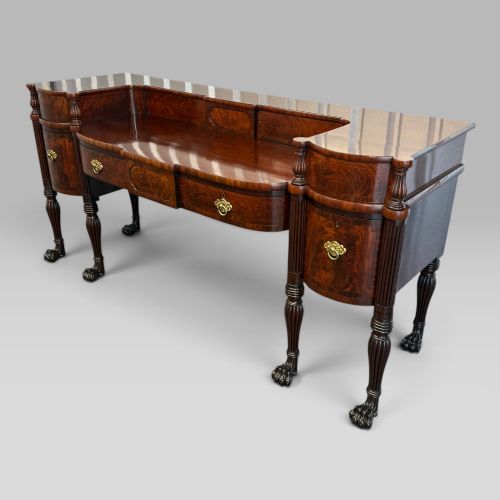
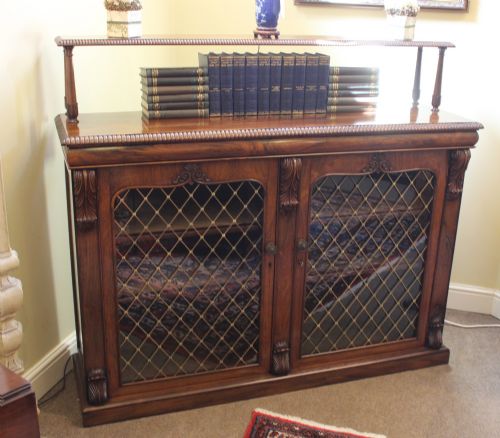
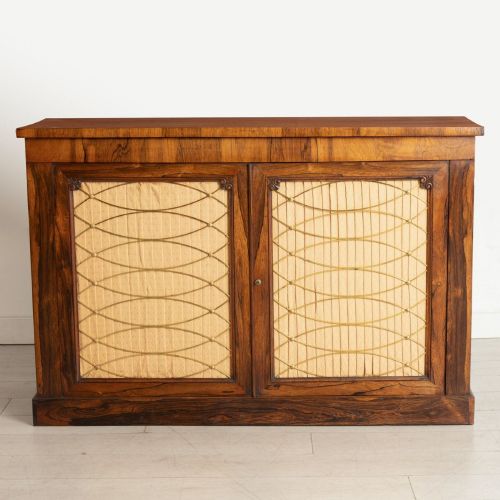
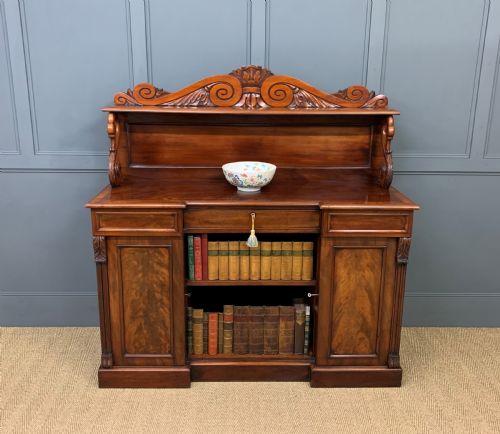
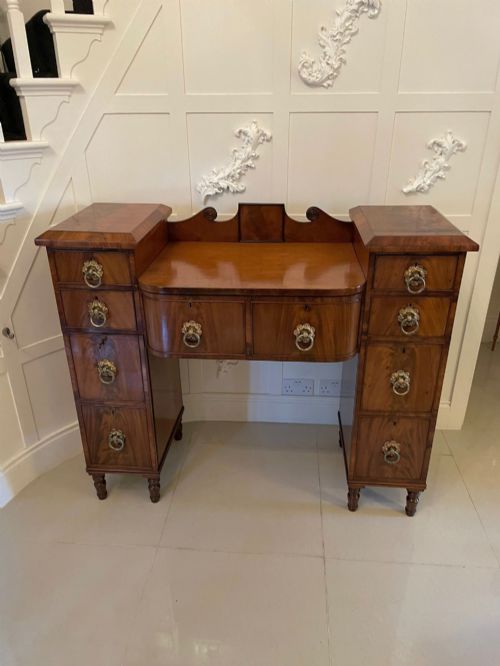
When you search for a regency credenza, you encounter a refined group of low side cabinets, chiffoniers, and breakfront bookcases designed to anchor formal rooms. These pieces originate primarily from the nineteenth century, spanning periods from Georgian and Regency through to William IV and Victorian eras.
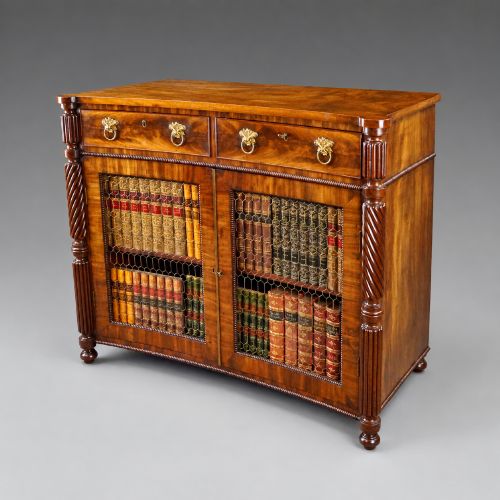
The versions you meet most frequently on this page combine low-standing timber cabinetry with brass mounts, glass panels, or fabric-backed doors. They serve as serving surfaces, bookcases, and discrete storage units in domestic interiors.
Cabinetmakers of the period constructed these forms in mahogany, rosewood, and flame mahogany, often incorporating marble tops and ebony stringing. Their low profile distinguishes them from taller towering bookcases and imposing traditional sideboards.
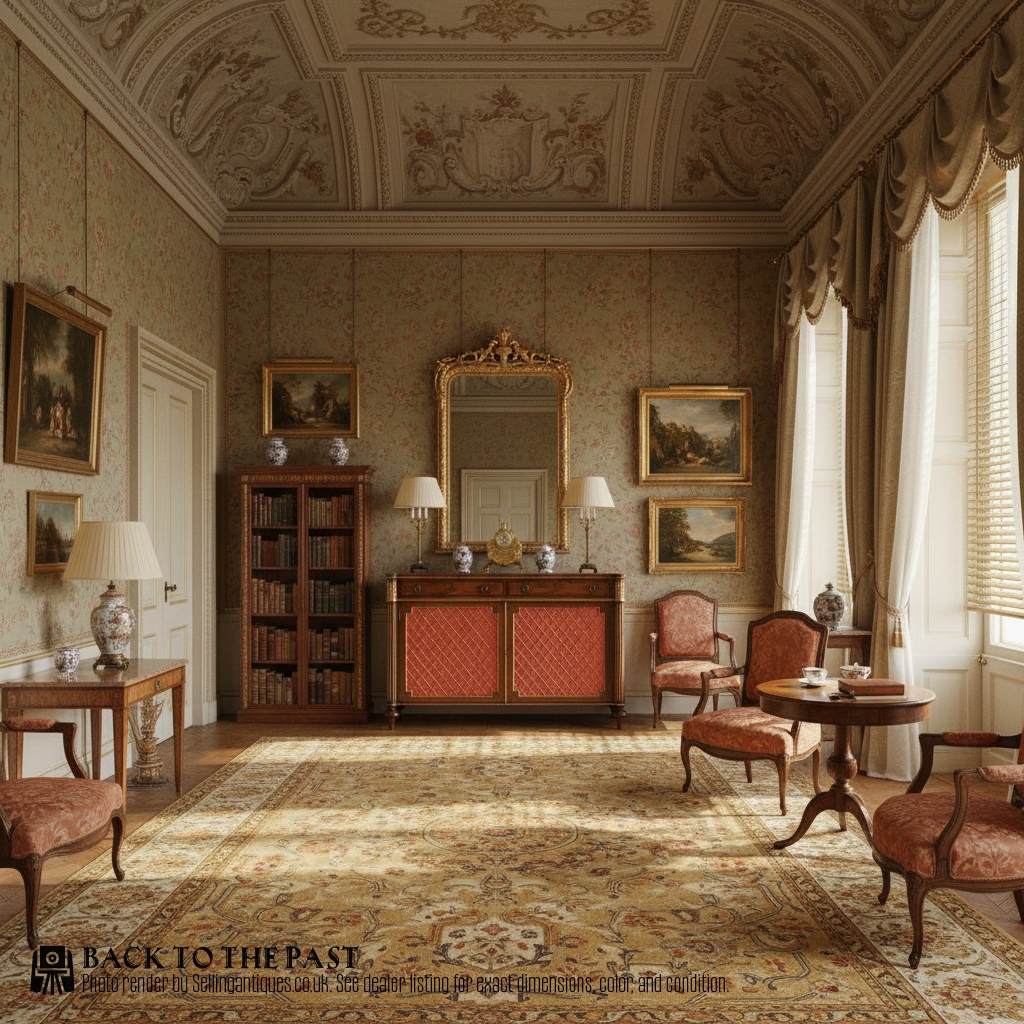
Materials and Construction
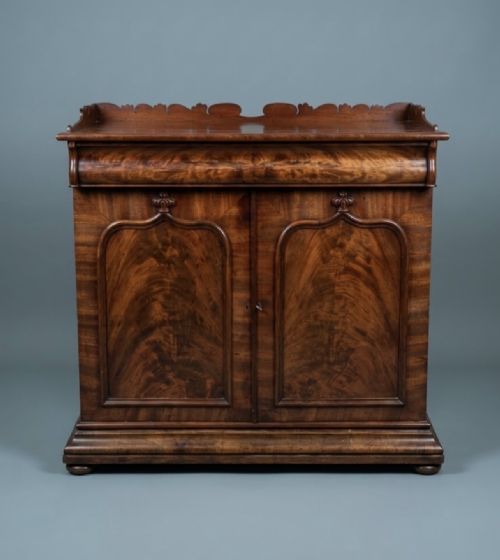
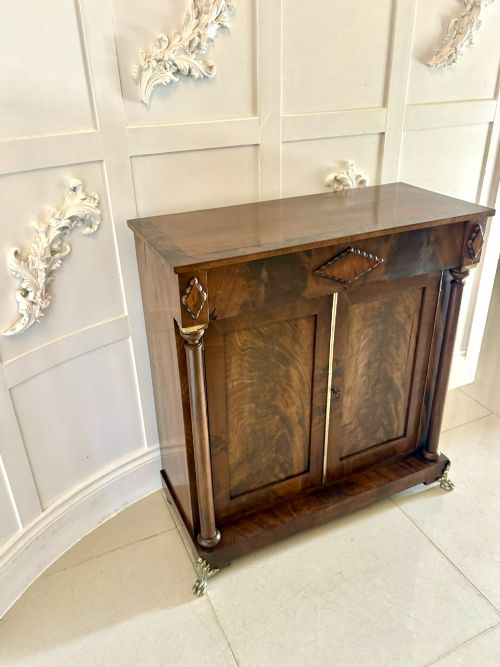
Cabinetmakers relied heavily on dense hardwoods like mahogany and rosewood, frequently applying flame mahogany veneer to achieve striking figured grain patterns across the primary doors and drawer fronts. Secondary woods provided structural stability behind these polished facades.
Brass featured prominently in the construction, utilised for intricate inlay, pierced gallery rails, and structural mounts that accented the dark timber. Marble tops appeared on select high-end variants, providing a cool, durable surface above the wooden cabinetry.
Regency Credenza Retail Price Guide 2026
Typical asking prices for regency credenza among the pieces listed under this phrase on Sellingantiques today, from the lower quarter to the upper quarter. They describe what is for sale here now, not the wider market.
Makers occasionally hid secret drawers inside these cabinets for family valuables, ensuring that nineteenth-century gossip remained strictly confidential.
Distinctions in Quality
Quality rests principally in the selection of the timber veneer and the precision of its application across the carcase. Pieces featuring highly figured flame mahogany or richly grained rosewood display a superior visual depth that elevates the entire furniture form.
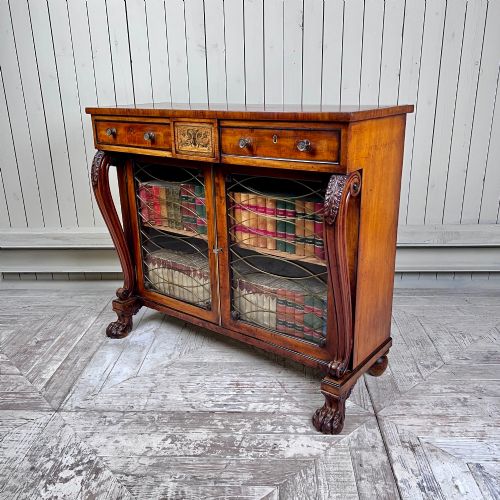
The finesse of the brass inlay, the crispness of carved details such as lion paw feet or panel mouldings, and the integration of secondary materials like marble or specialist glass dictate the standing of an individual piece.
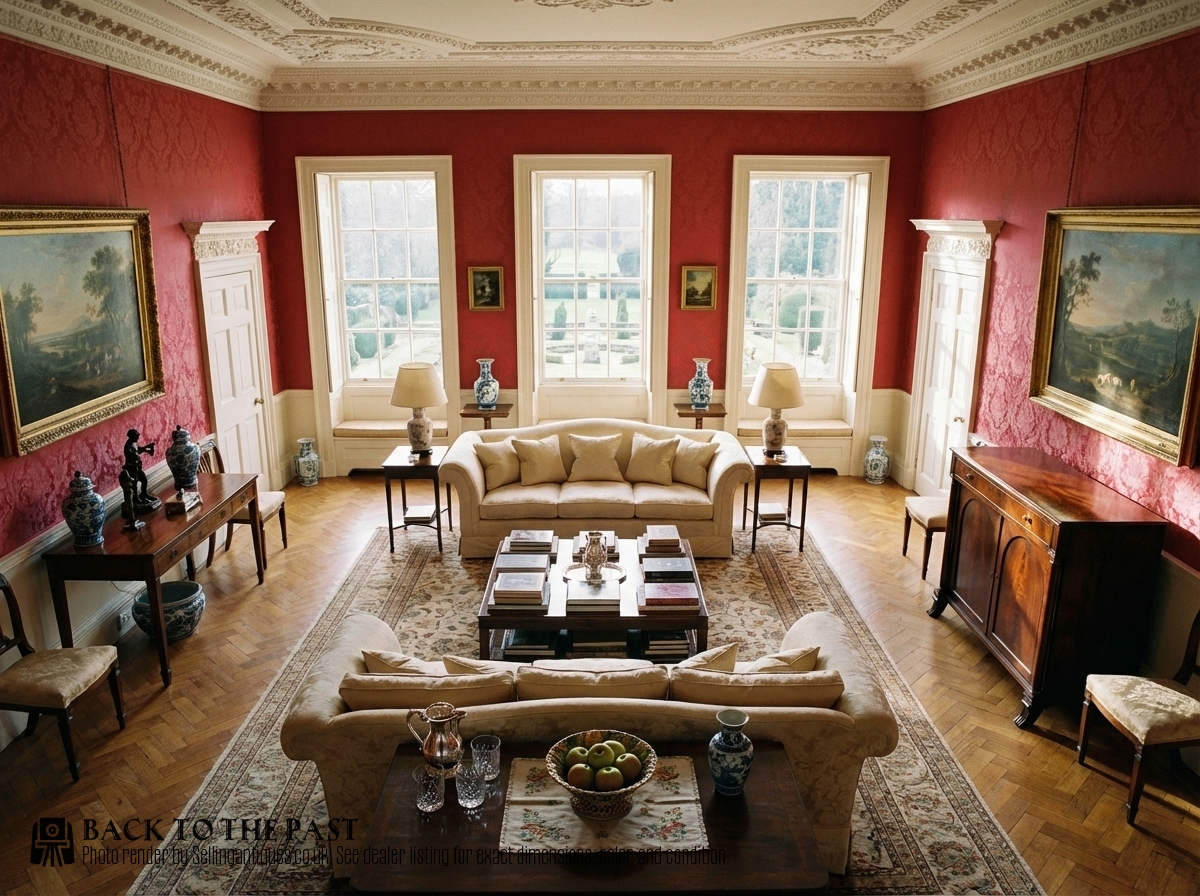
Gillows
The Regency Credenza Glossary
- Credenza
- A low cabinet or sideboard used for serving or storage, typically featuring doors across the front. It sits lower than traditional dining room sideboards.
- Chiffonier
- A small sideboard or low cabinet, often equipped with shelves or a raised superstructure on top. These pieces gained popularity during the Regency and William IV periods.
- Flame Mahogany
- A veneer cut from the branch junction of the mahogany tree to create a distinctive flame-like pattern. Furniture makers prized this timber for its dramatic visual movement.
- Breakfront
- A piece of furniture where the central section projects forward from the flanking outer sections. This architectural arrangement creates depth and shadow on cabinet facades.
- Pedestal Sideboard
- A heavy sideboard featuring separate pedestals or cupboards flanking a central table section. They frequently incorporated cellarettes for wine storage.
Regency Credenza: Frequently Asked Questions
What is a regency credenza used for?
These cabinets served primarily for storage and display in dining rooms, morning rooms, and parlours during the nineteenth century. They held table linen, silverware, and books while providing a surface for decorative objects.
Today, they function well in contemporary homes as media consoles, hallway storage units, or living room display cabinets that house lamps and collections.
How do I date a regency credenza?
Dating relies on examining the timber species, construction techniques, and decorative motifs present on the cabinet. Pieces from the strict Regency period often feature crisp brass inlay and rosewood veneers, whilst later William IV examples tend toward heavier proportions and bolder carved details.
Hardware, drawer linings, and backboards offer further clues to the manufacturing decade, distinguishing genuine nineteenth-century pieces from later revivals.
Are these cabinets made of solid wood?
Most examples utilise solid timber frames combined with premium wood veneers applied to stable secondary woods. Flame mahogany and rosewood were expensive, so cabinetmakers sliced them into thin veneers to display the decorative grain across wide door panels.
Solid sections typically appear on structural elements like columns, feet, and frame mouldings where strength and carving capability are required.
Where should I place a credenza at home?
A low cabinet works best against a primary wall in a dining room, living area, or wide hallway where its length can be fully appreciated. Because they sit lower than standard cupboards, they suit spaces positioned beneath large mirrors or artwork.
Ensure the room has adequate clearance for the cabinet doors or drawers to open fully without colliding with surrounding furniture.