
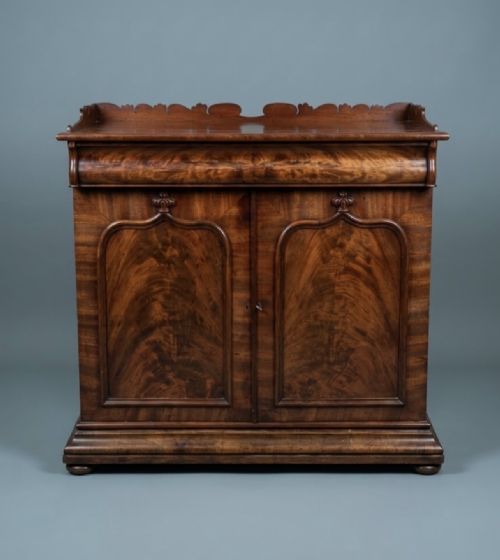
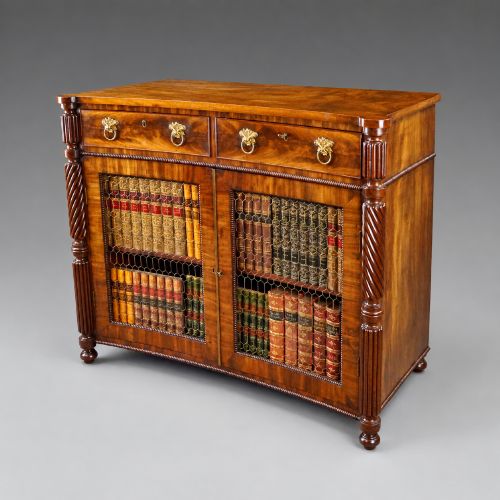
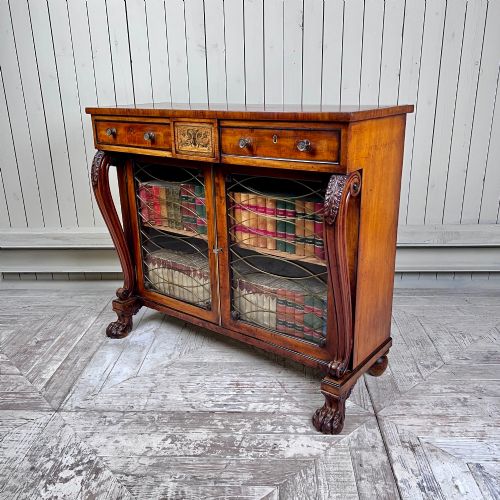
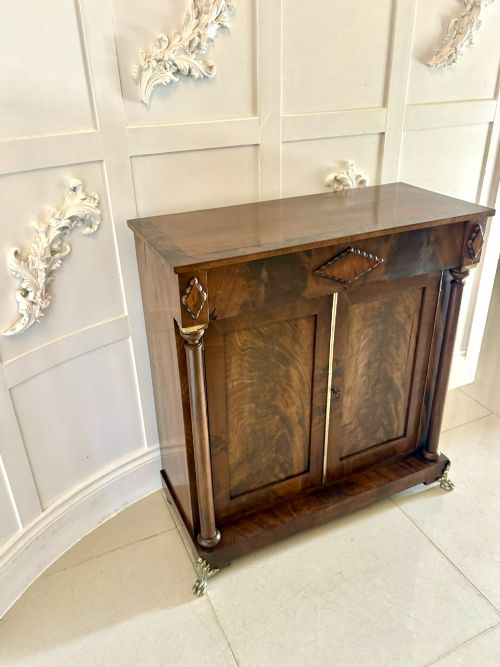
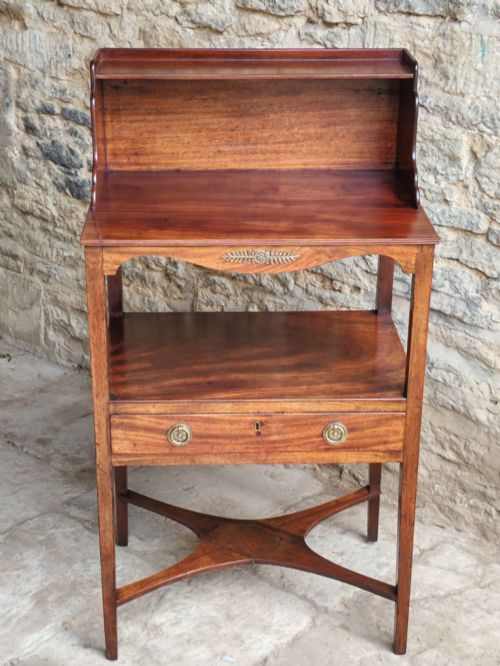
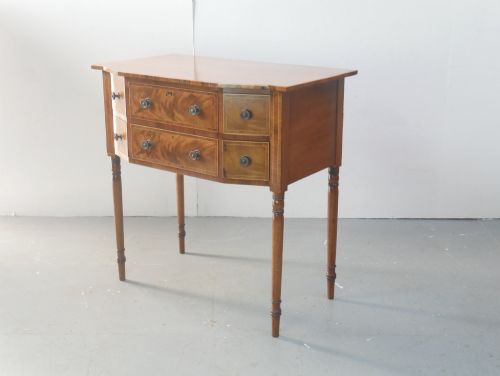
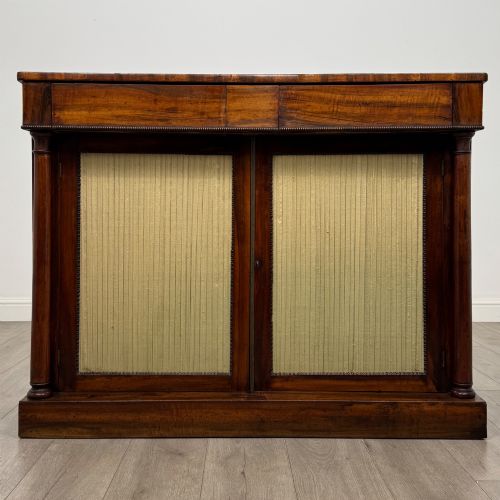
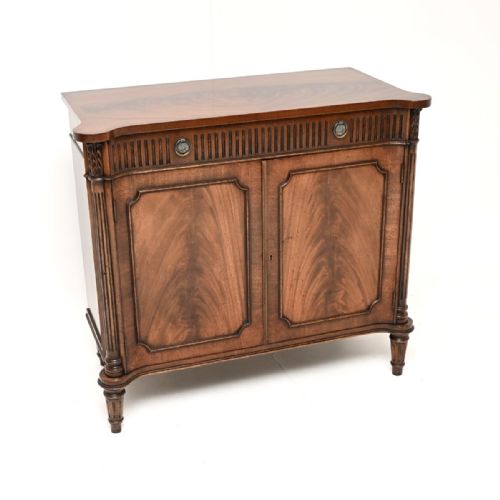
Regency Mahogany Side Cabinet
A regency mahogany side cabinet brings crisp architectural lines and rich timber into a room.
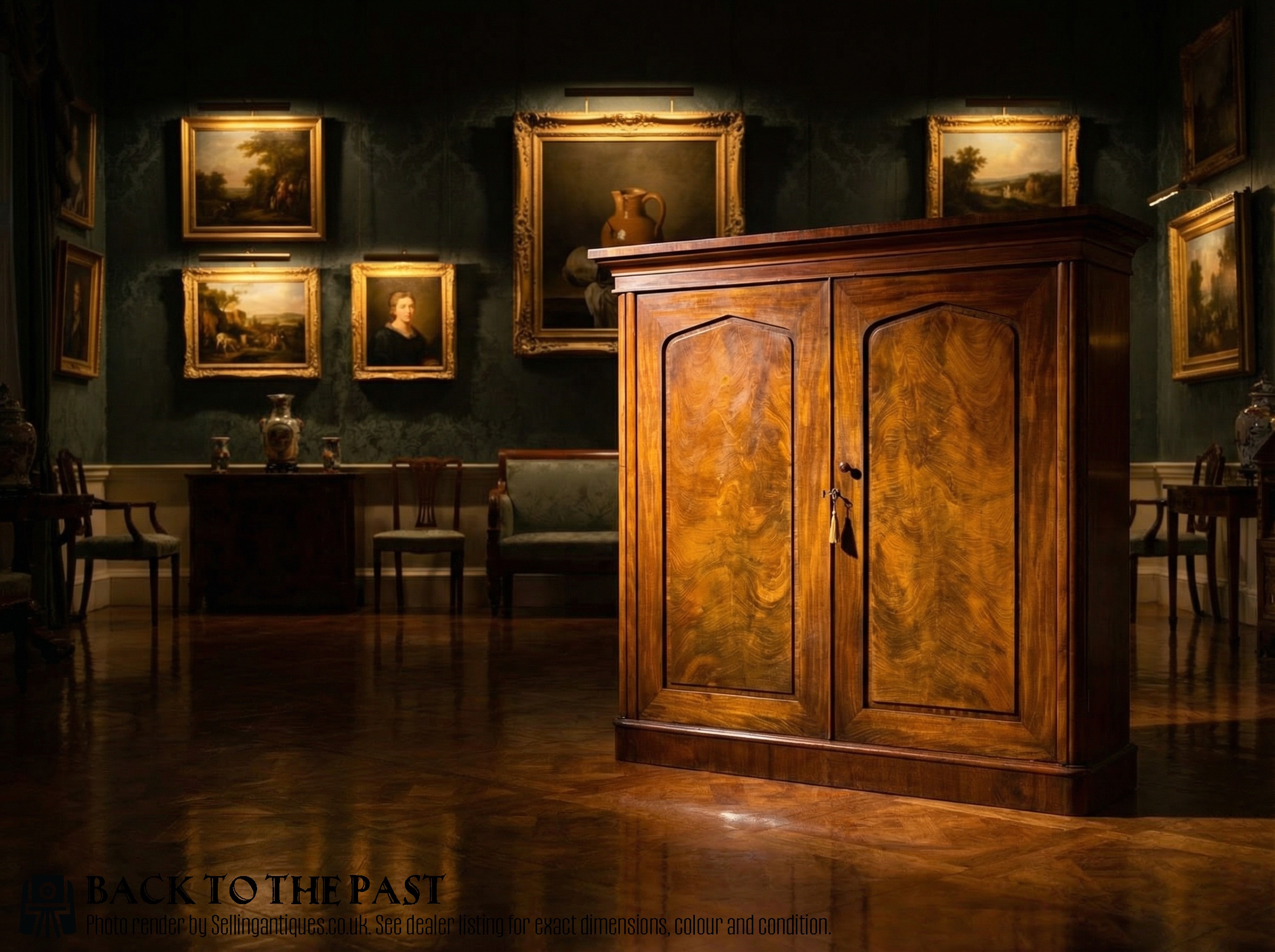
Defining the regency mahogany side cabinet
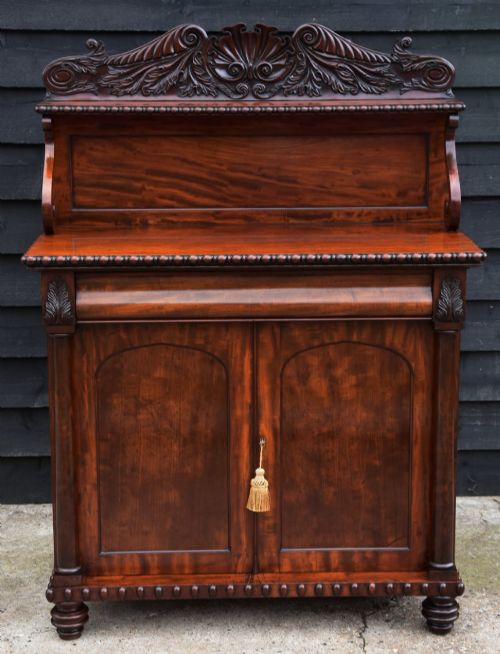
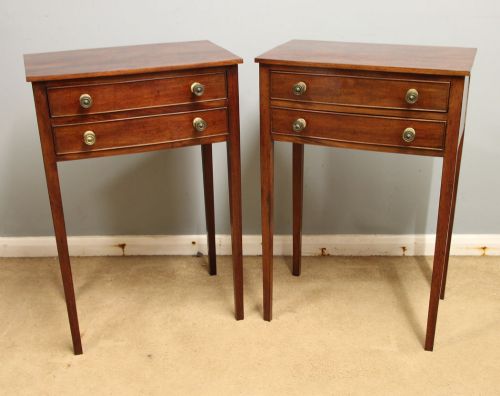
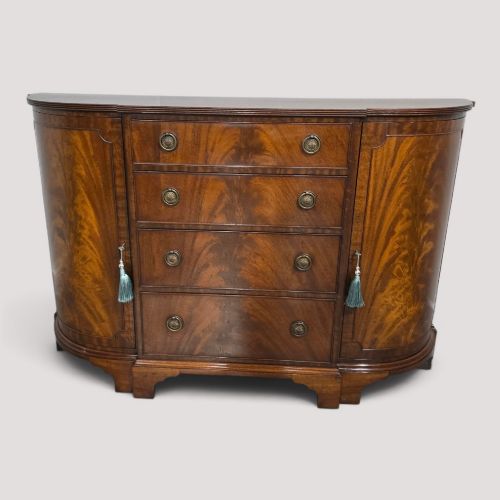
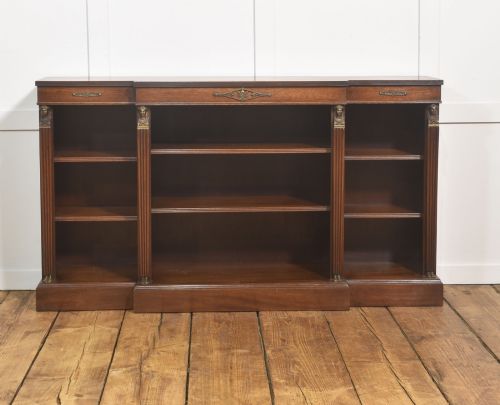
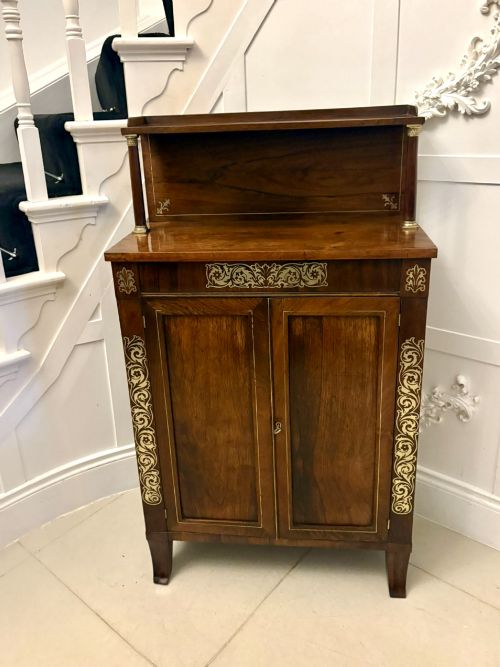
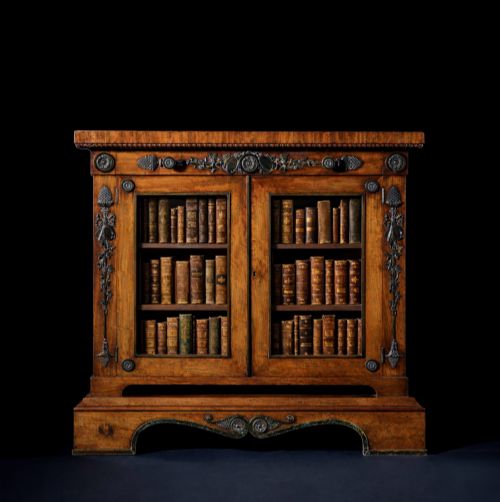
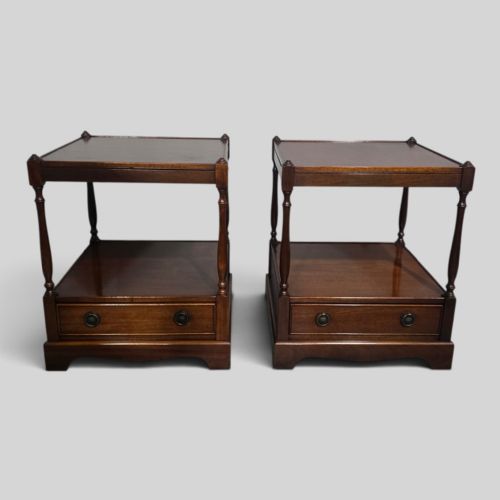
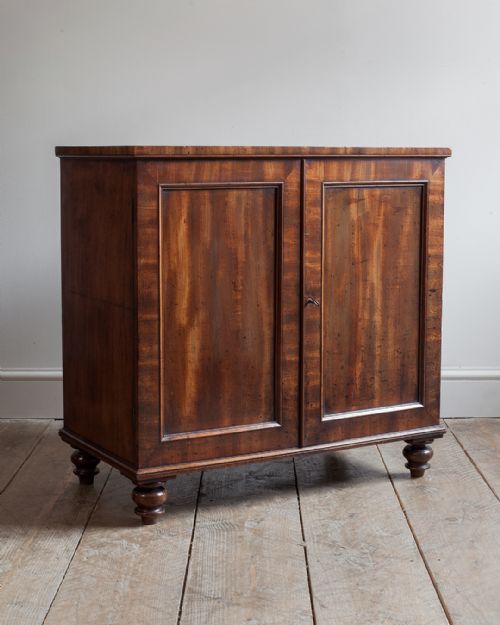
A regency mahogany side cabinet serves as a formal storage piece designed for the dining room, library or bedroom. These pieces range from low bedside cupboards and compact chiffoniers to larger two-door storage cabinets and breakfront forms.
The pieces listed now and in the archive span the nineteenth century, Regency, William IV and Victorian periods, with standard side cabinets and bedside variants appearing most frequently. Country house library cupboards and narrow configurations also emerge amongst the varied domestic forms.
Materials and construction
Cabinet makers relied primarily on solid mahogany and flame mahogany veneer applied to secondary framing timbers. Selected pieces incorporate brass wire, fabric panels and variated marble tops for decorative contrast.
Joinery techniques included precise drawer construction and cabinet framing to support heavy timber tops. Tambour doors and panelled two-door configurations required expert hand-fitting by period artisans.
Retail Price Guide 2026
Typical UK retail prices for regency mahogany side cabinet, calculated from the Sellingantiques database of over a million retail prices indexed since 2003. This retail price guide relies exclusively on Sellingantiques data; no external sources or auction records are used, so the figures do not describe the wider market.
Form variations include breakfront profiles, tambour fronts and narrow bedside cupboards.
Judging quality in construction and timber
The selection of timber dictates the visual impact of each cabinet, with figured flame mahogany veneer showing superior grain patterning compared to plain stock. Richness of colour and depth of polish separate standard utility pieces from high-status commissions.
Refinement in the handling of brass mounts, gallery rails and delicate inlay work indicates the skill of the workshop. Crisp architectural mouldings and well-balanced proportions distinguish fine examples from simpler provincial work.
Holland and Sons
The Regency Mahogany Side Cabinet Glossary
- Flame mahogany
- A veneer cut from timber where the grain creates a distinctive flickering, flame-like pattern. This figured wood was prized for front panels and drawer faces.
- Chiffonier
- A low cabinet featuring shelving or a raised back above storage doors. These pieces developed during the early nineteenth century for dining and drawing rooms.
- Breakfront
- A cabinet facade where the central section projects forward from the flanking cupboards. This architectural arrangement creates depth and shadow.
- Tambour
- Flexible strips of wood glued to a canvas backing to form a sliding shutter. This mechanism allowed makers to enclose curved bedside cabinet compartments.
- Tray top
- A raised rim surrounding the upper surface of small bedside cabinets. This feature prevented items from sliding off the polished surface.
Frequently Asked Questions
What is a regency mahogany side cabinet?
A regency mahogany side cabinet is a storage piece featuring timber doors, drawers or open shelving produced during the early nineteenth century. These items served practical storage functions in dining rooms and bedchambers.
Craftsmen utilised mahogany solids and veneers, often incorporating brass details or marble tops. Today they function as versatile accent furniture in contemporary homes.
How do I identify a period piece?
Review the construction methods, timber choice and hardware to determine age. Period pieces exhibit hand-cut joinery and aged mahogany patination.
Compare the proportions and decorative motifs against documented nineteenth-century examples. Revival pieces often display subtle differences in timber finish and internal structure.
Where should I place a side cabinet?
These cabinets suit hallways, living rooms and bedrooms where surface space and enclosed storage are required. Their compact footprint allows them to fit alongside seating or beneath artwork.
Keep them away from direct heat sources and strong sunlight to protect the mahogany veneer and polish. Regular dusting maintains the timber finish.
What is the difference between a chiffonier and a side cabinet?
A chiffonier typically includes a raised superstructure or shelf above the main enclosed storage section. Side cabinets generally offer a flat top surface.
Both forms utilise mahogany construction and date from the Regency and subsequent nineteenth-century periods.