
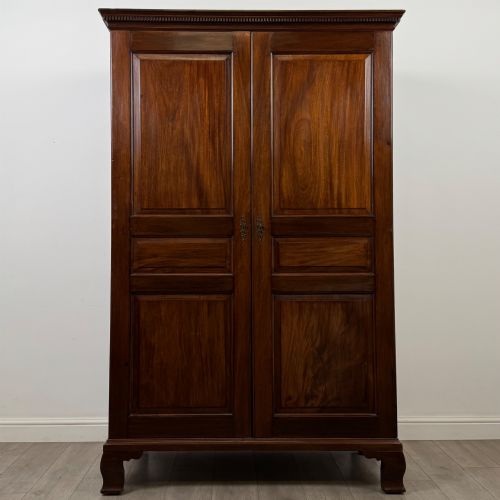
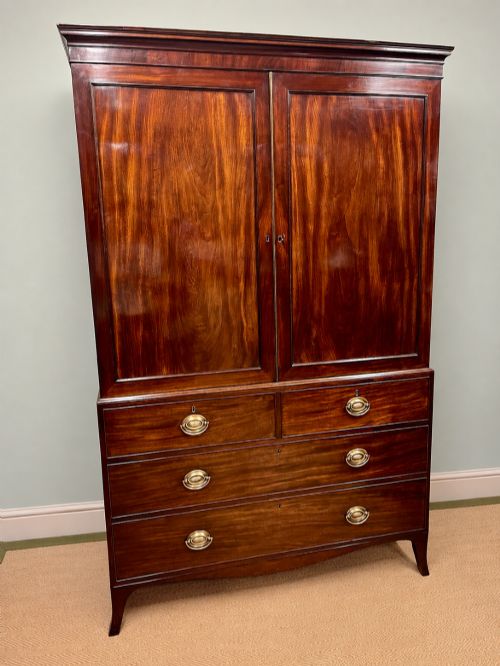
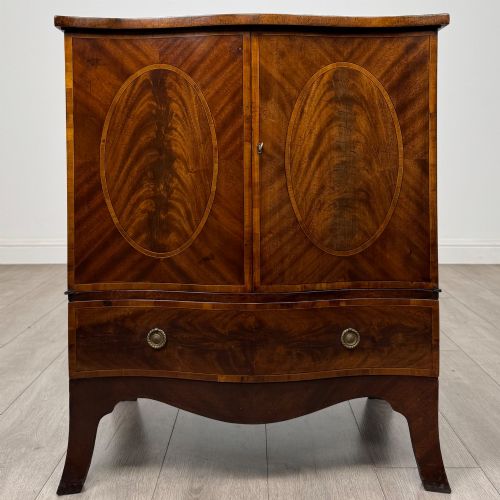
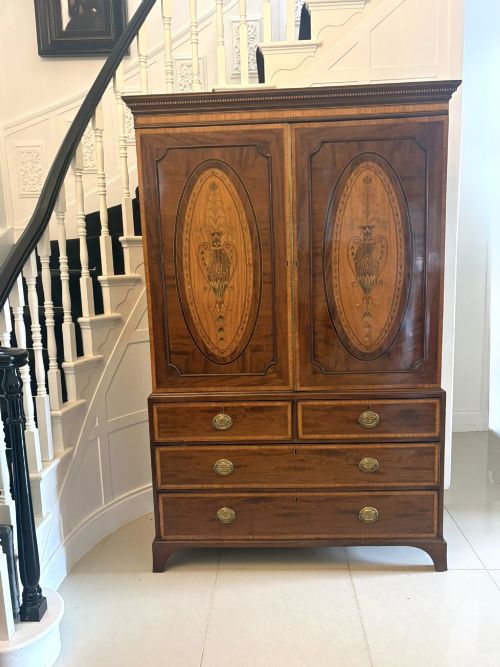
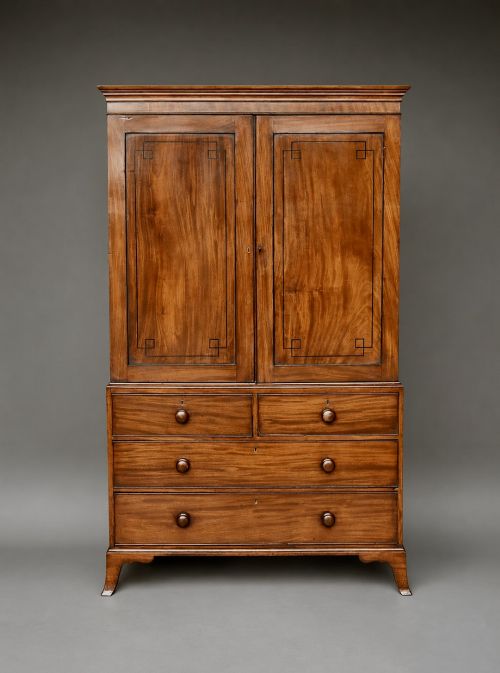
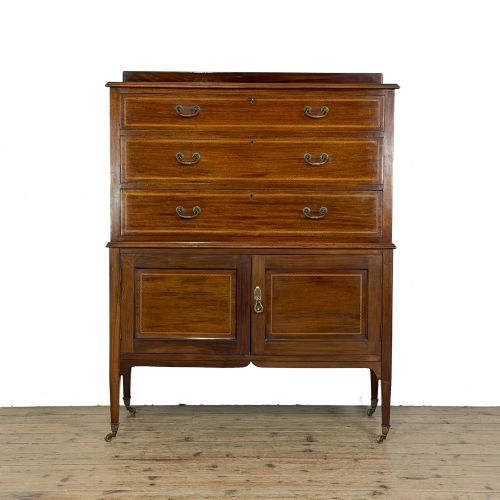
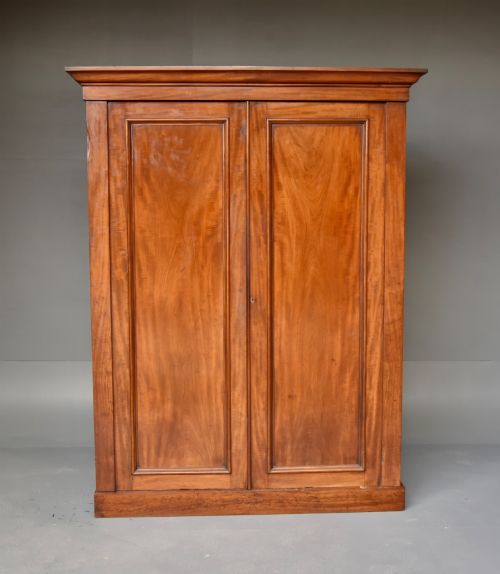
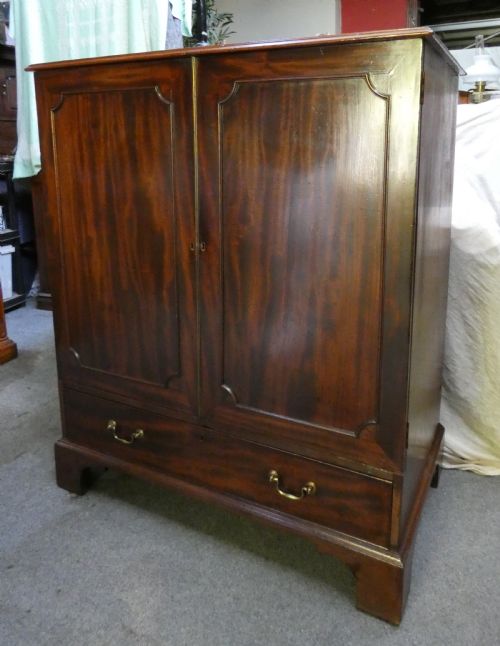
Mahogany Linen Cupboard
When you search for a mahogany linen cupboard, you are looking at substantial storage pieces designed to keep textiles organised and protected.
Mahogany Linen Cupboard
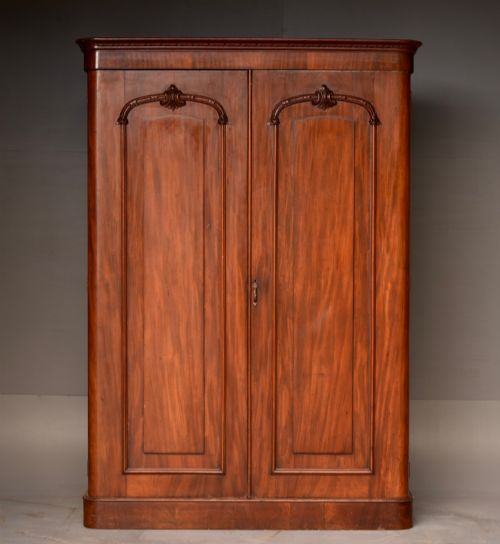
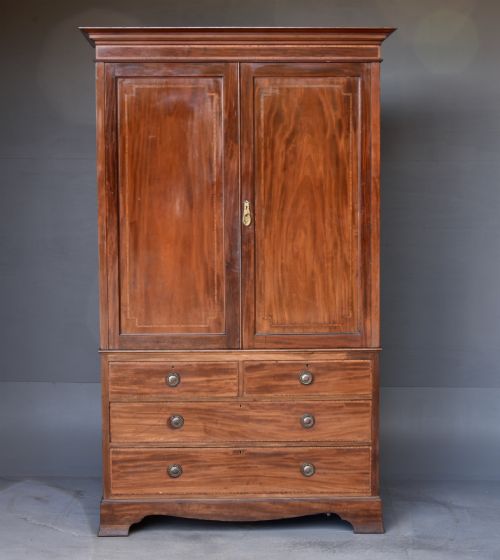
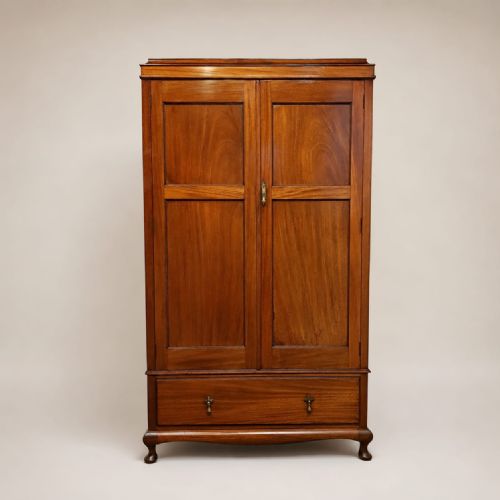
A mahogany linen cupboard typically combines upper cabinet storage with lower drawers, often taking the form of a tall press or a compact housekeeper's wardrobe. These pieces originated primarily in the Georgian and Victorian eras, designed to house folded garments and household linens before hanging space became standard.
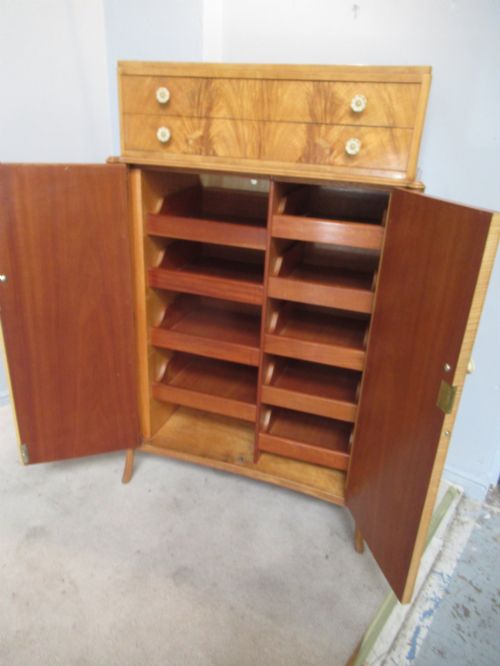
The most common versions met on this page span the late eighteenth century through to the Edwardian period, including pieces attributed to Georgian workshops and later Victorian iterations. They frequently pair deep internal sliding trays with base drawer configurations, offering a distinct storage profile compared to modern wardrobes.
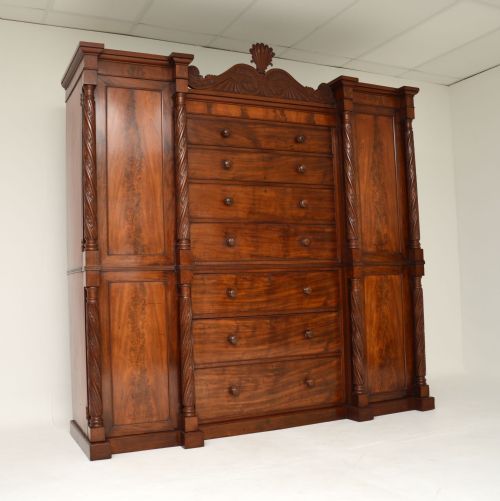
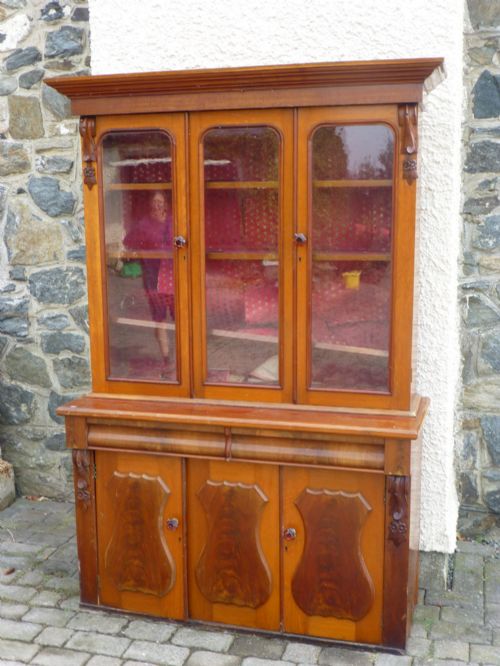
Makers often utilised tall upright proportions, sometimes featuring blind fretwork cornices, bow fronts, or breakfront designs to add architectural presence. Whether found in a compact dwarf format or a taller configuration, these cupboards serve as primary storage furniture with strong regional and period characteristics.
Materials and Construction
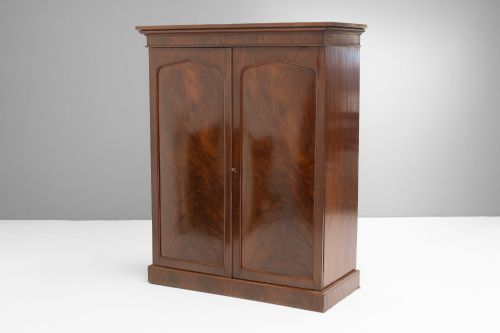
Cabinet makers built these pieces using solid timber frames overlaid with select veneers, frequently employing highly figured flame mahogany to create dramatic grain patterns on the main doors. Secondary timbers such as oak and pine commonly form the internal linings and drawer boxes.
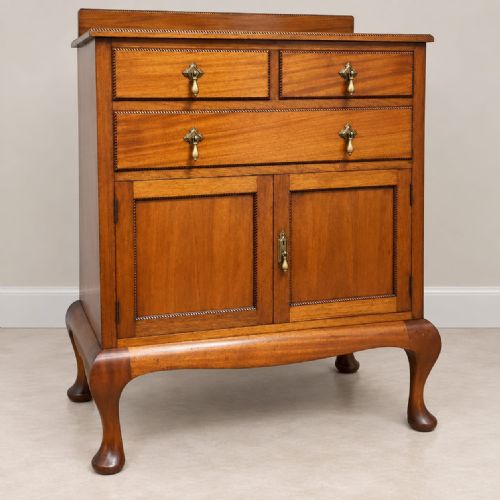
Surface enrichment often involved contrasting stringing and banding in satinwood or boxwood, alongside hand-cut dovetail joints on the drawer constructions. Brass hardware, ranging from simple knobs to decorative escutcheons, completes the functional assembly of doors and drawers.
Mahogany Linen Cupboard Retail Price Guide 2026
Typical asking prices for mahogany linen cupboard among the pieces listed under this phrase on Sellingantiques today, from the lower quarter to the upper quarter. They describe what is for sale here now, not the wider market.
Listings feature periods ranging from the eighteenth-century Georgian era through to Edwardian and Victorian times, alongside French regional styles.
Indicators of Quality
The choice of timber veneer dictates much of the visual impact, with symmetrical flame mahogany figuring representing the more desirable end of the scale. Cabinetmakers who matched veneer panels across multiple doors demonstrated a higher level of workshop skill.
Internal execution reveals the underlying standard of manufacture, particularly in the smooth operation of sliding linen trays and the tightness of the drawer dovetails. Finer examples integrate subtle decorative elements like satinwood inlay or carved fretwork without compromising the structural integrity of the frame.
maples & co·Gillows·Druce & Co.
The Mahogany Linen Cupboard Glossary
- Linen Press
- A tall storage piece featuring upper doors enclosing sliding trays, sitting above a chest of base drawers. This form was traditionally used for pressing and storing household textiles.
- Flame Mahogany
- A veneer cut from the fork of the mahogany tree where the branch meets the trunk, producing a distinctive flickering flame pattern. Cabinetmakers prized this figuring for primary display surfaces.
- Housekeeper's Cupboard
- A large utility press traditionally utilised in country houses for storing linens and blankets. These pieces often feature generous proportions and robust internal shelving or trays.
- Dovetail Joint
- A interlocking wood joint formed by wedge-shaped fingers, utilised in traditional drawer construction for maximum tensile strength. Fine examples show tight, precise hand-cut pins.
- Blind Fretwork
- Carved ornamental woodwork applied to a flat surface in a geometric pattern without being pierced right through. It frequently appears along the cornice of Georgian presses.
Mahogany Linen Cupboard: Frequently Asked Questions
What is a linen press?
A linen press is a large storage cabinet designed specifically to hold folded textiles, bed linen, and garments on internal sliding wooden trays. The upper section encloses these trays behind doors, while the lower portion typically contains a chest of drawers.
These pieces served a vital domestic function before fitted wardrobes became common in bedrooms. They allowed household linens to be kept flat and neatly ordered.
How do I date a mahogany linen cupboard?
Dating relies on observing construction methods, timber choices, and stylistic details such as cornices, bracket feet, and inlay work. Georgian pieces often feature cleaner architectural lines and solid proportions, whereas Victorian examples may incorporate heavier mouldings and different internal configurations.
Examining the secondary timbers inside the drawers and the style of the brass hardware also helps narrow down the period of manufacture. Regional variations can add further context to the origin of the piece.
Are the internal trays removable?
The internal sliding trays within these cupboards are generally designed to remain in their tracks as a fixed system for organising folded textiles. Some historical examples feature adjustable or removable trays depending on the specific workshop design.
Buyers intending to convert the interior for modern hanging clothes should check whether the tray framework can be adapted without altering the primary structure.
How do I care for antique mahogany?
Maintaining antique mahogany involves keeping the timber away from direct heat sources and strong sunlight, which can dry out the wood and fade the polish. Regular dusting with a dry, soft cloth preserves the finish.
Applying traditional beeswax occasionally helps nourish the grain and protect the surface without building up synthetic residues. Avoid using modern silicone-based sprays on period polish.