


Regency Collectors Chest
A regency collectors chest brings together small-scale craftsmanship and specialised storage for miniatures or specimens.
Regency Collectors Chest
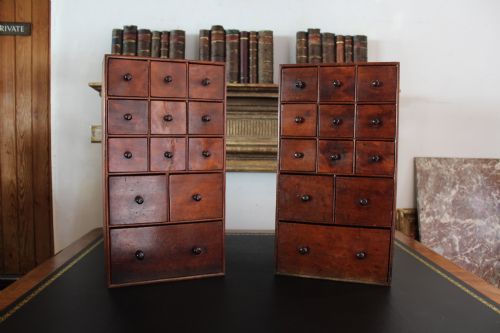
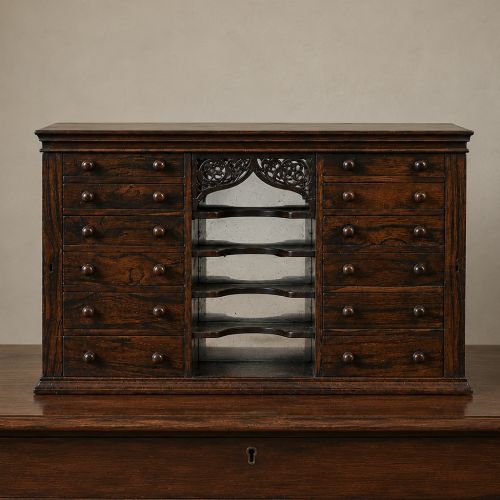
A regency collectors chest encompasses miniature chests of drawers, table cabinets, and desktop cases designed for organised storage. These pieces emerge from nineteenth-century workshops, drawing upon Georgian proportions and Regency styling.
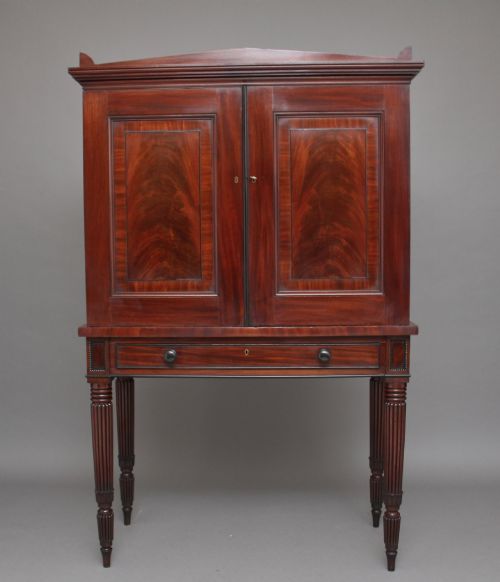
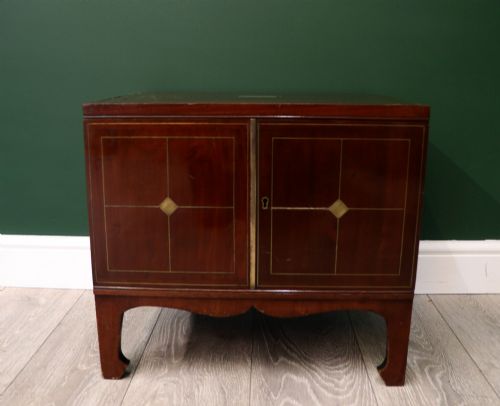
The most frequent examples take the form of miniature mahogany chests of drawers, tabletop cabinets on stands, and specialised Wellington chests. Many incorporate multiple internal drawers tailored for specific collections rather than general domestic use.
Makers utilised varied scales, producing items ranging from small desktophumidors to larger folio cabinets and cabinets on stands. The overarching form remains compact, prioritizing refined joinery and segmented internal layouts.
Materials and Construction
Cabinetmakers employed dense hardwoods such as mahogany, rosewood, burr oak, amboyna, and gonçalo-alvez for the primary carcasses. Secondary timbers often included boxwood and bone for subtle stringing, inlay, and escutcheons.
Surface ornamentation relied on sophisticated techniques including brass inlay, penwork, lacquer, and mother-of-pearl detailing. Drawers were closely fitted, occasionally featuring specialised locking mechanisms like those seen on Wellington chests.
Structural integrity depended on precise dovetailing and stable secondary woods, ensuring that small-scale drawers operated smoothly over extended periods of use.
Historic homeopaths required miniature chests to transport delicate remedies safely across bumpy roads.
Markers of Quality
Quality rests upon the selection of timber veneers and the precision of decorative inlays such as brass stringing or penwork. Finer pieces demonstrate meticulous attention to grain matching across small drawer fronts and panel surfaces.
The sophistication of the internal arrangement dictates value, particularly where numerous small drawers fit with tight tolerances. Superior examples feature intact original handles, locks, and specialised fittings without later alterations.
Overall structural harmony separates standard utility pieces from exhibition-grade examples bearing maker signatures or documented historical provenance.
CHARLES WILLIAM SCHOFIELD
The Regency Collectors Chest Glossary
- Wellington chest
- A tall, narrow chest of drawers secured by a locking pilaster hinged on one side. This design prevents unauthorized access to all drawers simultaneously.
- Penwork
- A decorative technique utilising fine ink drawings on a prepared wood surface, often finished with a clear protective glaze. It appears frequently on Regency Chinoiserie cabinets.
- Apprentice piece
- A miniature furniture item created by a trainee craftsman to demonstrate mastery of joinery techniques. These objects display full-scale construction methods in reduced dimensions.
- Gonçalo-alvez
- A dense, highly figured tropical hardwood displaying contrasting dark brown and golden tones. Cabinetmakers valued it for striking decorative veneers during the nineteenth century.
- Campaign style
- Portable furniture constructed for travel, typically featuring recessed brass handles and reinforced corners. These pieces were built for dismantling or secure transport.
Regency Collectors Chest: Frequently Asked Questions
What were regency collectors chests used for?
These cabinets housed specialised items such as natural history specimens, coins, medals, or small curiosities.
Collectors kept delicate objects organised within multiple shallow drawers designed specifically for sorting small items.
How do I identify a regency period piece?
Look for characteristic design elements such as classical proportions, flame mahogany veneers, and subtle brass stringing.
Construction methods like hand-cut dovetails and traditional secondary woods help confirm the nineteenth-century timeline.
Where should I place a table cabinet?
Table cabinets suit secure desktop placement or sturdy side tables where their detailed surfaces remain visible.
Avoid positioning them in direct sunlight or near heat sources to protect sensitive veneers and polished finishes.
Are miniature chests the same as apprentice pieces?
Miniature chests served as functional tabletop storage for personal items or small collections in domestic settings.
Apprentice pieces specifically represent test items built by learners to demonstrate advanced joinery skills to a guild.