
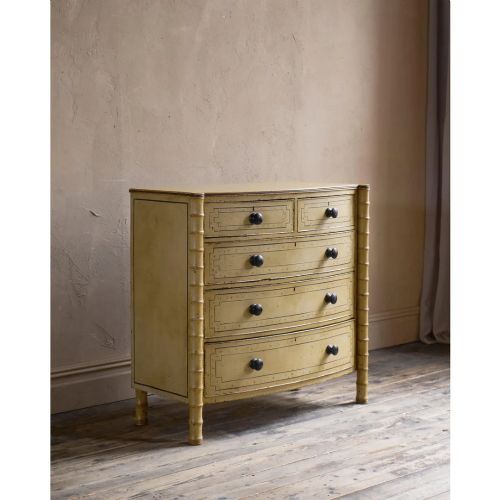


Regency Chinoiserie Cabinet
A regency chinoiserie cabinet brings eastern motifs and japanned finishes into formal rooms.
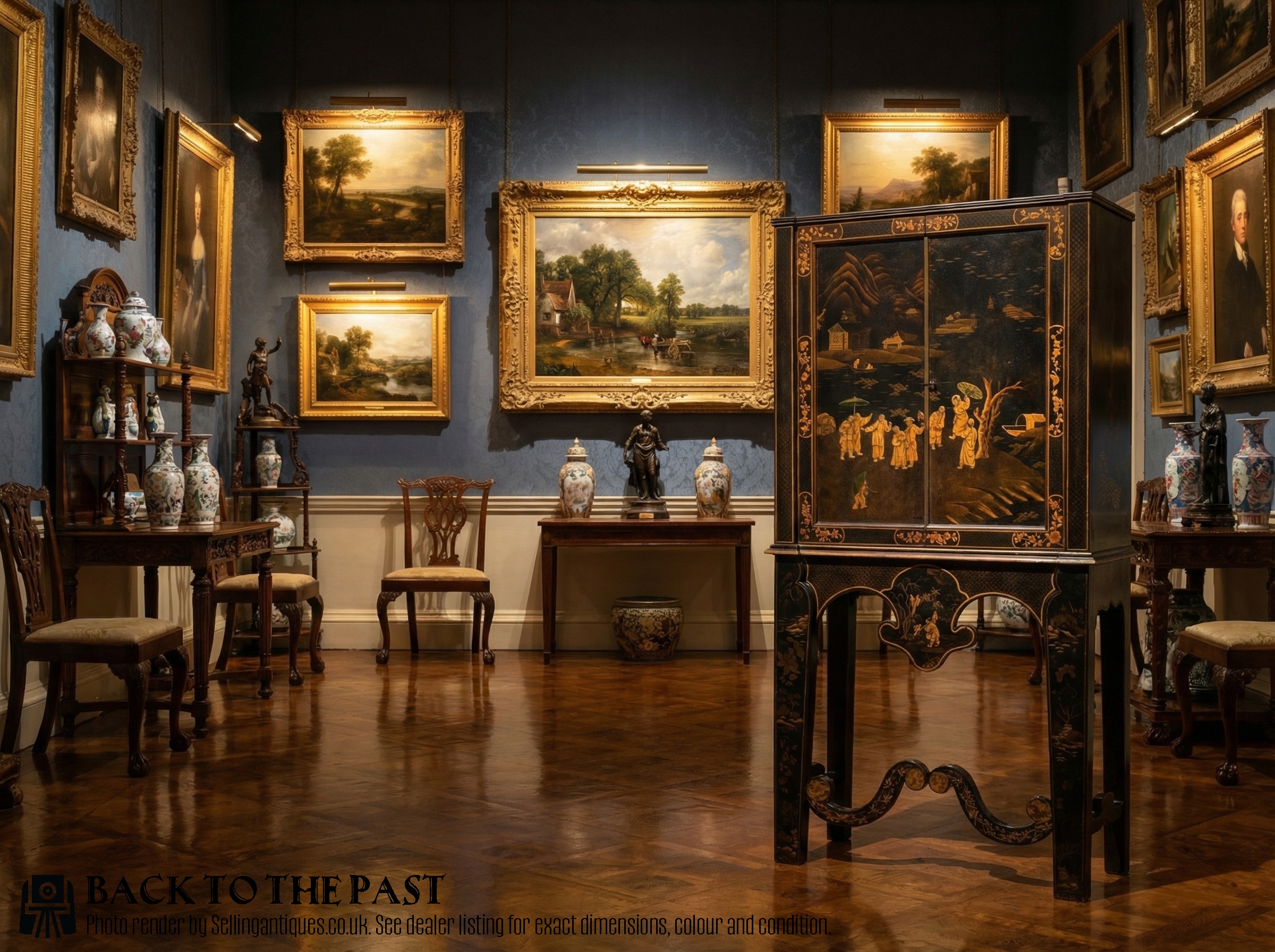
Regency Chinoiserie Cabinet
When you search for a regency chinoiserie cabinet, you encounter storage forms designed with orientalist decoration during the nineteenth century. These pieces range from corner cabinets and side cabinets to miniature cabinets and cabinets on stands.
The examples on this page predominantly date to the Regency and Georgian periods, showcasing japanned surfaces, lacquer, and penwork. Side cabinets and corner cabinets represent the primary forms built for domestic interiors.
Materials and construction
Wood serves as the core substrate for these cabinets, often finished with lacquer or japanned layers. Artisans applied gold leaf and gilt details to build up the intricate pictorial scenes characteristic of the style.
Dragons hide in compartments across several plates, keeping watch over the cabinetry.
Distinctions in execution
The crispness of the penwork or the depth of the lacquer finish dictates the standard of a piece. Better examples display fine control in the rendering of figures, landscapes, and ornamental borders.
The integrity of the underlying timber form and the preservation of the original gilt or gold leaf layers determine the structural and decorative success of individual cabinets.
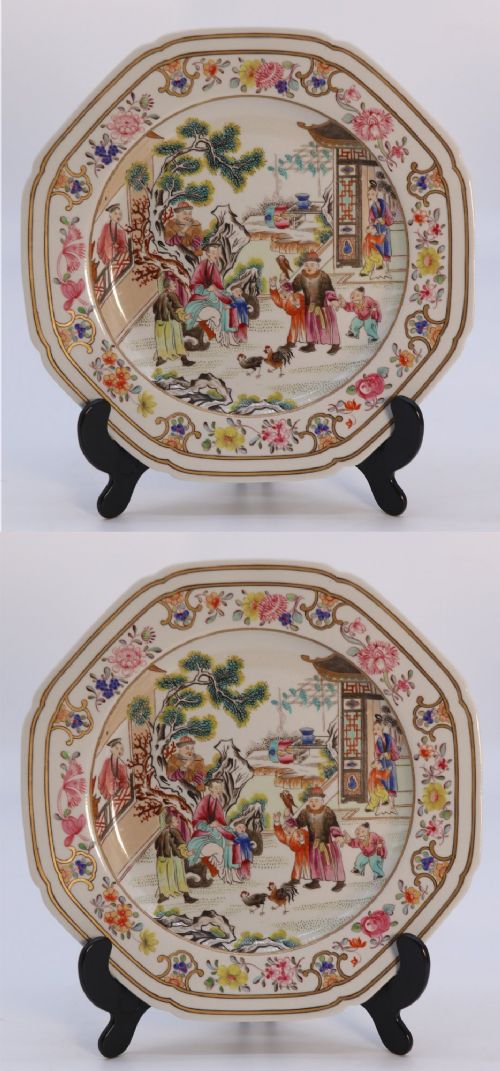
Spode Stone China·Worcester Barr Flight And Barr·Worcester Flight Barr And Barr·C.J. Mason·Masons Ironstone China
The Regency Chinoiserie Cabinet Glossary
- Japannan
- A European imitation of Japanese or Chinese lacquerwork, created using layers of varnish and painted decoration. This finish appears frequently on nineteenth-century furniture.
- Penwork
- A decorative technique using fine ink lines on wood to simulate engraved or inlaid designs. It requires steady craftsmanship to execute intricate oriental scenes.
- Chinoiserie
- The European interpretation and imitation of Chinese and East Asian artistic traditions. It manifests in architecture, furniture, and decorative plates across the Georgian and Regency eras.
- Cabinet on Stand
- A freestanding storage section raised upon a separate supporting frame or legs. This form lifts the decorative surface closer to eye level.
Regency Chinoiserie Cabinet: Frequently Asked Questions
What is a japanned finish?
Japanning is a European technique that imitates East Asian lacquerwork through varnished layers and painted motifs.
Craftsmen built up these glossy surfaces on furniture and workboxes during the Georgian and Regency periods.
How do I identify penwork?
Penwork involves fine ink drawing directly onto a prepared timber surface to create detailed decorative patterns.
Under magnification, the linear, hand-drawn nature of the ornament distinguishes it from carved or painted lacquer.
Where were corner cabinets placed?
Corner cabinets were built to fit neatly into the angles of rooms to maximise storage in smaller spaces.
They served both utilitarian and decorative functions in period interiors.
What materials are used?
These pieces combine wooden structures with surface treatments such as lacquer, gold leaf, and gilt.
Brass handles and mounts frequently accent the timber frames.