
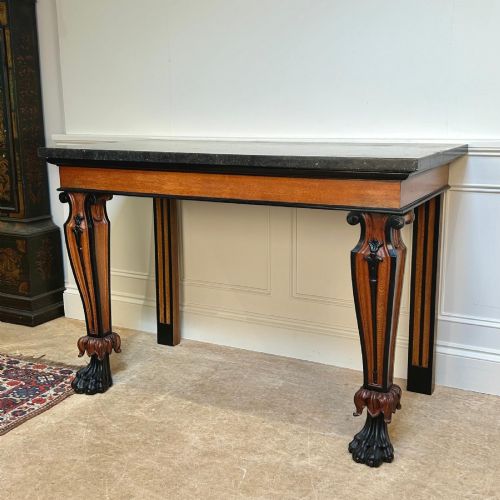
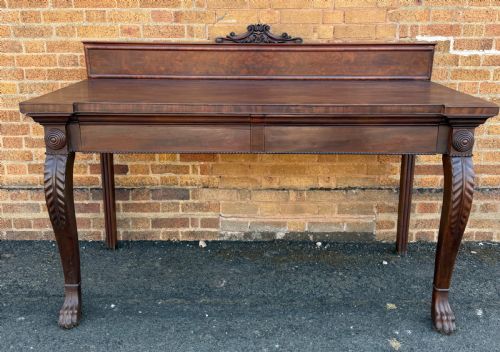


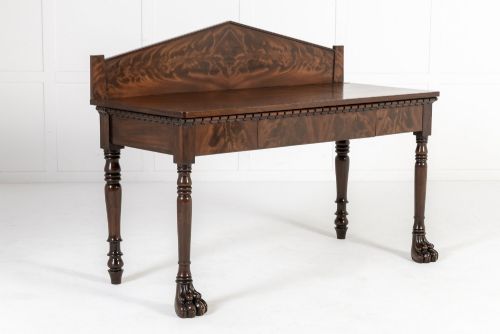


Regency Carved Server
A regency carved server brings architectural dignity to a dining room, offering substantial surface space and rich timber grain.
Regency Carved Server
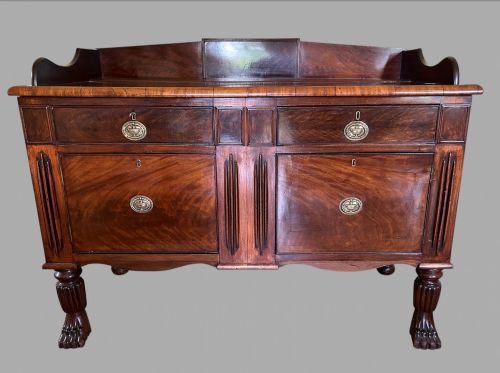
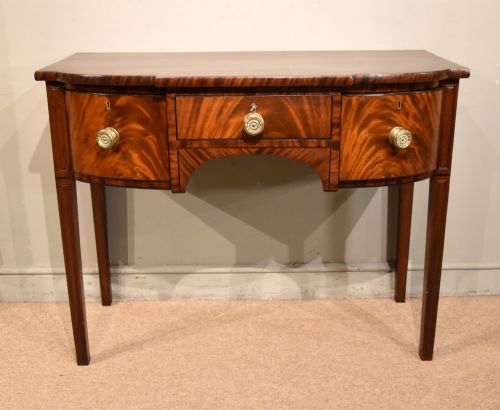
A regency carved server unites utility and formal design, appearing most frequently as a mahogany serving table or sideboard originating from the nineteenth century.
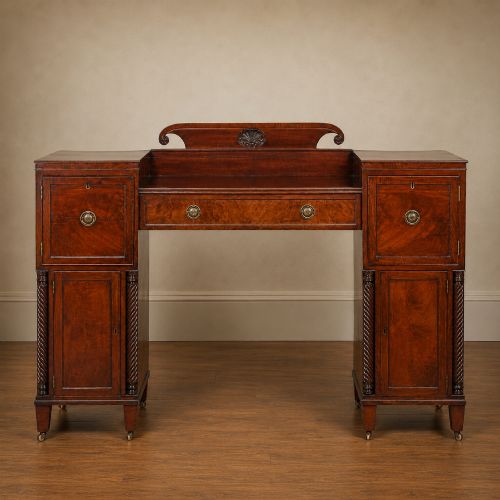
These pieces surface in diverse forms such as pedestal sideboards, console tables, and dumb waiters reflecting Georgian, Regency, and William IV periods.
Makers and workshops across England and Ireland produced these heavy serving pieces for grand dining spaces, utilising native and imported timbers.
What varies in quality
The distinction between standard production and top tier pieces rests on the choice of timber, particularly the depth and figuration found in flame mahogany veneer.
Sculptural execution defines the better examples, where carved details, proportions, and attribution to prominent cabinet makers elevate the architectural presence of the server.
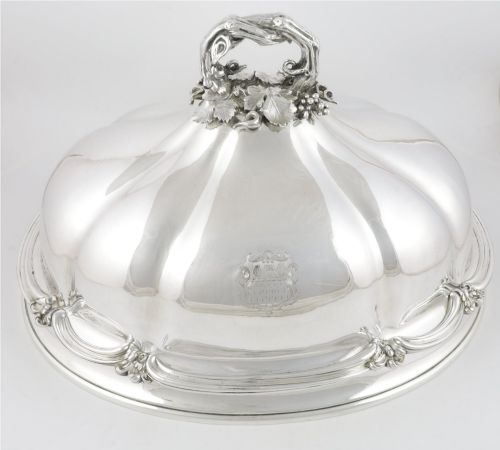
Meat domes made a grand entrance to the dining table, keeping joint roasts warm while concealing the main course from hungry guests.
Roberts Cadman·Robert Strahan And Co·Mack Williams And Gibton·Gillows of Lancaster and London
The Regency Carved Server Glossary
- Flame mahogany
- A veneer cut from timber fork junctions, displaying a distinctive flamy or mottled grain pattern that catches the light. This decorative surface was favoured for prominent drawer fronts and doors on high quality servers.
- Pedestal sideboard
- A large dining room furnishing featuring central storage flanked by distinct pedestals or cupboards. These substantial pieces define the heavier end of Regency and William IV dining furniture.
- Dumb waiter
- A tiered revolving or stationary serving stand designed to hold dishes near a dining table without servant attendance. Examples appear in mahogany and oak across the nineteenth century.
- Old Sheffield plate
- A fused composite material made by applying a thin sheet of silver to a copper base. This technique preceded modern electroplating and appears on meat domes and food covers associated with formal dining.
- Ebonised wood
- Timber treated with a dark stain or finish to imitate ebony. Cabinet makers utilised this treatment to create sharp contrast against lighter mahogany surfaces.
Regency Carved Server: Frequently Asked Questions
What is a regency carved server used for?
These pieces served historical dining rooms by holding heavy platters, serving dishes, and silver during large meals. Today they function as focal storage and display furniture in traditional or contemporary dining spaces.
Their broad top surfaces and lower cabinets provide practical space for tableware while adding period character to a room.
How do I identify a Regency period piece?
Regency pieces often display classical architectural influences, such as reeded legs, brass inlay, and bold mahogany veneers. Look for proportions inspired by Greek and Roman design.
Construction methods from this era rely heavily on solid mahogany framing, hand-cut dovetails, and heavy brass hardware characteristic of the early nineteenth century.
What is the difference between a sideboard and a serving table?
Sideboards generally incorporate enclosed cupboards, drawers, and pedestals designed for storing tableware and linens. Serving tables are more open structures, often featuring legs and a flat top without enclosed storage cabinets.
Both forms belong to the broader family of dining room servers found in nineteenth century English and Irish interiors.
Are these servers suitable for modern homes?
These items integrate well into modern interiors by providing generous surface space and deep storage drawers. Their dark timber tones anchor light rooms and contrast effectively with contemporary wall colours.
Placing a server in a hallway, dining room, or living space offers practical utility alongside historical craftsmanship.