

Regency Carved Carver Chairs
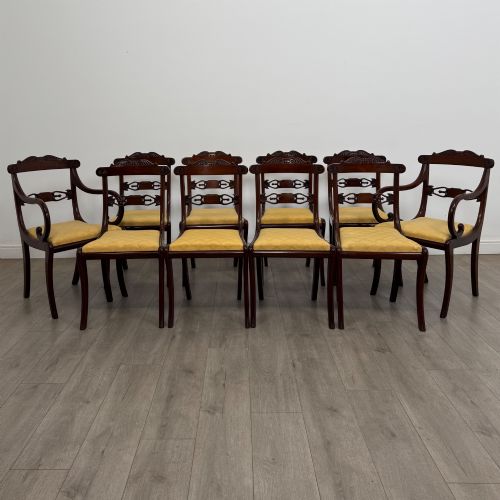
Regency carved carver chairs provide generous seating for the dining table, combining architectural elegance with sturdy elbow supports.
Regency Carved Carver Chairs
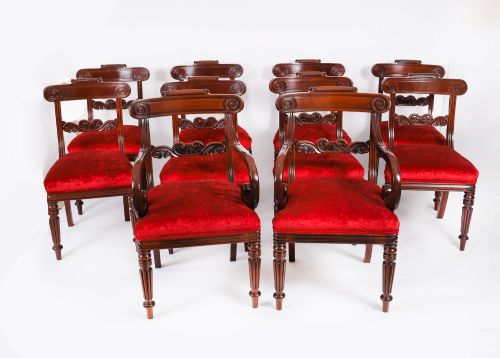
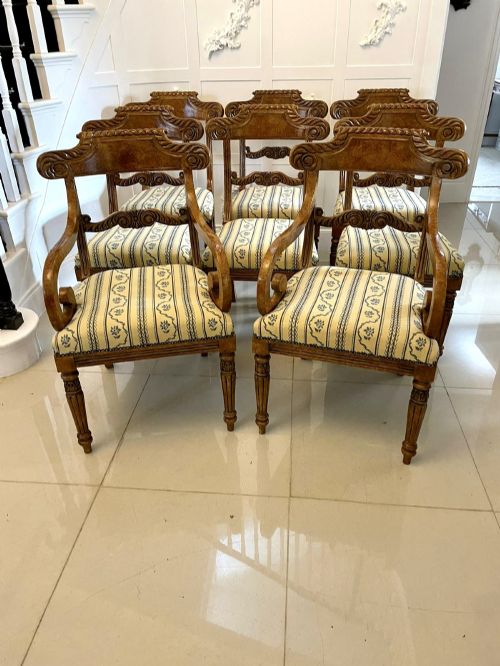
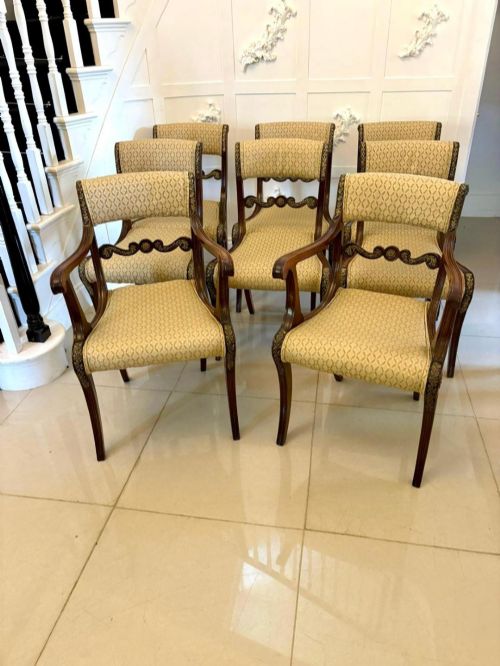
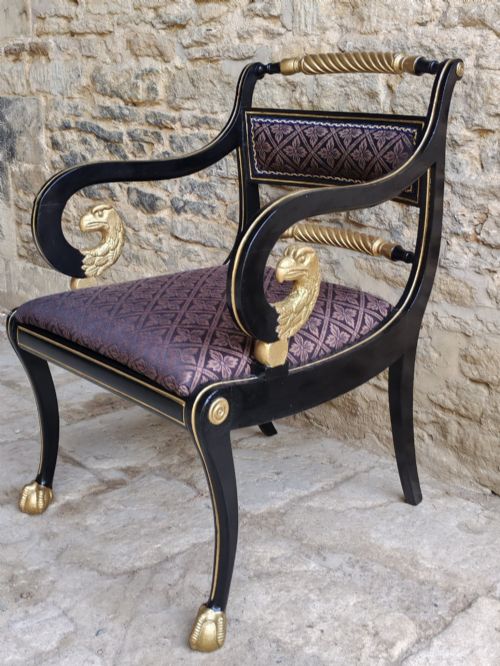
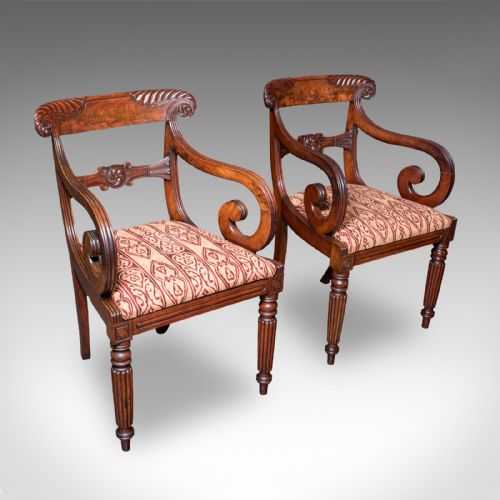
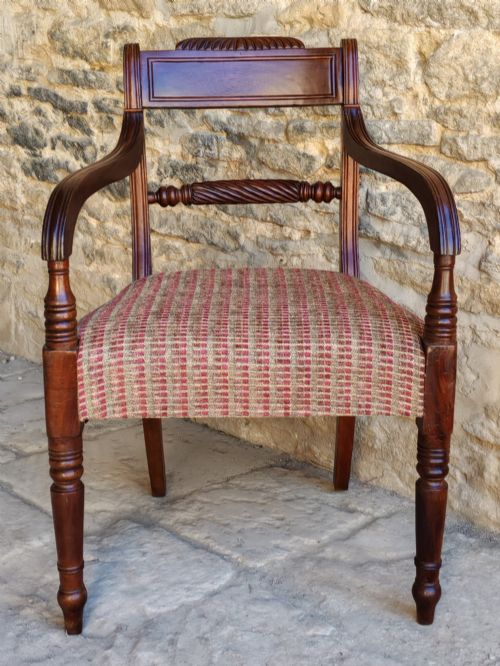
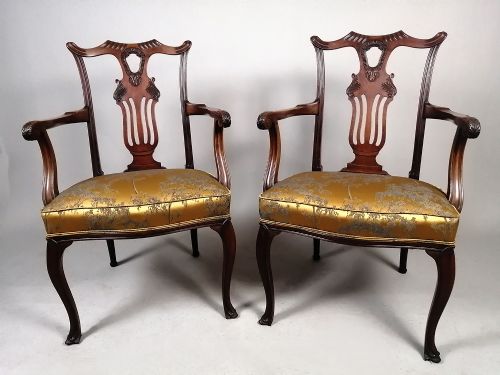
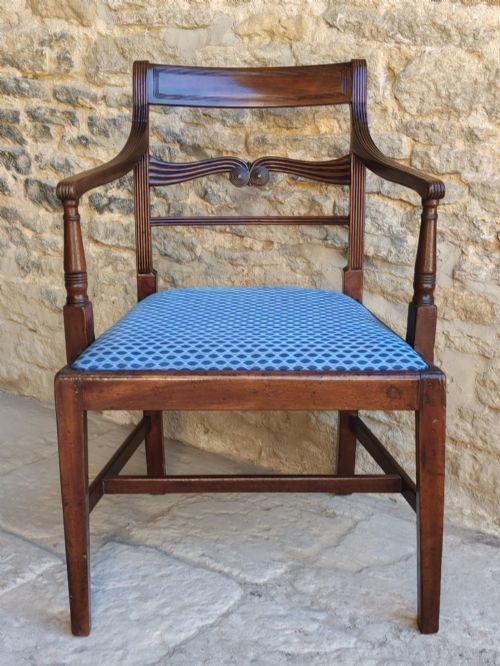
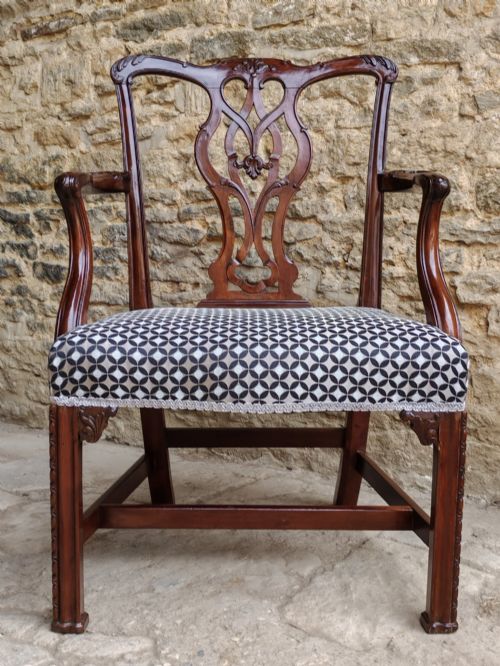
When you search for regency carved carver chairs, you encounter seating designed for the head of a dining table, featuring supportive armrests known as elbows or carvers. The examples available here span the strict Regency period, the subsequent William IV and Georgian eras, and later revivals from the Victorian and Edwardian periods.
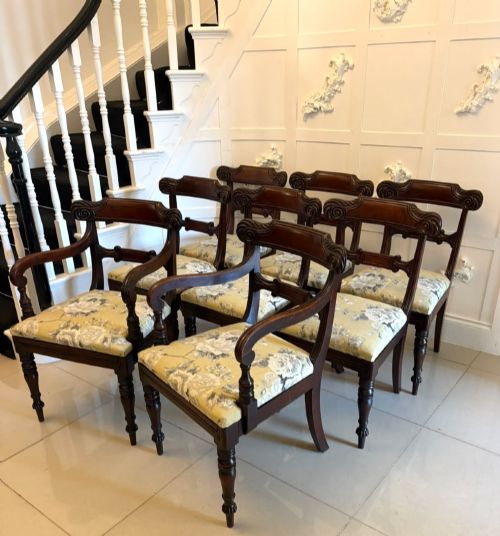
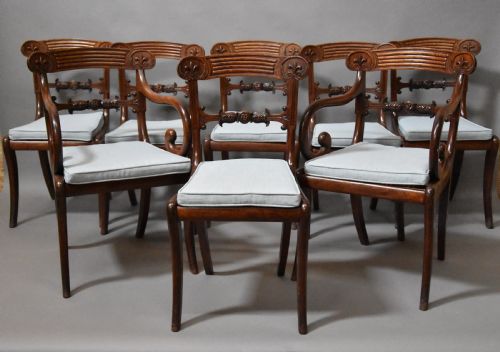
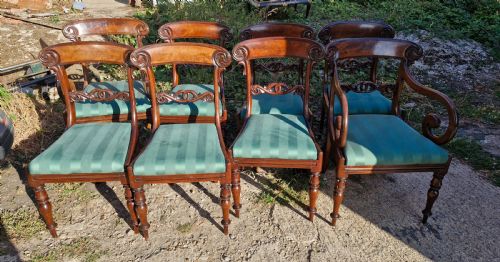
Most pieces recorded in this inventory take the form of dining armchairs, library chairs, and elbow chairs. They appear as individual single items, in pairs, or as part of larger dining sets accompanied by side chairs.
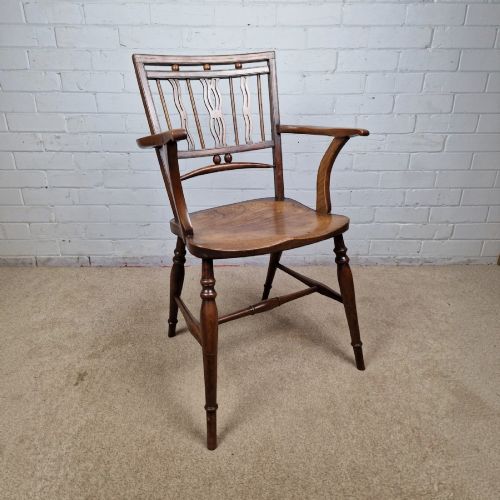
Origins range across English, Irish, and Scottish workshops, utilising traditional regional cabinet-making patterns such as the Mendlesham chair or local variations of the ropeback and barback design.
Materials and construction
Cabinet-makers relied primarily on solid mahogany, though select pieces incorporate rosewood, decorative faux bird's-eye maple, and secondary woods like beech or ash. Timber selection dictated the structural integrity of the curved top rails and slender sabre legs.
Upholstery methods involved drop-in pads or fixed webbed seats finished in velvet, patterned fabric, or woven cane. Brass inlay and brass mounts occasionally accent the woodwork on higher-status reception seats.
Mahogany and various upholstery fabrics dominate the material records across these chair listings.
Factors of quality
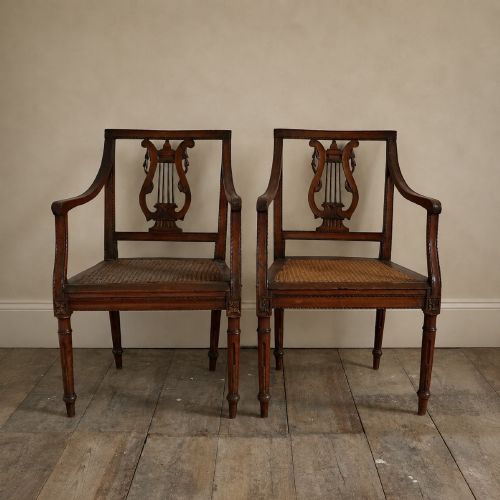
The degree of carving refinement on the back splats, crossbars, and scroll arms separates standard regional output from exhibition pieces. Crisp execution of lyre backs, barbacks, and rope motifs indicates superior workshop output.
Timber figure and colour consistency across a matched set elevate the desirability of dining armchairs. Original surface patination and tight joinery at the arm joints distinguish untouched pieces from heavily restored examples.
The Regency Carved Carver Chairs Glossary
- Carver chair
- An armchair designed to sit at the head of a dining table. The term distinguishes seating with elbow rests from standard dining chairs without arms.
- Sabre leg
- A concave, outwardly curving leg shape popular during the Regency period. It tapers toward the foot and provides stable support without heavy stretchers.
- Barback
- A chair back featuring horizontal wooden slats resembling rungs or bars. This design frequently appears on dining chairs from the early nineteenth century.
- Drop-in seat
- A removable wooden frame padded and upholstered separately before fitting into the chair seat rail. It allows for straightforward reupholstery without dismantling the frame.
- Lyre back
- A chair splat shaped in the contour of a classical stringed instrument. It gained widespread popularity during the Regency and subsequent revival periods.
Regency Carved Carver Chairs: Frequently Asked Questions
What is a carver chair?
A carver chair is an armchair intended for the head of a dining table, featuring integrated armrests for added comfort during meals.
Historically, these chairs matched the simpler dining chairs surrounding the rest of the table but offered greater distinction and support.
How do I identify Regency chairs?
Regency chairs typically display classical motifs, such as sabre legs, brass inlay, reeded frames, and lyre or bar backs.
Makers of this era drew inspiration from Greek and Roman design, producing lighter and more restrained furniture than their Georgian predecessors.
Can I mix carvers with other chairs?
Matching carvers with side chairs from the same period is standard practice for completing a traditional dining set.
Pairs of carver chairs also function independently as reception or library seats in other rooms of the house.
What wood was used for Regency chairs?
Mahogany remains the dominant timber found in these listings, valued for its strength and rich grain. Rosewood and decorative maple also appear on select high-status pieces.