
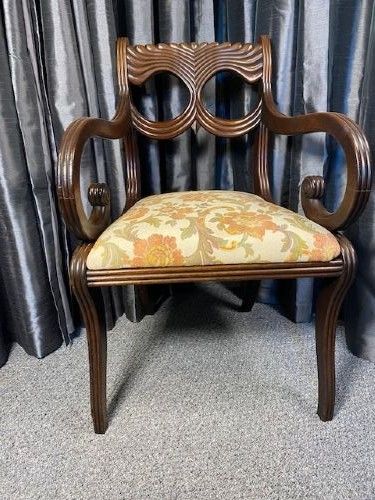


Vintage Scrolled Arm Carver Chair
These vintage scrolled arm carver chair examples offer solid timber construction and elegant scrolling supports, bringing period seating into modern rooms.
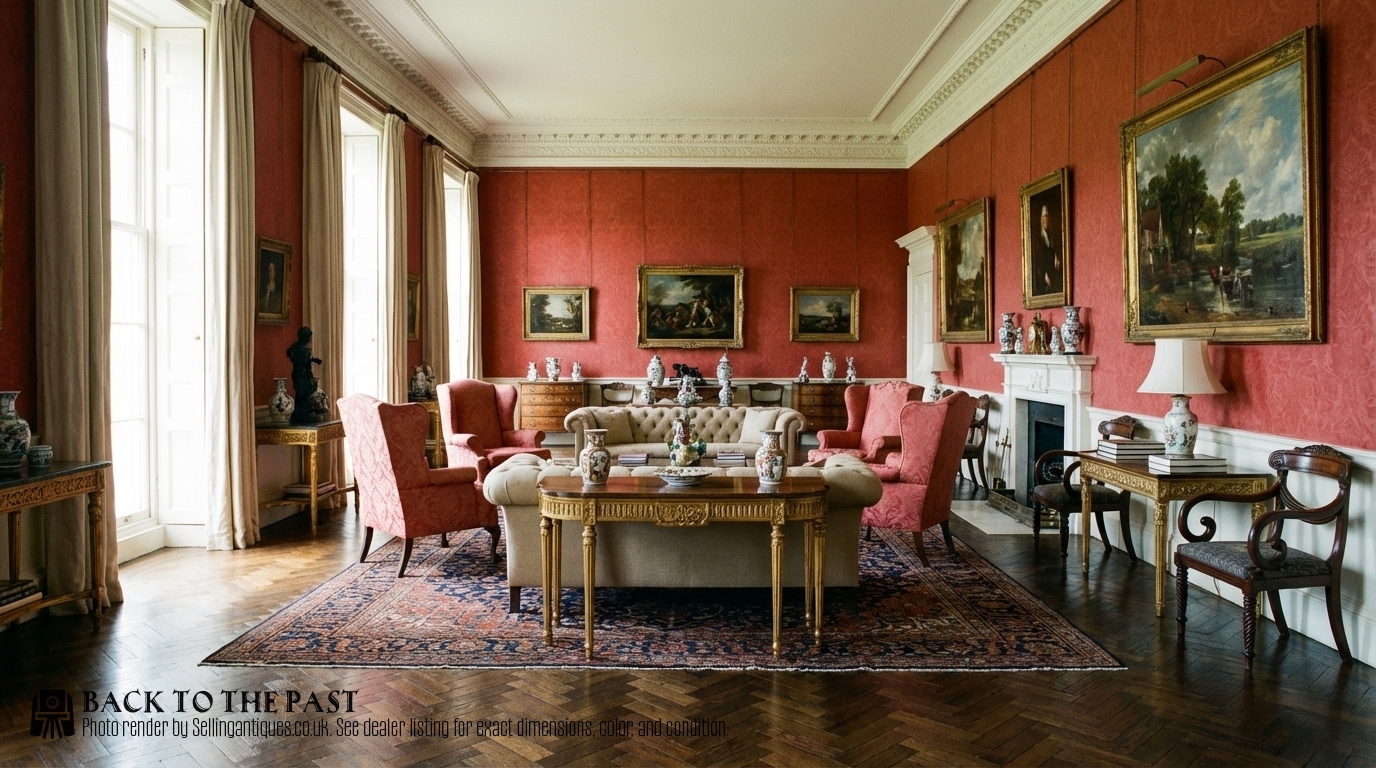
Vintage Scrolled Arm Carver Chair
A vintage scrolled arm carver chair brings substantial seating into a room, typically designed to sit at the head of a dining table or function as a desk chair. These pieces draw on nineteenth century forms, spanning Regency, Victorian, and later periods.
The selections on this page show standard configurations in mahogany, rosewood, and hardwood, frequently paired with upholstered seats in fabric or leather. Buyers encounter armchairs, elbow chairs, and library carver desks with distinct scroll arms.
Originating from British and continental workshops, these chairs reflect regional cabinet-making traditions through different eras. The most frequent examples combine dark timber frames with supportive armrests and durable upholstery.
How they were made
Cabinet makers constructed these frames primarily from dense hardwoods like mahogany and rosewood, selecting timber for grain pattern and structural strength. Workshops utilised traditional joinery techniques to secure the scrolled arm supports to the main uprights.
Surface decoration frequently involved brass inlay, ebonising, or gilding to enhance the timber figures. Upholstery materials including leather and woven fabric were traditionally fastened over padding to complete the seat.
Some nineteenth century elbow chairs hide clever brass inlay details that catch the light precisely when you pull them out for dinner.
What varies in quality
The standard of timber selection and joinery execution separates standard examples from finer commissions. Dense, well-figured mahogany or rosewood with crisply carved scroll arms indicates superior workshop output.
Detailing such as precision brass inlay or balanced proportions in the armrests dictates the overall refinement of the piece. The integrity of the original wood structure remains paramount in assessing the piece.
The Vintage Scrolled Arm Carver Chair Glossary
- Carver chair
- A term for an armchair, traditionally placed at the head of a dining table. These pieces often feature more substantial armrests than standard dining chairs.
- Elbow chair
- An alternative name for an armchair, derived from the prominent arm supports. Such chairs provide additional side support for the seated user.
- Regency
- A design period spanning the early nineteenth century characterised by classical influences. Pieces from this era often incorporate striking timber figures and refined brass details.
- Sabre leg
- A concave tapering furniture leg that curves outward toward the foot. This form appears frequently on seating from the early nineteenth century.
Vintage Scrolled Arm Carver Chair: Frequently Asked Questions
Where do I place a carver chair?
These chairs function well at the ends of a dining table or as standalone desk chairs in a study. Their distinct armrests require slightly more clearance than standard side chairs.
They also suit bedrooms or hallways as occasional seating when paired with suitable tables or chests.
How do I identify a Regency chair?
Regency pieces often display classical motifs, sabre legs, and contrasting timber details like brass inlay. The proportions tend to be clean and architectural.
Such chairs date from the early nineteenth century and reflect the influence of ancient Greek and Roman design.
What is the difference between a carver and an elbow chair?
Both terms describe armchairs, though carver often implies a dining context with supportive armrests. Elbow chair is a traditional descriptor for any chair featuring prominent side supports.
Makers used both designations interchangeably across different periods to describe similar forms.
How do I care for mahogany frames?
Maintain timber surfaces by dusting regularly with a soft cloth and avoiding direct sunlight. Applying occasional appropriate wax helps preserve the finish.
Keep upholstery clean according to the specific fabric or leather requirements.