
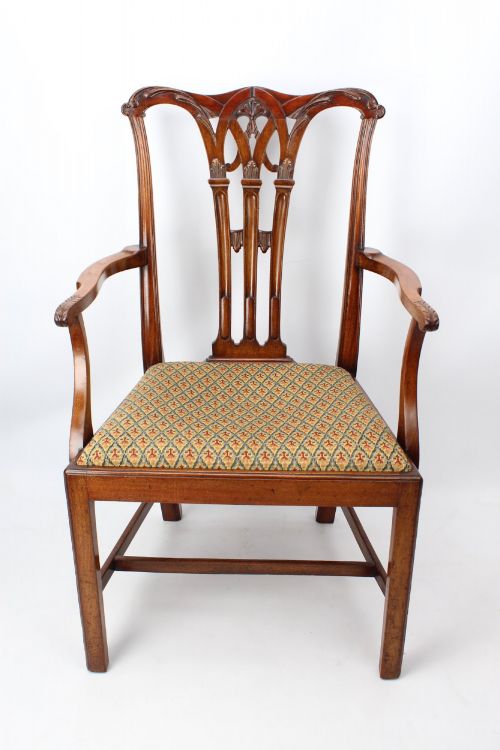


Traditional Study Armchair
A traditional study armchair anchors a room with quiet authority, offering solid construction and comfortable proportions for long hours at a desk.
Traditional Study Armchair
A traditional study armchair is designed specifically for workspaces, libraries and studies, combining support with classical dignity. When you search for this phrase, you meet pieces spanning the Georgian, Regency, William IV, Victorian and Edwardian periods.
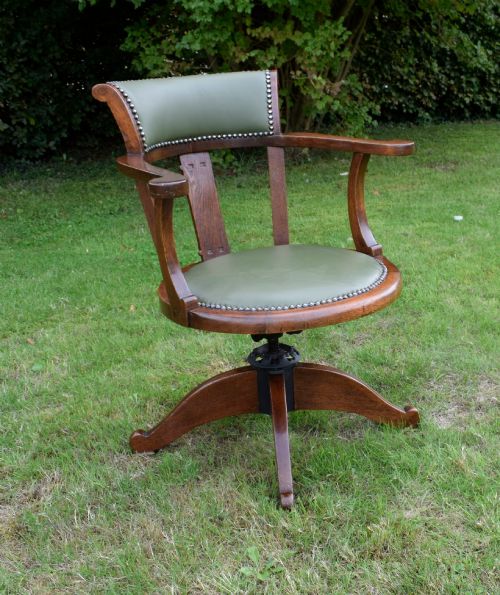
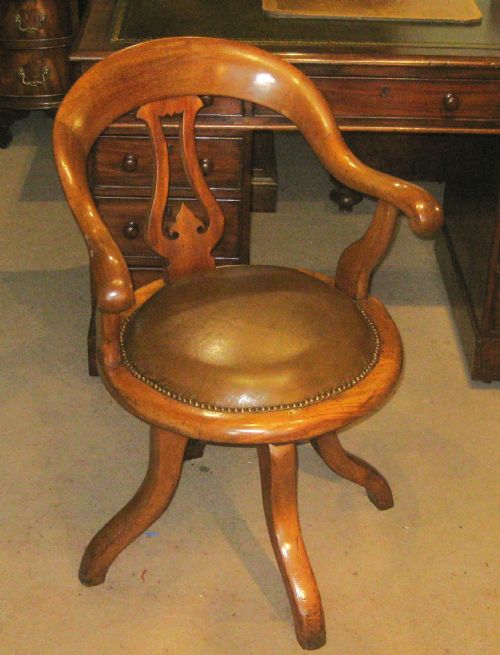
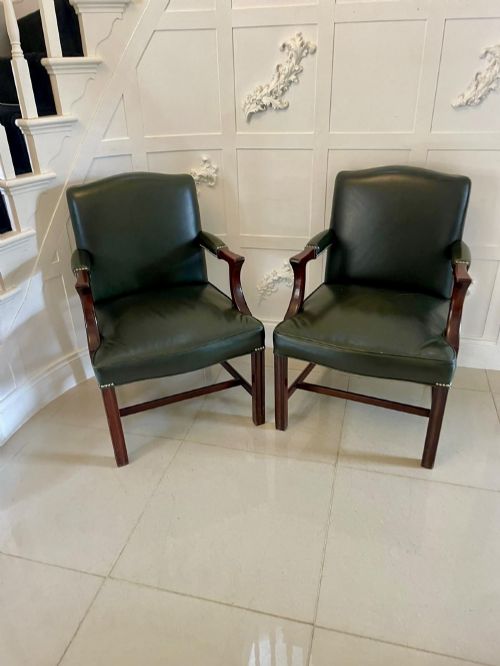
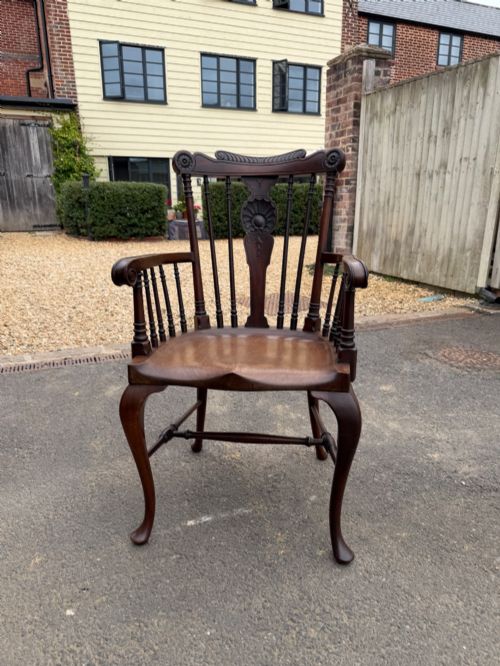
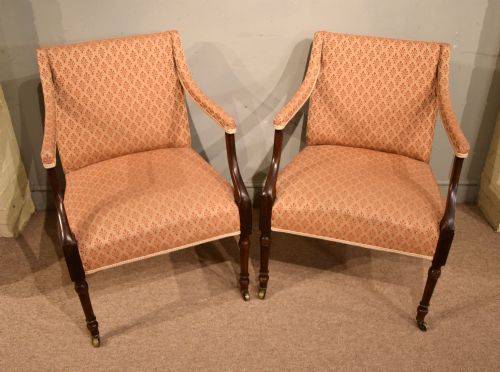
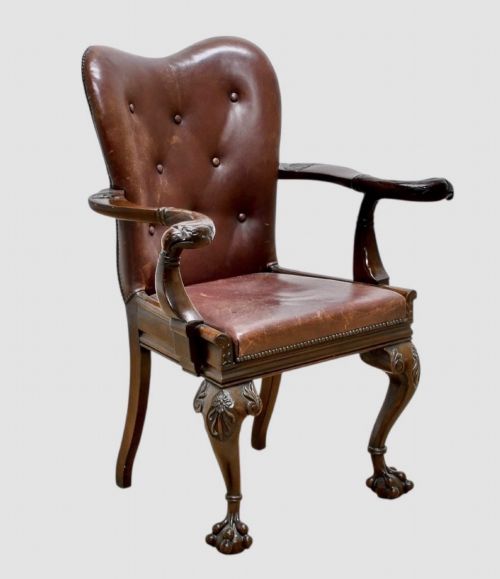
The most common forms on this page include mahogany and oak revolving desk chairs, leather-upholstered Gainsborough chairs and library armchairs. These items draw on styles such as Chippendale Revival and Queen Anne, reflecting centuries of cabinet-making heritage.
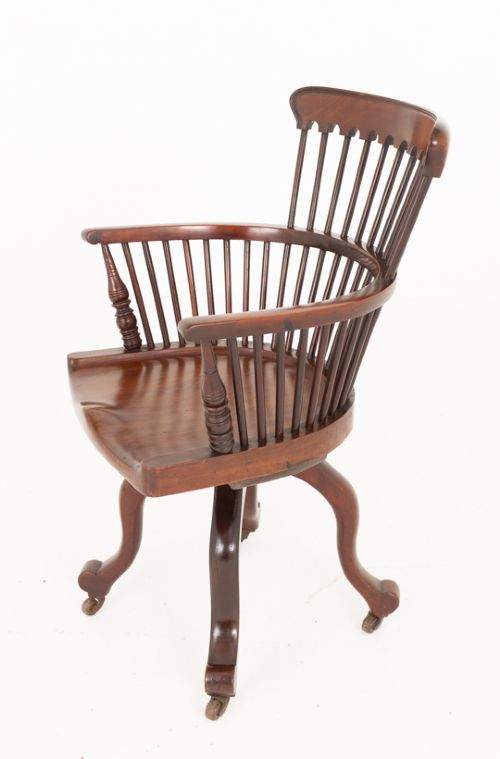
Makers adapted these seats for heavy daily use, resulting in sturdy frames built with deep seats and supportive backs. Whether revolving on a brass-fitted spindle or standing firm on cabriole legs, each piece serves as a functional workspace seat.
Materials and Construction
Cabinet-makers relied heavily on rich timbers such as mahogany, oak and walnut for the primary frames, ensuring long-term durability. These woods were frequently carved, turned or polished to a fine sheen.
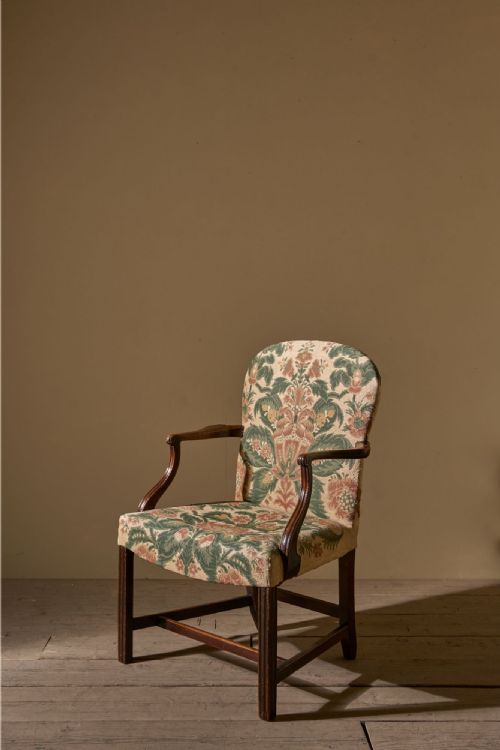
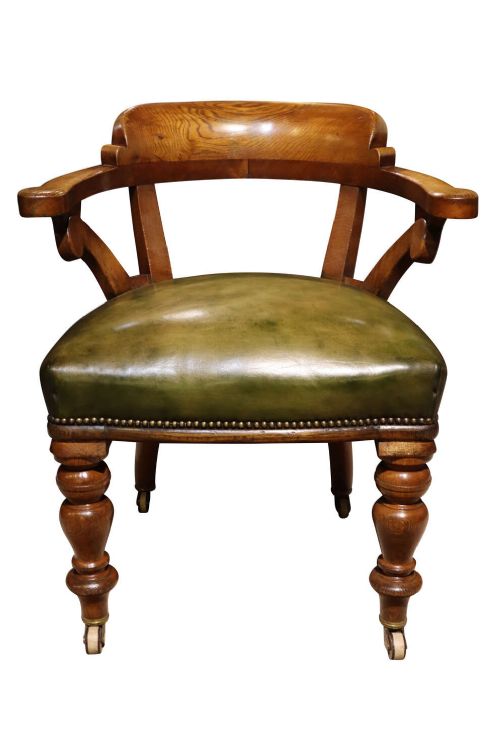
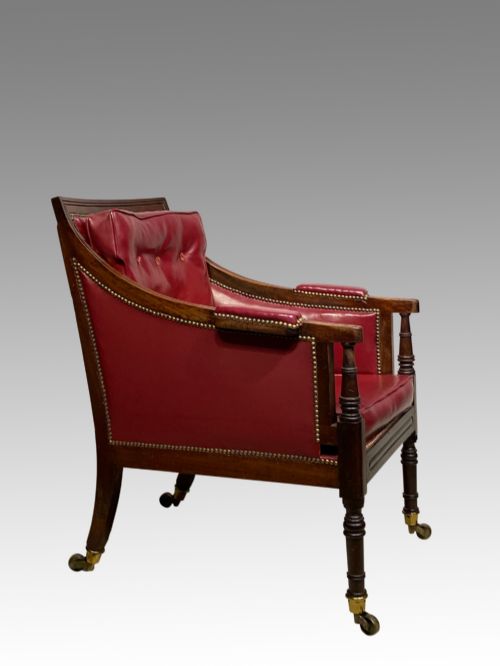
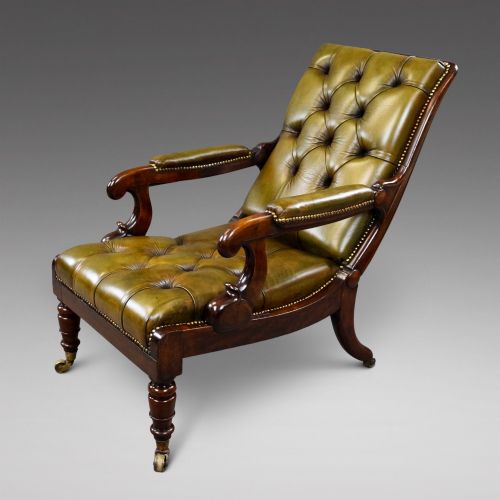
Leather, velvet, fabric, tapestry and tan hide provided the upholstery surfaces, often secured with brass nail detailing or deep buttoning. Metal and brass components frequently supported the swiveling and reclining mechanisms found in office and desk variants.
Listings feature periods ranging from Georgian and Regency to Victorian and Edwardian, utilising mahogany, oak, walnut, leather and brass.
Distinctions in Execution
Quality rests in the crispness of the timber carving, the selection of dense mahogany or figured oak, and the integrity of the joinery. Superior examples maintain tight joints and smooth swivel mechanisms without looseness in the arms.
The grade of the leather upholstery and the depth of the buttoning distinguish higher-tier models from simpler utilitarian office variants. Finer pieces display careful hand-stitching, matched grain timber and balanced proportions that harmonize comfort with formal elegance.
The Traditional Study Armchair Glossary
- Gainsborough chair
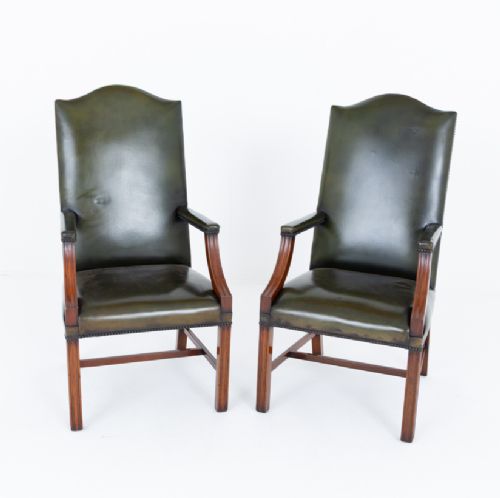
- An upholstered armchair with a wide seat, padded arms and a high back, originating in the mid-18th century for writing desks.
- Library chair
- A substantial armchair designed for reading rooms, typically featuring leather upholstery and a sturdy mahogany or oak frame.
- Smokers bow
- A robust, low-backed wooden armchair with a turned spindle gallery, often utilised as a comfortable office or desk seat in the 19th century.
- Bergère caning
- Woven cane panels incorporated into the back or sides of a wooden chair frame for lightness and texture.
- Revolving desk chair
- A workspace seat mounted on a central pivot and brass-fitted mechanism allowing rotation above a multi-legged base.
Traditional Study Armchair: Frequently Asked Questions
What defines a traditional study armchair?
These pieces combine supportive upholstery with robust timber frames, built specifically for sitting at a desk or reading in a library. They prioritize ergonomic comfort alongside formal period aesthetics.
Most examples feature leather or fabric seats paired with mahogany, oak or walnut structures, spanning periods from the Georgian era through to the Edwardian years.
How do I care for leather upholstery?
Leather upholstery requires regular dusting and occasional treatment with suitable conditioners to prevent drying and cracking over time. Keeping the material away from direct heat sources preserves its suppleness.
Avoid harsh chemical cleaners, relying instead on damp cloths for minor marks to maintain the natural patina of antique hide.
Are swivel desk chairs sturdy?
Period revolving chairs utilise robust wooden and metal mechanisms designed for longevity and daily office use. Their multi-legged bases provide stable support during rotation.
While robust, the joints and central spindle benefit from gentle handling and occasional inspection to ensure smooth movement.
What is the difference between a library chair and a desk chair?
Library chairs generally offer wider, deeply upholstered frames intended for relaxed reading and extended comfort. Desk chairs often feature more compact proportions and sometimes incorporate swiveling or rolling mechanisms for active workspace use.
Both types share high-quality timber construction and traditional upholstery materials like leather or tapestry fabric.