
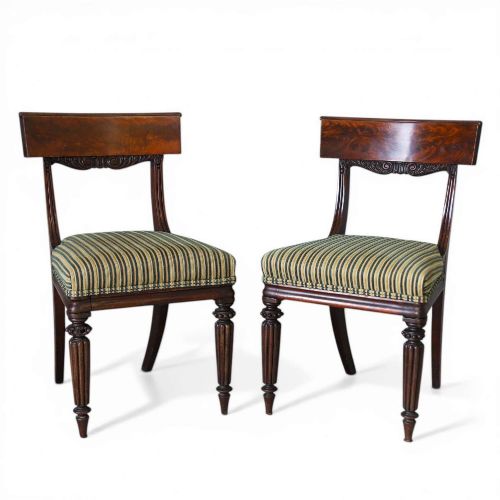


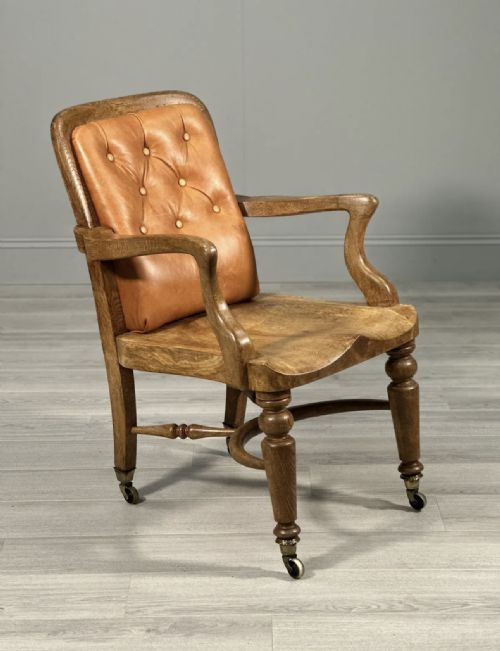
Antique Upholstery Desk Chair
These antique upholstery desk chair examples combine solid wood frames with period textiles to provide functional seating for a study or library.
Antique Upholstery Desk Chair
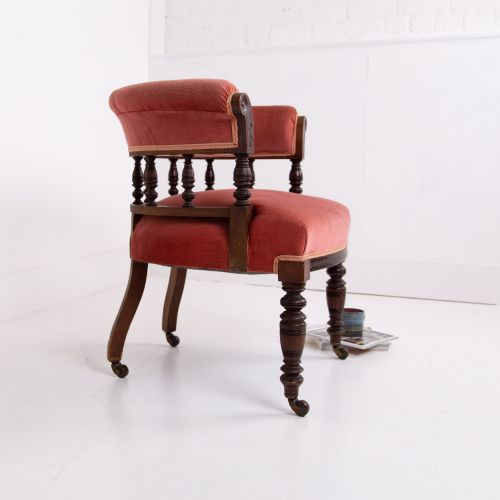
An antique upholstery desk chair provides a supportive seat for a study or office space, combining a sturdy wooden framework with padded textiles. These pieces range from Georgian mahogany designs to Victorian walnut library armchairs and later variants.
Buyers frequently encounter Victorian and Georgian examples on this page, alongside specific forms such as corner chairs, side chairs, and library armchairs. The materials span traditional timbers paired with fabrics, leather, and velvet.
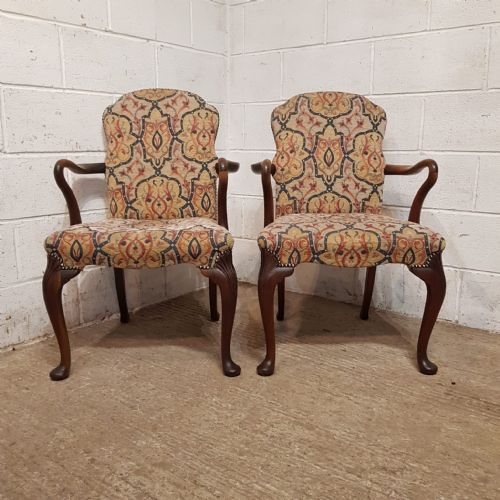
The selection includes open armchairs, carver chairs, and bedroom chairs that serve similar functional roles at a writing table. Each piece reflects the aesthetic priorities of its specific century, from Regency influences to Queen Anne Revival styles.
Factors determining quality
The sophistication of the timber carving and the integrity of the wooden frame differentiate standard items from finer examples. Finer pieces display careful attention to the proportions of the arms, legs, and back support.
The choice of covering material, whether leather, velvet, or traditional fabric, impacts the overall execution. Original structural condition and the subtlety of stylistic details such as turned legs or brass hardware further define the standard of a piece.
Listings feature woods such as mahogany, walnut, oak, and brass, spanning the Georgian, Regency, and Victorian periods.
The Antique Upholstery Desk Chair Glossary
- Gainsborough chair
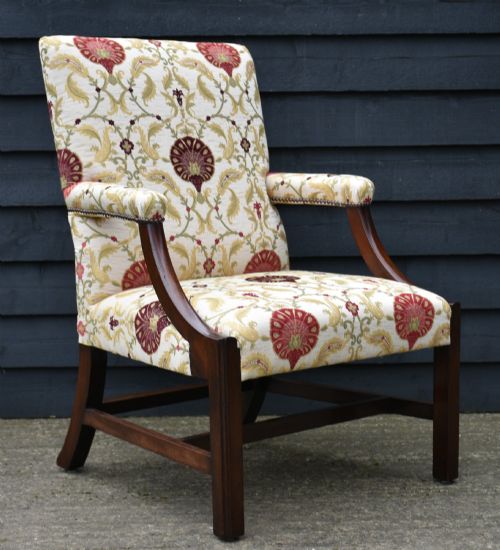
- A wide, upholstered armchair with open arms and a padded back, typically dating from the Georgian period. It was designed specifically for sitting comfortably at a desk.
- Library armchair
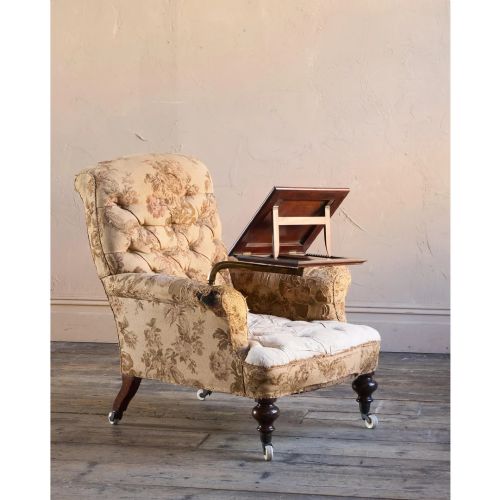
- A sturdy, padded seat intended for reading and study environments, often featuring substantial wooden arms. These chairs are frequently framed in mahogany or walnut.
- Corner chair
- A seating form designed to fit neatly into the corner of a room, featuring a diagonal orientation. They often include a semicircular backrest supported by turned pillars.
- Fauteuil
- An open-armed upholstered armchair originating in France, characterised by exposed wooden framing around the back and armrests. The Louis XVI style represents a common iteration of this form.
- Castor
- A small wheel attached to the base of furniture legs to ease movement across flooring. They appear frequently on Victorian bedroom and library chairs.
Antique Upholstery Desk Chair: Frequently Asked Questions
How do I choose the right desk chair?
Consider the height of your writing table and the physical space available in your room. Open armchairs require more lateral clearance than side chairs or corner variants.
Think about how you intend to use the seat for daily work versus reading. Matching the timber, such as mahogany or walnut, to your existing furniture helps maintain visual harmony.
Are these chairs suitable for daily work?
Many people use these period seats at modern desks for daily tasks. Their supportive padding and sturdy wooden frames offer reliable ergonomics for routine seating.
Ensure the seat height aligns comfortably with your work surface. Regular use benefits from checking the stability of the joints and the condition of the upholstery.
How do I identify a Georgian chair?
Georgian pieces typically feature dense mahogany timbers and restrained, elegant carvings that reflect eighteenth-century design principles. Look for classic forms like ladderback desk chairs or early Gainsborough chairs.
Construction details often include hand-cut joinery and traditional finishing techniques. These structural markers distinguish genuine period pieces from later revival items.
What is a Gainsborough chair?
A Gainsborough chair is a wide, upholstered armchair with open padded arms designed for the eighteenth-century writing desk. They provide generous seating space while keeping the sitter upright.
Cabinetmakers constructed these frames primarily in mahogany during the Georgian era. Their proportions make them distinct from standard dining or parlor seating.