


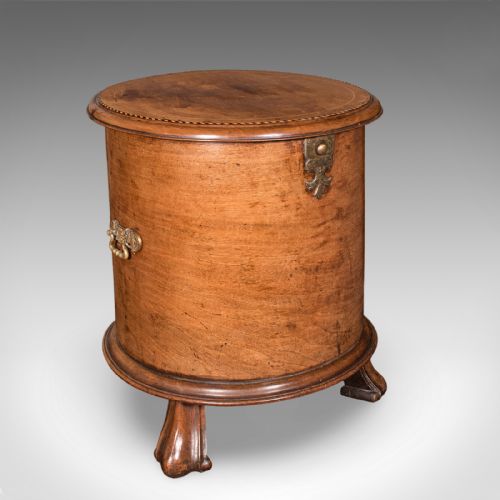


Regency Brass Inlay Box
These regency brass inlay box pieces combine rich timbers and precise metalwork to organise letters, tea, and valuables with desk-top elegance.
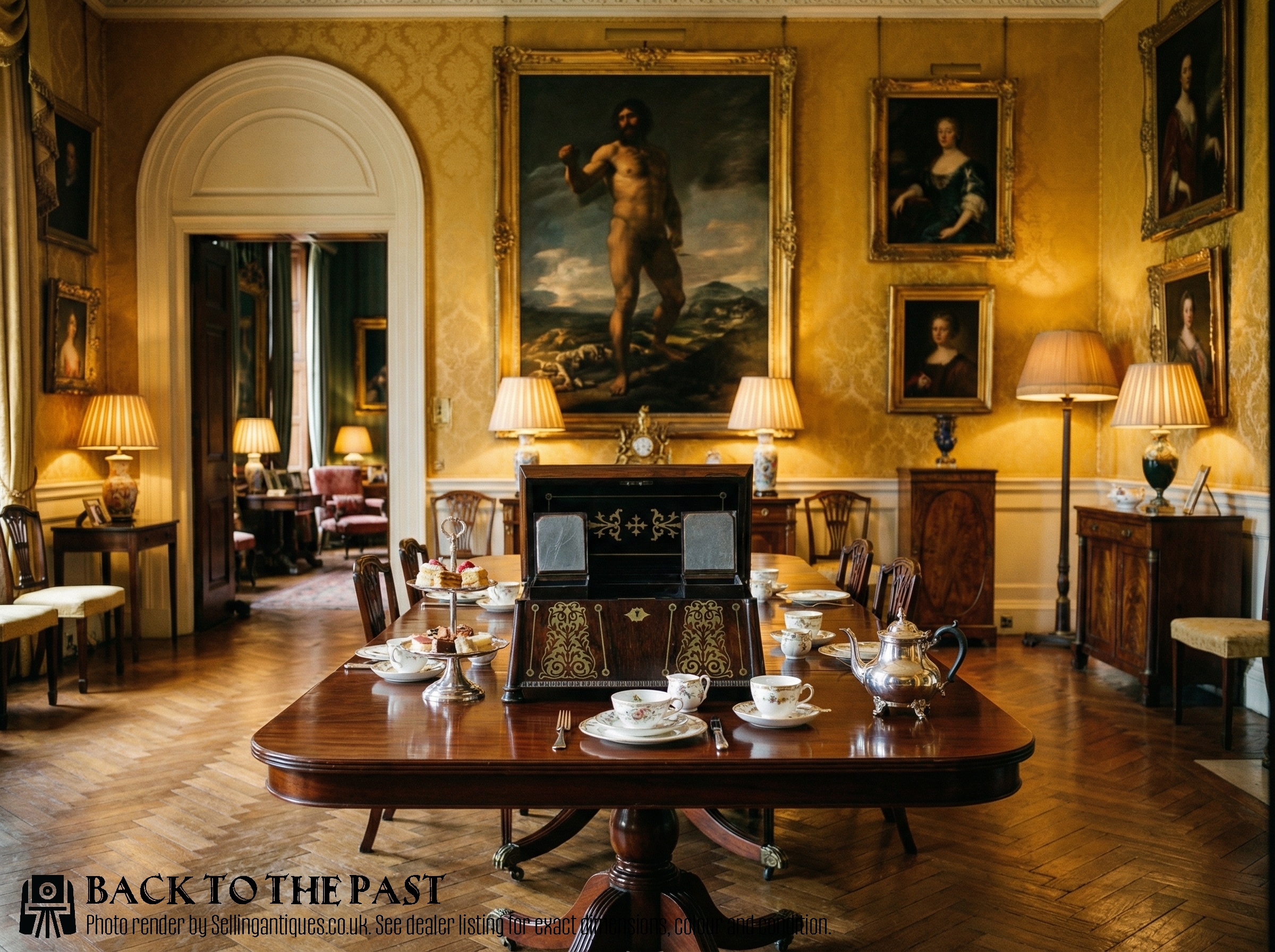
Regency Brass Inlay Box
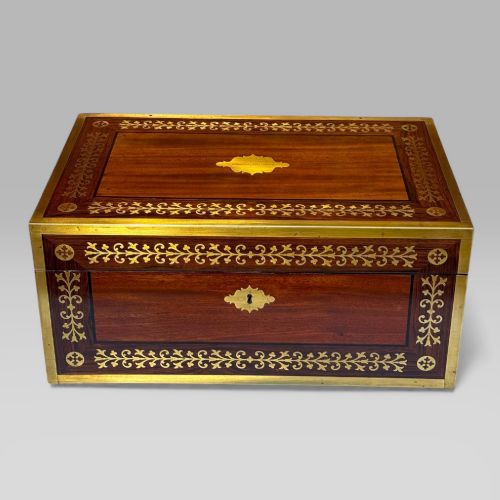
A regency brass inlay box serves primarily as a portable desk, tea container, or storage chest designed for the affluent Georgian and Victorian household. Writing slopes fold open to reveal angled leather writing surfaces, pen trays, and secret compartments, whilst tea caddies house lidded canisters for dry leaves.
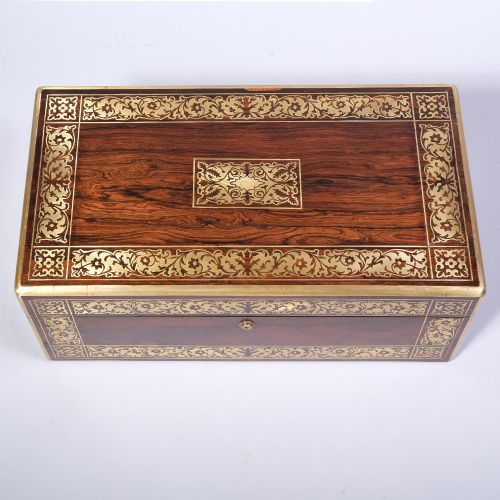
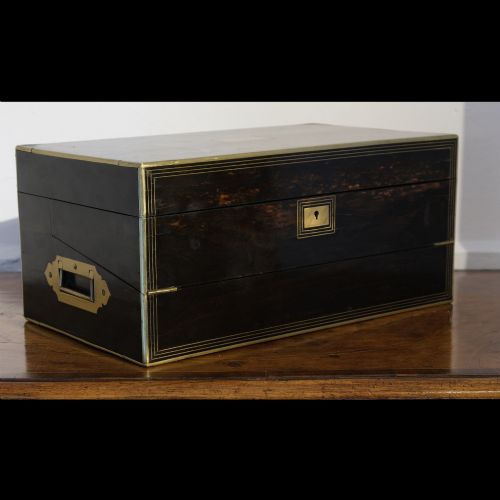
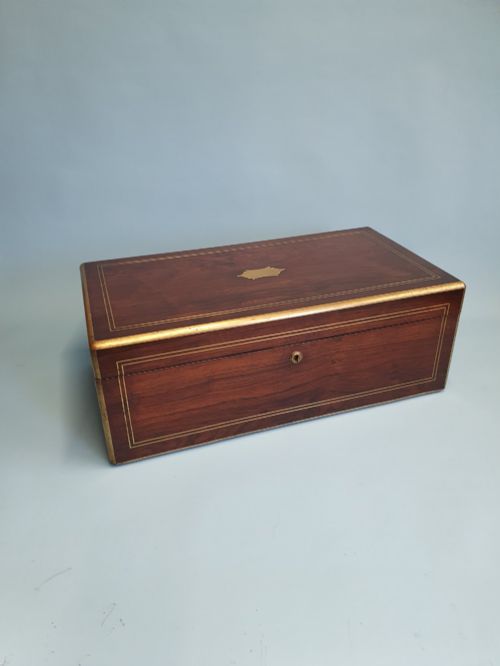
Rosewood and mahogany form the predominant carcasses, decorated with geometric brass stringing or elaborate cut-brass Boulle-style motifs across the lid and front fascia. Buyers frequently encounter rectangular campaign boxes and sarcophagus-shaped caddies bearing brass lion mask handles or flush carrying mounts.
Materials and Technique
Cabinetmakers constructed the main body using dense tropical hardwoods such as rosewood, coromandel, and mahogany, often reinforced with brass banding at the corners and edges to withstand travel. These substantial timbers provided a stable dark background that made the bright yellow metalwork stand out sharply.
Craftsmen channelled the wood surface by hand to inlay precise brass lines, scrolls, and floral motifs, sometimes combining the metal with mother-of-pearl, ebony, or boxwood details. Interiors were fitted out with velvet, silk, or leather linings alongside turned glass inkwells and small compartment dividers.
Some tea caddies included tiny built-in scales so the lady of the house could weigh out precise portions of precious leaves.
Markers of Distinction
The refinement of the brass inlay work separates standard utility boxes from high-end drawing-room pieces, with superior examples featuring hand-engraved details on the metal rather than plain strips. Sharp corners in the wooden channels and tight joints where the brass meets the timber indicate a high level of joinery skill.
Internal completeness heavily influences the standard of a piece, as surviving original glass inkwells, velvet-lined trays, key escutcheons, and functioning locks denote a well-preserved survivor. The choice of carcass wood also matters, with richly grained coromandel and heavily figured rosewood commanding greater visual presence than plain mahogany.
The Regency Brass Inlay Box Glossary
- Writing slope
- A portable hinged box that opens to form an inclined writing desk, fitted with internal compartments for paper, pens, and ink. These items were essential for travellers and household correspondence.
- Tea caddy
- A small box or chest intended for storing loose tea leaves securely under lock and key. Inside, they typically feature one or two lidded compartments and sometimes a glass mixing bowl.
- Brass stringing
- Fine, narrow threads of brass inlaid into flush channels cut across the wood surface to create geometric borders. This technique highlights the crisp lines of the box lid and sides.
- Campaign box
- A sturdy wooden chest or slope built with flush brass handles, corner guards, and reinforcing mounts for military officers on the move. They prioritised durability without sacrificing domestic convenience.
- Sarcophagus caddy
- A tea container shaped like a miniature stone tomb with a domed lid and sloping sides, popular during the late Georgian and Regency eras. They frequently rest on small carved feet or lion paw mounts.
Regency Brass Inlay Box: Frequently Asked Questions
How do I use a writing slope?
Open the hinged lid and fold down both halves to create an angled writing platform covered in leather or velvet. The internal partitions hold stationery while secret drawers beneath the pen tray secure private papers.
Keep modern fountain pens and heavy moisture away from the historic wood and fabric linings. Use a dry microfibre cloth for dusting and feed the rosewood occasionally with a suitable wax.
Were these boxes used for travel?
Many examples featuring brass corner mounts and flush side handles were made for military officers and travellers on campaign. Other domestic variations remained static on parlour tables and ladies' dressing desks.
Transporting an antique box requires securing any internal inkwells and locking the lid to prevent the folding slope from shifting. Heavy timber carcasses handle short journeys well if padded properly.
Why do tea caddies have locks?
Tea was an expensive, heavily taxed luxury commodity in the Georgian and Regency periods, so householders kept the caddy locked to prevent servants from helping themselves. The key stayed with the mistress of the house.
Today, finding a working lock and original key adds significantly to the historical interest of the box. Many survive with their original steel mechanisms intact.
How do I distinguish Regency from Victorian boxes?
Regency pieces dating from the early nineteenth century favour crisp, classical brass inlay, rich rosewood veneers, and sarcophagus or rectangular geometric forms. Victorian examples from later decades often display heavier proportions and alternative decorative elements like mother-of-pearl.
Examine the interior carcass construction and secondary timbers like oak or pine to help confirm the manufacturing era. Hardware styles and escutcheon shapes also shift subtly across the decades.