




Regency Period Tea Caddy
These regency period tea caddy examples are elegant wooden or tortoiseshell storage chests designed to preserve expensive leaf tea.
Regency Period Tea Caddy
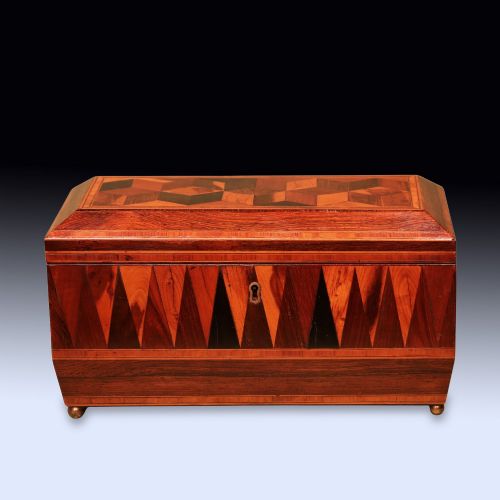
When you search for a regency period tea caddy, you encounter domestic containers shaped as sarcophaguses, octagons, and rectangular boxes. The selection spans standard single and double containers alongside larger tea-poys and work boxes originating from the nineteenth century.
Rosewood, mahogany, and tortoiseshell dominate the forms found in these collections, frequently ornamented with brass inlay, bone, and ebony. Pieces occasionally date to the Georgian or William IV eras, reflecting the broader stylistic overlaps of the period.
The objects serve primarily as decorative desktop or table containers today, though their original function involved locking away precious loose tea leaves. Surviving specimens range from modest wooden boxes to elaborate tortoiseshell and penwork examples.
Materials and construction
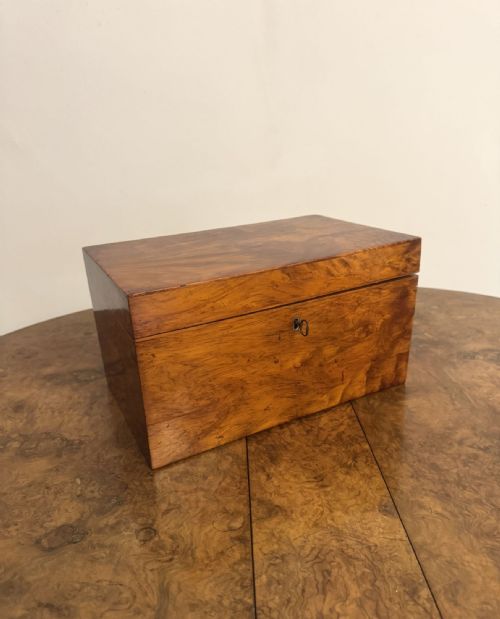
Cabinetmakers utilised dense timbers including rosewood, mahogany, walnut, yew, and satinwood to construct the foundational carcases. These woods were often polished to highlight natural grain patterns such as burr mulberry and birdseye maple.
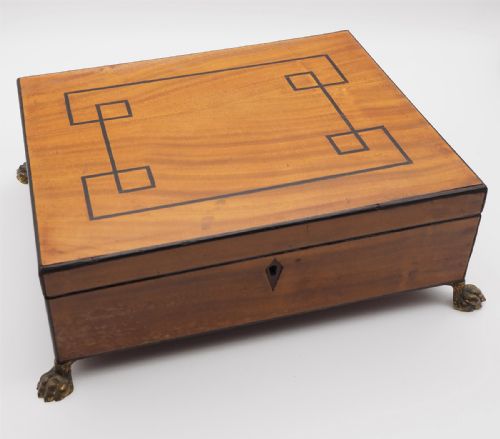
Decoration relied heavily on contrasting stringing, penwork, mother-of-pearl, and precision-cut brass inlay set directly into the wooden or tortoiseshell surface. Interior compartments frequently retained miniature lidded canisters and mixing bowls made from glass or silver.
Regency Period Tea Caddy Retail Price Guide 2026
Typical asking prices for regency period tea caddy among the pieces listed under this phrase on Sellingantiques today, from the lower quarter to the upper quarter. They describe what is for sale here now, not the wider market.
Several caddies include tiny mother-of-pearl birds peck at foliate inlay, proving even dry leaves deserved a cheerful guard.
Judging quality and execution
Excellence in a regency period tea caddy rests on the precision of its decorative inlays and the integrity of its timber selection. Superior pieces display finely detailed penwork, meticulous brass stringing, and unwarped carcases that maintain tight joints.
The choice of rarer materials such as tortoiseshell, goncalo alves, or blonde tortoiseshell elevates a piece beyond standard mahogany or rosewood versions. Original interior fittings, such as mixing bowls and matching internal lids, significantly distinguish higher-tier examples.
The Regency Period Tea Caddy Glossary
- Teapoy
- A pedestal table or large container designed specifically for holding tea caddies and serving tea.
- Sarcophagus
- A box shape featuring a domed lid and sloping sides, popular for larger double tea caddies during the Regency era.
- Penwork
- A surface decoration technique using ink or burning to create delicate illustrative motifs on light-coloured wood.
- Stringing
- Thin inlaid lines of contrasting wood or metal used to outline panels and geometric shapes on box exteriors.
Regency Period Tea Caddy: Frequently Asked Questions
What is a regency period tea caddy?
A regency period tea caddy is a covered box or chest made during the early nineteenth century to store dry tea leaves securely.
These containers often feature internal compartments with separate lids to keep green and black tea blends separated and fresh.
How were tea caddies used?
Household owners used tea caddies to store expensive imported tea under lock and key, as tea was a valuable commodity.
The lady of the house typically kept the key herself, dispensing the leaves personally for each pot brewed by the staff.
How do I identify a Regency box?
Regency boxes typically display classical architectural proportions, neat brass inlay, and exotic timber veneers like rosewood or mahogany.
They frequently feature turned feet, ring handles, and geometric stringing that distinguish them from later Victorian examples.
What woods are most common?
Mahogany and rosewood appear most frequently in surviving examples, often selected for their deep colour and strong grain.
Cabinetmakers also employed decorative veneers including satinwood, walnut, yew, and burr mulberry to create contrasting decorative surfaces.