
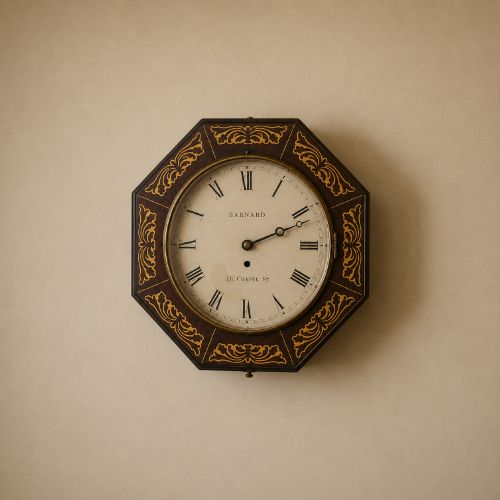
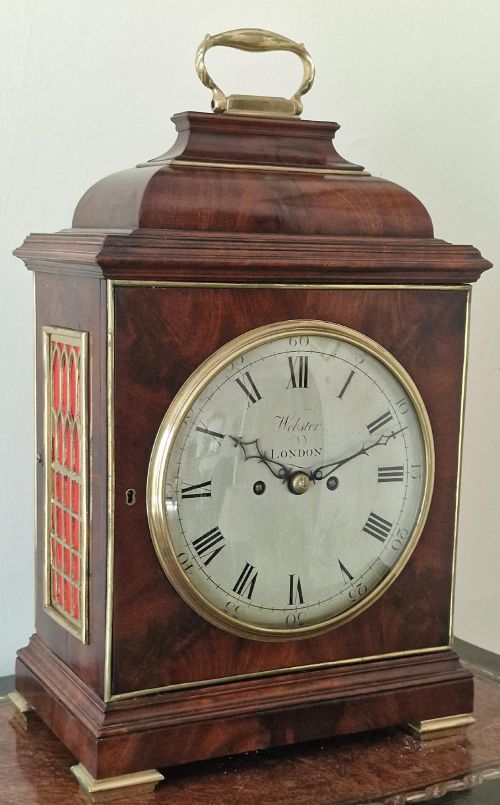
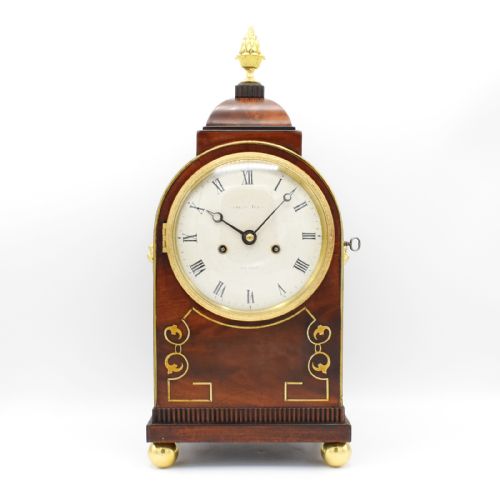
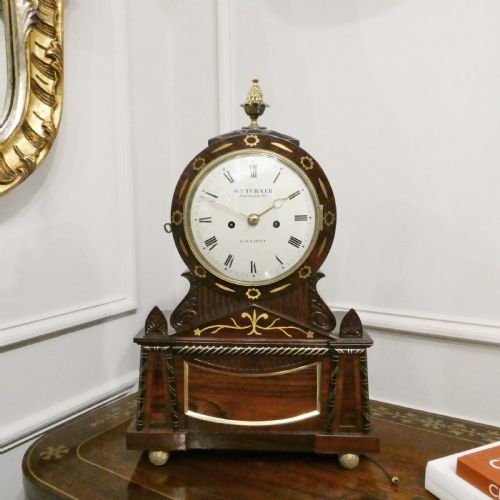
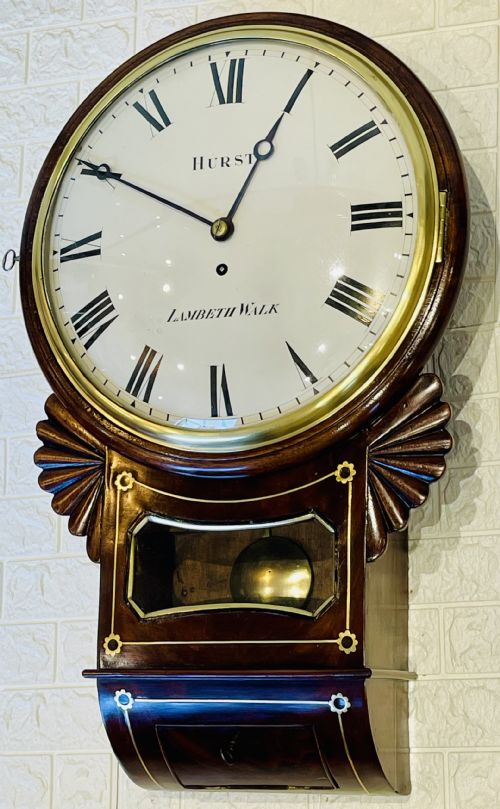


Regency Brass Inlaid Clock
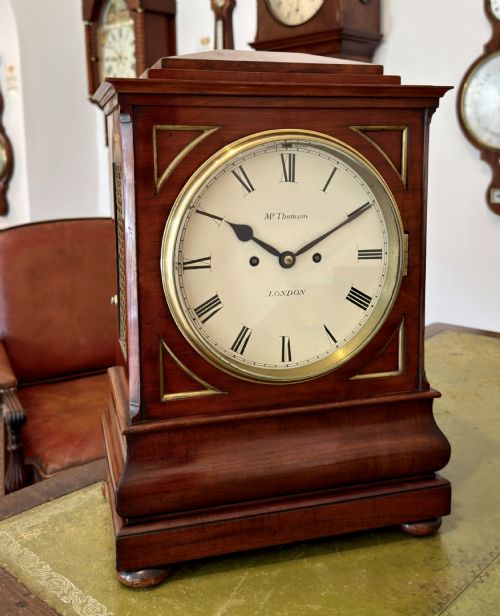
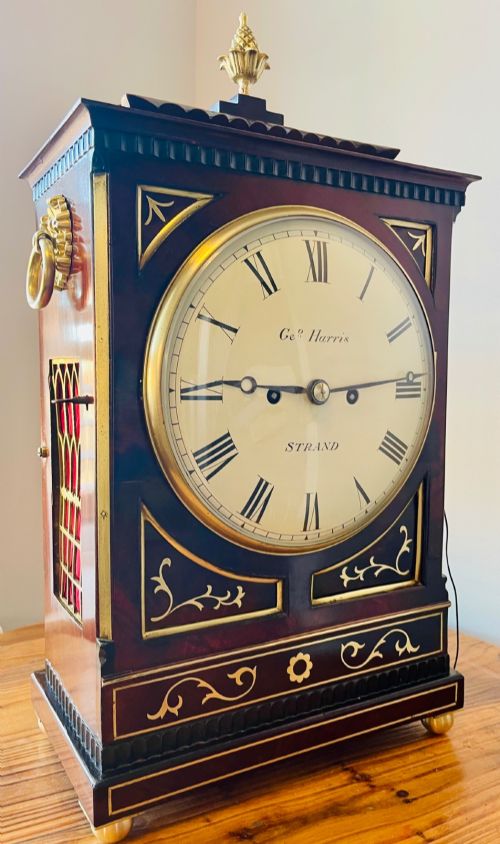
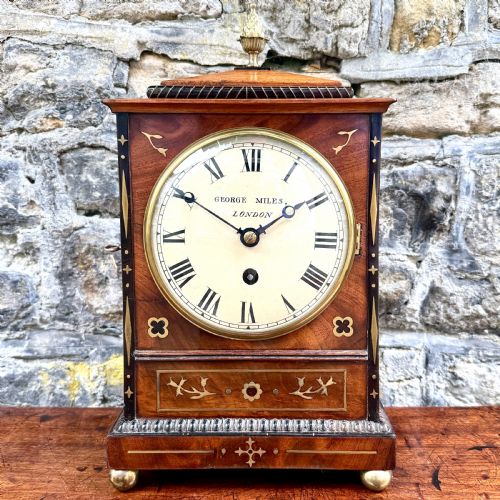
A regency brass inlaid clock brings the sharp contrast of polished yellow metal against dark cabinet timbers directly into a room.

Regency Brass Inlaid Clock
A regency brass inlaid clock typically takes the form of a bracket clock, a mantel clock, or a wall clock designed for domestic or library use. These pieces emerge predominantly from the Regency, Georgian, and wider nineteenth-century periods, carrying the stylistic weight of George III, George IV, and William IV eras.
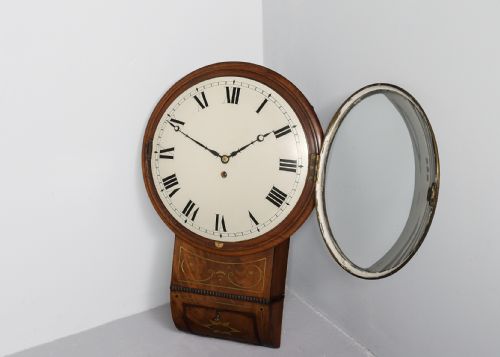
The buyer meets variations ranging from octagonal and drop-dial wall clocks to lancet, pagoda, and chamfer-top table or mantel clocks. Many originate from London makers, alongside provincial workshops spanning provincial towns and Scottish centres.
Cases follow distinct architectural silhouettes, housing either fusee movements or striking and repeating mechanisms behind silvered metal or enamelled dials. The integration of brass inlay defines the visual language across both mahogany and rosewood bodies.
Materials and Construction
Cabinet makers constructed the primary carcasses from dense tropical hardwoods like mahogany and rosewood, occasionally incorporating ebony or mother-of-pearl details. Thin sheets of brass were meticulously hand-cut and pressed into precise channels carved into the wood surface to form geometric or floral motifs.
Movements rely on fusee mechanisms or spring-driven systems paired with silk suspension or pendulum regulation. Dials combine brass backplates with silvered metal or white enamel coatings, protected behind curved or flat glass within hinged bezels.
Listings feature bracket, mantel, and wall clock forms constructed from mahogany and rosewood, decorated with brass inlay.
Determinants of Quality
The refinement of the brass inlay work separates standard production from superior examples, with finer pieces exhibiting tight, flush fitting without excessive gap-filling mastic. The crispness of the engraving on the silvered dial and the harmonious proportions of the wooden case relative to the dial scale dictate the aesthetic standing.
Mechanical execution within the movement itself marks the hierarchy, where signed brass plates, substantial pillars, and precise escapements show the hand of a capable maker. The choice of dense, highly figured rosewood or rich flame mahogany provides the concluding measure of distinction.
Thomson of London·Barnard·Webster·Charles Pratt London·Turner of London·George Orpwood·Bush of London·L. Vick of Stroud·Seller of Reading·Thomas Moss·S Simpson Southampton·William Moon London·Cording of London·John Bull of Bedford·Thomas Lindey of Bristol·Wilkinson Leicester·Barrett London·Thomas Connold·Hyde of Salisbury·Ganthony of London·David Morice·Taylor of London·Leplastrier of London·Wightman Of London·J. Condliff Liverpool
The Regency Brass Inlaid Clock Glossary
- Fusee
- A conical pulley used in spring-driven clocks to maintain an even pull as the mainspring unwinds. This mechanism ensures consistent timekeeping power throughout the winding cycle.
- Bracket clock
- A portable table or mantel clock originally designed to sit on a wall bracket. These pieces often feature striking mechanisms and carrying handles.
- Drop-dial
- A wall clock featuring an extended lower wooden trunk beneath the circular dial. This form accommodates a longer pendulum swing while keeping the face prominent.
- Silvered metal
- A brass dial plate treated with a silver solution and engraved with numerals and maker details. The resulting matte surface offers high contrast against dark hands.
- Chamfer top
- A cabinet roof where the edges are bevelled or angled inward towards a flat centre. This carpentry detail characterises many mantel and bracket clock silhouettes.
Regency Brass Inlaid Clock: Frequently Asked Questions
How do I wind a fusee clock?
Insert the winding key into the dial aperture and turn it gently clockwise until firm resistance indicates the spring is fully tensioned. Care must be taken not to overwind the mechanism.
Ensure the key matches the arbor precisely to avoid damaging the square drive during routine maintenance.
Where should I place a bracket clock?
Position the clock on a stable, level surface such as a heavy sideboard, mantelpiece, or dedicated wall bracket away from direct sunlight and draughts. A solid foundation prevents vibrations that can disrupt the pendulum or balance.
Keep the piece clear of exterior walls experiencing dampness to protect the delicate internal steel components and wood veneers.
How can I tell a Regency clock from a Victorian one?
Regency models typically display restrained Classical proportions, brass stringing, and dial signatures from makers active in the early decades of the nineteenth century. Rosewood usage and specific brass scroll inlay also point strongly to this era.
Victorian pieces often introduce heavier architectural mass, darker ebonised finishes, or alternative dial treatments reflecting later revivalist tastes.
Why does the dial say London?
London city makers operated as major hubs of horological trade, stamping their names and addresses onto dials and backplates to assert professional standing. These signatures connect the clock to specific workshops documented in trade directories.
Provincial examples similarly bear town names, reflecting the geographic spread of skilled clockmakers across Britain.