

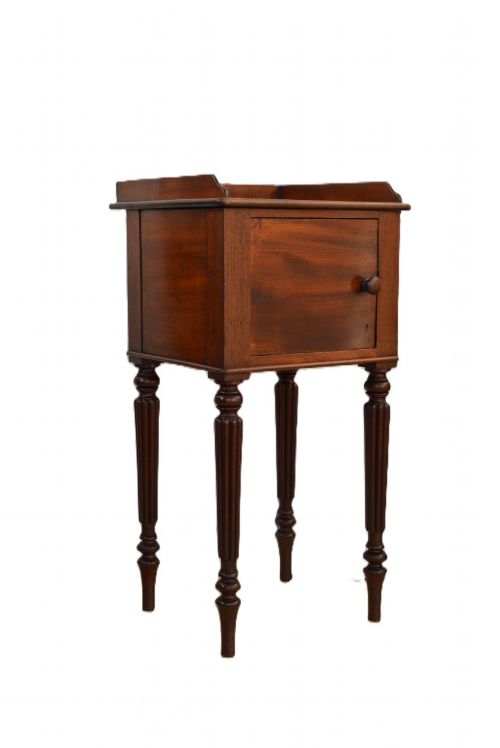


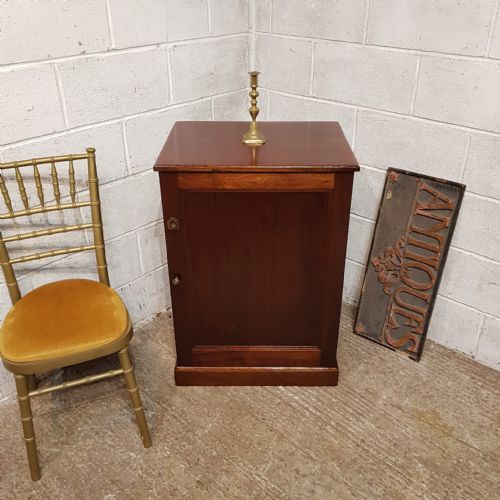


Regency Bedside Cabinet
A regency bedside cabinet brings architectural elegance to the bedroom, offering concealed storage in compact timber forms.
Forms and Origins
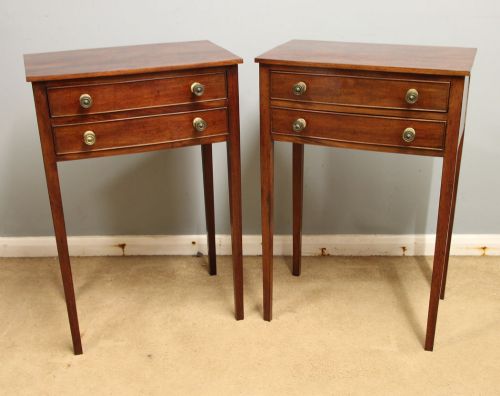
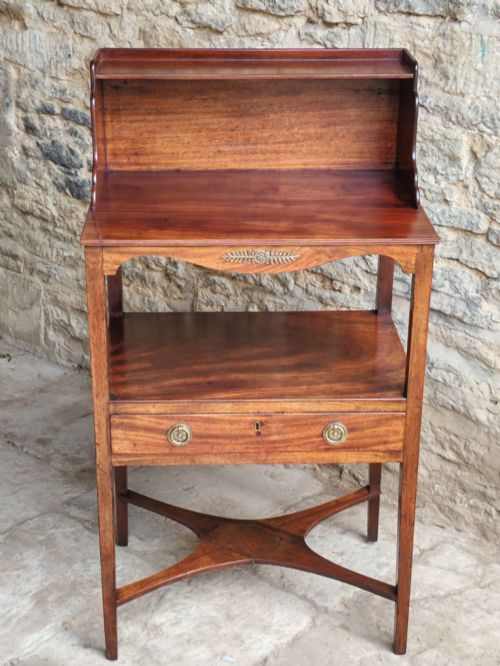
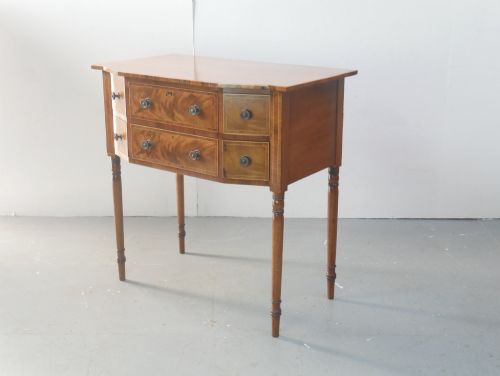
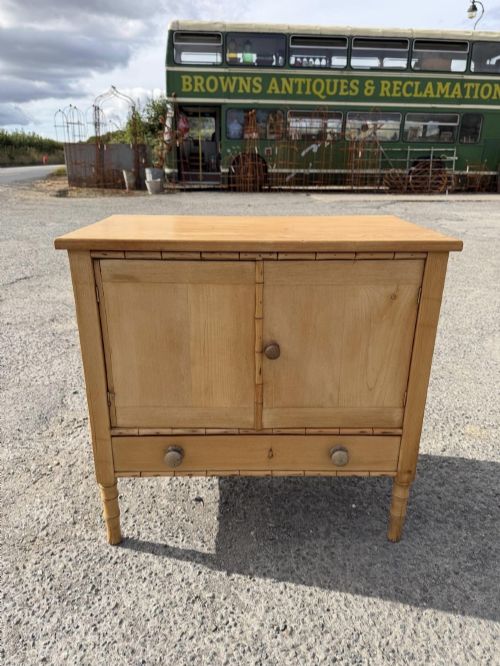
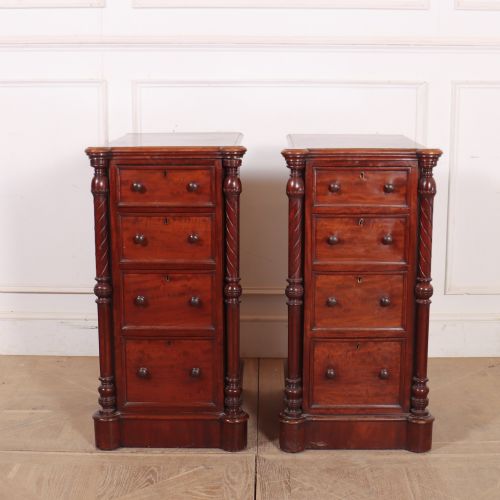
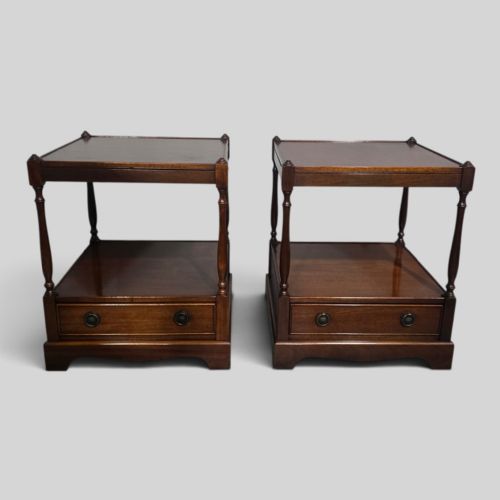
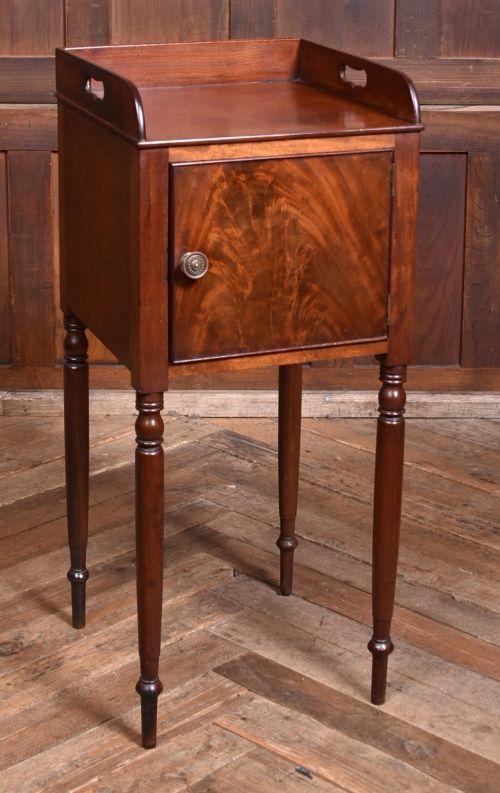
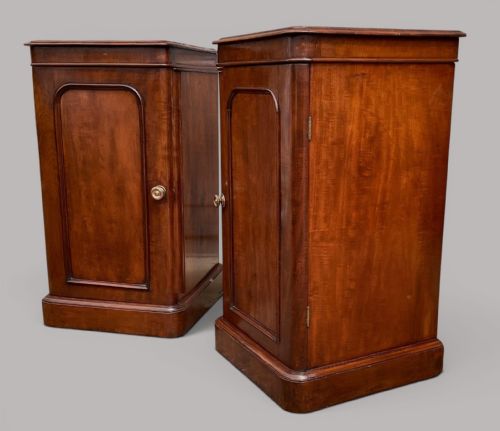
A regency bedside cabinet stands as a practical small-scale storage piece originating from the early nineteenth century. Buyers searching for a regency bedside cabinet encounter upright forms including pedestals, cylindrical cupboards, bowfront commodes, and square tray-top designs.
The predominant items recorded in listings span the regency period and the wider nineteenth century. Pieces frequently emerge as individual examples or matched and identical pairs.
Cabinet makers of the era constructed these items to function as nightstands, pot cupboards, and lamp tables. Forms range from simple enclosed cupboards to architectural column designs and tambour fronts.
Materials and Construction
Cabinet makers utilised solid and figured timbers, predominantly mahogany and flame mahogany, supplemented by rosewood, simulated rosewood, and kingwood. Selected pieces incorporate contrasting crossbanding and marquetry inlay alongside brass fittings.
Timber selection governs the visual texture of each carcass, utilising the natural grain patterns of flame mahogany. Structural joinery combines enclosed cupboard compartments with specialised tops such as galleries, trays, and curved bowfronts.
Retail Price Guide 2026
Typical UK retail prices for regency bedside cabinet, calculated from the Sellingantiques database of over a million retail prices indexed since 2003. This retail price guide relies exclusively on Sellingantiques data; no external sources or auction records are used, so the figures do not describe the wider market.
Recorded variations include cylindrical cupboards, architectural column pedestals, and tambour front commodes.
Craftsmanship and Proportion
Differentiation across the range rests on timber choice, figure intensity, and proportion. Cabinets utilising highly figured flame mahogany or exotic veneers such as kingwood and rosewood sit distinctly above plain mahogany equivalents.
Refinement of form dictates upper tiers of the market, visible in architectural column details, tambour fronts, and precise crossbanding. Pairs demonstrate higher desirability and consistency when matching grain patterns and proportions precisely.
Holland and Sons
The Regency Bedside Cabinet Glossary
- Flame mahogany
- Timber showing a distinctive undulating, flame-like grain pattern created by cutting across the branch boughs. This highly decorative veneer appears on upper-tier regency cabinets.
- Bowfront
- A convex curved front facade popular in furniture design of the period. This shape softens the corners of bedside storage pieces.
- Tambour
- A sliding door constructed from narrow vertical strips of wood glued to a canvas backing. It runs in tracks to conceal interior shelving or storage.
- Commode
- A low cabinet or chest designed with enclosed storage, historically utilised for chamber pots. In nineteenth-century listings, the term often interchanges with bedside cupboard.
- Crossbanding
- A border veneer applied around the edges of a panel with the grain running perpendicular to the central piece. It frames the primary timber surface.
Frequently Asked Questions
What is a regency bedside cabinet used for?
These cabinets function primarily as bedside storage for lamps, books, and night-time essentials. Historical designs often incorporated enclosed spaces for chamber pots or commode equipment.
Today, buyers place them beside beds or use them as compact lamp tables in living spaces. Their enclosed cupboards keep small items concealed while offering a flat surface on top.
How do I identify a regency period piece?
Identification relies on architectural proportions, classical details such as columns, and characteristic timber usage. The period spans the early nineteenth century, showing restrained classical influence.
Examination of timber types, construction methods, and secondary woods helps confirm age. Many pieces display flame mahogany veneers and subtle brass hardware typical of the era.
Are pairs difficult to find?
Matched pairs appear less frequently than single cabinets because items were originally produced individually or separated over time. Finding a true pair requires matching timber grain and dimensions.
When pairs do survive, they command higher interest from collectors aiming to flank a bed symmetrically. Archive records show paired items in both flame mahogany and rosewood.
What woods were used in these cabinets?
Mahogany forms the primary structural and surface timber across the vast majority of surviving examples. Cabinet makers enhanced plain surfaces with flame mahogany veneer.
More decorative variants incorporate rosewood, simulated rosewood, and kingwood. Inlays often feature contrasting lighter timbers to create geometric framing borders.