
Reeded Pedestal Table
A reeded pedestal table brings classical proportion and turning to dining rooms and libraries.
Reeded Pedestal Table
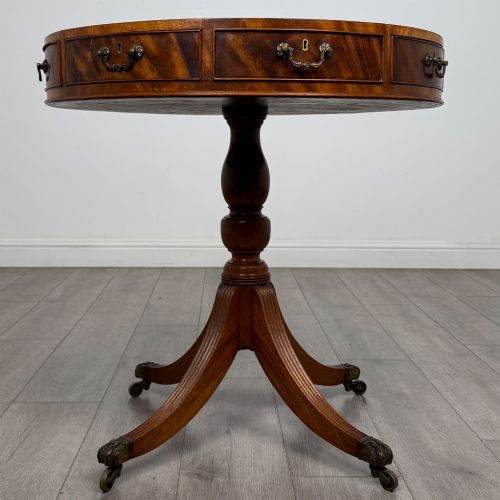
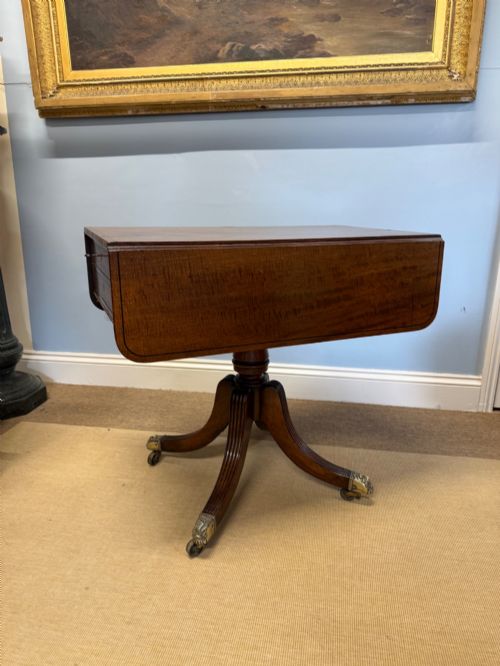
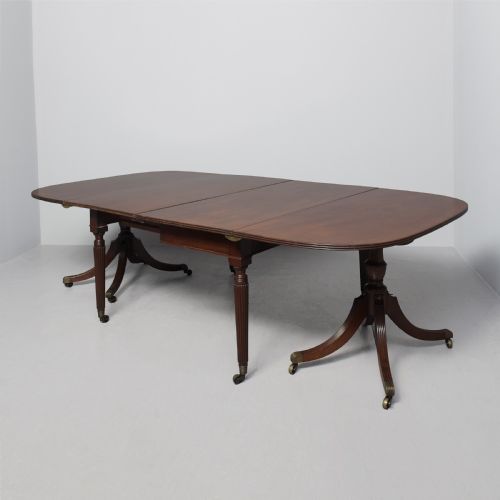
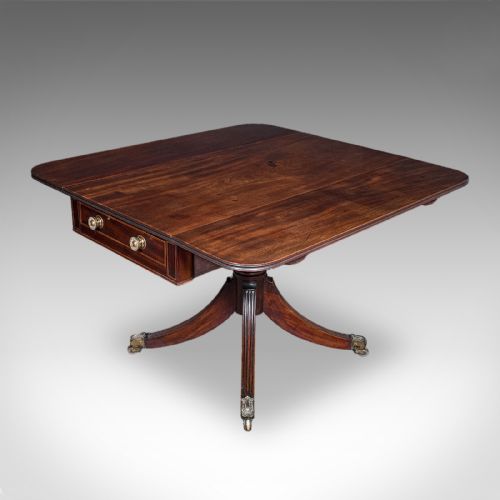
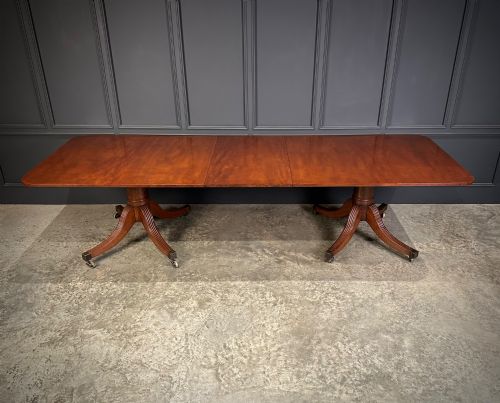
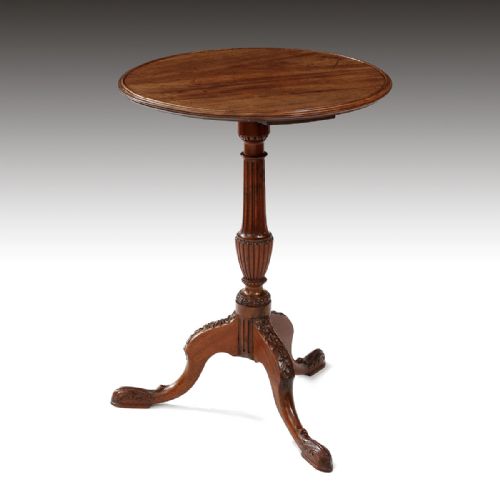
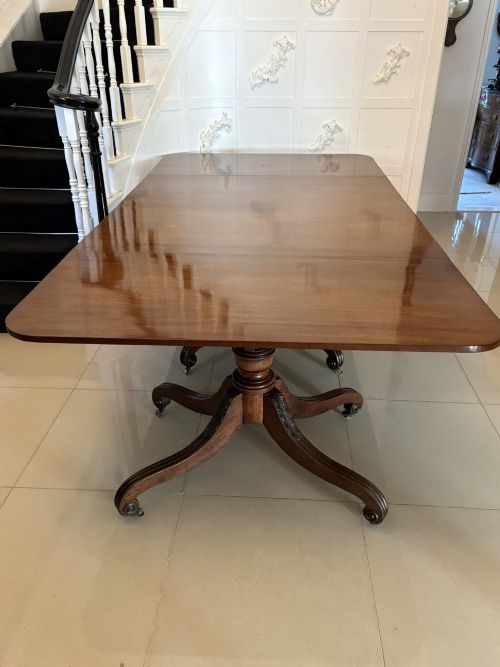
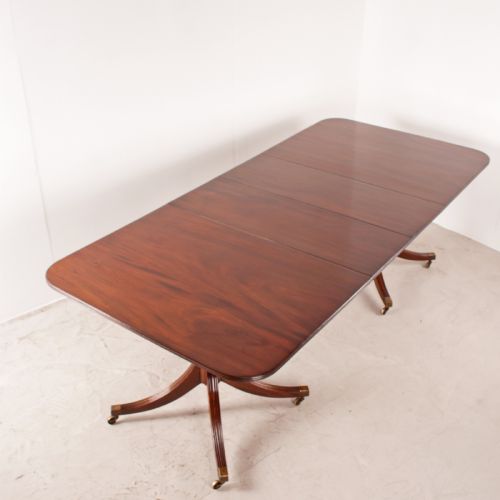
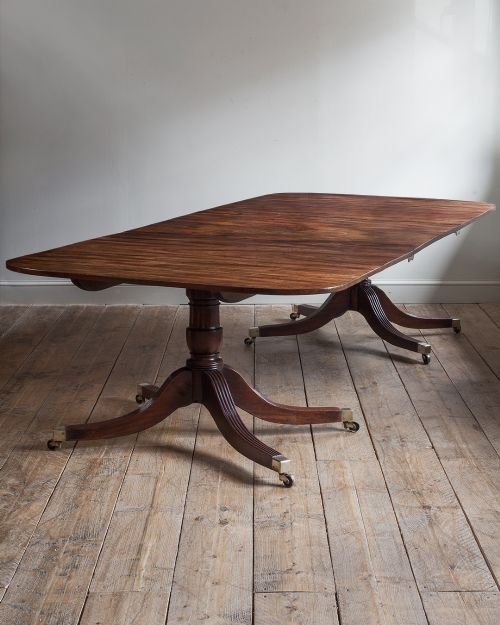
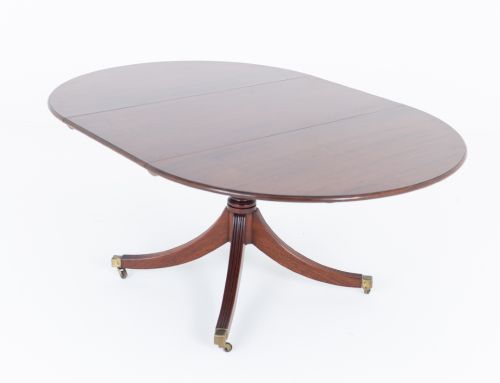
A reeded pedestal table combines a central turned support with parallel carved grooves, commonly encountered in dining tables, breakfast tables, and drum tables. The pieces span the Georgian, Regency, and Victorian periods, alongside later revival pieces from the Edwardian era and the 1920s.
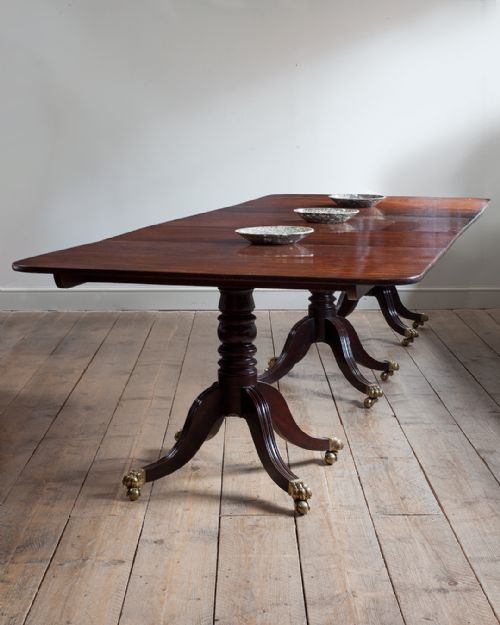
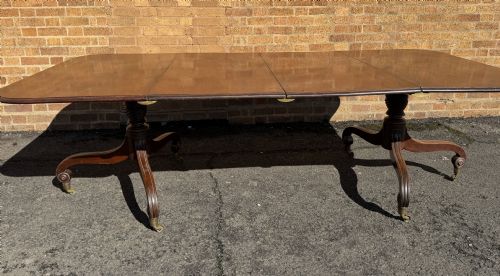
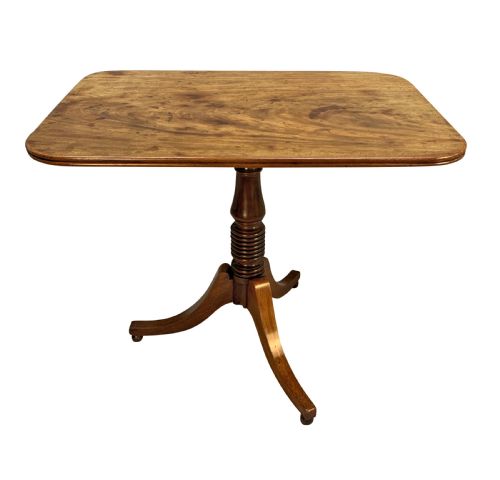
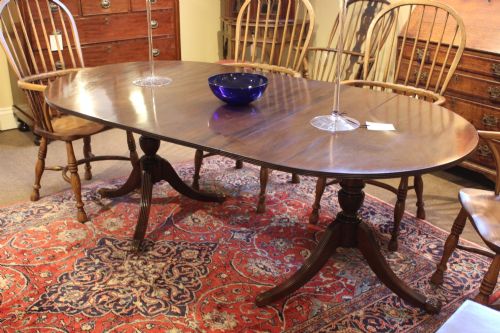
Dining tables dominate the selection, appearing frequently in twin-pillar, triple-pillar, and four-pillar formats designed for extension with leaves. Side tables, tilt-top tables, sofa tables, and occasional pieces also emerge across the periods recorded.
Makers such as Gillows of Lancaster and James Mein appear in the record, grounding these pieces in documented British cabinet-making traditions. The designs draw heavily on Regency, George III, and George IV idioms.
Materials and Construction
Mahogany serves as the primary timber, utilised in solid form and as flame mahogany veneer, Cuban mahogany, and plum pudding mahogany. Secondary materials include brass for casters and mounts, alongside leather inserts on specific desk and table surfaces.
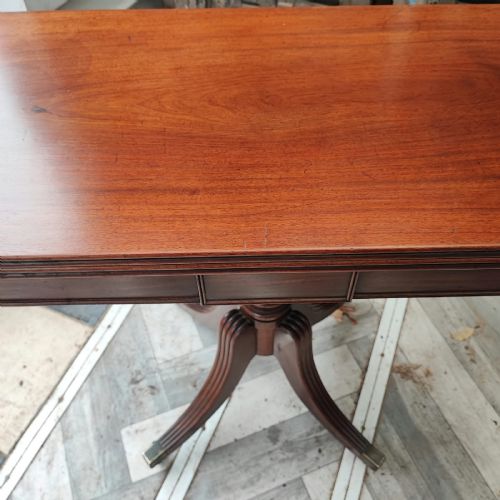
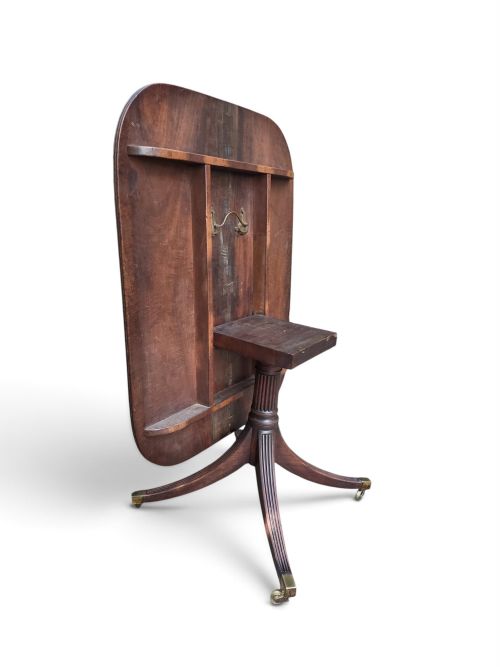
Columns and pedestals receive hand-carved reeding, creating series of parallel rounded mouldings that catch the light. Tilt-top mechanisms, brass claw feet, and sabre legs appear across the structural assemblies.
Some tables require up to twenty-four guests to fill their extended length.
Distinctions in Execution
Quality rests in the crispness of the reeding carved into the solid mahogany and the selection of figured timber veneers for the tops. Superior examples show harmonious timber matching across multiple dining leaves and substantial pillar bases.
The engineering of extending dining mechanisms and tilt-top catches separates standard production from finer cabinet-making. Original brass hardware and well-balanced pillar supports elevate the standing of a piece.
Gillows of Lancaster·James Mein·Gillow and Co
The Reeded Pedestal Table Glossary
- Reeding
- Parallel convex mouldings carved into wood, resembling bundled stems. This decorative treatment defines the legs and columns of the style.
- Pedestal table
- A freestanding table supported by a central pillar rather than four corner legs. The pillar often terminates in a tripod or quadruped base.
- Tilt-top table
- A table with a mechanism allowing the top to pivot to a vertical position when not in use. This saves floor space in smaller rooms.
- Drum table
- A circular library or occasional table with a deep skirt containing drawers, resembling the shape of a drum. They rest on a single central pedestal.
Reeded Pedestal Table: Frequently Asked Questions
Are these tables suitable for daily dining?
Many examples function well for daily meals, particularly multi-pillar extending dining tables designed to accommodate removable leaves. Their robust mahogany construction handles regular use.
Smaller tilt-top and drum tables serve specific functions in sitting rooms and studies rather than family dining.
What is Cuban mahogany?
Cuban mahogany is a dense, dark timber imported from the Caribbean during the eighteenth and nineteenth centuries. It possesses a rich depth and weight distinct from later African or Asian varieties.
Cabinet-makers favoured it for high-status pieces due to its stability and superior capacity for holding sharp carved detail.
How do multi-pillar tables extend?
Multi-pillar tables utilise drop-in leaves supported by a system of bearer rails and centring pins between the pedestals. This allows the table length to adjust according to the number of diners.
Extra leaves are stored separately when not in use to reduce the overall footprint of the furniture.