



Reddish Brown Chest
A reddish brown chest delivers deep timber tones and practical storage, spanning formal mahogany drawers and rustic painted pine boxes.
Reddish Brown Chest
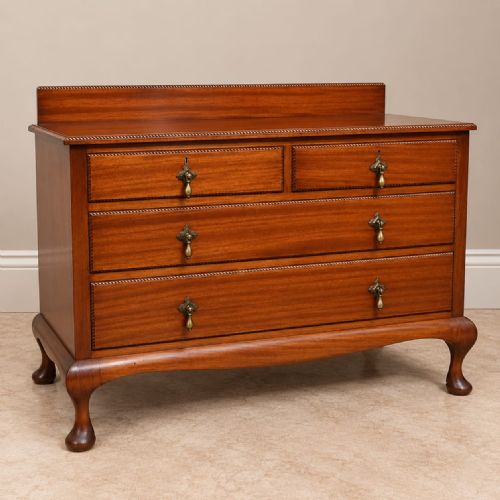
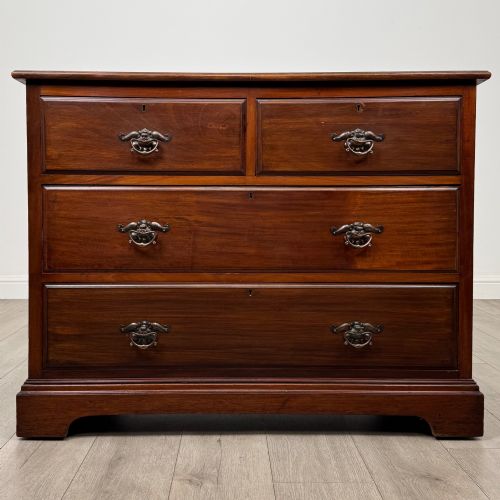
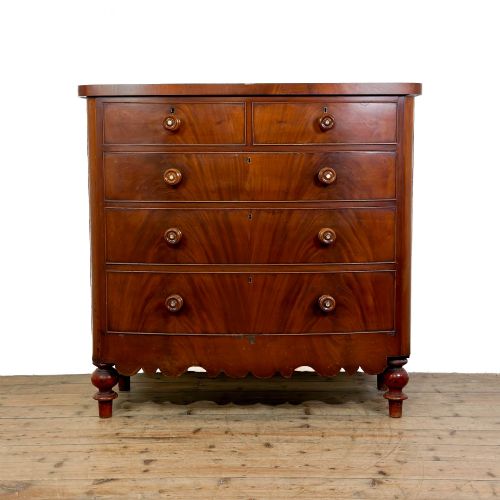
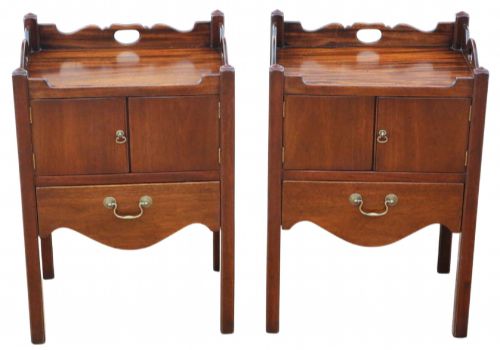
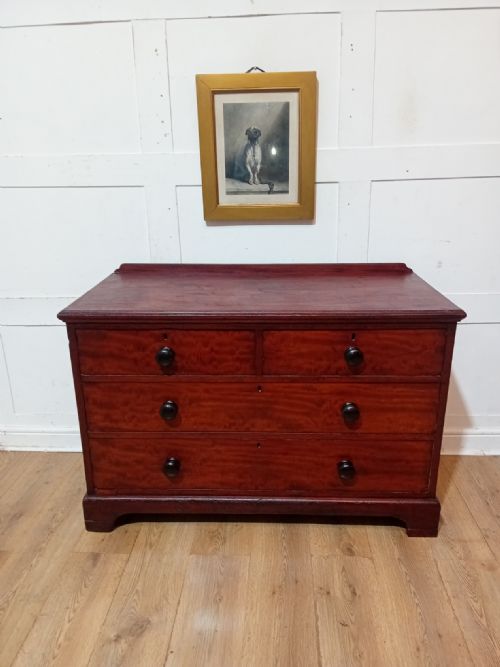
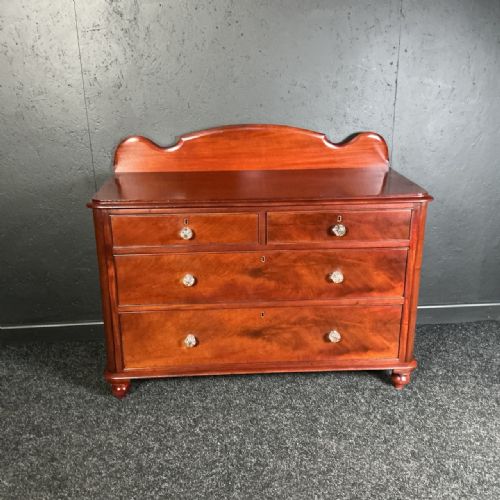
A reddish brown chest encompasses a diverse range of domestic storage furniture, from formal mahogany chests of drawers and bow-front commodes to utilitarian pine blanket boxes and kists. Buyers looking for this phrase encounter pieces dating across the eighteenth, nineteenth, and early twentieth centuries, reflecting changing domestic needs for linen, clothing, and valuables storage.
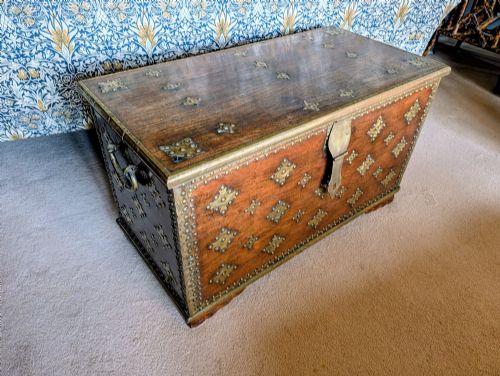
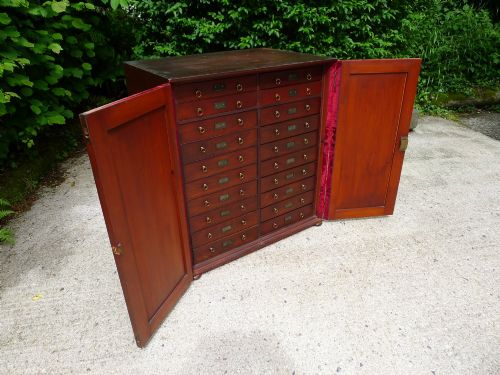
Mahogany examples dominate the selection, often appearing in Georgian, Regency, and Victorian styles with brass hardware and sliding trays. Alongside these formal pieces sit regional variations including painted pine strong boxes, padouk storage trunks, and specialised collectors cabinets with numerous small drawers.
Materials and construction methods
Timber selection dictates the character of these pieces, with dense hardwoods like mahogany, padouk, and walnut sitting alongside softer domestic woods such as pine and deal. Cabinet makers utilised traditional joinery techniques, housing drawers within dovetailed carcasses and occasionally applying decorative wood veneers or painted finishes.
Metal fittings such as brass drop handles, iron locks, and strap hinges provide functional contrast to the wooden structures. Secondary woods often line the interior compartments, showing the practical approach of period workshops to unseen structural elements.
Object forms range from traditional chests of drawers and bow-front commodes to specialised collectors cabinets and bedside tables.
Factors that separate examples
Quality reveals itself in the crispness of the timber grain, the precision of the drawer dovetailing, and the retention of original hardware such as turned wooden knobs or brass pulls. Pieces featuring secondary timbers like cedar linings or carefully matched mahogany veneers show a higher degree of initial craftsmanship.
The integrity of the surface finish matters significantly, whether dealing with a polished French polish on a formal Georgian commode or surviving original paint on a nineteenth-century pine blanket box. Alterations to feet, handles, or interior configurations shift an example further from its original state.
Brady
The Reddish Brown Chest Glossary
- Commode
- A low ornamental chest of drawers or cabinet, often originating from eighteenth-century European traditions.
- Kist
- A traditional British or Scandinavian wooden storage chest or box, commonly constructed from pine.
- Brushing slide
- A pull-out shelf integrated into the upper section of a chest of drawers, used historically for folding clothes.
- Dovetail
- A joint formed by interlocking wedge-shaped fingers, standard in period drawer construction for strength.
- Bow-front
- A curved convex cabinet front that projects outward in the centre, popular during the Georgian and Regency periods.
Reddish Brown Chest: Frequently Asked Questions
What is a reddish brown chest used for?
These pieces served historically for storing household textiles, garments, and personal valuables safely away from dust and light. Today they function primarily as bedroom storage, hallway furniture, or living room statement pieces.
Larger trunk forms hold bulky blankets, while multi-drawer cabinets organise smaller items like stationery or specimen collections.
How do I date a mahogany chest?
Dating relies on observing construction traits, handle styles, and foot configurations across different design periods. Georgian pieces often feature bracket feet and cockbeaded drawer edges, while Victorian examples tend to be heavier with turned wooden feet.
Secondary woods inside the drawers also offer clues, as cedar or pine linings changed in preparation methods over the nineteenth century.
Are pine chests as old as mahogany ones?
Pine examples appear across the same nineteenth-century timeline as mahogany furniture, though they served different domestic environments. While mahogany was chosen for formal parlours and bedrooms, pine was the standard timber for farmhouses, utility rooms, and merchant shipping.
Painted pine boxes and kists often survive from the mid nineteenth century with their original surface decoration intact.
What is the difference between a kist and a trunk?
A kist is a traditional regional term for a heavy wooden storage chest, typically associated with Scottish or Scandinavian pine vernacular furniture. Trunks often incorporate leather, metal reinforcement, or exotic timbers like camphor wood intended for travel.
Both served the fundamental purpose of secure transport and storage before fitted wardrobes became common.
How do I care for antique wood furniture?
Preserving these surfaces requires maintaining stable indoor humidity levels and keeping pieces away from direct heat sources and strong sunlight. Regular dusting with a soft, dry cloth prevents particulate accumulation without risking moisture damage to old polishes.
Application of traditional wax polish occasionally helps nourish dry timber and maintains a soft protective sheen.